
Palácio Nacional da Pena

Sintra · Lisboa

Palácio Nacional da Pena

PalaceXIXPalace Architecture
Estrada da Pena, 2710-609 Sintra4.4 Rating · 104,024100 min

The National Palace of Pena rises above the hills as a romantic fantasy turned into stone. Dreamed up by Ferdinand the Second, the Artist King, it grew from the transformation of a former Hieronymite monastery into a summer palace for the royal family, where nineteenth-century taste blends medieval, Manueline, Moorish and Renaissance references without losing its harmony. Inside, the old church, cloister and apartments preserve the memory of a place once lived in; outside, Triton’s Terrace offers one of the palace’s most fascinating details, with its hybrid figure symbolically linking the aquatic and terrestrial worlds. From the Courtyard of Arches, too, the scenic ambition of Pena becomes clear, framing the hills, the park and the Atlantic as part of the palace itself. It was here that Queen Amélia received the news of the proclamation of the Republic. Few places tell so well the story of dream, power and the end of an era.

Why it matters

At the highest point of the Sintra hills, the National Palace of Pena grew from the meeting of an ancient place of devotion and a royal Romantic project of the nineteenth century. The memory of the site goes back to the twelfth century, when a chapel linked to the cult of Our Lady is said to have stood there. In 1503, King Manuel I ordered the building of the Royal Monastery of Our Lady of Pena, later entrusted to the Order of Saint Jerome. From that sixteenth-century complex, the church, the cloister and several ground-floor spaces survived. The 1755 earthquake struck the building, and the extinction of the religious orders in 1834 left the monastery abandoned. Four years later, Ferdinand II bought the former monastic enclosure and transformed the place into his summer residence, enlarging the ruins with a new palace under the direction of Baron Eschwege. Pena was later occupied again by Carlos I, Amélia and Manuel II. In 1910 it was classified as a National Monument and it forms part of the Cultural Landscape of Sintra, inscribed on the UNESCO list since 1995.

Architecture and history

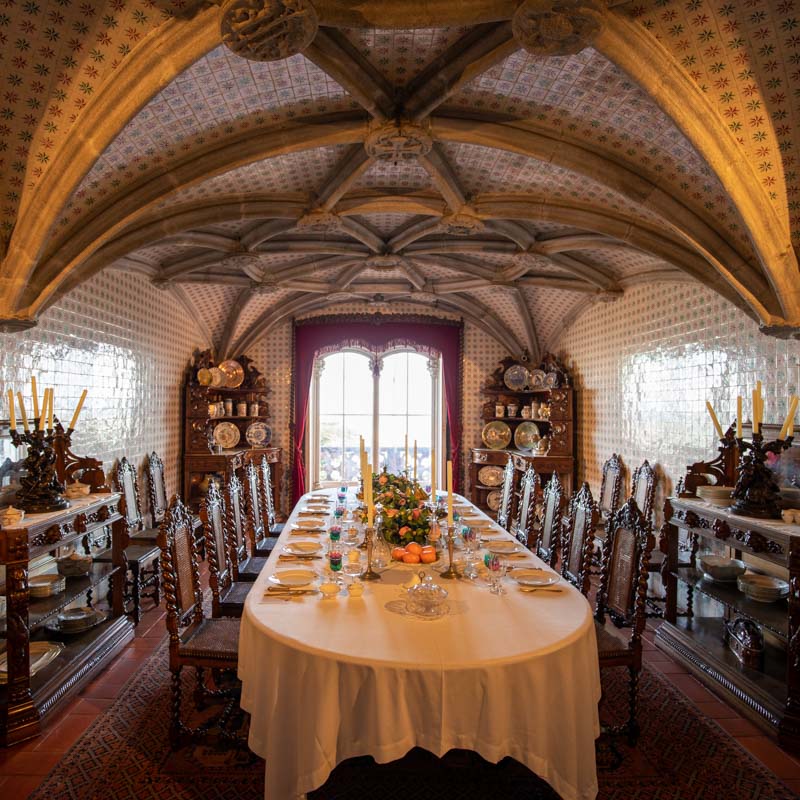
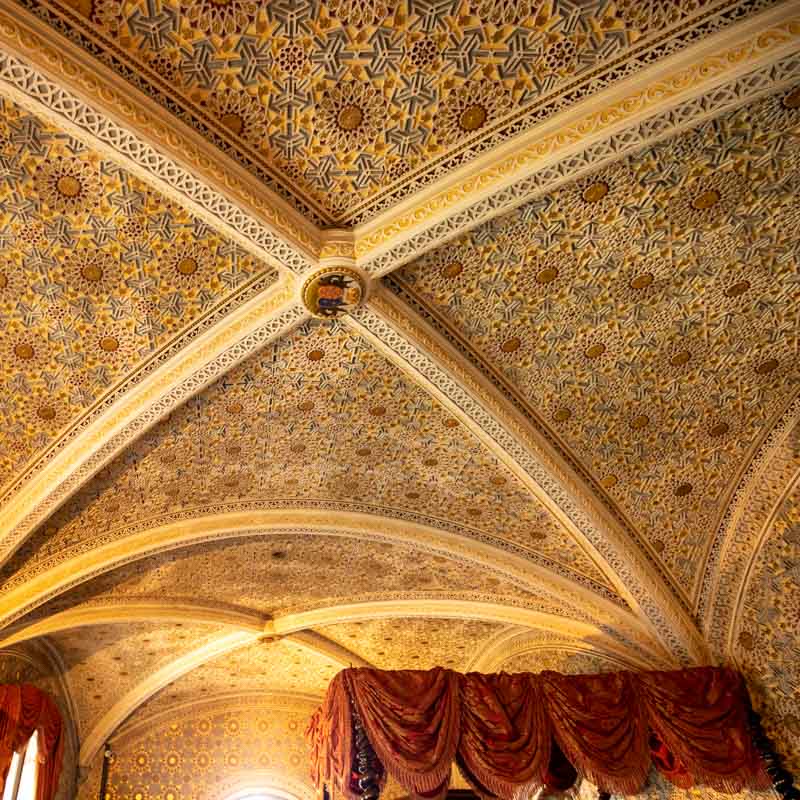
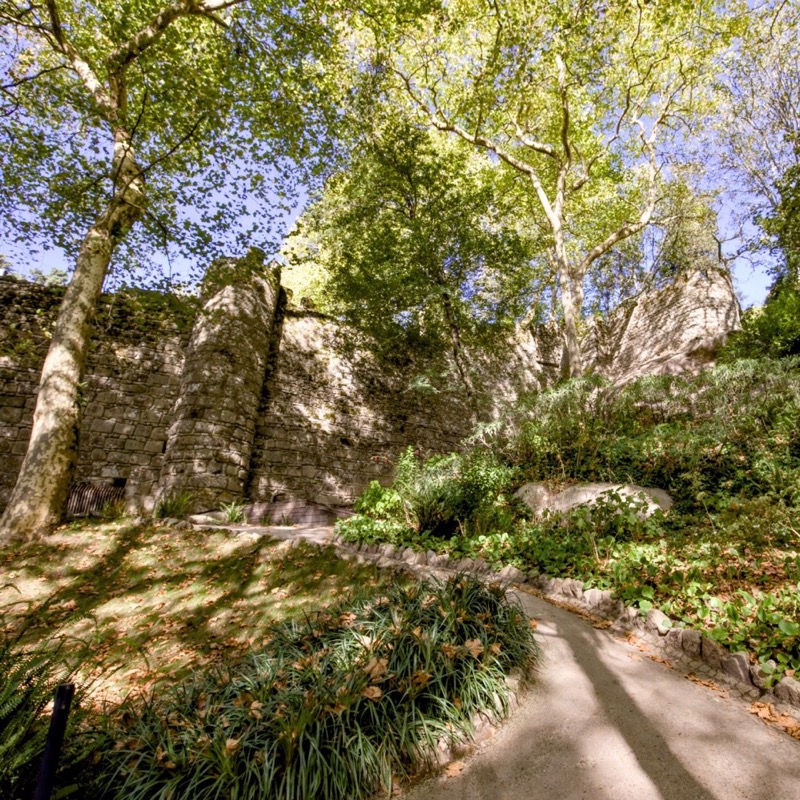
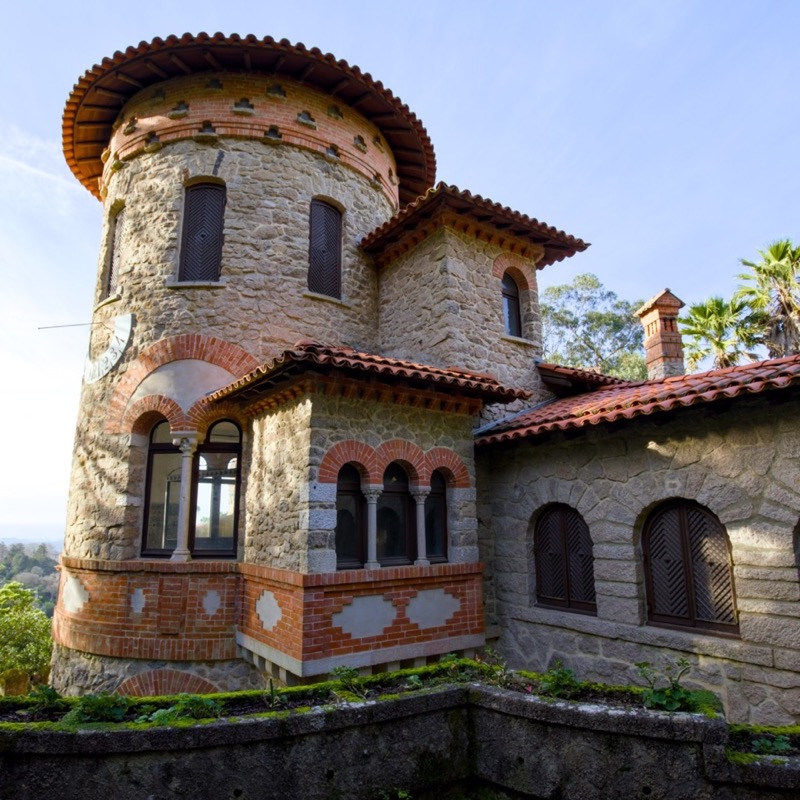
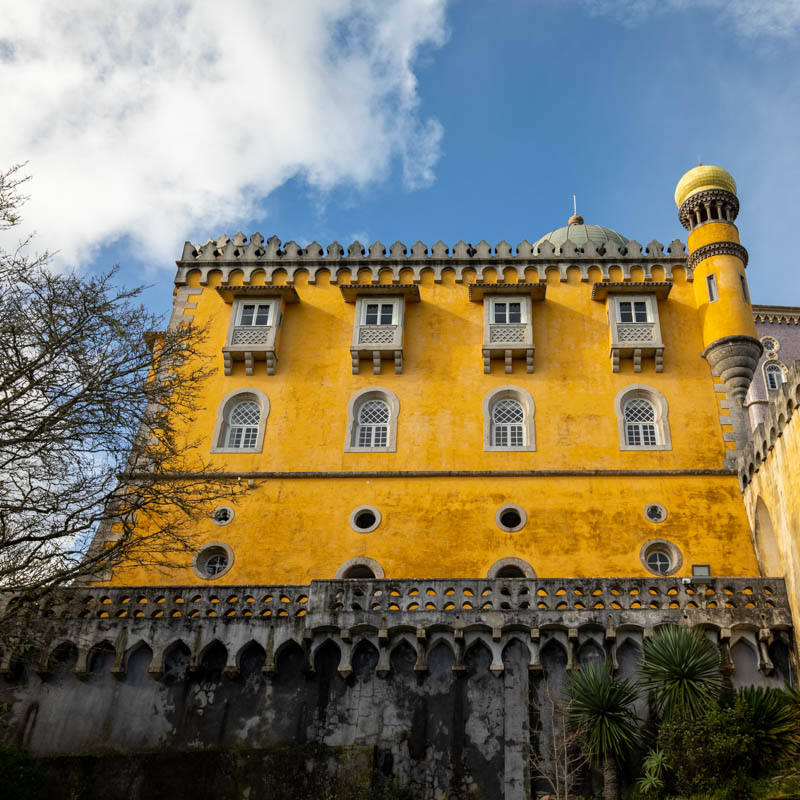
The architectural power of Pena lies in the coexistence of two clearly legible periods. On one side stands the former monastery, intimate in scale, where many private rooms are concentrated. On the other rises the New Palace, conceived for ceremonial halls, theatrical terraces and a monumental image visible from far away. The complex rests on rocky outcrops and unfolds across successive levels, with towers, watch turrets, wall walks, stairways, passages and courtyards that use the terrain as part of the composition. Its formal language is deliberately eclectic. The building combines Neo-Gothic, Neo-Manueline, Neo-Islamic and Neo-Renaissance references in a synthesis that is very characteristic of the Romantic taste for exoticism and historical evocation. The surface treatments reinforce that effect. There are Neo-Hispano-Arab tiles, stucco, trompe-l’oeil wall paintings, stained glass and an expressive use of colour that distinguishes volumes and functions. More than an isolated palace, Pena was conceived as a total setting, in dialogue with the surrounding park and with the broad landscape of the hills.

More context

The Triton Terrace offers one of the clearest keys to understanding the palace. The monstrous figure, half man and half fish, marks the entrance to the New Palace and symbolically organises the passage between the aquatic world, suggested on the lower level, and the terrestrial world, affirmed by the tree and vines rising above the portal. The Manueline Cloister, built around 1511, deserves attention for its reduced scale and for its Hispano-Moresque dry-cord tiles with geometric design. In the Chapel, notice the high altar altarpiece in alabaster and limestone from Sintra, executed between 1529 and 1532 by Nicolau de Chanterene, and the stained-glass window commissioned by Ferdinand II in 1840. The Great Hall reveals nineteenth-century court life through oriental porcelain, large lighting fittings and central European stained glass. Finally, the Queen’s Terrace opens the reading of the landscape. From there one sees the Cruz Alta, the statue of the Warrior, the line of the ocean and, on clear days, Lisbon.

Gallery

Palácio Nacional da Pena 1
Palácio Nacional da Pena 2
Palácio Nacional da Pena 3
Palácio Nacional da Pena 4
Palácio Nacional da Pena 5

Nearby places

View all