

Mafra · Lisboa
Palácio Nacional de Mafra
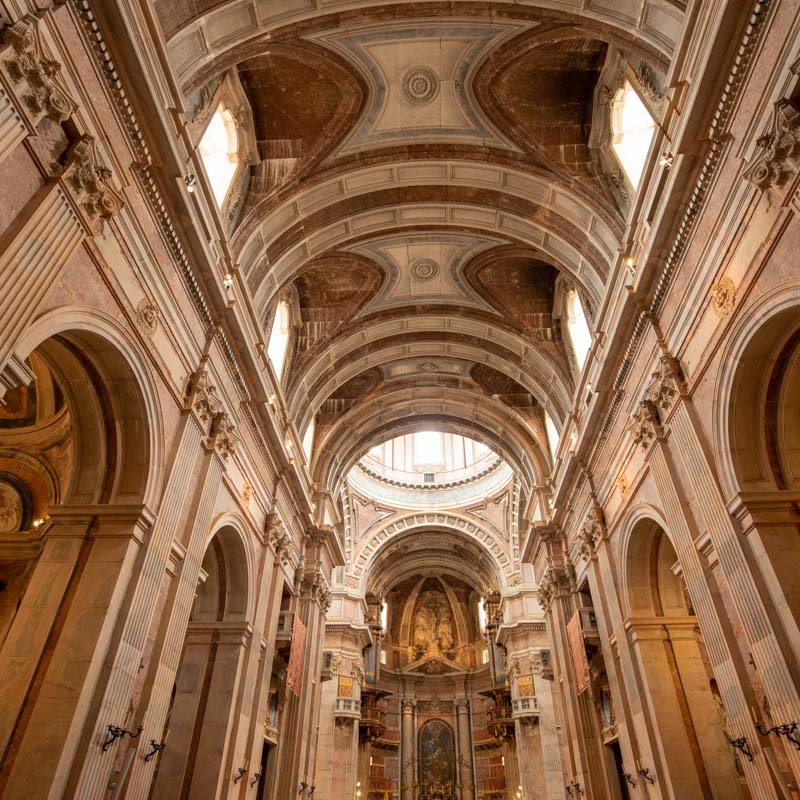
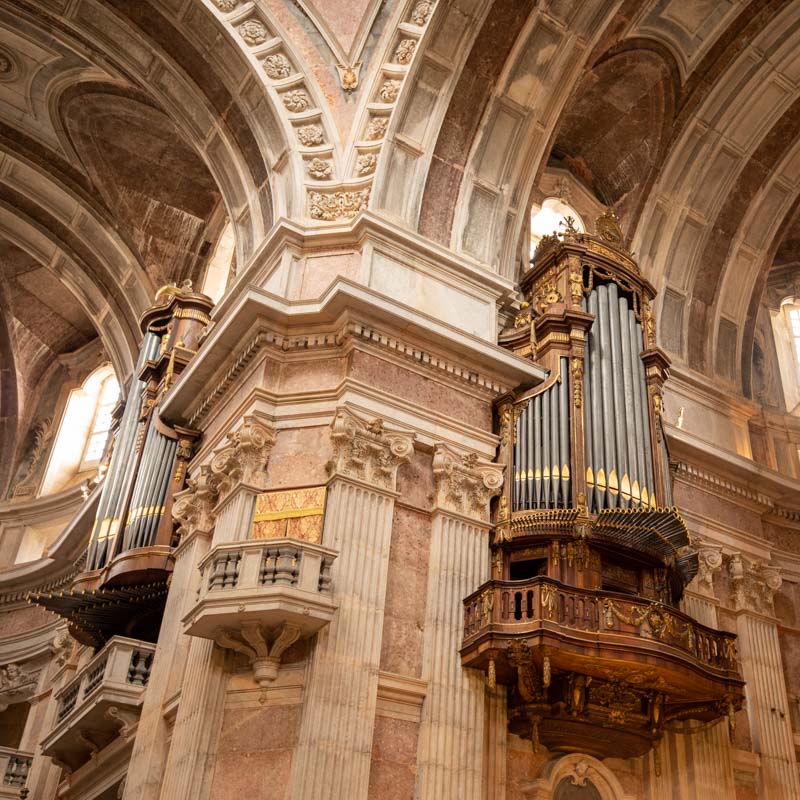
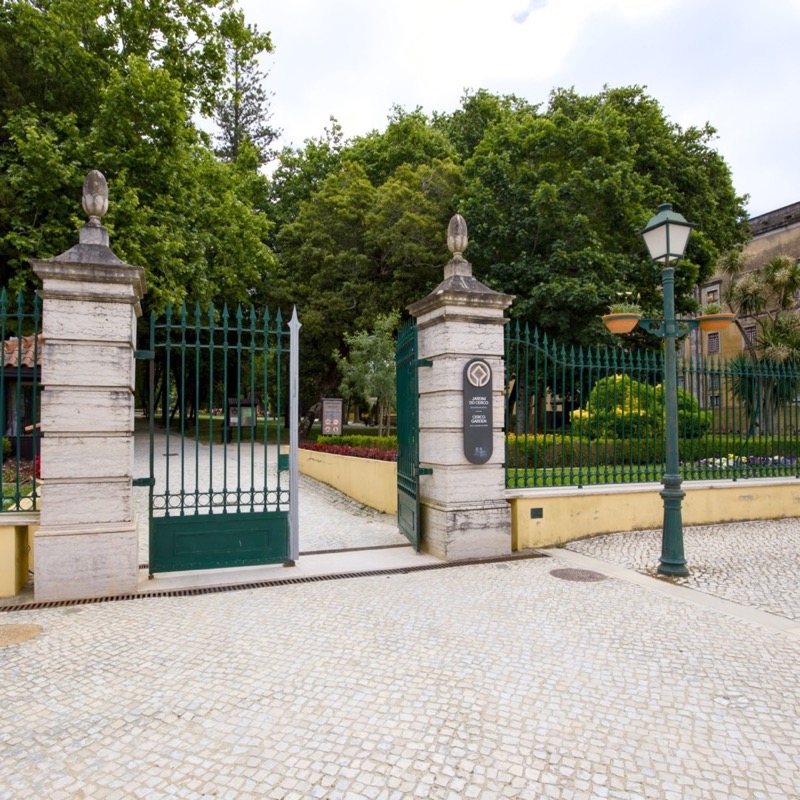
In Mafra, the scale of the palace seems to have been conceived to turn a royal vow into a spectacle of power. Commissioned by King João V and begun in 1717, the complex brings together palace, basilica, convent, Cerco Garden and Tapada in a Baroque composition of rare ambition. The basilica, the two carillons and the six historic organs remind us that music and liturgy were also part of this grand display. Yet there is one space that captivates in a different way: the library, a luminous nave of stone and wood that holds tens of thousands of volumes and remains one of Mafra’s most striking images. The building changed its role over time — royal residence, military quarters, monument — and it was from here that King Manuel II left for exile in 1910. A World Heritage Site since 2019, Mafra is remarkable for the way it brings devotion, knowledge and authority together in a single body.
Why it matters
In Mafra, the palace was born as a royal statement in stone. Commissioned by D. João V in the context of a vow of succession, it began to be built in 1717 and the Basilica was consecrated in 1730. The complex was not conceived only as a residence: it brought together a royal palace, basilica, Franciscan convent, library, Cerco Garden and Tapada, forming the Royal Building of Mafra, inscribed by UNESCO in 2019. Its scale helps explain the ambition of the work, but also its symbolic function: to represent the monarchy, the State and the connection between political power and religion. Over time, the palace served as a seasonal residence for the royal family and, from the Napoleonic invasions onwards, housed military quarters. Today, its importance lies in this coexistence of courtly life, devotion, knowledge and national memory.
Architecture and history
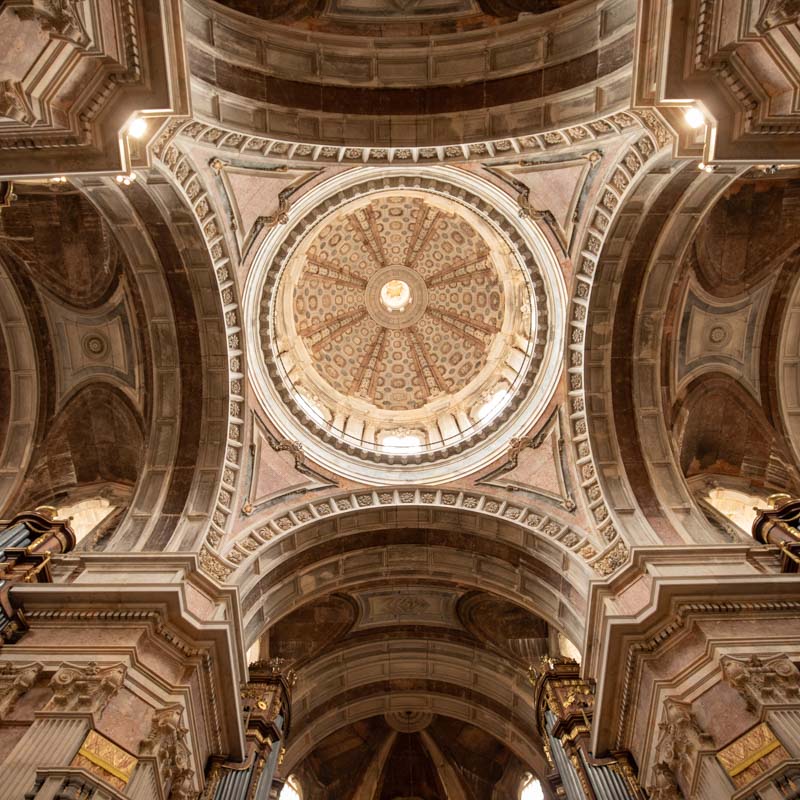
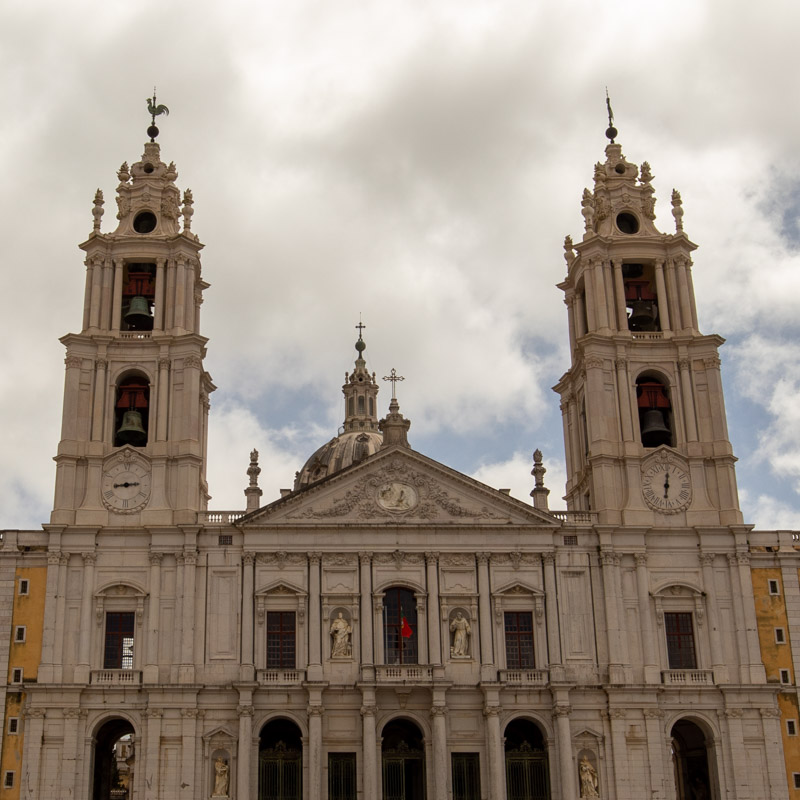
The long, symmetrical façade shapes the first reading of the monument. At the centre stands the Basilica, framed by two bell towers; on either side stretch the palace wings, while the former convent extends behind. The final design is attributed to Johann Friedrich Ludwig, known in Portugal as João Frederico Ludovice, and follows Roman and Italian Baroque models. The construction occupies around 38,000 square metres and includes about 1,200 rooms, 5,200 doors and windows and 156 staircases. In the Basilica, the Latin-cross plan, the dome above the crossing, the Italian sculpture and the stone altarpieces create a space of great solemnity. The Library, with around 1,000 square metres in a single room, reveals another side of the building: the palace as a place of Enlightenment knowledge.
More context
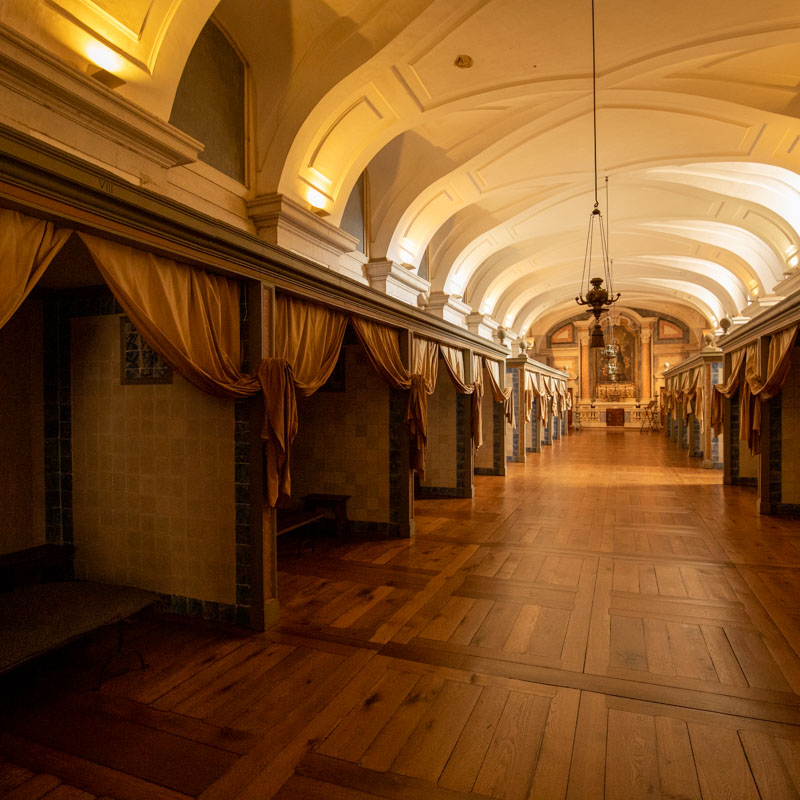
The Basilica concentrates some of the rarest elements of the complex: six historic organs, built so they could be played together, and two carillons installed in the towers, linked to a vast set of bells. Notice how music, liturgy and architecture were conceived together. In the Library, observe the depth of the room, the shelves and the organisation of the books, which bring together around 30,000 volumes on religious, scientific, legal, literary and artistic subjects. In the palace apartments, the sequence of rooms helps imagine the ceremonial life of the court, with spaces for representation, prayer, rest and service. The convent infirmary adds a different reading: it shows the daily life of the friars and the practical dimension of the convent. Mafra should be read in layers, because each area reveals a distinct function within the same building.
Gallery