Sintra · Lisboa
Museu do Ar
At Granja do Marquês, near Sintra, the Air Museum preserves the Portuguese history of flight as a blend of ingenuity, risk and imagination. The idea of creating an aviation museum dates back to the early twentieth century, but the museum opened to the public in 1971, in Alverca, before gaining a new scale in its present Sintra site, inaugurated in 2009. Between spacious hangars and aircraft from different periods, the visit links military and civil aviation and shows how flying changed the country, from the feats of the pioneers to the era of TAP and ANA. One of its most curious details is the replica of Santos Dumont’s 14-bis, presented as the second one in the world. More than a technical collection, the museum preserves a deeply physical memory of the human desire to rise into the air and turn that ambition into history.
Why it matters
The Museu do Ar, in Sintra, preserves the memory of Portuguese aviation in a place that still belongs to the aeronautical world: Granja do Marquês, beside Air Base No. 1. The museum opened to the public in Alverca on 1 July 1971, but the growth of the collection made that space insufficient. The solution involved recovering hangars in Sintra, where the new museum space was inaugurated in December 2009 and opened to the public at the end of January 2010. Its mission is to conserve, restore and display national aeronautical heritage, both civil and military. The route therefore does not tell only the history of the Air Force: it also includes commercial aviation, airports, air navigation, pilot training and the technical evolution of flying machines.
Architecture and history
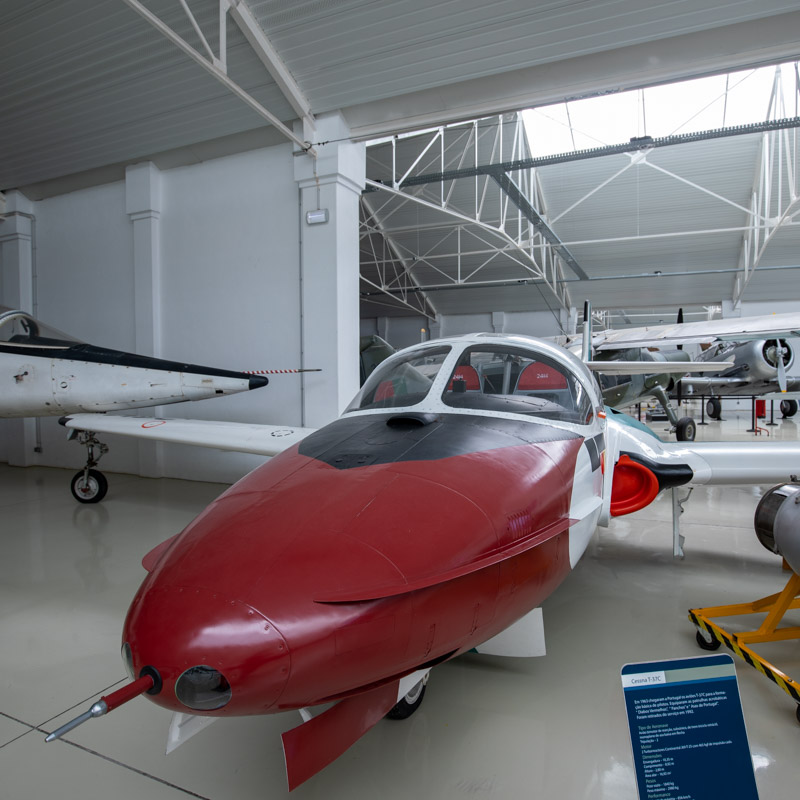
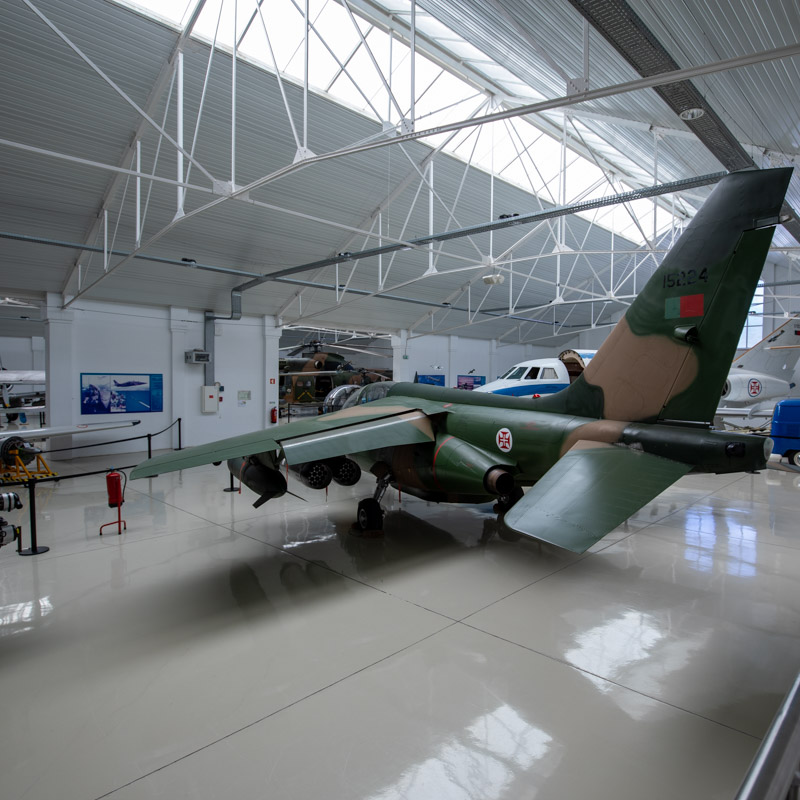
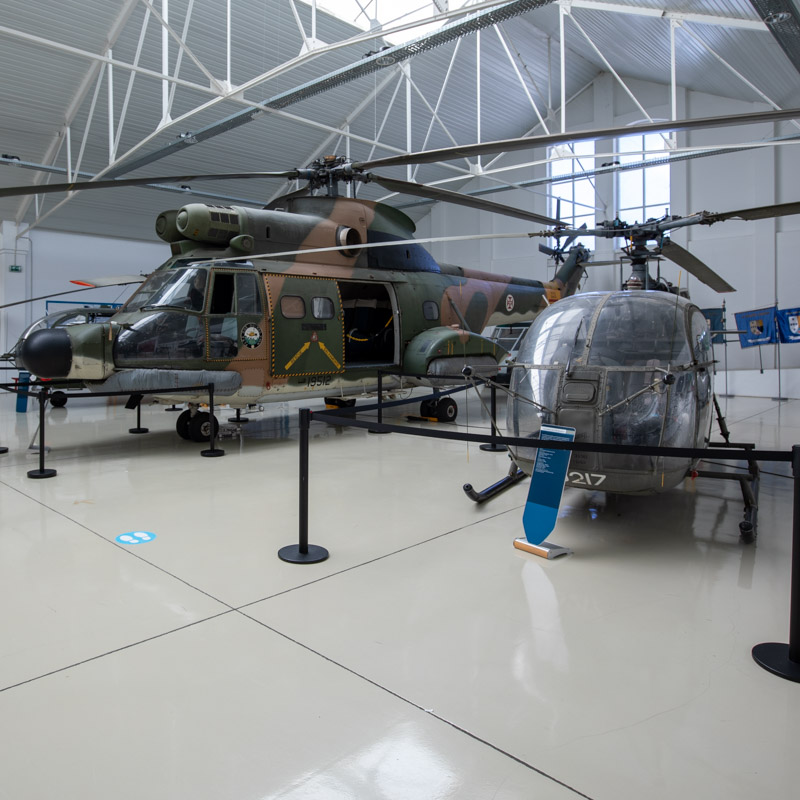
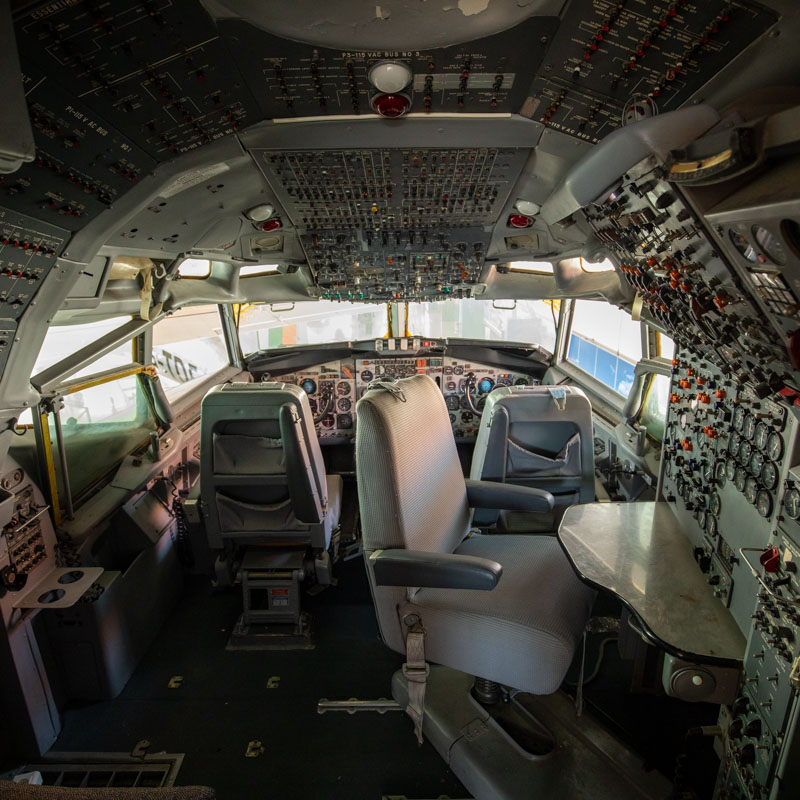
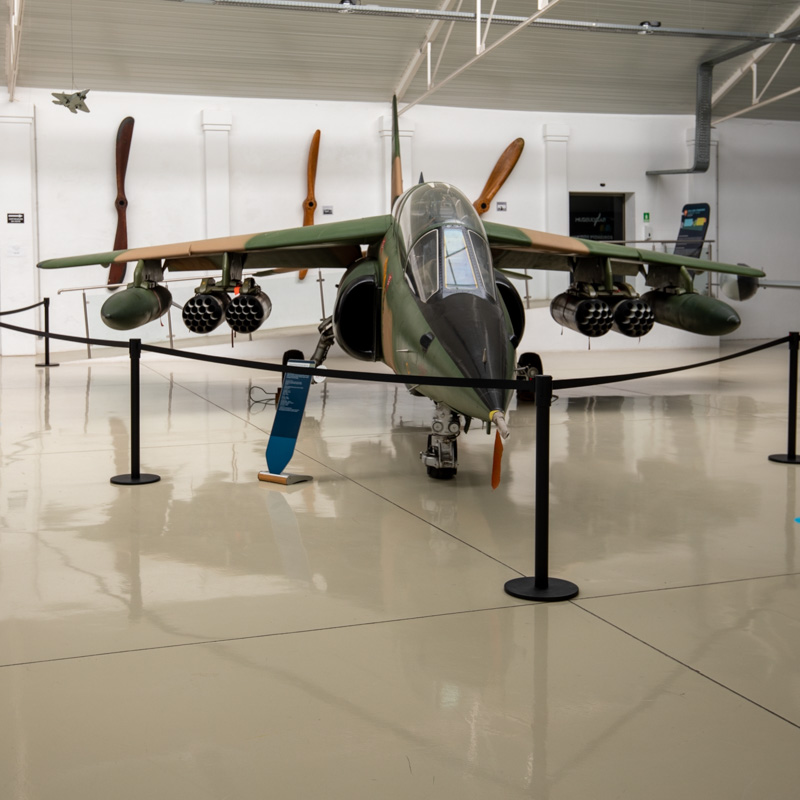
The hangars give the museum a scale that is unusual among Portuguese museums. The exhibition occupies an area of more than 8000 square metres, enough to display full-size aeroplanes and helicopters without separating them from the practical purpose for which they were built. The space is organised into areas such as the main hangar, the TAP room, the ANA room, the historic hangars and the Pioneers Room. This layout helps visitors follow different stories within the same narrative: military aviation, civil air transport, airport management and the early days of flight. Engines, propellers, simulators, navigation equipment and instrument panels complete the reading. In a museum of this kind, the architecture does not compete with the exhibits; it offers width, height and continuity so that each aircraft can be seen as a machine, a historical object and a physical presence.
More context
The main hangar reveals the variety of the collection: more than 40 aeroplanes and helicopters are displayed in Sintra, together with equipment that explains how an aircraft is flown, guided, maintained and connected by communication. Notice the differences between training aircraft, transport planes, fighters and helicopters; each form answers a specific function. The TAP and ANA areas extend the visit beyond the military dimension, showing the importance of commercial routes, airports and the services that make civil aviation possible. The Pioneers Room helps connect the first flights with the building of an aeronautical culture in Portugal. Also look at the engines and propellers outside the aircraft: seen up close, they reveal the engineering that is usually hidden by the fuselage and by the movement of flight.
Gallery