Lisboa · Lisboa
Palácio e Quinta de Beau-Séjour
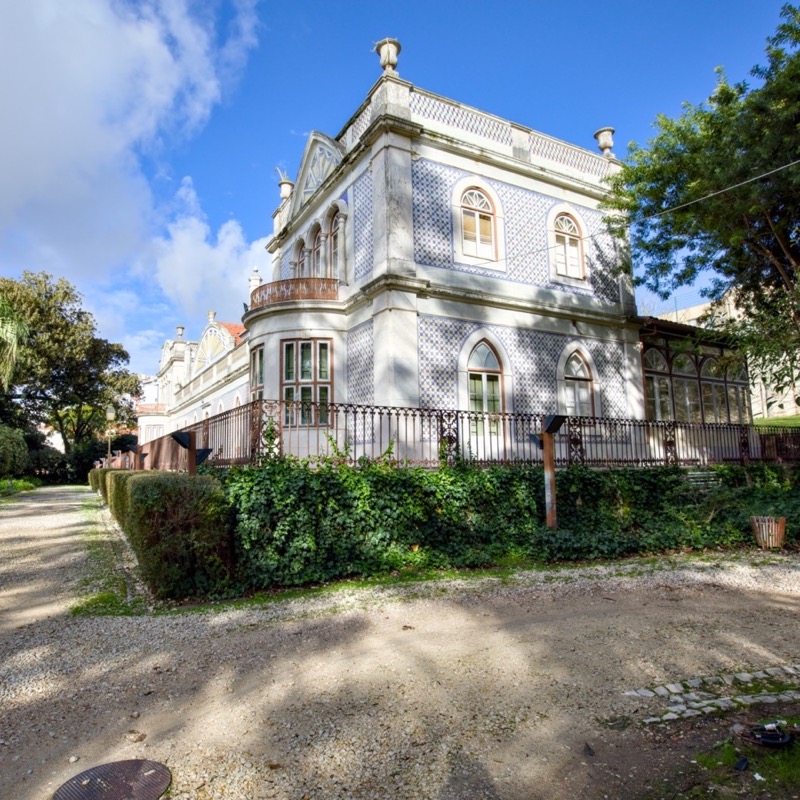
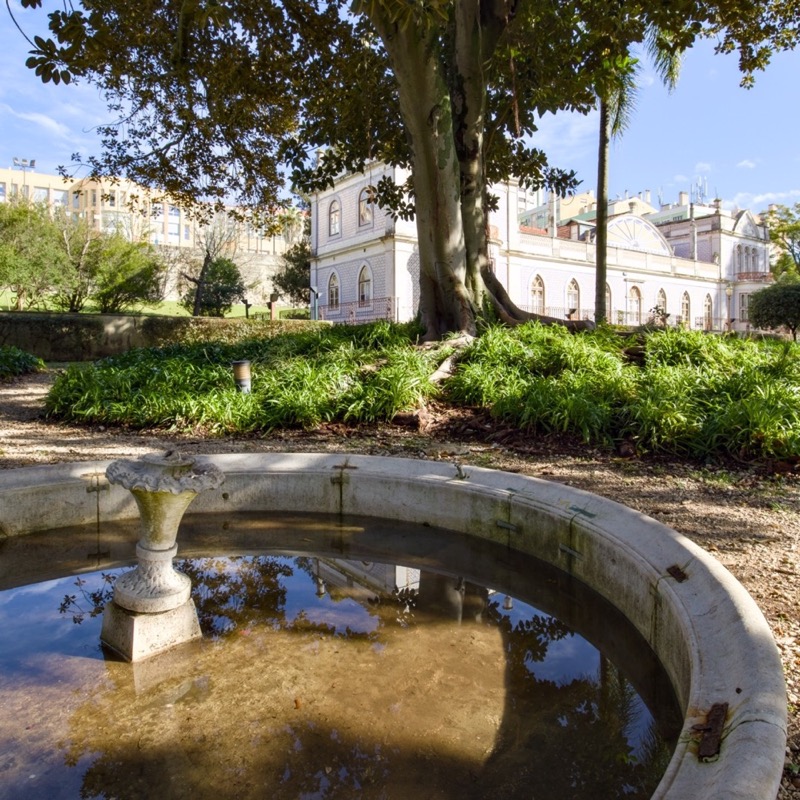
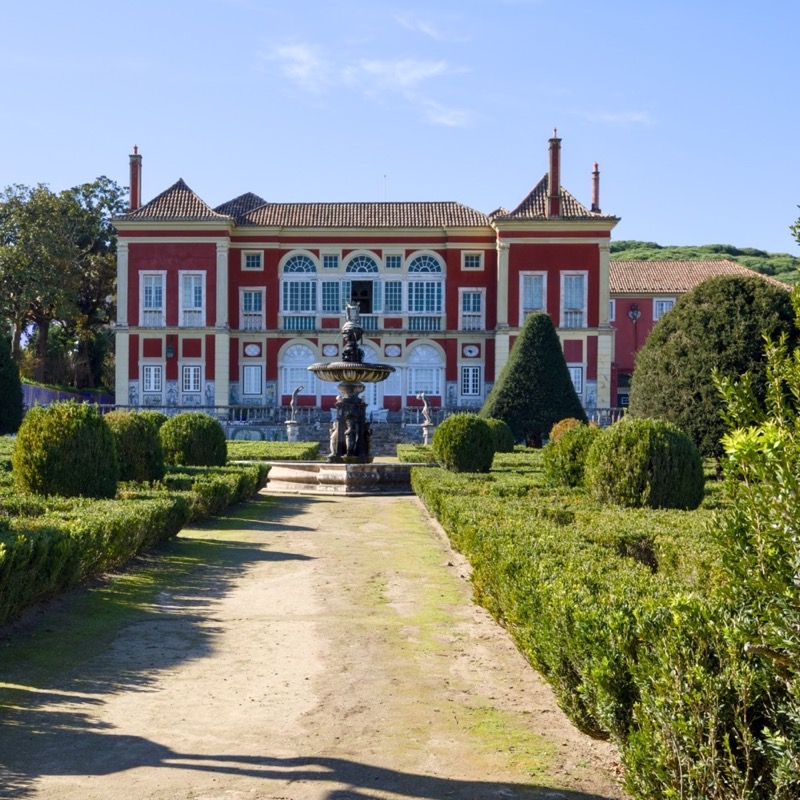
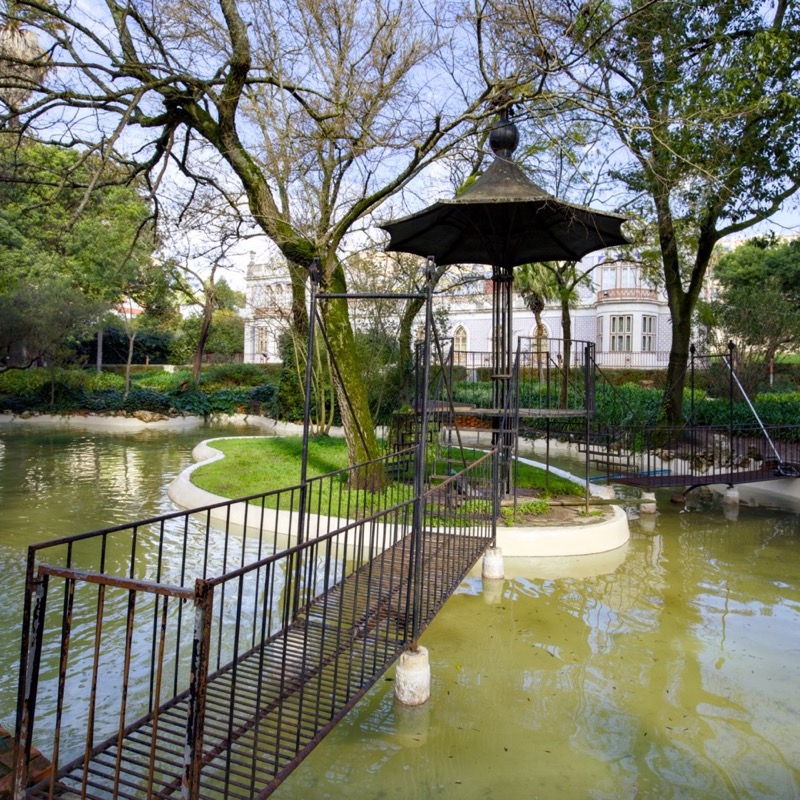
The Palácio e Quinta de Beau-Séjour is located in São Domingos de Benfica, Lisbon, on the former Quinta dos Loureiros. In 1849, D. Ermelinda Allen Monteiro de Almeida, Baroness and Viscountess of Regaleira, acquired the property, gave it the name Beau-Séjour and commissioned a summer house surrounded by exotic vegetation. In 1859, the estate was bought by António José Leite Guimarães, Baron of Glória, who introduced improvements, including the tile covering of the façade and the enlargement of the lake. Later, his nephews, José Leite Guimarães and Maria da Glória Leite, commissioned the interior decoration from artists connected to the Grupo do Leão. Classified as a Monument of Public Interest, the ensemble brings together a small palace, a romantic garden and agricultural memory. Today it houses the Gabinete de Estudos Olisiponenses, dedicated to the study of Lisbon’s history and culture.
Why it matters
The Palácio e Quinta de Beau-Séjour is one of Lisbon’s finest examples of 19th-century romantic architecture and landscape design. Its history began in 1849, when the Viscountess of Regaleira, D. Ermelinda Allen de Almeida, acquired the former Quinta das Loureiras. Guided by a refined aesthetic vision and inspired by French romanticism, she imagined a space that combined elegance, nature and art. She commissioned the construction of the palace and developed gardens reflecting the sophisticated tastes of the time. In 1859, the estate was sold to the Baron of Glória, António José Leite Guimarães, an influential figure who carried out significant renovations, including the addition of decorative tiles on the facades and the incorporation of Art Nouveau elements. After his death, the palace was inherited by his nephews, who continued to enhance its artistic richness with the contribution of renowned artists such as the Bordalo Pinheiro brothers and the painter Francisco Vilaça. Since the late 20th century, the palace has been home to the Lisbon City Council’s Gabinete de Estudos Olisiponenses, a research centre dedicated to the city’s history.
Architecture and history
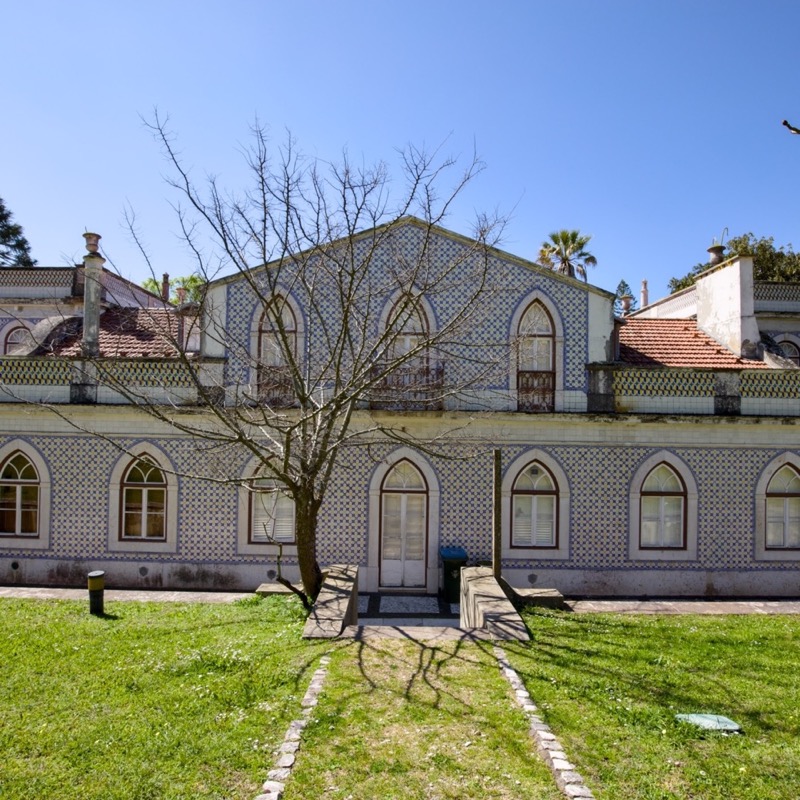
The architecture of Palácio de Beau-Séjour balances 19th-century simplicity with the delicate embellishments of romanticism. Its facade is decorated with traditional Portuguese tiles, applied in a harmonious and symmetrical manner, reflecting the Baron of Glória’s appreciation for decorative arts. The soft colour palette, framed windows and modest balconies contribute to its quiet elegance. Inside, there are rooms of great artistic value, such as the Painting Gallery, featuring a ceiling painted by Francisco Vilaça, and the Golden Hall, where the ceiling hosts the canvas "Carnival of Venice" by Columbano Bordalo Pinheiro. These artistic elements add intimacy and sophistication to the building. The garden, designed in a romantic style, creates a dreamlike atmosphere with winding paths, exotic vegetation and scattered sculptures blending into the natural surroundings.
More context
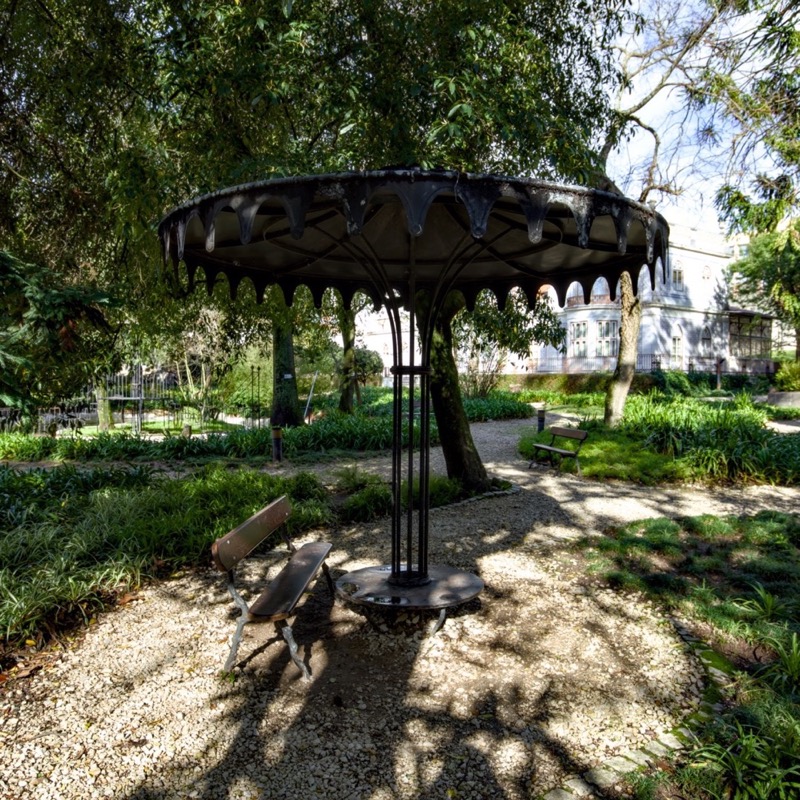
Visiting the Palácio e Quinta de Beau-Séjour offers a journey into Lisbon’s romantic 19th century. The gardens, restored in 1992 by Lisbon City Council, preserve their original layout and invite peaceful strolls among exotic plant species, sculptures and stone benches in a setting made for reflection and tranquillity. Inside the palace, visitors can enjoy the architectural and decorative features as well as its artistic heritage, including period furniture, paintings and ornaments that reflect the lifestyle of Lisbon’s upper class in the 1800s. Although not functioning as a conventional museum, the palace opens to the public during cultural events, exhibitions and guided visits organised by the municipality.
Gallery