Lisboa · Lisboa
Sport Lisboa e Benfica
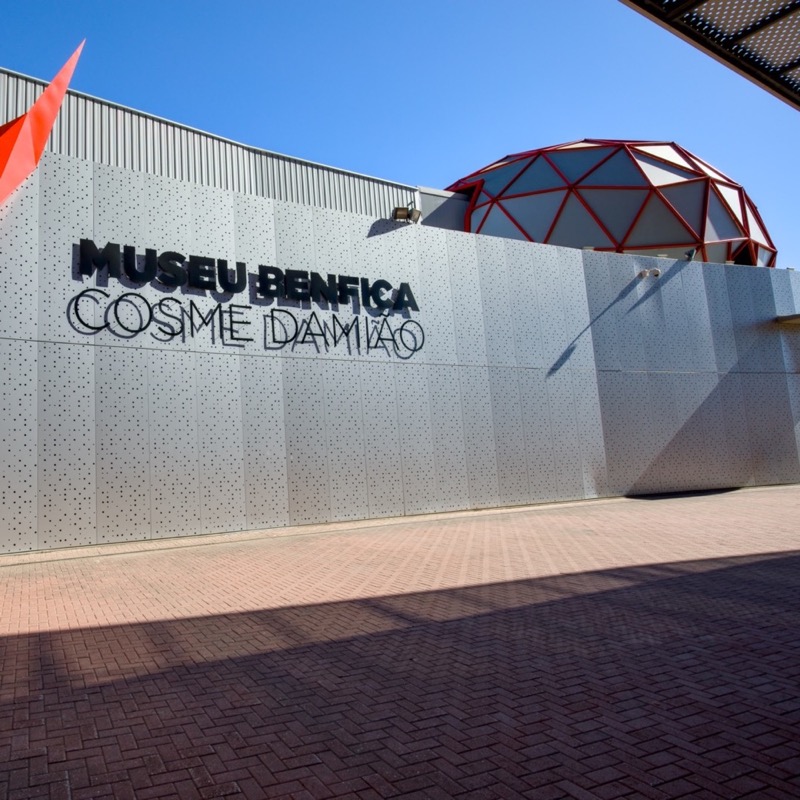
At Luz, the world of Sport Lisboa e Benfica shows how a club founded in 1904 grew beyond the pitch and became a place of memory in Lisbon. The current stadium, opened in 2003 beside the former ground of 1954, was built for Euro 2004 and quickly gained international weight: it hosted the final of that tournament and later staged the Champions League finals of 2014 and 2020. Its arched roof, designed to let light enter, helps explain why the space is experienced almost like a civic cathedral. Next door, the Benfica Museum Cosme Damião extends that story through trophies, documents and objects that tell more than a century of sporting history. Between the stands, the tunnel and the memory held here, it becomes clear that this is not only the home of a club: it is a place where collective passion, architecture and a sense of belonging have taken lasting form.
Why it matters
In Lisbon, the Estádio do Sport Lisboa e Benfica, known as Estádio da Luz, has been the club’s home since 2003. It was built next to the site of the former stadium, which had served Benfica for 49 years, and opened on 25 October 2003. The new venue was born in a European context: it was prepared for UEFA EURO 2004 and hosted the final of that competition less than a year after its inauguration. Later, it also hosted UEFA Champions League finals in 2014 and 2020. The stadium’s importance lies in this double scale. For the club, it replaced a historic “home” with a contemporary infrastructure. For Lisbon, it became one of the city’s major international sporting stages. The name Luz preserves the link with the former name of the venue and with the local tradition of Nossa Senhora da Luz.
Architecture and history
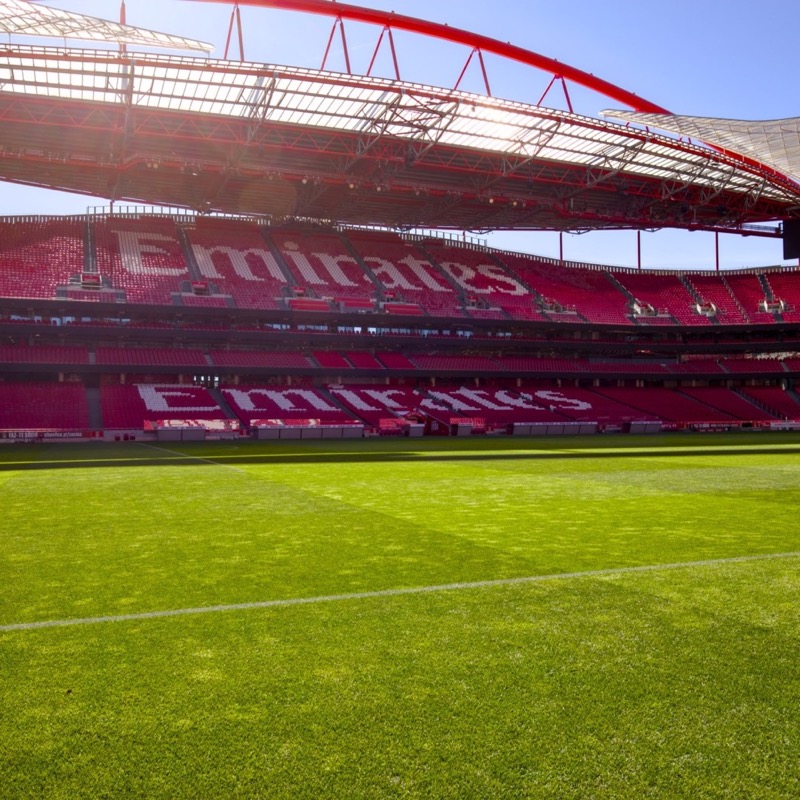
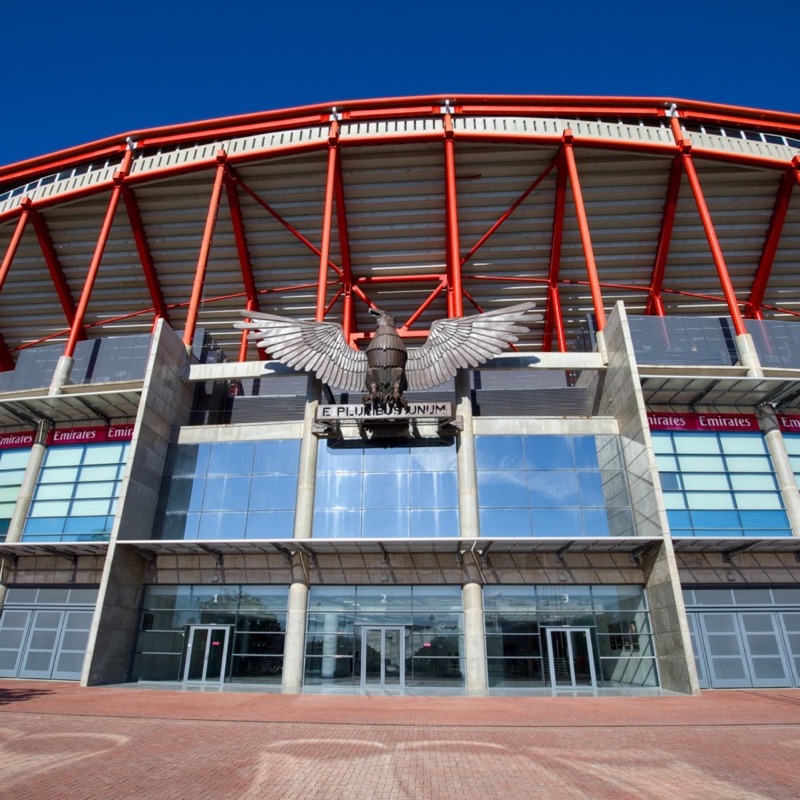
The polycarbonate roof is one of the elements that most defines the stadium. Damon Lavelle’s design uses 43-metre-high arches to support a translucent roof, allowing natural light to enter and giving the stands a sense of openness. The structure is organised into four rings spread over four floors, with covered seating designed to bring the public visually closer to the pitch. This solution helps explain the strength of the interior atmosphere: the arena closes around the field, but without losing brightness. Beyond the stands, the building includes services connected to the club’s operation, support areas, event spaces, work areas and a panoramic restaurant. The architecture therefore combines sporting spectacle, daily operation and institutional representation.
More context
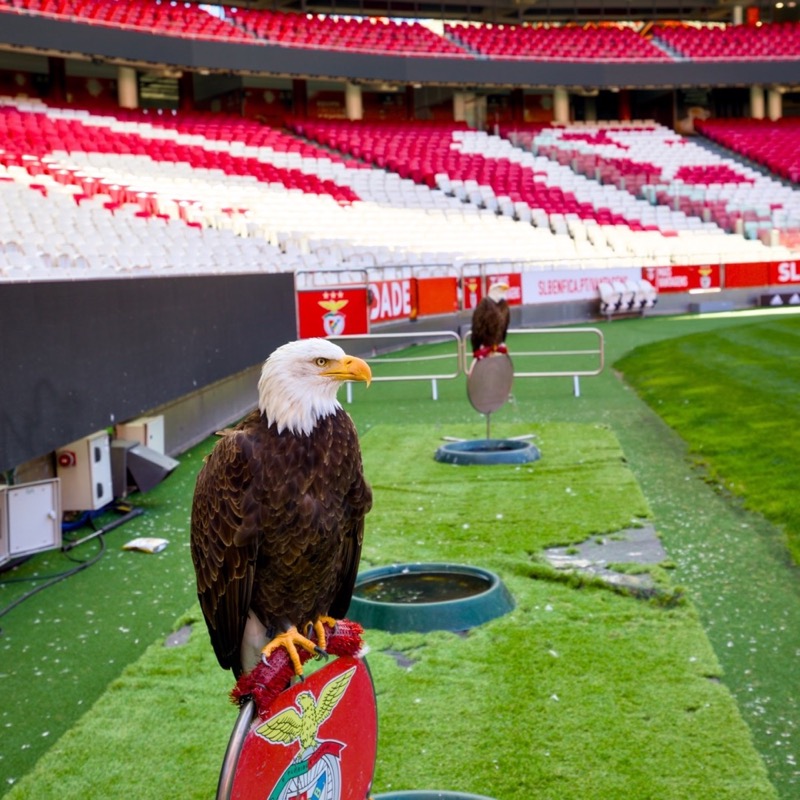
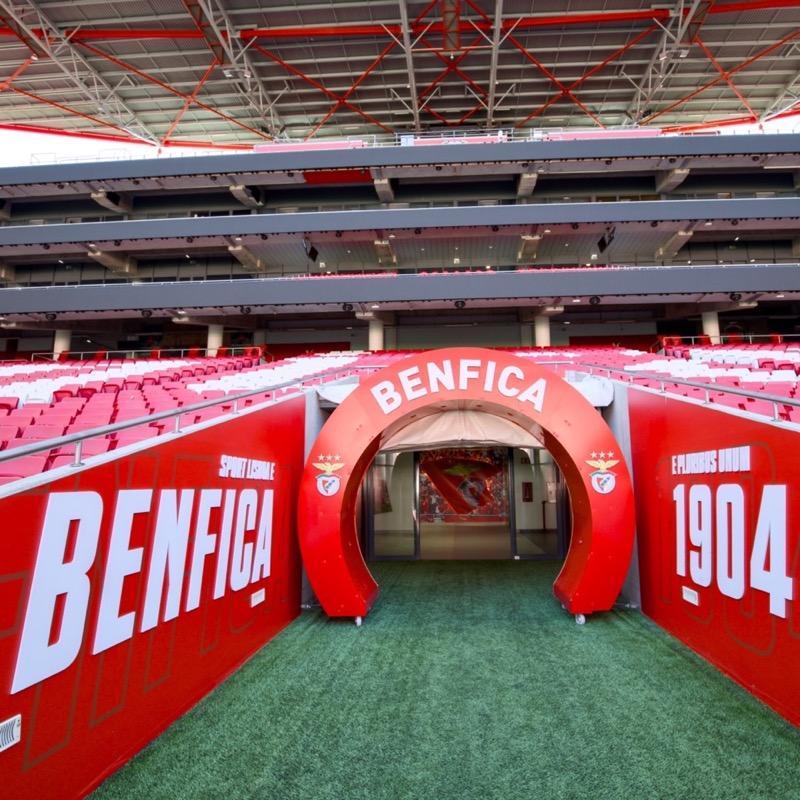
The translucent roof shows how the stadium seeks to live up to the name Luz: notice the light entering over the stands and the way the arches seem to lift the upper ring. The four levels of seating help convey the scale of the arena and the visual concentration on the pitch. Inside, the access tunnel to the field is especially interesting, because it is where the teams line up before entering the game. Outside, the statue of Eusébio beside the main entrance recalls the link between the current stadium, the memory of the former ground and one of the central figures in Benfica’s history. The façade with the metal eagle reinforces the club’s visual identity and turns the building into a recognisable landmark even before entering.
Gallery