Guarda · Guarda
Sé Catedral da Guarda
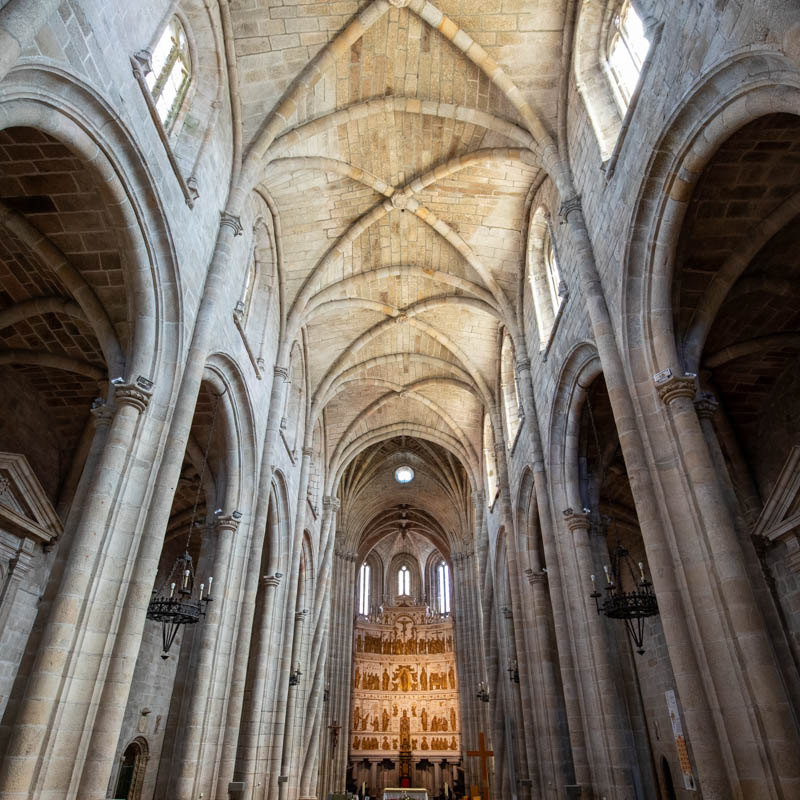
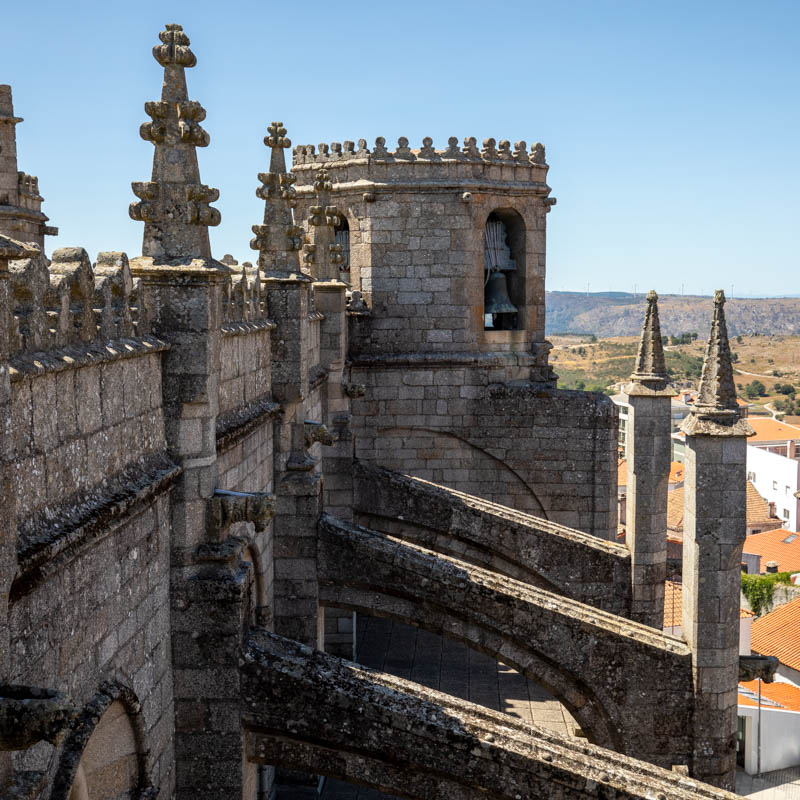
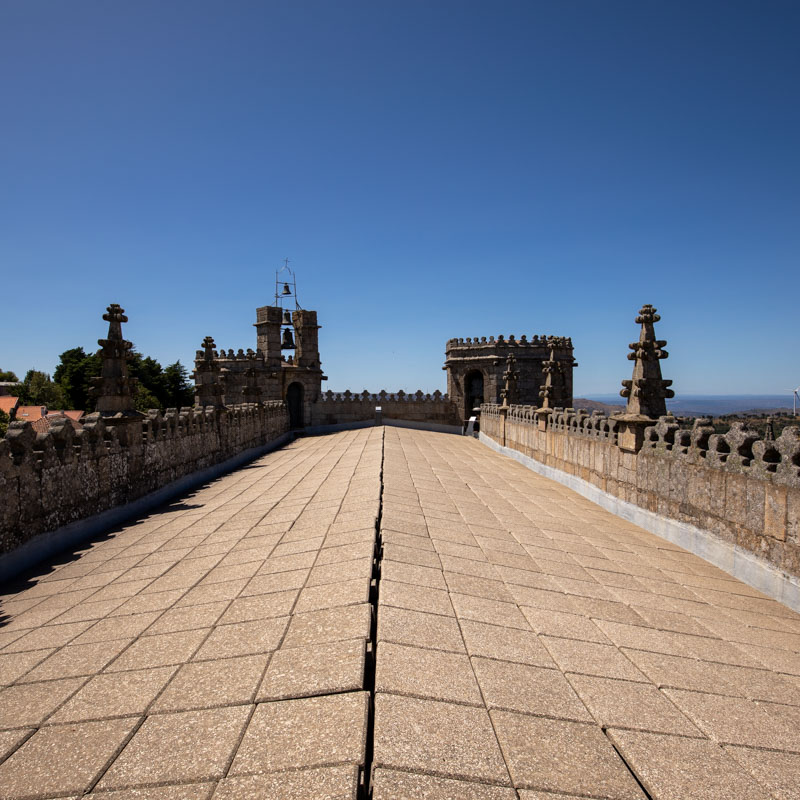
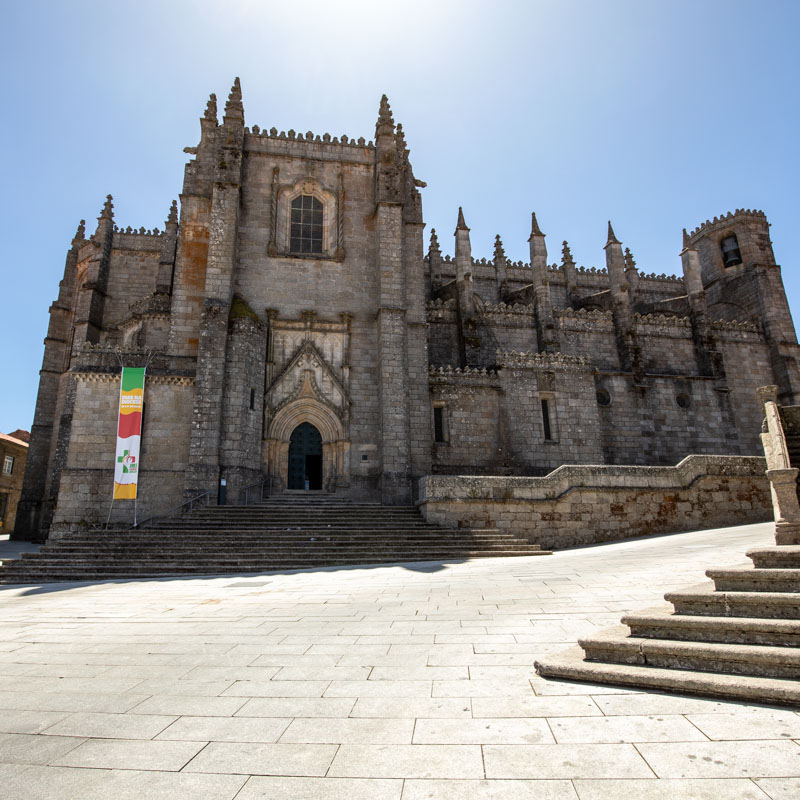
In the heart of Portugal’s highest city, Guarda Cathedral stands with the luminous severity of granite. Work began around 1390, in the reign of King John I, on the initiative of Bishop Vasco de Lamego, and continued for about a century and a half; from that long process came a building where Gothic and Manueline forms live together with remarkable ease. On the outside, its massive volumes, buttresses, octagonal towers and lace-like outline give it an almost military air, well suited to an old frontier city. Inside, the surprise is different: twisted columns, the vaulting and above all the great altarpiece in Ançã stone, made by João de Ruão in the sixteenth century, bring an unexpected richness of form. The cathedral is not striking only because of its scale. It is striking because it seems to gather, in one single body, the harshness of the mountain, the ambition of a royal building site and the patient faith of several generations.
Why it matters
In Guarda, the cathedral helps explain why this city gained religious and strategic importance in the Middle Ages. In 1199, the diocese of ancient Egitânia, linked to Idanha-a-Velha, was transferred to the new city at the request of D. Sancho I and with papal authorisation. The present cathedral began to be built from 1390, during the reign of D. João I, to replace earlier cathedral churches located outside the walls. The work progressed slowly and was only completed in 1517, already in the reign of D. João III. This long construction period left visible marks: the cathedral combines a late Gothic base with Manueline and Renaissance solutions. Classified as a National Monument, it still preserves the religious function that explains its origin and its dominant presence in the historic centre.
Architecture and history
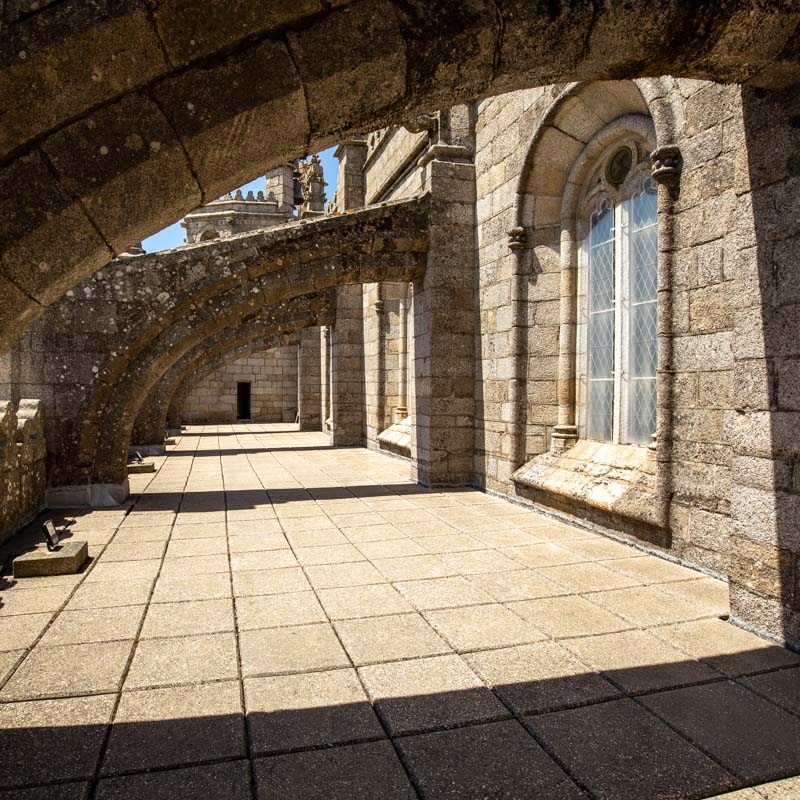
The granite façade has an almost defensive presence, emphasised by the two octagonal towers and the compact mass of the building. This church-fortress appearance is not just a visual effect: it helps explain a cathedral built in a frontier city, where religion, urban power and the affirmation of the kingdom came together. The plan follows a medieval Latin-cross arrangement, with three naves, a broad transept and a chevet of three communicating chapels. Outside, buttresses, pinnacles and portals show the transition between different artistic phases. Inside, the higher central nave directs the eye towards the chancel. There stands the great altarpiece in Ançã stone, executed by João de Ruão in the 1550s, a work already open to the language of Mannerism.
More context
The main portal deserves attention for the way it prepares the entrance into a building that is austere, yet full of carved detail. Then notice the contrast between the solidity of the exterior and the clarity of the interior space: the three naves, transept and chevet organise movement and give depth to the church. In the chancel, the Ançã-stone altarpiece is the essential focal point. Its figures are arranged in registers linked to sacred history, turning sculpture into a kind of visual reading for the faithful. Also look for the Pina Chapel, associated with a tomb with a recumbent statue, as it shows how the cathedral received family memories and private devotions. Outside, the towers, buttresses and position in the square explain why the Sé still shapes the historic image of Guarda.
Gallery