Santa Maria da Feira · Aveiro
Castelo de Santa Maria da Feira
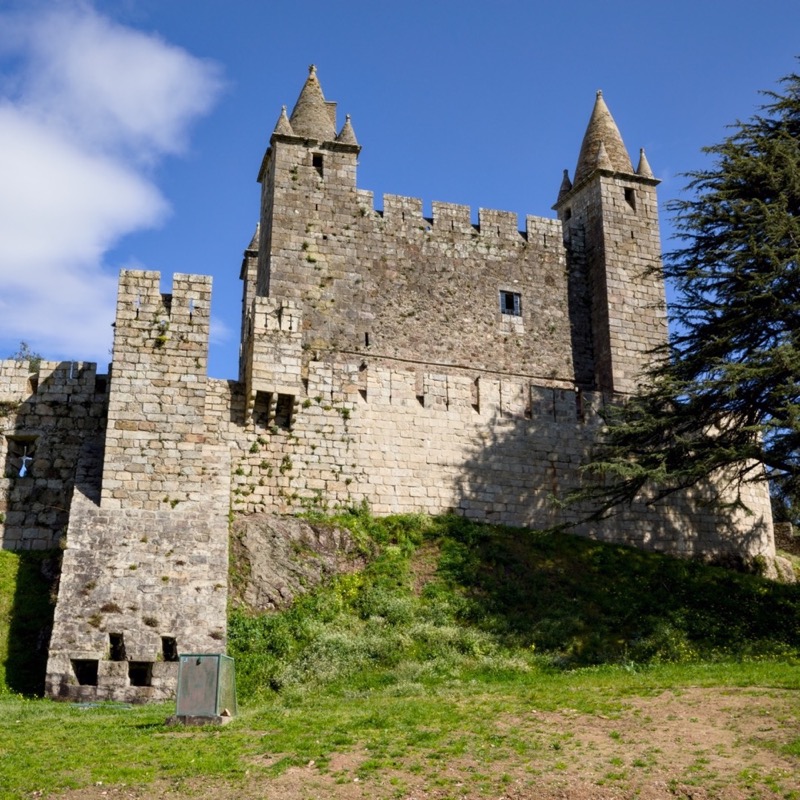
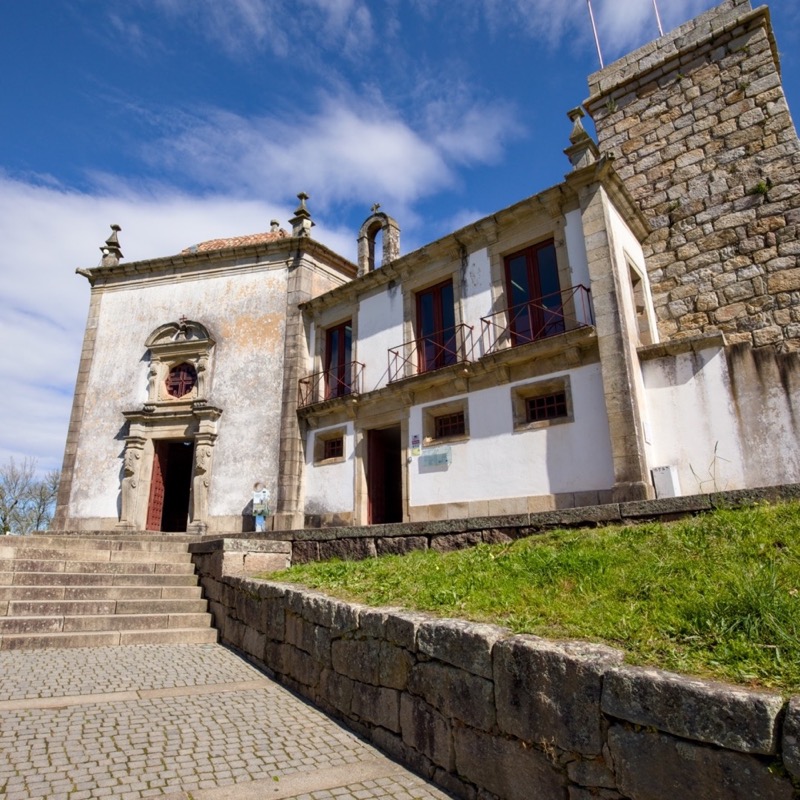
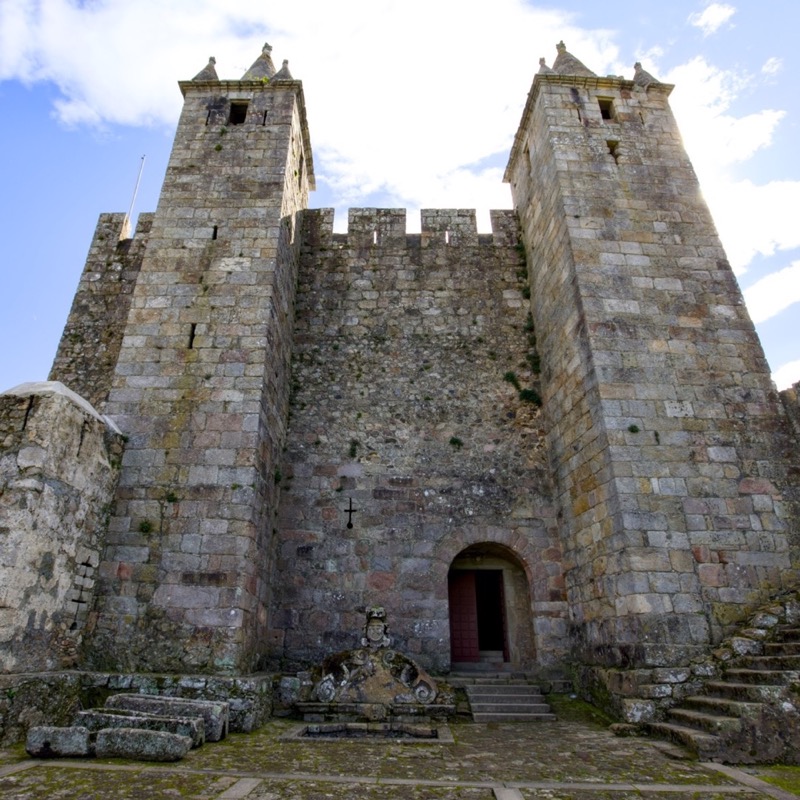
The Castle of Santa Maria da Feira rises in the municipality of Santa Maria da Feira, as a fortification linked to the former Terra de Santa Maria. Classified as a National Monument since 1910, it has its origins in the Reconquest, before the formation of the Portuguese nation, and served as the administrative and military seat of a vast region south of the Douro. The image that now defines the ensemble was shaped mainly in the 15th century, when King Afonso V handed it to Fernão Pereira with the task of restoring it. Inside the enclosure, the town gate protected by the barbican, the parade ground, the wall-walk, the keep, the well tower and the tenaille reveal successive military adaptations. Beside the barbican, the chapel and the chaplain’s house, ordered to be built in 1656, recall the coexistence of defence, noble residence and devotion.
Why it matters
The Castle of Santa Maria da Feira stands on the top of a hill that has long controlled important routes between northern and central Portugal. Human occupation of the site dates back to prehistory and later to a Lusitanian sanctuary dedicated to the god Bandeve-Lugo, later Romanised beside the road linking Olissipo (Lisbon) to Bracara Augusta (Braga). With the Christian Reconquista, this pagan sanctuary was transformed into a Marian centre and associated with a regional fair that eventually gave its name to the settlement: Santa Maria da Feira. The earliest documentary reference to the fortification appears in the Chronica Gothorum, which already mentions a "Castle of Santa Maria" in the 11th century. The stronghold became the administrative head of the Terra de Santa Maria, a wide district incorporated into the County of Portugal and closely linked with the actions of Count Henry and the political rise of Afonso Henriques before independence. In the 15th century the lordship passed to Fernão Pereira, origin of the title Counts of Feira, who adapted the castle into a manorial residence. In the 17th century the Counts’ palace and the Chapel of Nossa Senhora da Encarnação were built; a major fire in 1722 triggered abandonment and ruin. From the late 19th century onwards, restoration campaigns promoted by public authorities gradually recovered the monument. It was classified as a National Monument in 1910 and has since become the emblematic landmark of the city.
Architecture and history
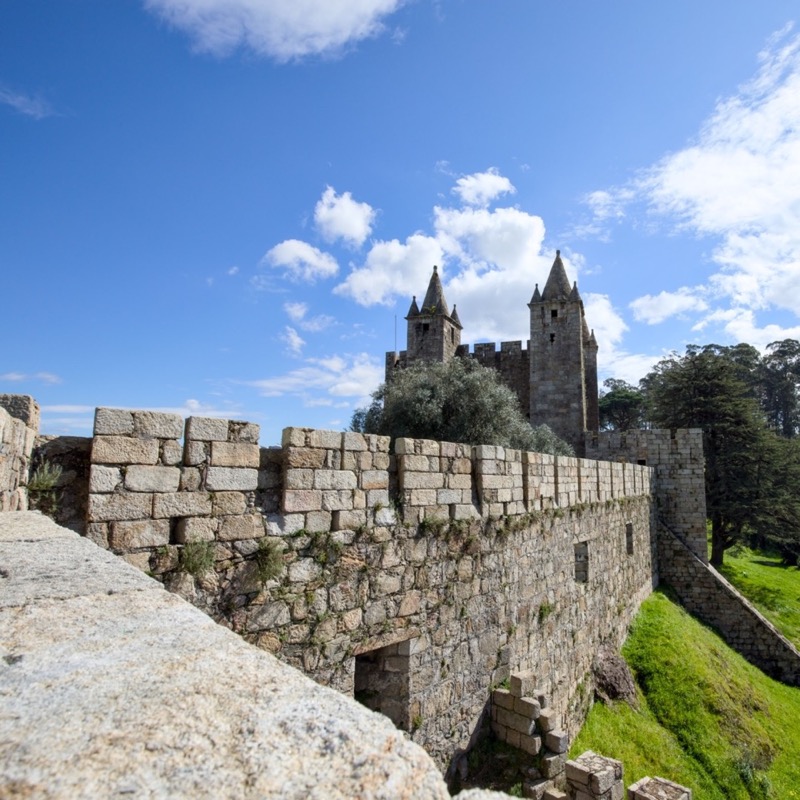
The Castle of Santa Maria da Feira is regarded as one of the most complete examples of Portuguese medieval military architecture, because it concentrates a wide range of defensive solutions developed between the 11th and 16th centuries. It is laid out on an irregular oval ground plan, roughly north–south oriented, built in granite masonry, with crenellated walls, a wall-walk and successive defensive enclosures. Access is through the barbican, whose gate bears the coat of arms of the Pereira family and is flanked by two square towers: the Casamata Tower, with a vaulted room used as a gun battery, and the Well Tower, protecting a spring reached by a spiral stair. Inside, the keep/alcáçova dominates the ensemble, a massive block crowned by four elegant corner turrets with pyramidal pinnacles that define the castle’s distinctive profile. The keep has three main levels: the lower storey houses the cistern; above is the great hall with fireplaces, a stove and windows with stone window-seats; and, at the top, the more intimate residential quarter. In the courtyard (praça de armas) there are remains of the 17th-century palace integrated into the overall design. Attached to the curtain wall stand the Chapel of Nossa Senhora da Encarnação, with its hexagonal plan and Baroque language, and the former chaplain’s house, which underline the religious and residential dimension within a basically Gothic fortress.
More context
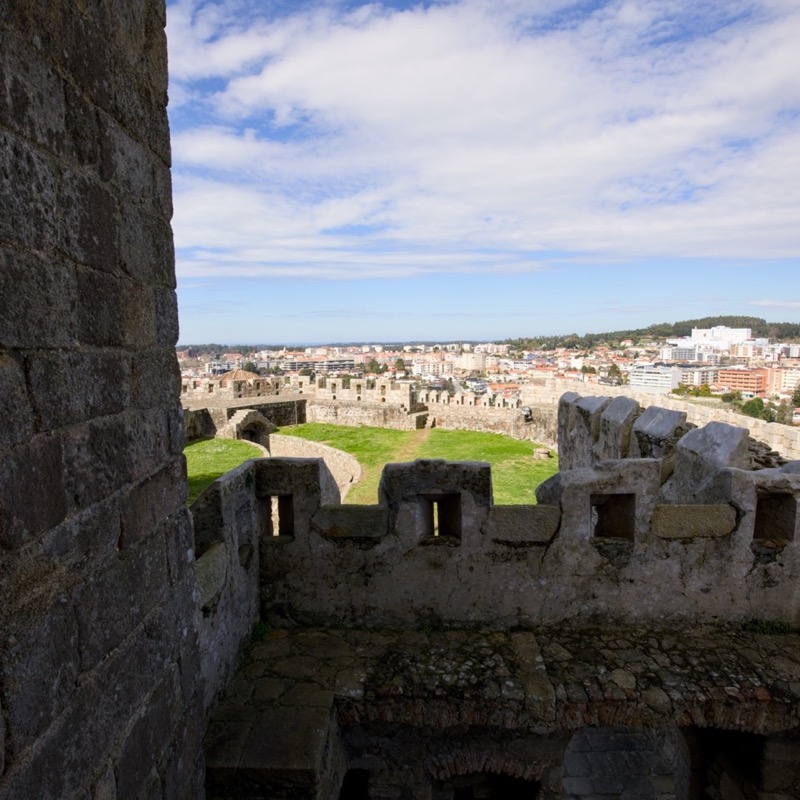
A tour may start with the outer circuit, where visitors can appreciate how the fortress adapts to the terrain, the irregular oval plan and the succession of curtain walls, towers and defensive slopes. Passing through the barbican and the so-called Town Gate (Porta da Vila), one reaches the courtyard, a large central space organising the different sectors: ruins of the Counts of Feira’s palace, access to the keep and subsidiary structures. Climbing the keep allows a close view of the pyramidal pinnacles, a visit to the different floors and, above all, wide panoramas over the town and the former Terra de Santa Maria, illustrating the strategic control of valleys and routes. On the opposite side lies the tenaille, preceded by the so-called "courtyard of treason", associated with defensive manoeuvres, while along the wall stands the Chapel of Nossa Senhora da Encarnação, with a simple interior marked by local devotion. Visitors should also look for the old well and its stairway and explore the wall-walk, which offers a sequence of viewpoints over the castle and the surrounding wooded area, today frequently used for cultural and educational initiatives related to medieval history.
Gallery