Bragança · Bragança
Castelo de Bragança
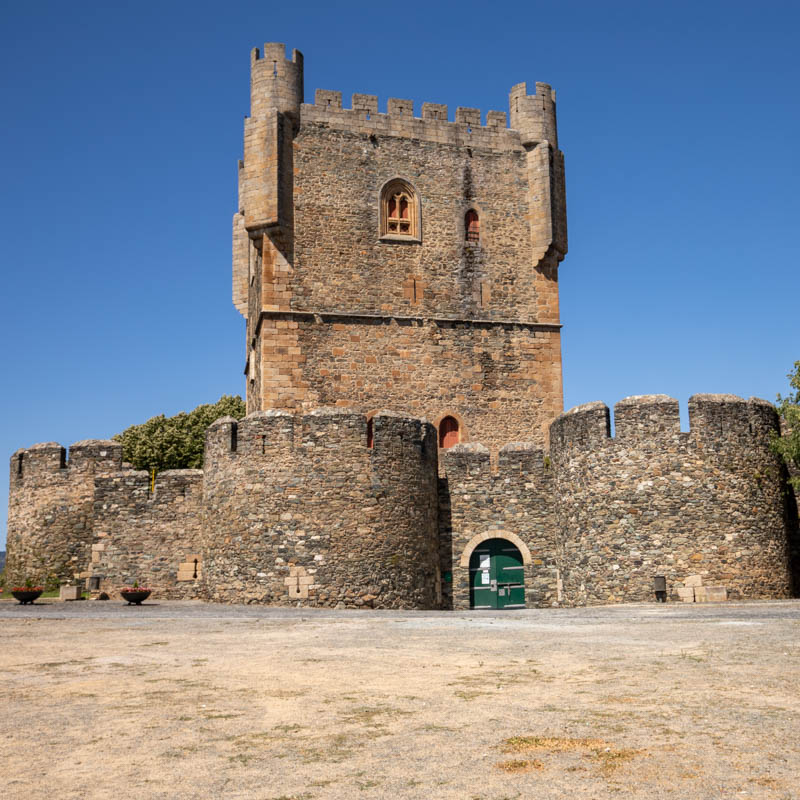
In Bragança, the castle does more than crown the city: within its walls it shelters a small citadel where medieval life still seems to retain a human scale. The story begins with King Sancho I, who in 1187 granted a charter to the new settlement and ordered its first walls to be built in order to secure the Trás-os-Montes frontier; King Dinis strengthened the enclosure and, in the fifteenth century, João I began the fortress that can still be recognised today, dominated by the powerful keep completed under Afonso V. From the top, the view opens over Portuguese mountains and Leonese lands, recalling that this was for centuries a place of watchfulness. Yet Bragança is also distinguished by what it contains within the walls: the Domus Municipalis, a singular example of Romanesque civil architecture in the Iberian Peninsula, gives the whole site a rare character, somewhere between fortified town, civic memory and frontier castle.
Why it matters
On the Trás-os-Montes frontier, Bragança Castle was created to affirm royal authority in a peripheral and strategic territory. In 1187, D. Sancho I granted the first charter to the settlers of Bragança and, the following year, supported the construction of the first walls. D. Dinis later reinforced the fortification with a second walled perimeter, traces of which can still be recognised on the northern slope. The fortress that dominates the citadel today was commissioned by D. João I in 1409, and the works continued until 1449. The site kept adapting: in 1791 an infantry barracks was planned within the citadel, and the former military structures shaped its occupation into the twentieth century. Its classification as a National Monument in 1910 confirms the importance of this ensemble for the defensive and urban memory of Bragança.
Architecture and history
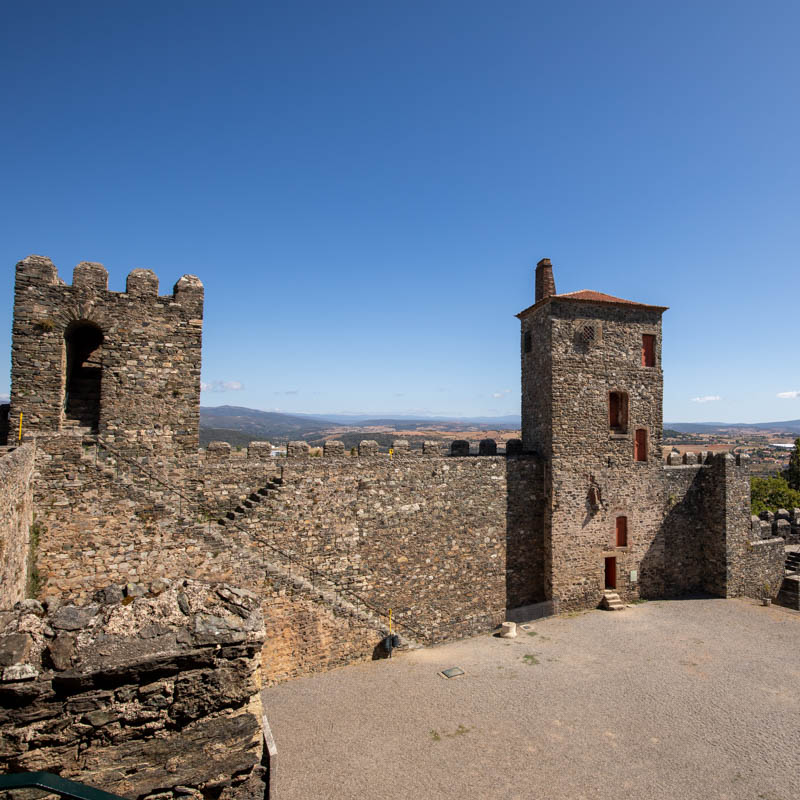
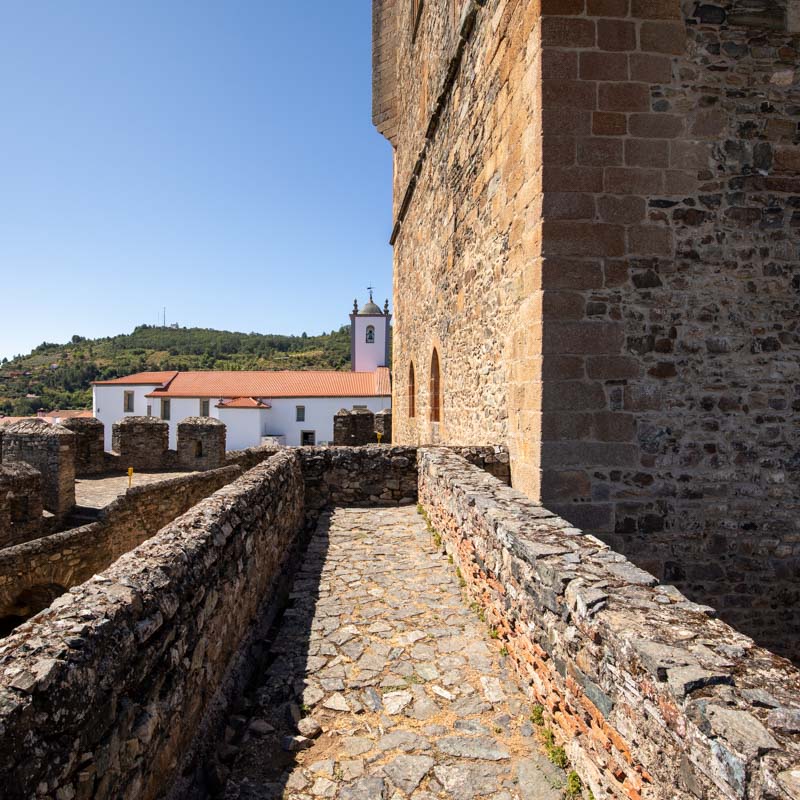
The keep concentrates the castle’s visual power. It has a square base, rises 33 metres, includes twin pointed windows and, on the south façade, the coat of arms associated with the House of Avis. At the top, the battlements, crossed arrow slits, north-facing machicolation and cylindrical corner lookouts recall an architecture designed to watch, defend and affirm power. The wall encloses the citadel in an irregular oval layout, covering around 3.2 hectares and with an approximate perimeter of 670 metres. The wall is cut by pyramid-shaped battlements and punctuated by towers of different plans. On the northern slope, the remains of the barbican help explain that defence did not depend on a single line of wall, but on successive barriers between the outside and the inhabited core.
More context
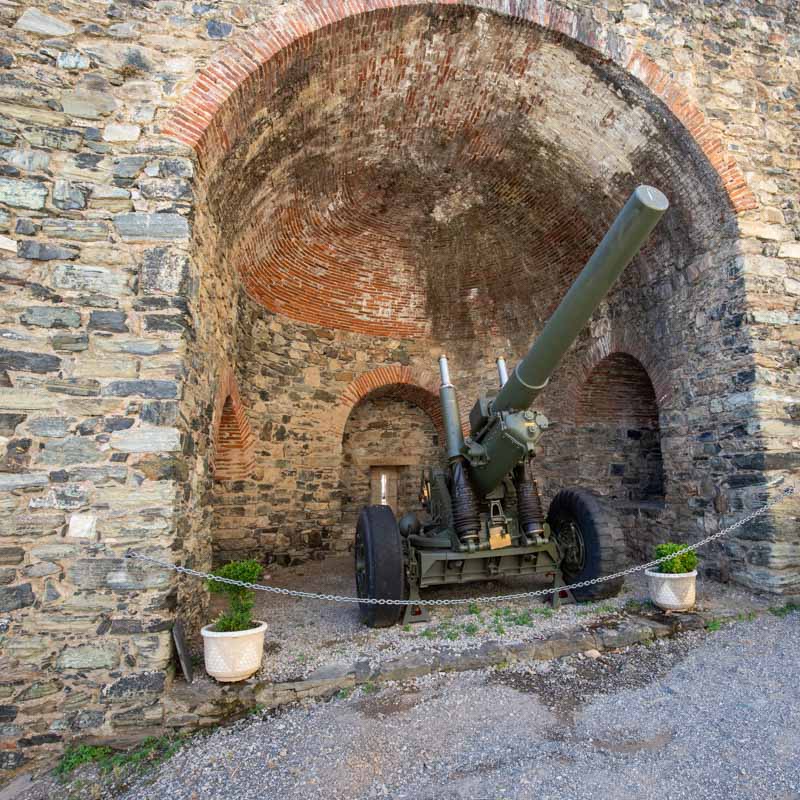
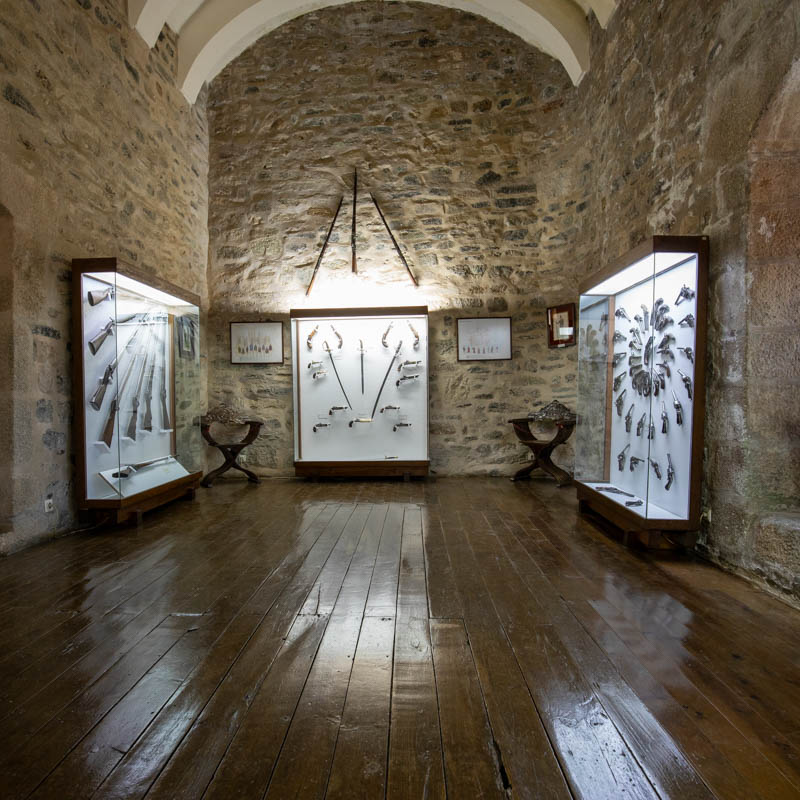
The Porta da Vila gives meaning to the entrance into the citadel, because it marks the passage between the present-day city and the space protected by the walls. To the right, the Clock Tower had a defensive role: it guarded the gates and watched over the Fervença river valley before being adapted as a bell tower in 1681. The Princess Tower, beside the northern wall, preserves a more domestic dimension, as it formed part of the former alcazaba and was linked to the now-vanished Paço dos Alcaides. Inside the keep, the Military Museum occupies floors, rooms and outdoor spaces connected to the castle, displaying pieces that help trace the evolution of light weaponry from the sixteenth century to the mid-twentieth century. From the battlemented terrace, the reading becomes territorial: the view reaches mountains and frontier lands, better explaining why this place needed to be fortified.
Gallery