Galerias Romanas da Rua da Prata

Lisboa · Lisboa

Galerias Romanas da Rua da Prata

MuseumIMonumental Architecture
Rua da Conceição 62, 1100-161 Lisboa4.5 Rating · 17745 min

The Roman Galleries of Rua da Prata lie hidden beneath Lisbon’s Baixa, between Rua da Prata and Rua da Conceição, as one of the most discreet traces of ancient Olisipo. Dating from the 1st century AD, they are now interpreted as a cryptoporticus: a vaulted stone structure created to form a stable platform on which large buildings could stand. Their presence was identified in 1771, during the Pombaline reconstruction that followed the 1755 earthquake. Flooded by underground water, the galleries maintain a physical relationship with the damp ground of the riverside city. Inside, corridors, vaults and masonry walls reveal the technical scale of Roman construction. Beneath the regular grid of modern Lisbon, this space preserves an ancient, silent and essential layer of the city.

Why it matters

The Roman Galleries of Rua da Prata, also known as the Rua da Prata cryptoporticus, extend beneath Lisbon’s Baixa district, under Rua da Prata, Rua da Conceição and Rua do Comércio. They belong to the urban fabric of ancient Olisipo and are now interpreted as the base of a large artificial platform built to support major buildings along the former riverfront. Their construction is generally dated to the reign of Emperor Augustus, between the late 1st century BC and the 1st century AD, at a time of intensive monumentalisation of the city. For many years the structure was identified as Roman baths, mainly because of an inscription dedicated to the god Aesculapius found on the site, now kept at the National Archaeology Museum. This led to names such as "Baths of the Augustales" or "Roman Baths of Rua da Prata". More recent archaeological research, however, has reinforced the interpretation as a cryptoporticus: a system of vaulted galleries designed to stabilise the ground and create a vast terrace for public buildings, probably with port and commercial functions. The galleries were discovered in the 1770s during Pombaline reconstruction after the 1755 earthquake, when foundations were being dug for the new buildings. Throughout the 19th and 20th centuries they were studied, at times used as a water cistern, and later integrated into archaeological enhancement projects. Today, the monument is included within the classified area of the Baixa Pombalina and forms one of the venues of the Museum of Lisbon, accessible only on occasional visits, since groundwater keeps much of the structure flooded for most of the year.

Architecture and history

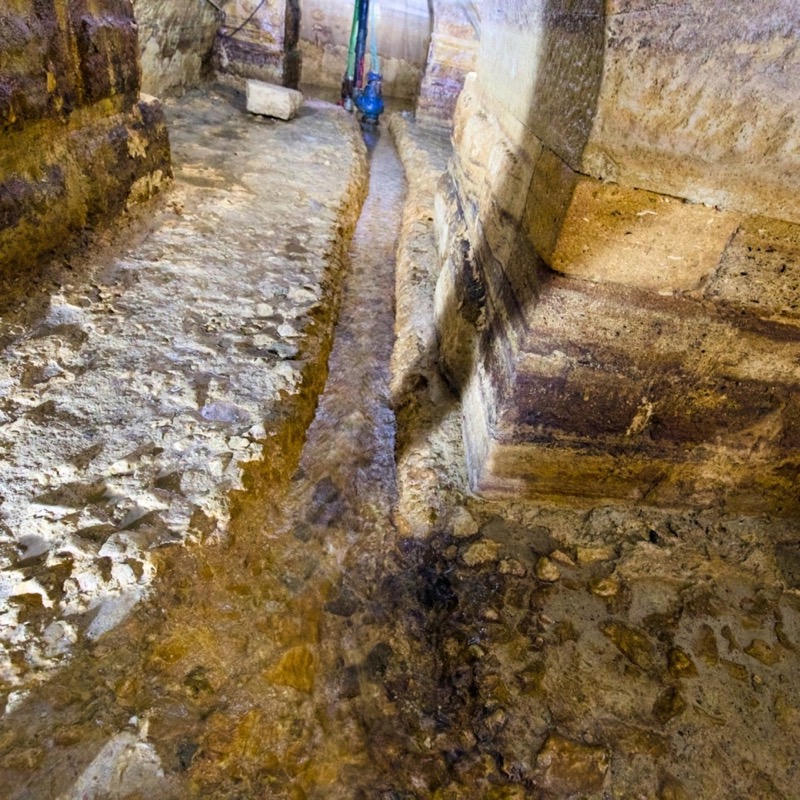
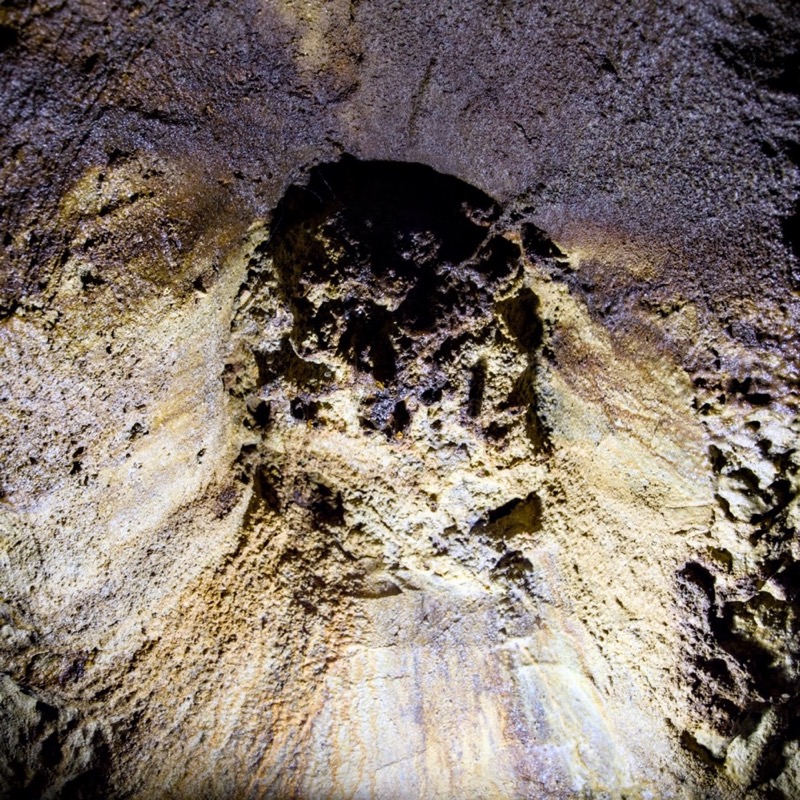
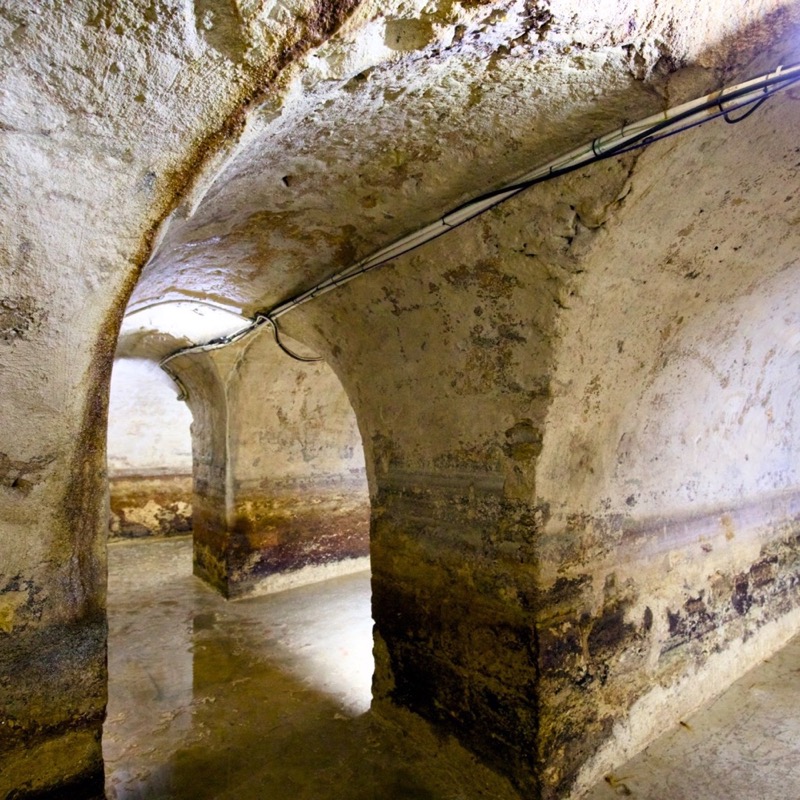
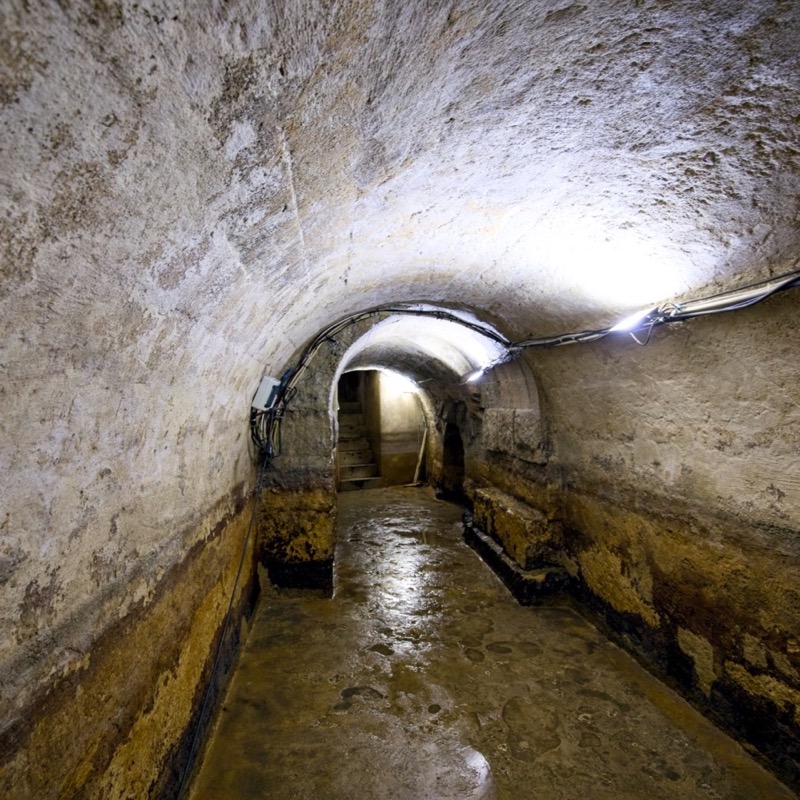
The galleries are a remarkable example of a Roman cryptoporticus: a subterranean vaulted structure functioning as the foundation for large constructions. They are organised into orthogonal corridors, parallel and perpendicular to each other, forming a true "maze" beneath the present-day street grid. The main corridors are around 3 metres high and 2–3 metres wide, with smooth vertical walls and barrel vaults, while secondary passages are smaller in size. The structure is built in stone masonry bonded with Roman-type mortar, above which rests the continuous vaulted roof. In several points visitors can see niches, narrow side chambers and subtle changes in floor level, suggesting circulation areas and possible storage zones. Recent studies point to a function as support for a large built complex, probably associated with port baths or a group of public buildings facing the ancient Tagus estuary in a key sector of the Roman city. A striking aspect is the relationship between architecture and water. It is known that soon after construction, groundwater began to infiltrate the galleries through fissures in the subsoil, a process that continues today. This explains the water level frequently present in the interior and constrains the use of the space, but it has also helped to preserve the structure, keeping parts of the masonry protected from sudden temperature changes and later building interventions.

More context

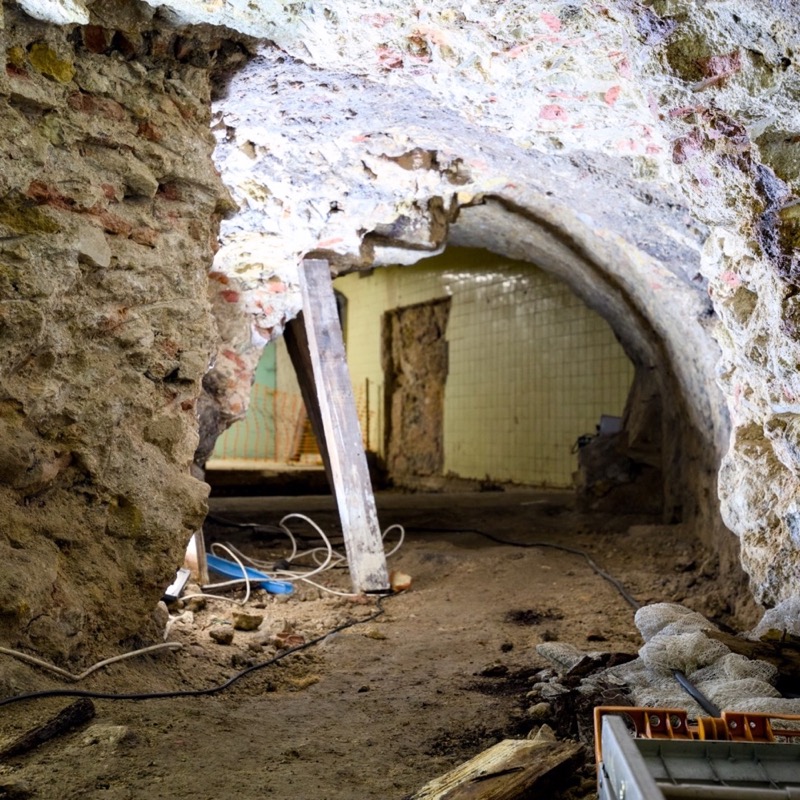
Access to the Roman Galleries is currently via a trapdoor in Rua da Conceição, descending several metres to the level of the underground corridors. The transition from the light of the Pombaline Baixa to the damp, dim space of the cryptoporticus is one of the most striking moments of the visit, helping visitors understand the depth of the city built over successive historical layers. The route generally follows one of the main corridors, revealing a sequence of barrel arches, vertical stone walls and a slightly sloping floor. Along the way it is possible to see intersections with transversal galleries, small lateral chambers and areas where water forms true mirrors on the pavement, reflecting the vaults above. Contemporary elements such as pumps, lighting and metal support structures are visible but discreet, underscoring the archaeological character of the space. During the visit, the explanation usually covers the story of its discovery during Pombaline reconstruction, the former interpretation as baths and the current reading as a port-related cryptoporticus. Other parts of Roman Lisbon, such as the Roman Theatre or the Pedras Negras inscriptions, are often mentioned, emphasising the idea of a densely monumentalised Olisipo. For visitors, the main highlight is the unique experience of walking beneath the Baixa, following the hidden layout of one of the capital’s most enigmatic Roman structures.

Gallery

Galerias Romanas da Rua da Prata 1
Galerias Romanas da Rua da Prata 2
Galerias Romanas da Rua da Prata 3
Galerias Romanas da Rua da Prata 4
Galerias Romanas da Rua da Prata 5

Nearby places

View all