Castelo de Tomar

Tomar · Santarém

Castelo de Tomar

CastleXIIMilitary Architecture
Estrada do Convento 8, 2300-000 Tomar4.7 Rating · 1,79060 min

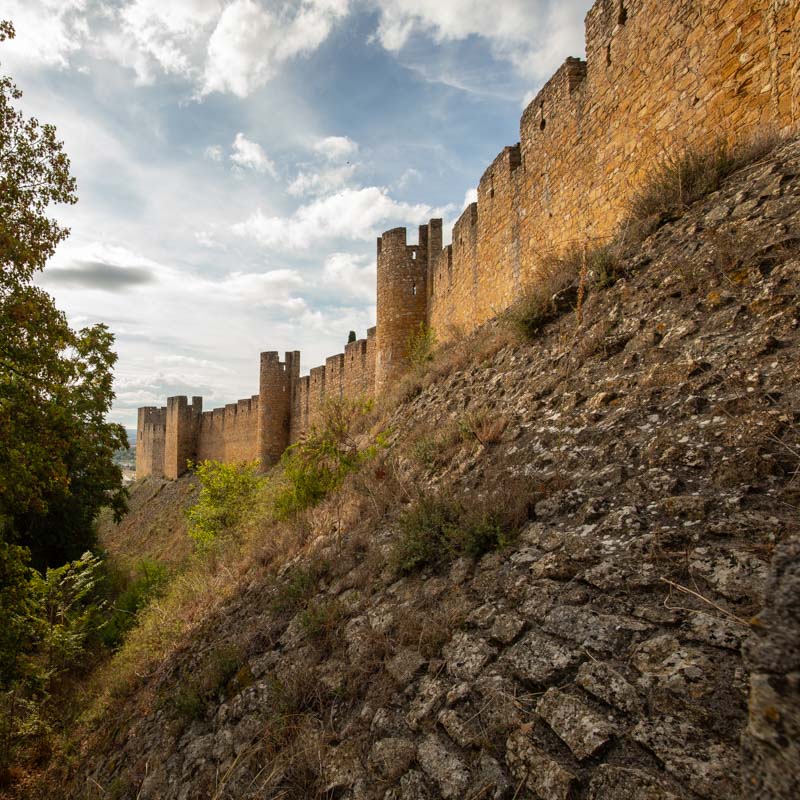
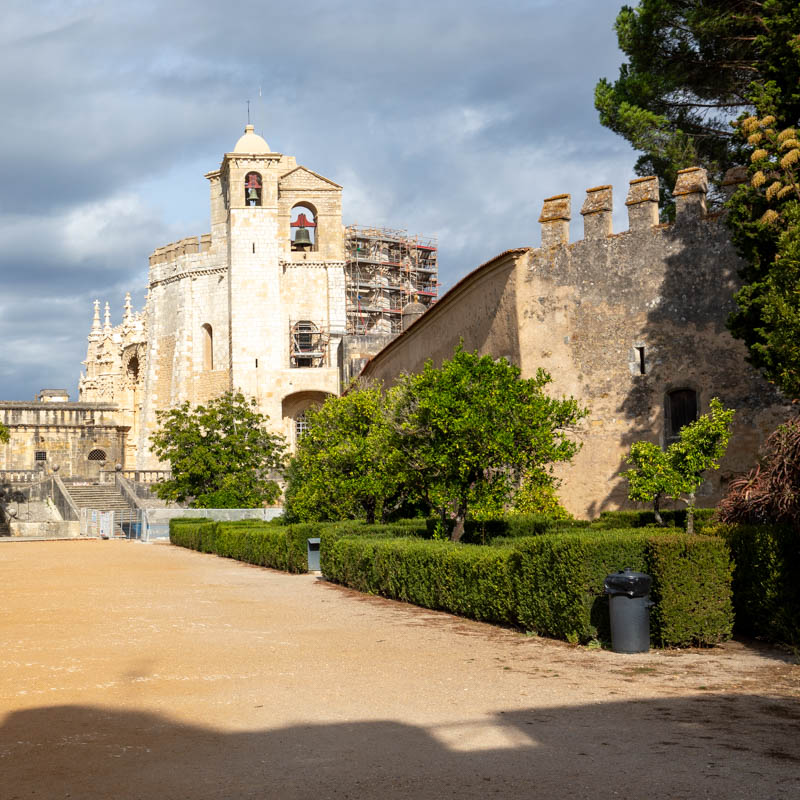
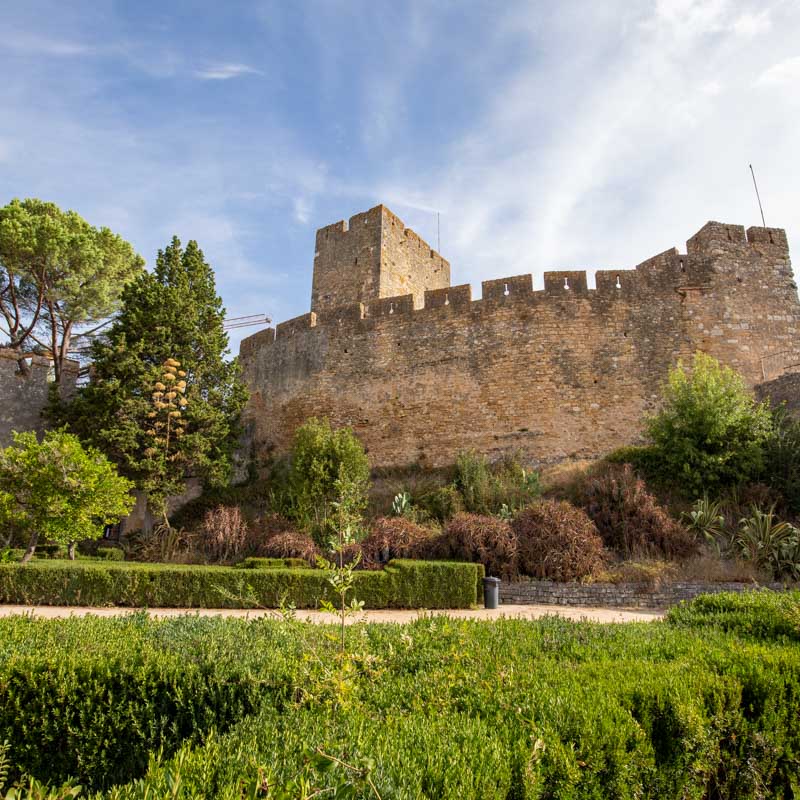
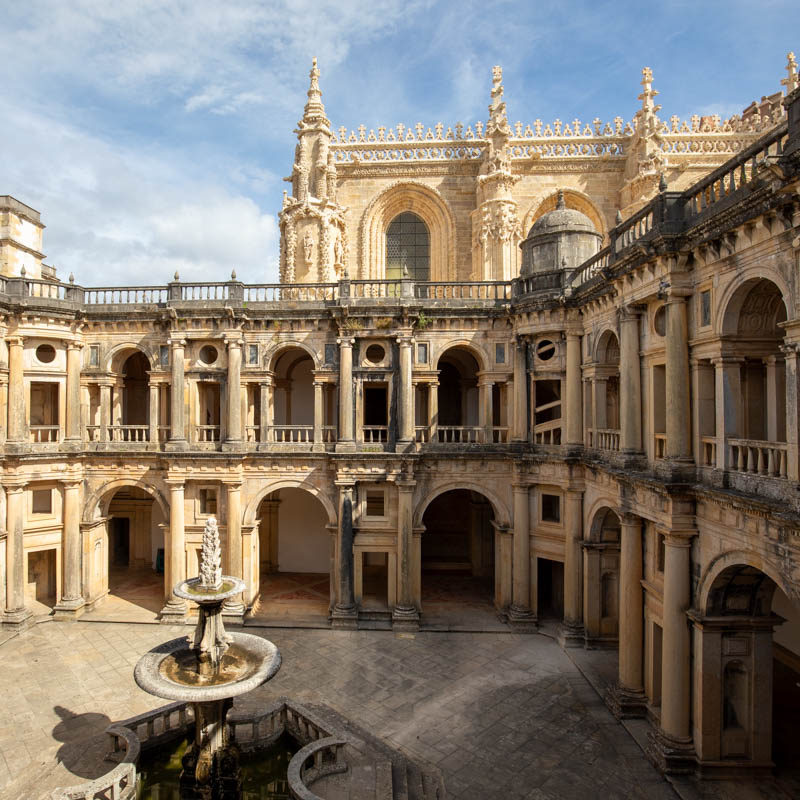
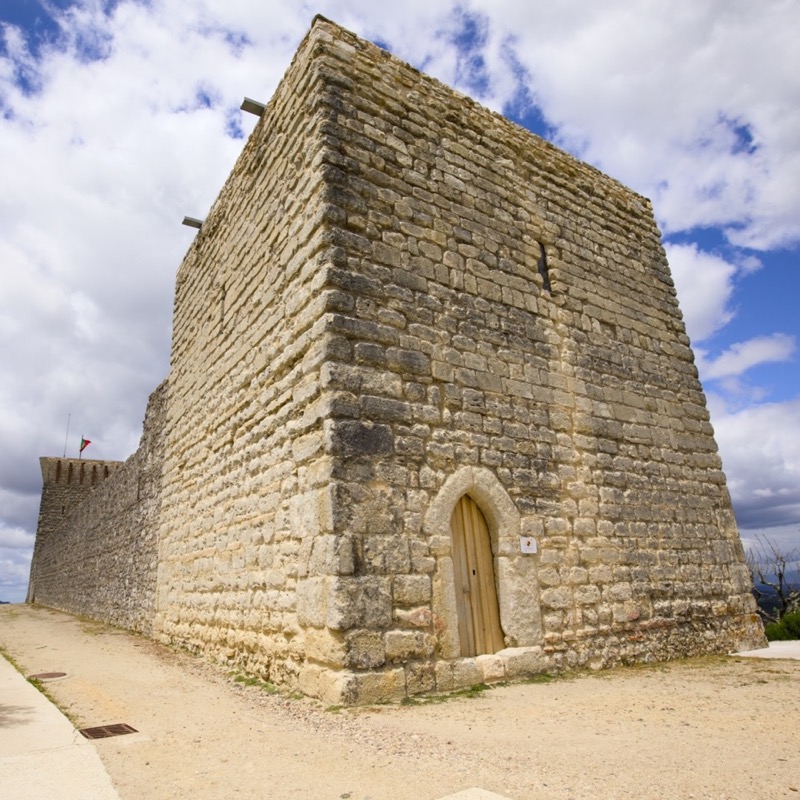
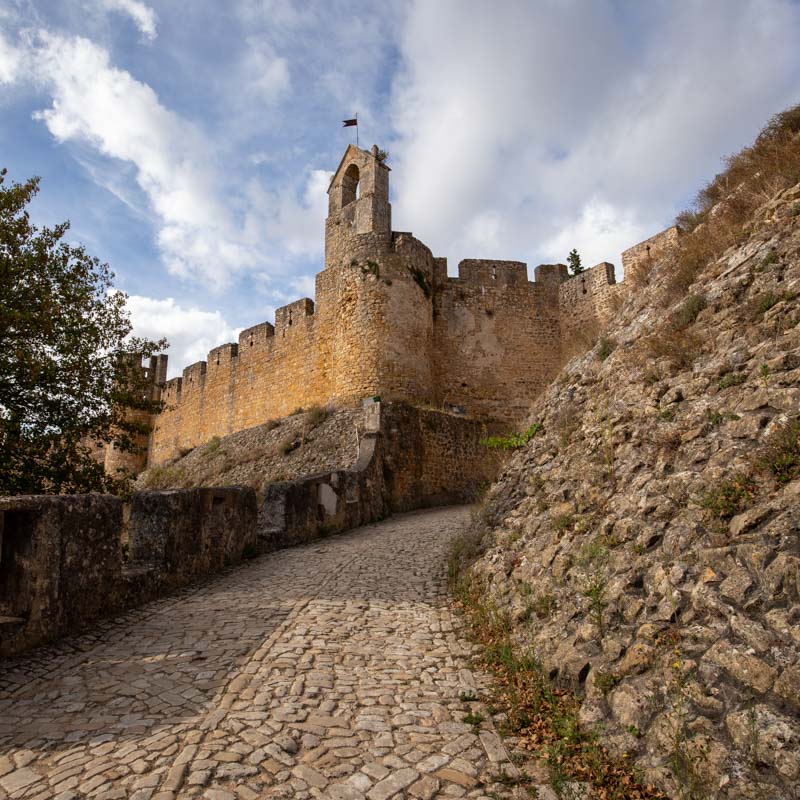
On the hilltop overlooking Tomar, the Castle of Tomar marks the beginning of the great Convent of Christ complex. The fortification began to be built in 1160, after the donation of the region to the Templars, and is linked to Gualdim Pais, master of the Order of the Temple. Its position protected a strategic point between the Tagus and Coimbra, then the capital of the kingdom. Even today, Romanesque military solutions associated with the Templars can be read in the walls, such as the sloping base that strengthened them, and the keep, rising above the citadel. In the lower enclosure stood the former fortified town; to the west was placed the Charola, the Templar oratory that would later become part of the Convent of Christ. Classified as a National Monument in 1910 and included in the ensemble inscribed by UNESCO in 1983, the castle preserves the defensive memory that shaped Tomar.

Why it matters

In Tomar, the Templar Castle was born as a work of defence and settlement in a territory that was decisive for the consolidation of the kingdom. The royal charter donating the area to the Templars dates from 1159, and construction began in 1160, according to the inscription preserved in the keep. The person responsible was Gualdim Pais, master of the Order of the Temple in Portugal, who established here one of the most important centres of the Templar presence in the country. In 1162, a charter was granted to the inhabitants, a sign that the fortress served not only war, but also the creation of a protected community. After the extinction of the Templars in 1312, the inheritance passed to the Order of Christ, created in 1319. Integrated into the Convent of Christ ensemble, the castle has been part of the UNESCO World Heritage site since 1983.

Architecture and history

The castle walls organise several enclosures and help explain how defence, community life and worship were combined in the same space. The alcazaba, with its irregular polygonal plan, preserves the keep, an element that heritage sources highlight as one of the earliest examples of this defensive solution in Portugal. Below, the area of the former fortified town recalls the medieval settlement protected by the walls. One of the most important elements is the batter, a sloping reinforcement at the base of the wall, designed to hinder the approach of siege engines and reduce vulnerable points. The Charola, integrated into the castle, was the Templars’ oratory. Its centralised structure, with an octagonal core and ambulatory, links Tomar’s military and religious architecture to the memory of the Holy Sepulchre in Jerusalem.

More context

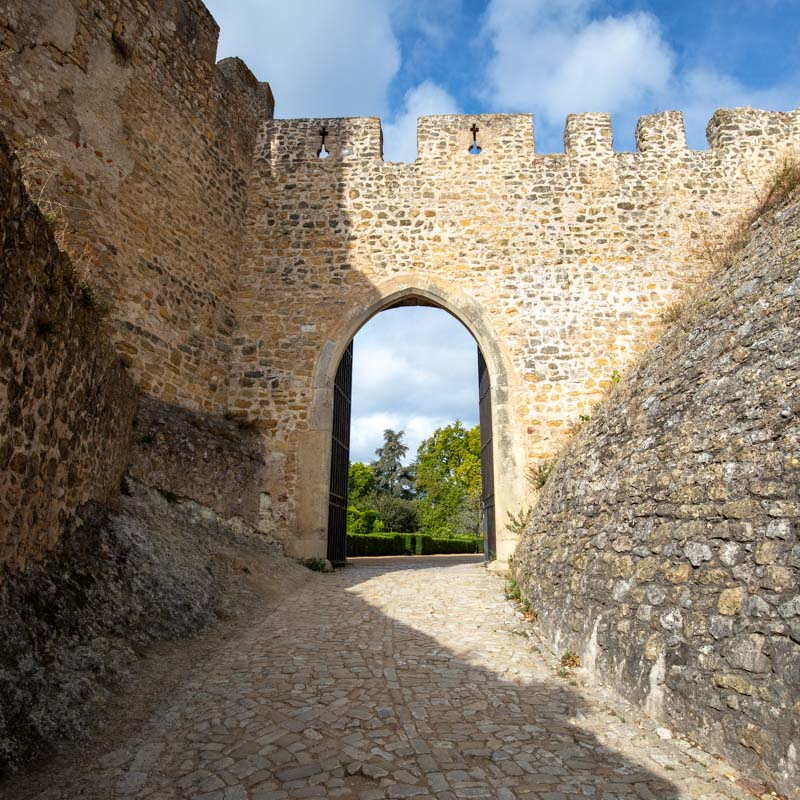
The keep should be read as more than the high point of the fortress: it concentrates the memory of the foundation and marks the military authority of the Templars. On the walls, look for the batter and notice how the sloping base changes the defensive reading of the castle. The Almedina Gate, also called the Gate of Blood, recalls the Muslim attack of 1190 and the link between military history and local tradition. The Charola deserves attention for the way it unites religious retreat and protection inside the fortress. Between the alcazaba and the Charola, the sources identify traces of Muslim occupation and the area of the former fifteenth-century palace buildings. The route along the walls also shows that Tomar was born as an inhabited, defended and spiritually ordered place, not merely as an isolated fortification.

Gallery

Castelo de Tomar 1
Castelo de Tomar 2
Castelo de Tomar 3
Castelo de Tomar 4
Castelo de Tomar 5

Nearby places

View all