Porto · Porto
Igreja do Carmo
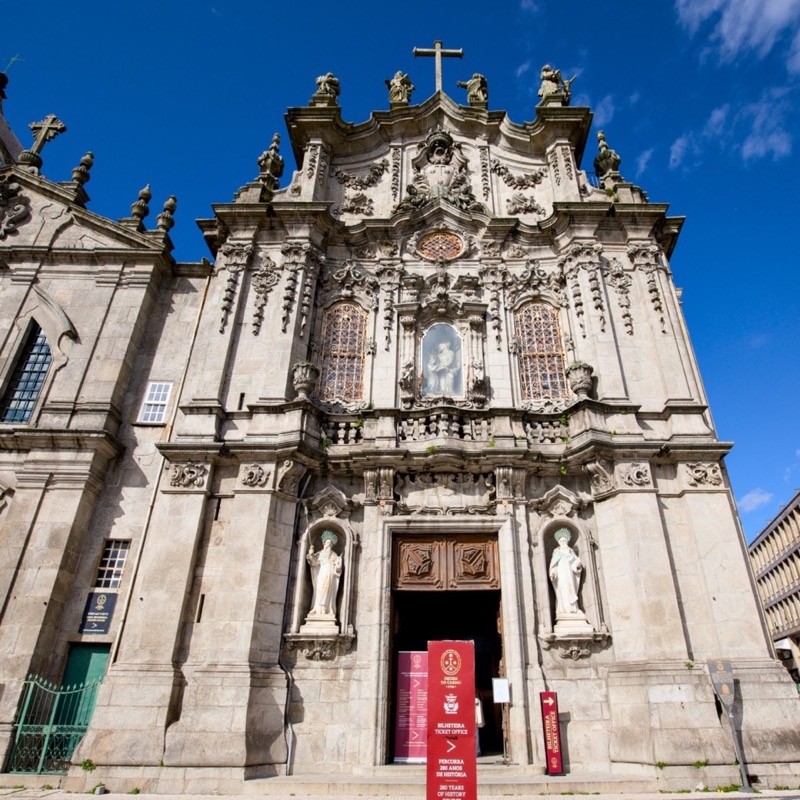
The Igreja do Carmo, in Porto, stands beside the Igreja dos Carmelitas, between Rua do Carmo and Praça de Carlos Alberto. The church belongs to the Venerable Third Order of Our Lady of Mount Carmel, established in 1736. The first stone was laid in 1756, with a design by José de Figueiredo Seixas, and the church was completed in 1762, after Nicolau Nasoni had endorsed the architectural plan. Part of the ensemble classified as a National Monument in 2013, it is distinguished by its Rococo façade, full of decorative movement, with images of the prophets Elijah and Elisha, Saint Anne and the four Evangelists. Inside, the gilded woodcarving of the chapels and high altar extends the ornamental richness. The side façade, covered with blue and white tiles in 1907 and 1912, represents Carmelite devotion and has become one of the city’s most recognisable surfaces.
Why it matters
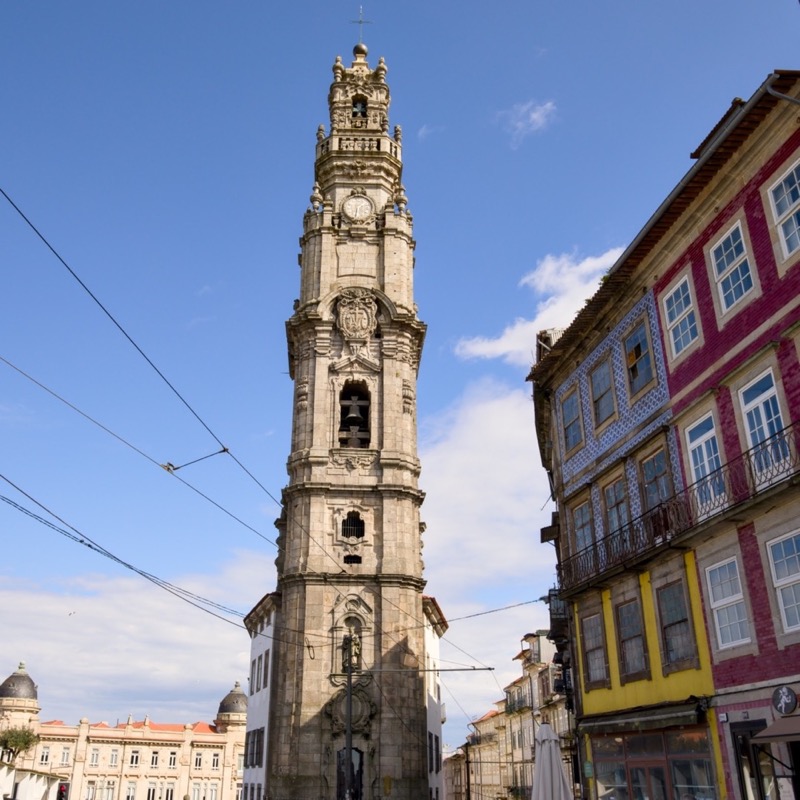
The Carmo Church, formally the Church of the Venerable Third Order of Our Lady of Mount Carmel, stands at the junction of Praça de Carlos Alberto and Rua do Carmo, very close to the Clérigos Tower, in Porto’s historic Vitória parish. It was commissioned by the Third Order of Carmel, a lay confraternity associated with Carmelite spirituality, which sought its own church distinct from the neighbouring Carmelitas Church. Construction took place between 1756 and 1768, in the second half of the 18th century, following a Baroque-Rococo design by architect José Figueiredo Seixas. Within the same block the Order also built its hospital, completed in 1801. The plot occupied by the church lay immediately west of the pre-existing Carmelitas Church. As legislation at the time did not allow two churches to share a common wall, a very narrow house, just over a metre and a half wide, was built between them – the so-called "Casa Escondida" (Hidden House). With several floors connected by an internal staircase, it is thought to have housed chaplains, artists, craftsmen and, later, doctors linked to the Order’s hospital, and is now regarded as one of the narrowest houses in Portugal. In 2013 the Carmo Church was officially listed as a National Monument, together with the adjacent Carmelitas Church, in recognition of the outstanding heritage value of this unique ensemble.
Architecture and history
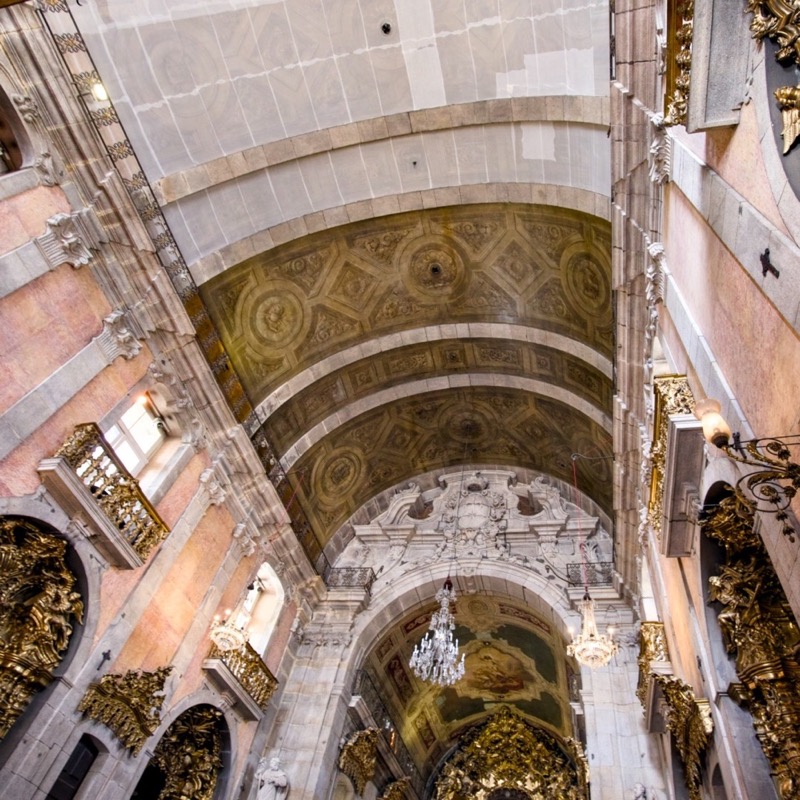
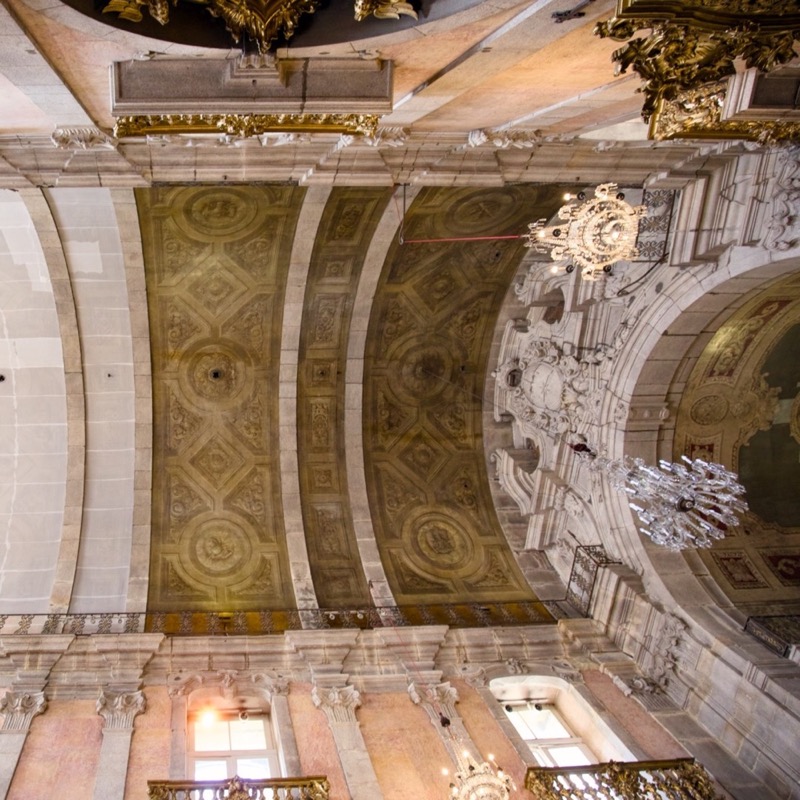
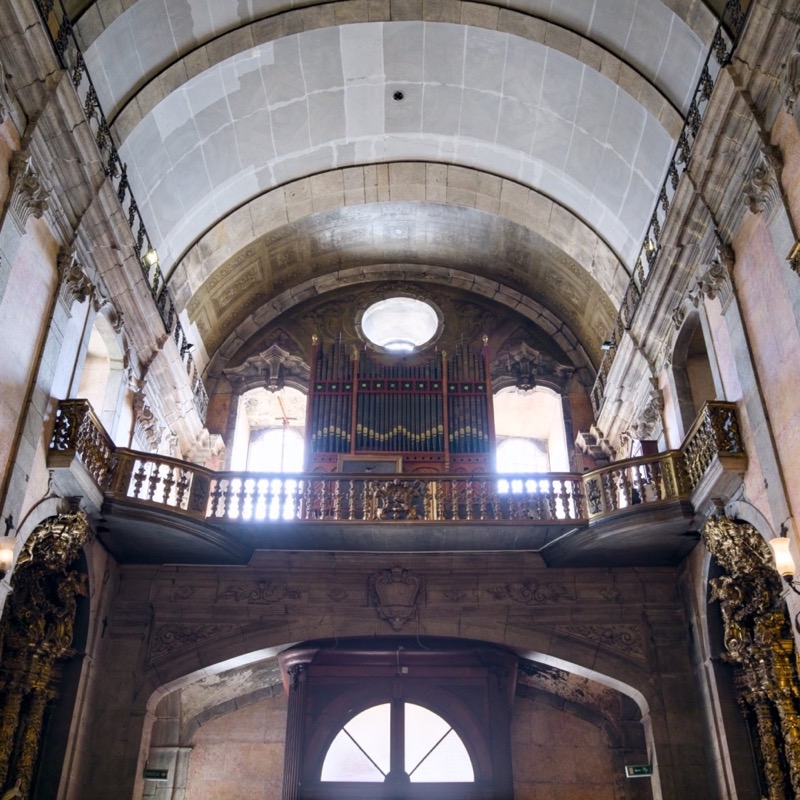
The Carmo Church is considered one of the most remarkable examples of Rococo in Porto, both for its external volume and for the richness of its interior decoration. The granite main facade is arranged in two registers, with pilasters, volutes, undulating cornices and a crowning section of pinnacles and finials, in a language close to the Italian Baroque popularised in Porto by Nicolau Nasoni. At the centre opens a rectangular portal, surmounted by the statue of Saint Anne, patron of the church and a figure of particular devotion for the Carmelite Order. Niches flanking the doorway contain sculptures of the prophets Elijah and Elisha, biblical models for the Order, while the upper level displays statues of the four Evangelists. On the eastern side facade is one of Porto’s best-known azulejo panels, covering almost the entire wall. Installed in 1912, it consists of large blue-and-white ceramic compositions depicting scenes related to the founding of the Carmelite Order and Mount Carmel. The design is attributed to the Italian artist Silvestre Silvestri and the tile painting to Carlos Branco; production took place in factories in Vila Nova de Gaia, notably Senhor do Além and Torrinha. The result is a vast narrative "carpet" that combines architecture, landscape and devotional episodes, reinforcing the scenic character of the church and its striking visual presence in the urban fabric. Inside, the single nave is dominated by fine gilded woodcarving and seven lateral altars attributed to the carver Francisco Pereira Campanha, which structure the space into deep, richly decorated chapels. The iconographic programme focuses on the Passion of Christ, arranged as a sequence that includes the Agony in the Garden, the Arrest, the Flagellation, the Ecce Homo and the Way of the Cross, culminating in the Crucifixion and a ceiling painting of the Resurrection of Christ. The high altar combines woodcarving, sculpture and oil painting, while the sacristy and adjoining rooms house an important collection of liturgical vestments, silverware and other objects linked to the Third Order of Carmel.
More context
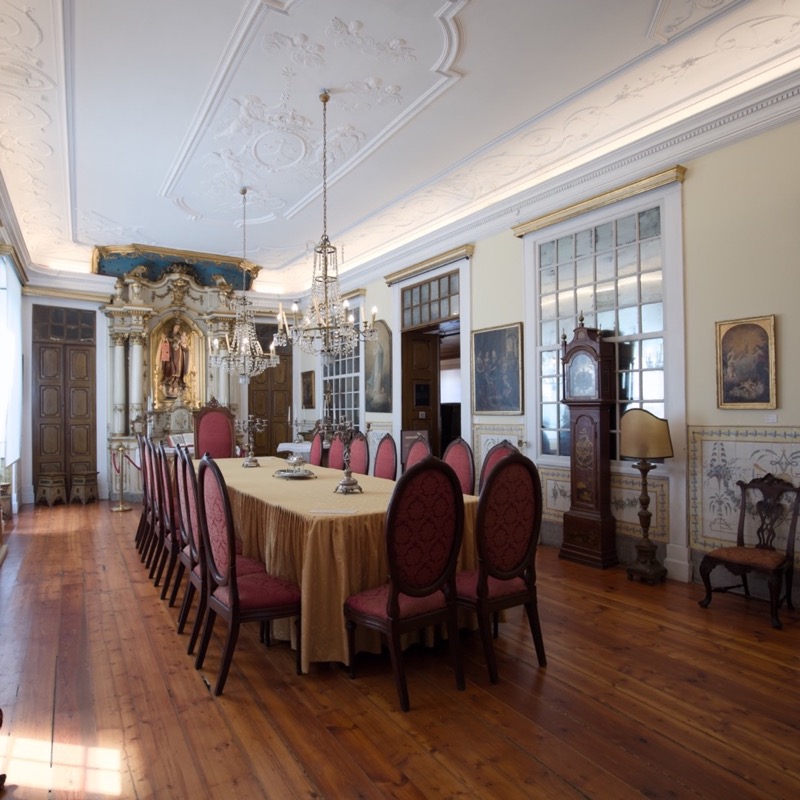
A visit may begin outside, in today’s Praça de Gomes Teixeira, from where the ensemble formed by the Carmo Church, the Carmelitas Church and the extremely narrow Casa Escondida between them can be appreciated. From here one can clearly see the Rococo profile of the main facade and, above all, the large azulejo panel on the eastern side wall, one of the most photographed backdrops in Porto. The square, marked by the Lions Fountain and the nearby faculties of the University of Porto, reveals the church’s urban setting and its privileged location, only a short walk from the Clérigos Tower and other landmarks of the historic centre. Inside the church, visitors are encouraged to walk along the nave, paying attention to the lateral chapels, the gilded altarpieces and the oil paintings that form part of the Passion cycle. Time should be taken to examine the high altar, the quality of the sculpture and woodcarving, and the painted ceiling depicting the Resurrection. When accessible, a visit to the sacristy allows a closer look at carved wooden furniture, chests and cupboards, as well as priestly vestments and liturgical objects associated with Carmelite worship and the life of the Third Order. A highlight of the complex is the Casa Escondida, a narrow multi-storey house wedged between the two churches. Now integrated into the Carmo Order’s visitor circuit, it preserves domestic rooms associated with the Order’s hospitality, with references to chaplains, artists and doctors who stayed there over the centuries. The route generally also includes the Noble Hall, the Vestments Room, the sacristy and the small catacombs where members of the Order were buried before the creation of public cemeteries in the late 19th century. These ancillary spaces help visitors understand the residential, charitable and funerary dimensions associated with the church, beyond its strictly liturgical function.
Gallery