Porto · Porto
Torre e Igreja dos Clérigos
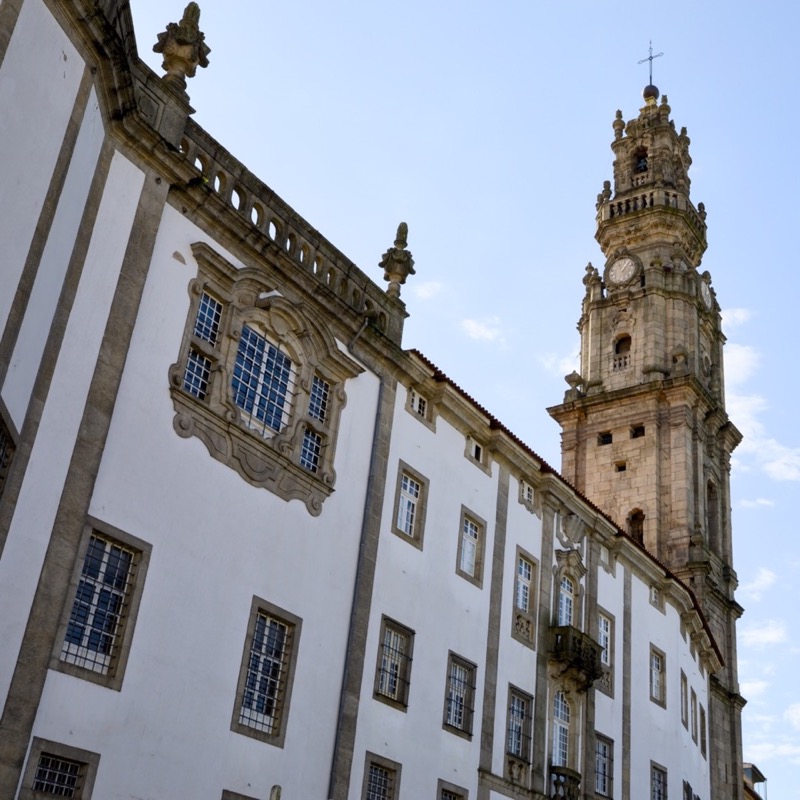
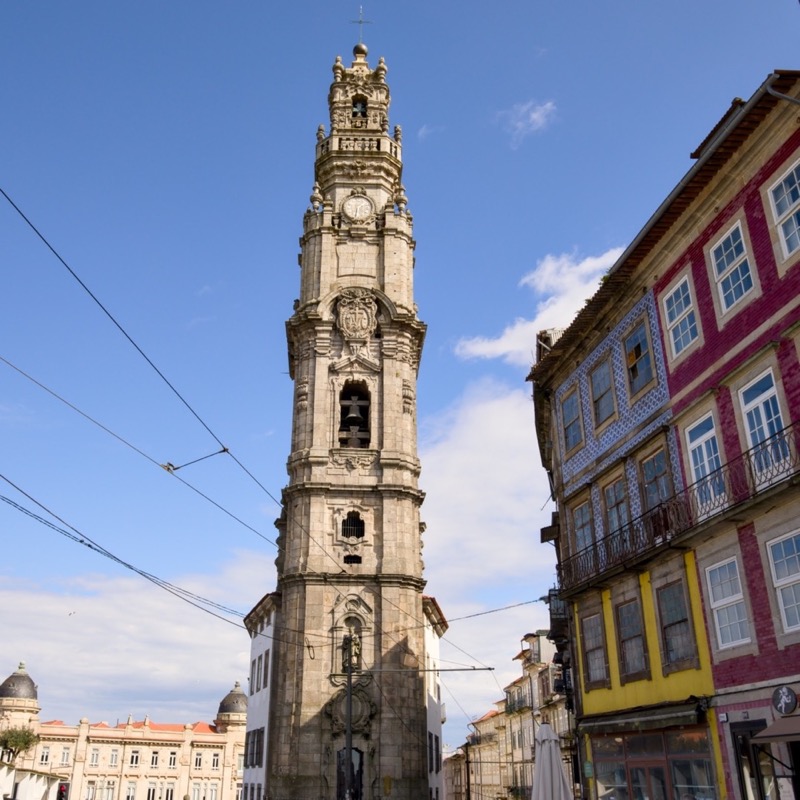
The Torre e Igreja dos Clérigos rise in the heart of Porto, between Rua dos Clérigos, Rua de São Filipe de Nery and Rua da Assunção. The ensemble was designed by the Italian architect Nicolau Nasoni for the Irmandade dos Clérigos, founded in 1707. The first stone of the church was laid in 1732, and construction of the tower began in 1754, being completed in 1763. Classified as a National Monument since 1910, the ensemble is one of Nasoni’s most prominent works in northern Portugal. The church reveals an elliptical plan and a Baroque façade with a strong scenic quality. The granite tower rises in six storeys to a height of 75 metres, with 225 steps to the top. Between the verticality of stone, Baroque decoration and the view over the Douro, the Clérigos condense Porto’s architecture, devotion and urban image.
Why it matters
The Clérigos Church and Tower form one of Porto’s most emblematic architectural ensembles, reflecting the growing importance of the Brotherhood of the Clerics in the city during the 18th century. The confraternity has its roots in several associations of poor clerics created from the 17th century onwards and unified in 1707 as the Brotherhood of Clérigos, which sought its own church and suitable premises. In 1732 the first stone of the new church was laid on a plot of land at the top of what is now Rua dos Clérigos. The project was entrusted to the Italian architect and painter Nicolau Nasoni, a key figure of northern Portuguese Baroque, who conceived a unified complex: the church, the Brotherhood house and, later, the free-standing bell tower that would become the city’s ex-libris. Construction of the church took place between 1732 and around 1750, with some interruptions; the facade was completed in the mid-century and the consecration only took place in 1779, when the whole ensemble was finished. The tower, built between the 1750s and 1763, soon became the highest point in Porto’s historic area and a visual landmark for those arriving by the Douro. In 1910 the complex was classified as a National Monument, in recognition of its artistic and urban importance. Throughout the 20th and early 21st centuries, conservation campaigns, the creation of the museum in the Brotherhood house and the enhancement of the visitor route have consolidated the Clérigos Church and Tower as a key symbol of Porto and as the most celebrated work of Nasoni.
Architecture and history
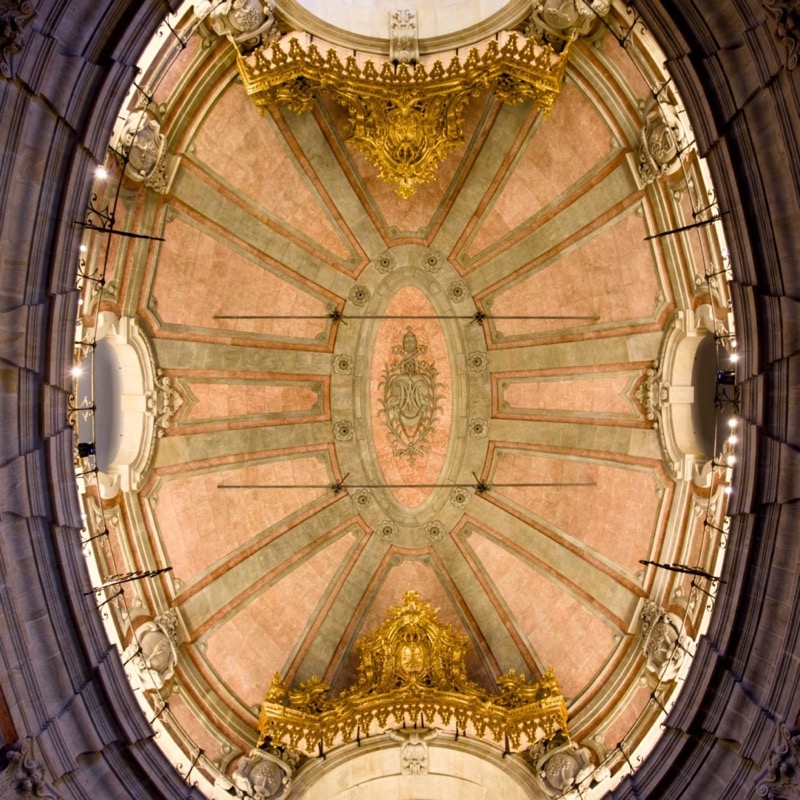
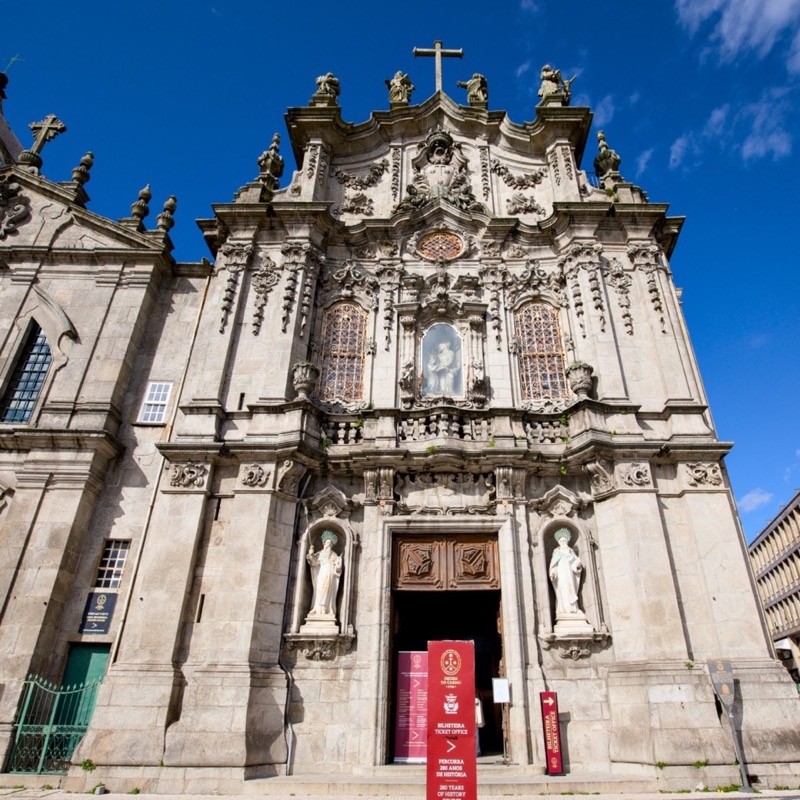
The church is a remarkable example of late Baroque in Portugal, with an elliptical granite plan and a single nave covered by a dome. On the side walls stand preaching pulpits and collateral altars, creating an enveloping space that directs the gaze towards the main chapel, marked by abundant carved wood and sculpture. The Brotherhood’s coat of arms, set in the dome, underlines the confraternity’s leading role as patron. The comparatively narrow facade reinforces the verticality of the building. It is preceded by a double staircase that leads to the main portal and to the former Chapel of Nossa Senhora da Lapa on the lower level. The richly decorated front combines straight and curved lines, scrolls, cartouches, urns and flaming vases in a late-Baroque and Rococo vocabulary typical of Nasoni. In the upper section, a central window is flanked by stone statues of Saint Peter and Saint Philip Neri, while the crowning element includes the three-bar papal cross and the Marian monogram. The Clérigos Tower, some 75–76 metres high, is considered the tallest campanile in Portugal. It rises from a square base articulated in six stages, pierced by increasingly elaborate openings and by balconies with balustrades. The main doorway is surmounted by a niche containing the statue of Saint Paul, and the top is adorned with an intricate decorative composition and a metal sphere. Inside, a spiral staircase of more than two hundred steps leads to the panoramic viewing platforms. The Brotherhood house, with its more sober lines and orthogonal plan, links the church to the tower and now houses the museum devoted to the history of the confraternity and to Nasoni’s legacy.
More context
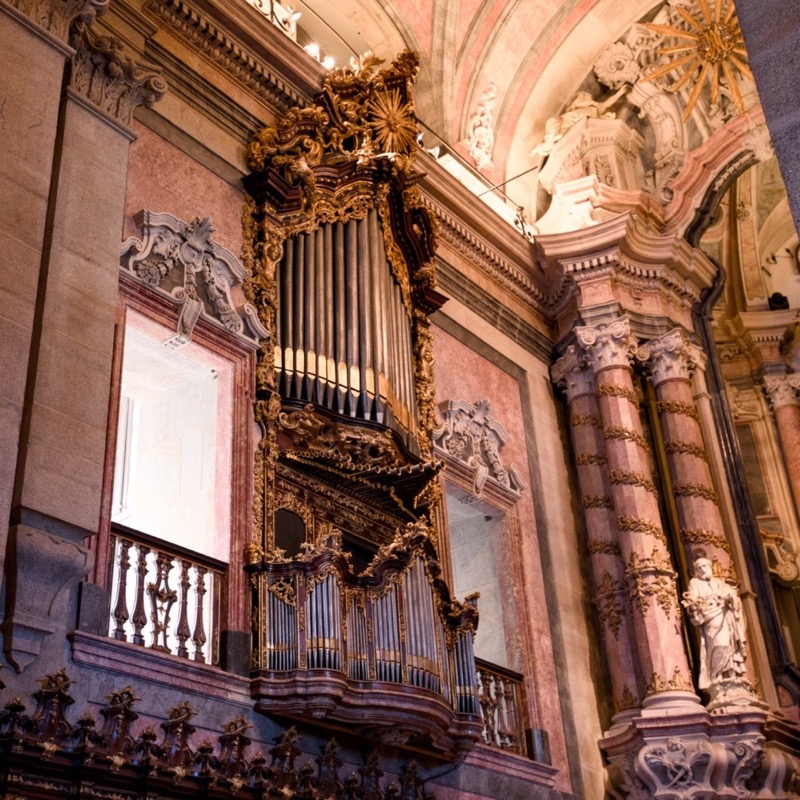
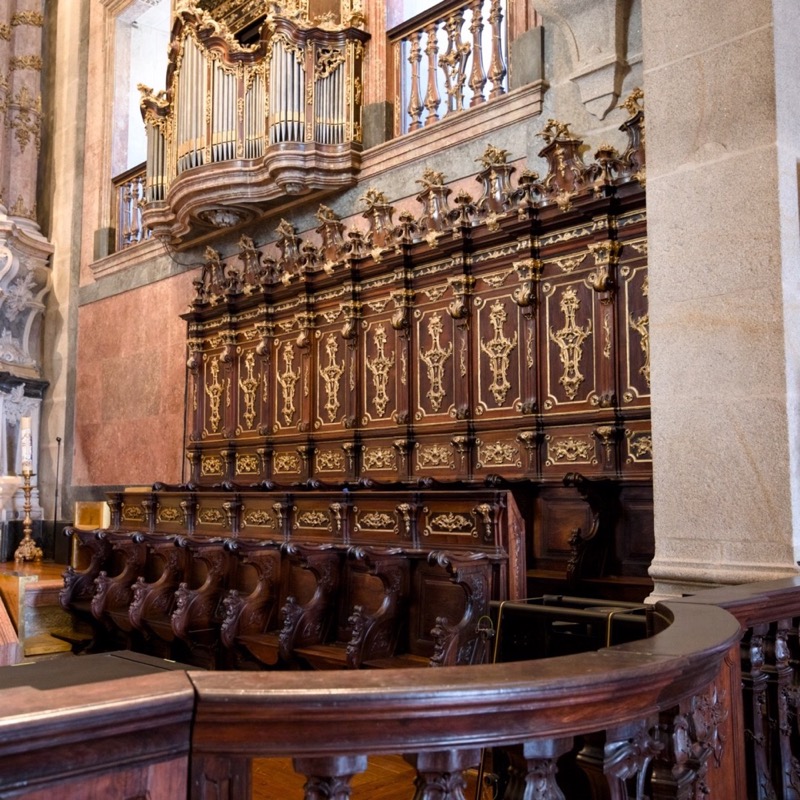
A visit usually begins in the church, where the elliptical plan and the theatrical effect of carving and sculpture are fully revealed from the nave. It is worth taking time to examine the high altarpiece, the side altars and the choir stalls, as well as the pipe organs placed on opposite galleries. From the upper corridors and the choir loft, accessible along the museum route, visitors enjoy unusual viewpoints over the interior, highlighting the complex spatial articulation devised by Nasoni. The floor of the nave also bears the inscription marking the tomb of the architect, buried in his own masterpiece. In the Brotherhood house, now a museum, visitors can walk through rooms once reserved for the administration of the confraternity: former offices, archive, infirmary and residential quarters. The displays bring together silverware, vestments, paintings and sculptures linked to worship, as well as documents and models that help explain the development of the complex. The exhibition narrative focuses on the history of the Brotherhood of Clérigos and on Nasoni’s role in reshaping 18th-century Porto. Climbing the Clérigos Tower is another essential highlight. Along the inner staircase small openings frame partial views over the city and reveal the large carillon of bells. At the top, the balconies provide a 360-degree panorama of the historic centre, the Douro River and the surrounding urban expansion, allowing visitors to pick out other major landmarks such as the Cathedral, the Stock Exchange Palace or the river bridges. By the end of the visit, the relationship between church, tower, museum and urban fabric becomes clearer, reinforcing the perception of this ensemble as a central feature of Porto’s image.
Routes
Explore this place in a cultural route
Gallery