Lisboa · Lisboa
Pavilhão do Conhecimento - Ciência Viva
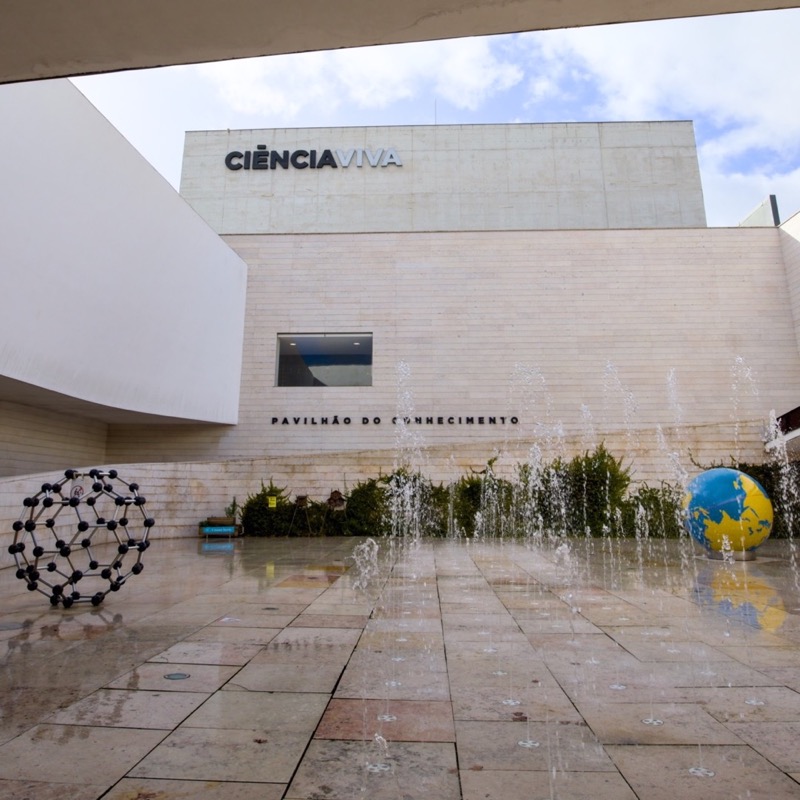
In Parque das Nações, Lisbon, the Pavilion of Knowledge – Ciência Viva occupies the building that, during the 132 days of EXPO’98, housed the Pavilion of Knowledge of the Seas. Designed by João Luís Carrilho da Graça’s studio, it was one of the most visited thematic pavilions of the exhibition, with 2,543,914 visitors. In 1999, the building was assigned to the creation of a space for scientific and technological outreach and reopened to the public, on 25 July, as the Pavilion of Knowledge. Today it is part of the National Network of Ciência Viva Centres and is presented by the network itself as the country’s largest science and technology centre. Across some 4,000 square metres, exhibitions on Physics, Mathematics, Chemistry, Biology and Social Sciences are combined with interactive modules, laboratories, talks and experimental activities. The architecture received the Valmor and Municipal Architecture Prize in 1998.
Why it matters
The Pavilhão do Conhecimento - Ciência Viva is a hallmark of scientific modernity in Lisbon, inaugurated in 1999 as part of Expo 98, the World Exposition celebrating the oceans. Located in Parque das Nações, the building was designed by architect João Luís Carrilho da Graça. Since its opening, the Pavilhão do Conhecimento has played a crucial role in scientific dissemination in Portugal, serving as a meeting point for curious minds of all ages eager to explore the wonders of science and technology. This space was created to promote scientific culture, providing interactive experiences that stimulate curiosity and learning.
Architecture and history
The design of the Pavilhão do Conhecimento reflects a contemporary and functional approach. The building is an impressive example of modern architecture, characterised by clean lines and intelligent use of materials. The main facade is notable for its large glass windows that allow natural light to enter, creating a welcoming and inspiring environment. Inside, the space is wide and flexible, allowing the configuration of various exhibitions and interactive activities. The exhibition areas are designed to be intuitive and accessible, encouraging visitors to interact with different scientific modules. The architecture of the Pavilhão do Conhecimento not only serves a practical function but also stands as a work of art in itself, reflecting the centre’s mission to inspire and educate.
More context
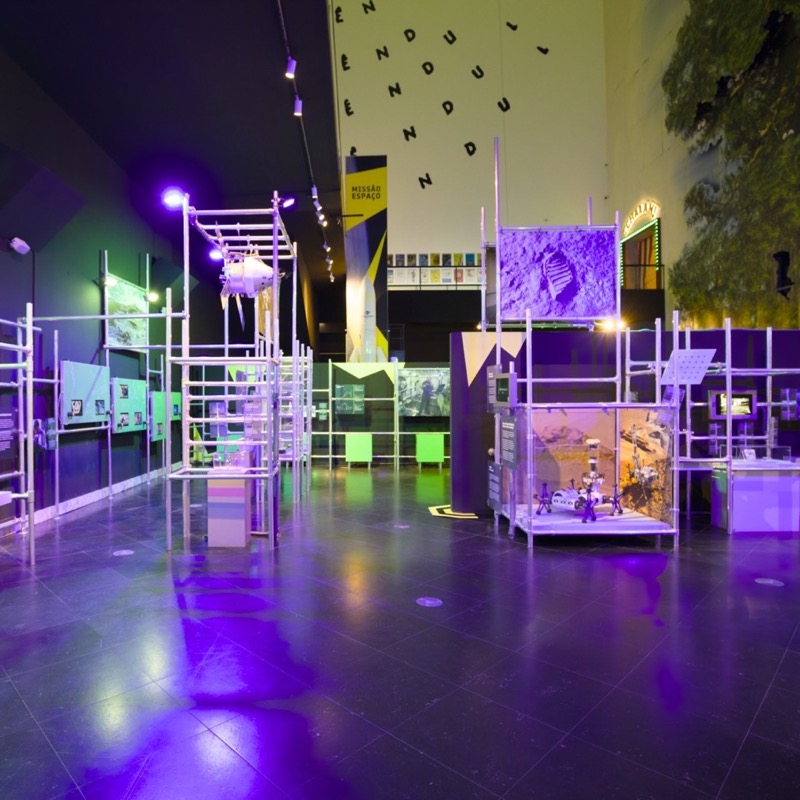
At the Pavilhão do Conhecimento, visitors can explore a wide range of permanent and temporary exhibitions covering various areas of scientific knowledge. Among the permanent exhibitions, "Explora" stands out, where visitors can experience physical phenomena through hands-on activities. Another popular attraction is the "Unfinished House", a space where visitors can explore the principles of engineering and physics in construction. Besides the exhibitions, the Pavilhão do Conhecimento offers workshops, lectures, and educational activities for all ages, many of which are specially designed for children and young people. The centre also houses a digital fabrication laboratory, the FabLab, where visitors can experiment with 3D printing and other innovative technologies. For those seeking an even more immersive experience, the Pavilhão do Conhecimento organises themed scientific events and astronomical observation nights.
Gallery