Porto · Porto
World of Discoveries
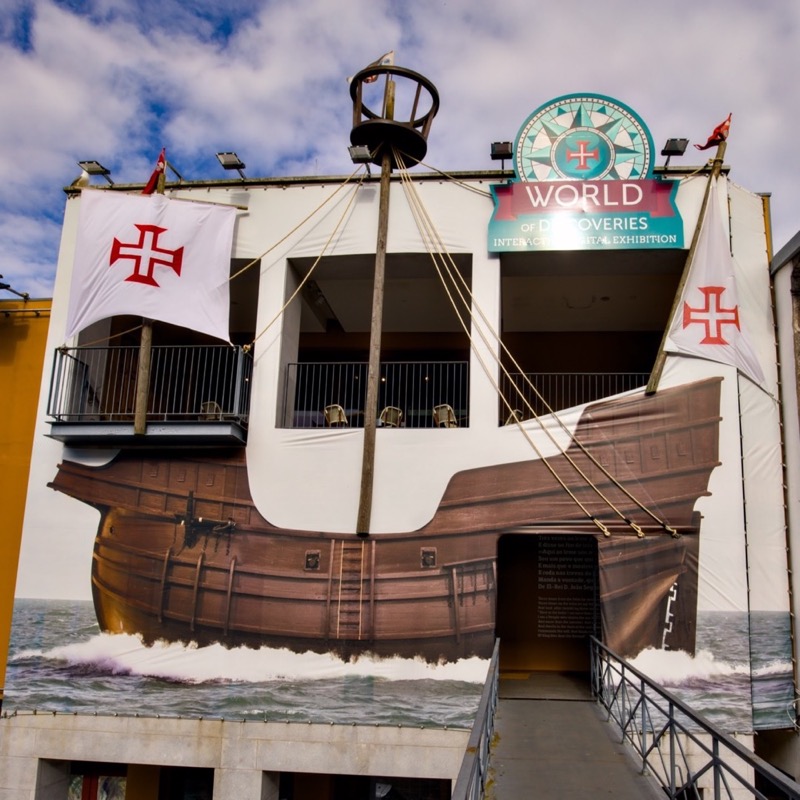
World of Discoveries is located in Porto’s riverside area, a few metres from the Douro and the Alfândega. Inaugurated in 2014, it presents itself as an interactive museum and theme park dedicated to the Portuguese Discoveries. The route combines exhibition, scenography and immersive experience to recreate episodes of Portuguese navigation, maritime routes and encounters with other territories. Among the proposed moments are the Conquest of Ceuta, the figure of Adamastor, the exploration of the inside of a vessel and the evocation of spices. One of its distinctive components is the journey along a water channel, designed to follow, in a staged setting, routes associated with Portuguese maritime expansion. With multilingual content, audio guides and an educational service, the space brings history, adventure and pedagogy together in an accessible format. More than presenting old objects, it seeks to transform the narrative of the Discoveries into a visual, sound and participatory experience.
Why it matters
World of Discoveries is an interactive museum and theme park devoted to the Portuguese Age of Discoveries, housed inside the former warehouses of the Real Companhia Velha wine company in Miragaia, on Porto’s riverside, just a few metres from the River Douro and the Alfândega do Porto. Conceived as an immersive, educational exhibition, it recreates the period of the great Portuguese ocean voyages between 1415 and 1543, from the conquest of Ceuta to the first contacts with Japan. The space opened to the public on 25 April 2014, the result of an investment of around eight million euros promoted by the company Douro Azul. With an exhibition area of about 5,000 m², it belongs to a recent generation of themed museums dedicated to the Discoveries in Portugal, standing out for its strong emphasis on interactive technology, full-scale scenography and multimedia storytelling. Over the last decade it has established itself as one of the best-known exhibitions in the country on this subject, welcoming hundreds of thousands of visitors and acting as a cultural complement to visits to Porto’s historic centre, a city closely linked to figures such as Prince Henry the Navigator and to the preparation of several ocean voyages.
Architecture and history
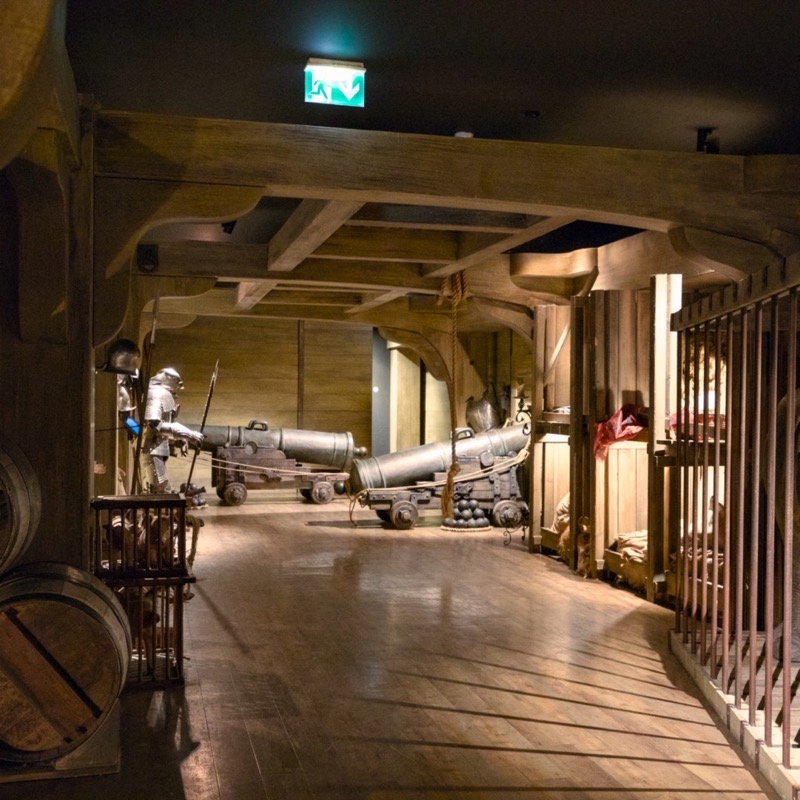
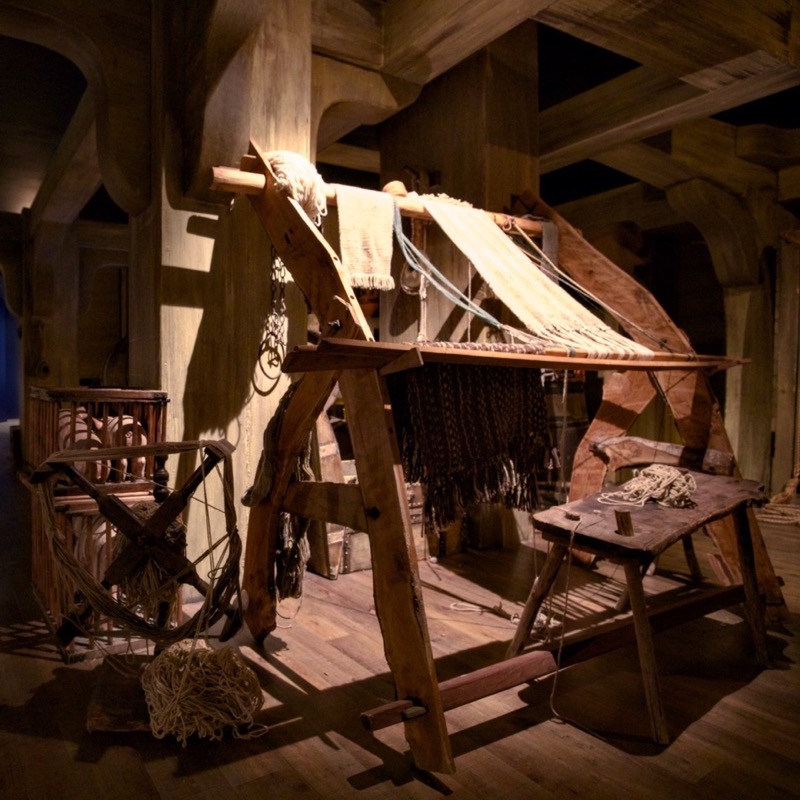
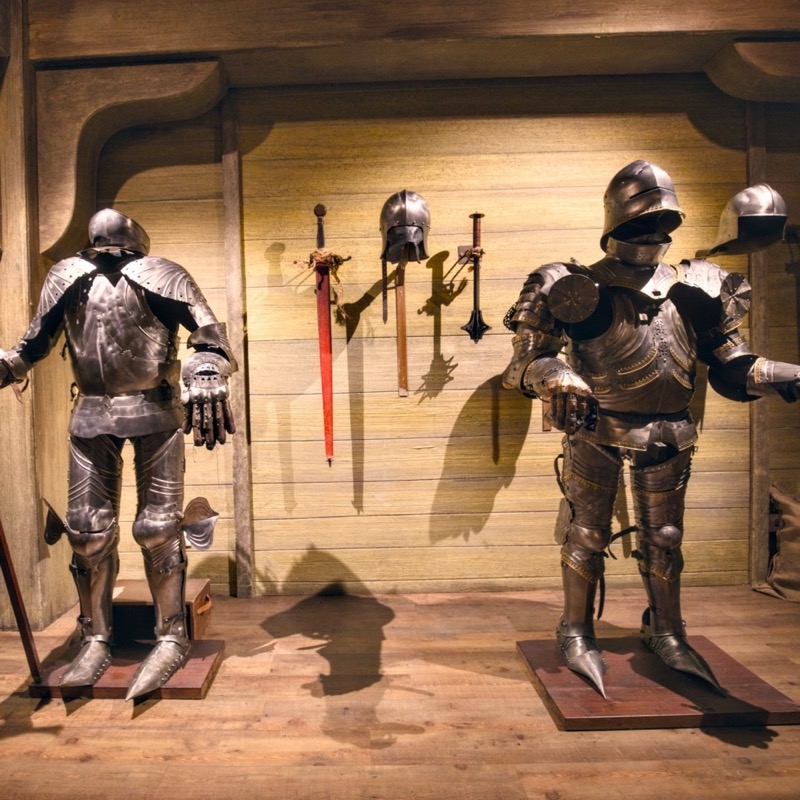
World of Discoveries occupies former wine warehouses of the Real Companhia Velha, adapted for museum use while preserving the industrial volumes and robust stone-and-timber structure, now reorganised into a continuous sequence of exhibition rooms and an indoor water channel. Its location in Miragaia, by the riverside, recalls Porto’s historical relationship with maritime trade and long-distance routes. The visitor route is organised into around 20 themed spaces, where full-scale sets recreate environments connected with the Portuguese voyages: shipyards, ship interiors, markets, ports and landscapes in Africa, Asia and the Americas. The museography combines physical scenery, theatrical lighting, ambient sound, digital projections, 4D globes and touchscreens, creating an immersive environment designed for active exploration. Panels and multimedia devices present information on the evolution of ships, navigation instruments, cartography, political and religious contexts and the lives of navigators such as Vasco da Gama, Bartolomeu Dias and Ferdinand Magellan. One of the key structural elements is the navigable zone, an indoor canal travelled by small boats that take visitors through a sequence of scenes, including depictions of the African coast, the Indian Ocean and territories such as India, Indonesia, China, Japan, North Africa and Brazil. The design of the route, together with the use of scents, directional sound and changing light, reinforces the sensory character of the experience and links it to the more informative content of the exhibition rooms.
More context
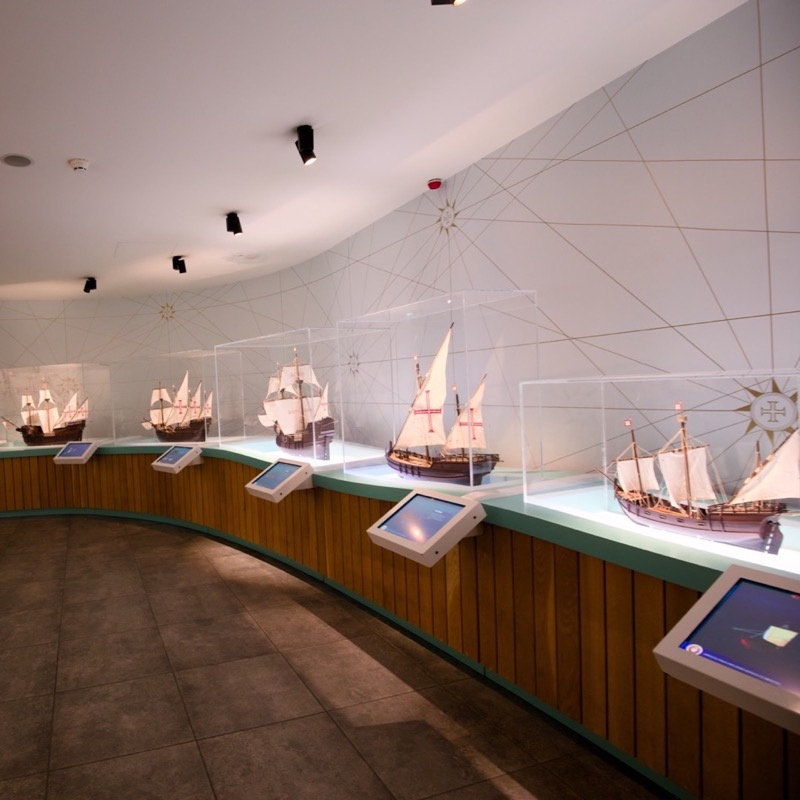
A visit to World of Discoveries usually begins in the introductory rooms devoted to the context of Portuguese maritime expansion, where maps, timelines and background information are presented on the European world of the 15th and 16th centuries, the political and economic motivations for the voyages and the technical advances that made them possible. Further spaces focus on shipbuilding, life on board and the navigators themselves, using ship models, reproductions of instruments and interactive resources that allow visitors to explore routes, winds and navigation techniques. For many visitors, the highlight is the boat ride along the indoor canal, integrated into the exhibition circuit. In small vessels, visitors pass through successive full-scale scenes evoking points of contact between the Portuguese and other cultures: markets and ports on the African coast, environments of the Indian Ocean and Southeast Asia, Indian cities, and landscapes of Japan and China, as well as sections associated with Brazil and other parts of the Americas. Along the way, emphasis is placed on trade routes, cultural exchanges and the movement of people, plants and animals between continents. The museum also includes areas specifically designed for school groups and families, coordinated by the Educational Service, with content adapted to different ages, supporting materials and suggested activities before and after the visit. Core information is available in several languages through written texts and audio systems, making the circuit accessible to international visitors. Temporary exhibitions, support zones and complementary spaces reinforce its role as a thematic centre devoted to the history of the Discoveries, in articulation with other cultural facilities along Porto’s riverside.
Gallery