Lisboa · Lisboa
Convento de São Pedro de Alcântara
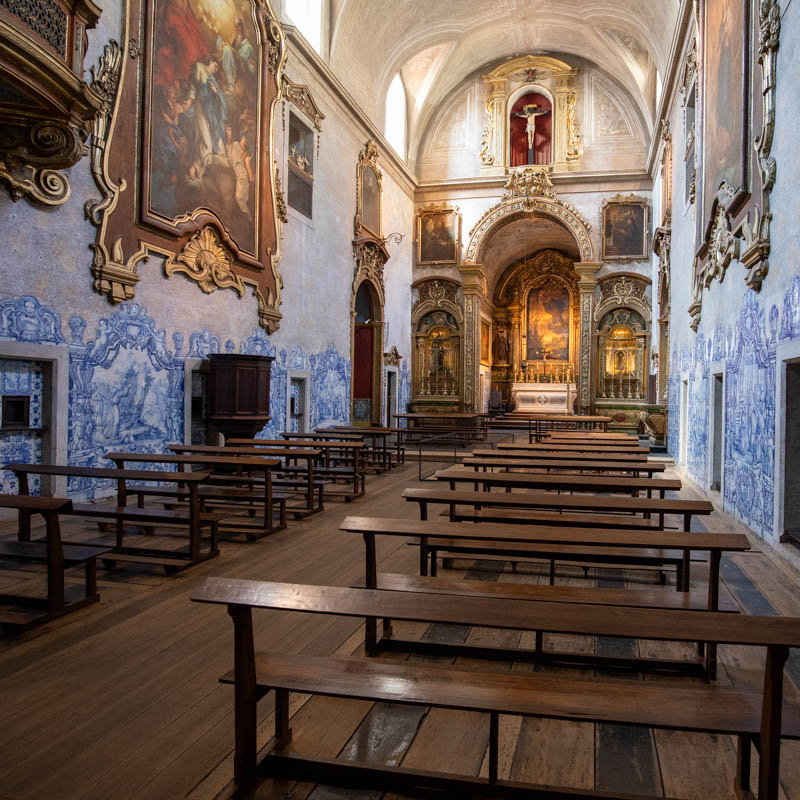
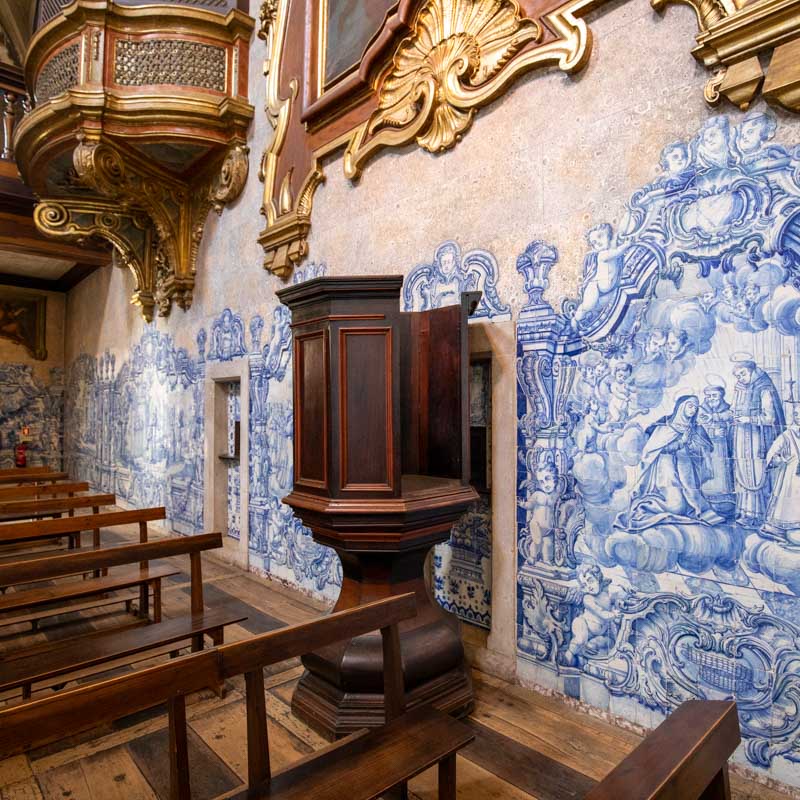
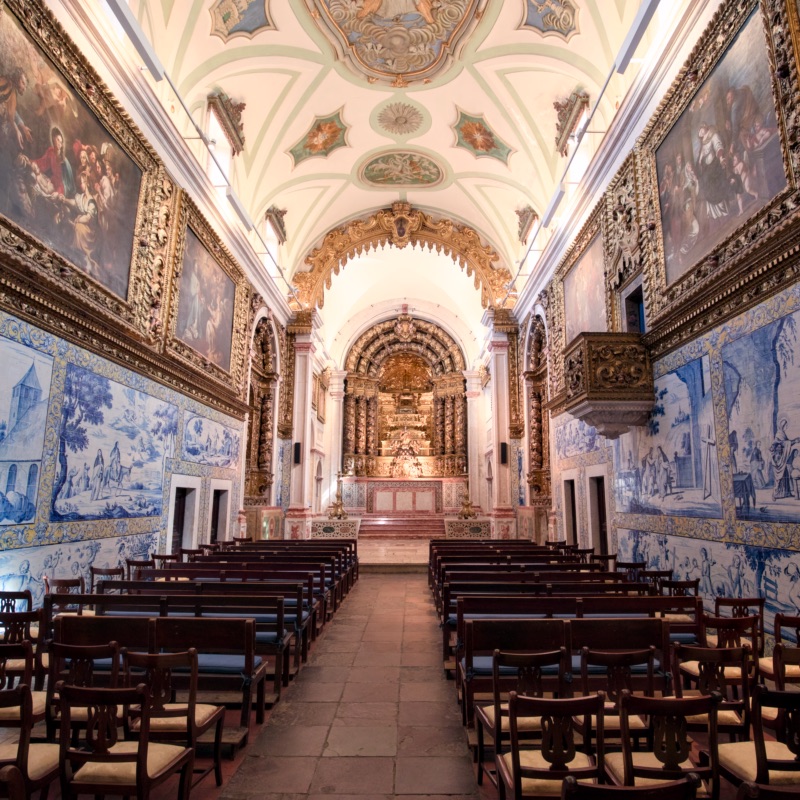
In Bairro Alto, the Convent of São Pedro de Alcântara preserves the memory of a war vow turned into architecture. It was founded in the seventeenth century by António Luís de Meneses, first Marquis of Marialva, after the Battle of Montes Claros, and entrusted to the Arrábidos, the most austere branch of the Franciscan family. The 1755 earthquake destroyed almost the whole complex, but the rebuilding begun in 1783 left a church where the Baroque speaks through gilded woodwork, monochrome eighteenth-century tiles and ceiling frescoes. There is also a rarer surprise: the Chapel of the Lencastres, added to the complex between 1686 and 1692, celebrated for its refined decoration and polychrome marbles. After the extinction of the religious orders, the convent passed to the Santa Casa da Misericórdia de Lisboa, which gave it new uses. Between courtyards, stairways and silence, the building shows how Lisbon rebuilt its memory without freezing it in place.
Why it matters
In Bairro Alto, the Convent of São Pedro de Alcântara was born in the context of the War of Restoration. Its first stone was laid in 1680 by D. António Luís de Meneses, 1st Marquis of Marialva, in fulfilment of a vow linked to the Battle of Montes Claros in 1665. The building was intended for the Arrábida Franciscans of the Order of Saint Francis and gradually occupied a block near today’s viewpoint. In the late seventeenth century, the Lencastres Chapel was commissioned for the family worship of D. Veríssimo de Lencastre. The 1755 earthquake destroyed almost the whole complex, and reconstruction began in 1783. After the abolition of the religious orders in 1833, the former convent passed to the Santa Casa da Misericórdia de Lisboa, which installed the Orphans’ Home there. This succession of functions helps us read the place as a religious, urban and social memory of Lisbon.
Architecture and history
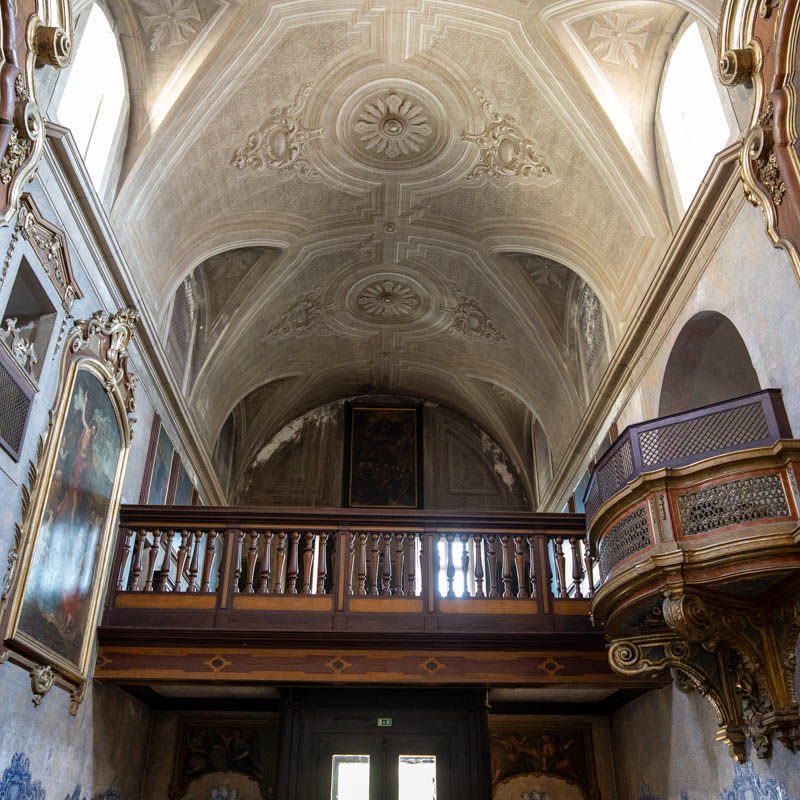
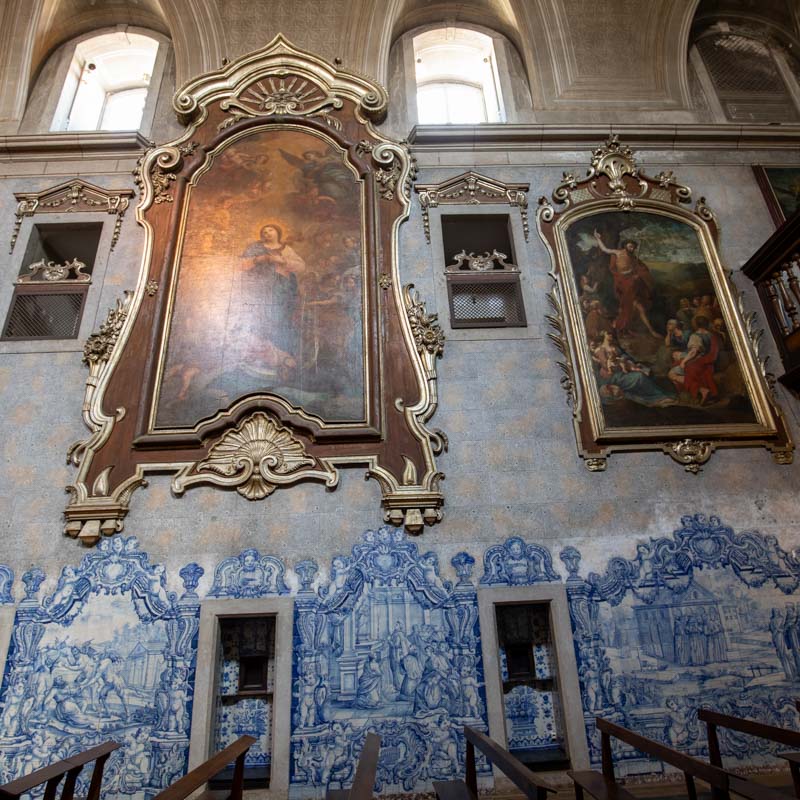
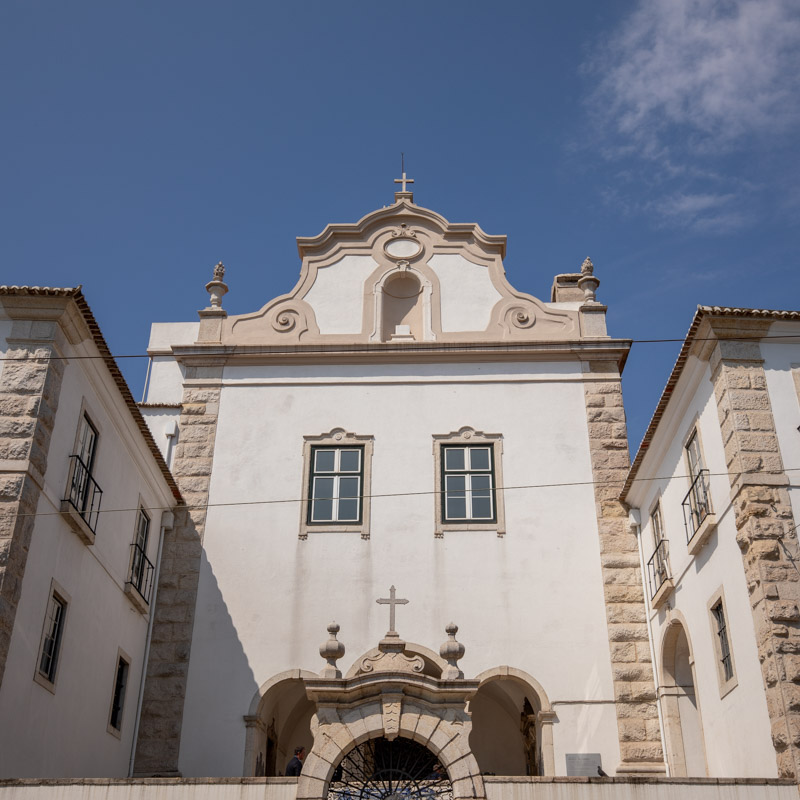
The four-flight staircase organises the approach to the complex. Its tile panels represent the stigmatisation of São Pedro de Alcântara and lead to a raised paved forecourt. The U-shaped plan brings together three rectangular wings, a layout that helps explain how the convent house enclosed internal areas while also opening towards the church. The church entrance stands beneath an arched portico and galilee, a passage point to the convent rooms and to the Lencastres Chapel, built between 1686 and 1692. The church has a single nave, large windows, gilded woodcarving and eighteenth-century monochrome tiles. On the ceiling, the frescoes complete the Baroque reading of the space, while Quillard’s painting of the Coronation of Our Lady by the Holy Trinity adds a pictorial focus to the altar.
More context
The staircase tiles are worth a pause because, even before entering, they tell of the Franciscan devotion that gave the convent its name. Inside the church, notice the dialogue between gilded woodcarving and monochrome tiles. The carved wood marks the altars, while the ceramic covering gives rhythm to the walls. Look up at the ceiling frescoes and find the painting of the Coronation of Our Lady by the Holy Trinity, identified by the sources as an original work by Quillard. The Lencastres Chapel shows another scale of devotion, more familial than communal, as it was linked to the memory of D. Veríssimo de Lencastre. The cloister and former refectory recall the convent routine, made of circulation, silence, shared meals and separation between inner life and the city. The route also helps visitors understand how a building created for friars adapted without erasing all the signs of its origin.
Gallery