Elevador de Santa Justa

Lisboa · Lisboa

Elevador de Santa Justa

ElevatorXXIndustrial Architecture
Rua de Santa Justa, 1150-060 Lisboa4.1 Rating · 57,66930 min

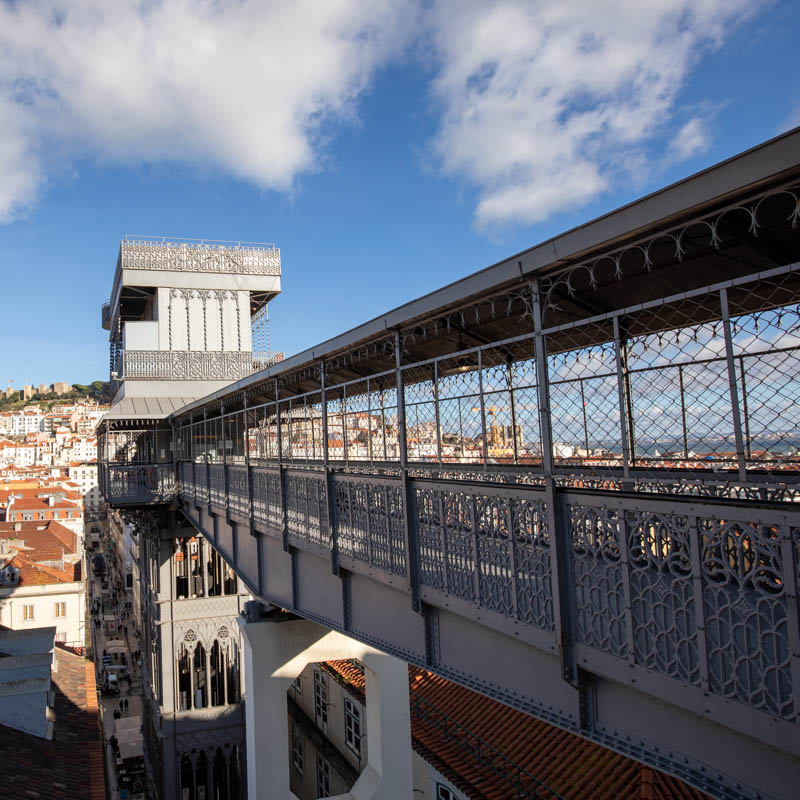
In the heart of Baixa, the Santa Justa Lift shows how Lisbon turned an urban problem into beauty. Opened in 1902 to overcome the steep difference in level between Rua do Ouro and Largo do Carmo, it was designed by Raoul Mesnier du Ponsard and first operated by steam before changing to electricity in 1907. Its iron structure, laced with neo-Gothic arches, makes it far more than a means of transport: it is a rare piece of Lisbon’s industrial architecture and the only vertical lift the city still preserves. During a visit, it is worth noticing the wood-lined cabins, the delicacy of the metal decoration and the suspended walkway leading to Carmo. From the top, among rooftops, ruins and hills, it becomes clear why this monument remains one of Lisbon’s most distinctive images.

Why it matters

Set between Rua de Santa Justa and Largo do Carmo, the lift was created to overcome the sharp difference in level between the Pombaline Baixa and the Carmo hill, in a city where steep slopes strongly shaped everyday movement on foot. The project for what was then called the Carmo Lift was presented in 1900, and the structure opened to the public on 10 July 1902 to a design by the engineer Raoul Mesnier du Ponsard. At first it worked by steam, with the engine house placed at the top, and only in 1907 did it begin to operate with electric power. The quick link between Rua do Ouro and Largo do Carmo gave the structure a very practical role in Lisbon’s daily life, while also turning it into a sign of urban modernisation at the start of the twentieth century. The monument kept this double identity, both transport system and visual landmark, and it was classified as a National Monument in 2002. It remains Lisbon’s only vertical urban lift and one of the city’s most recognisable works of urban engineering.

Architecture and history

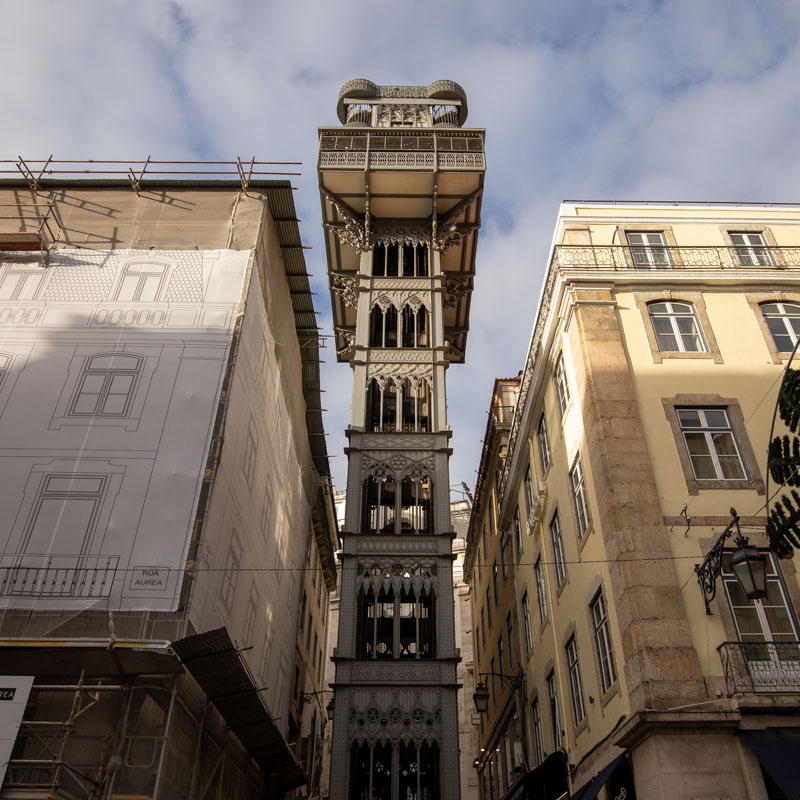
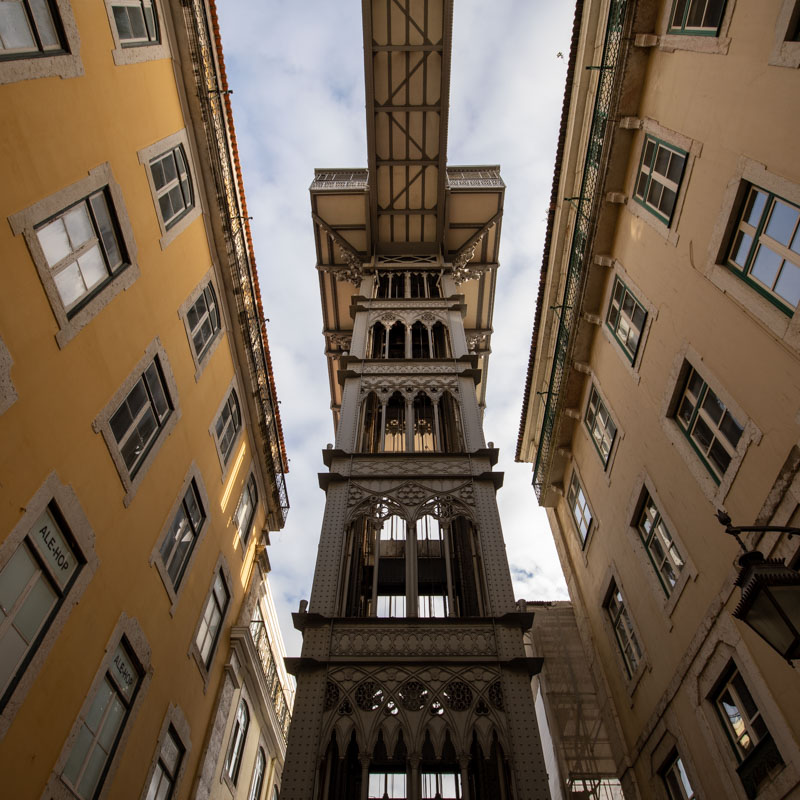
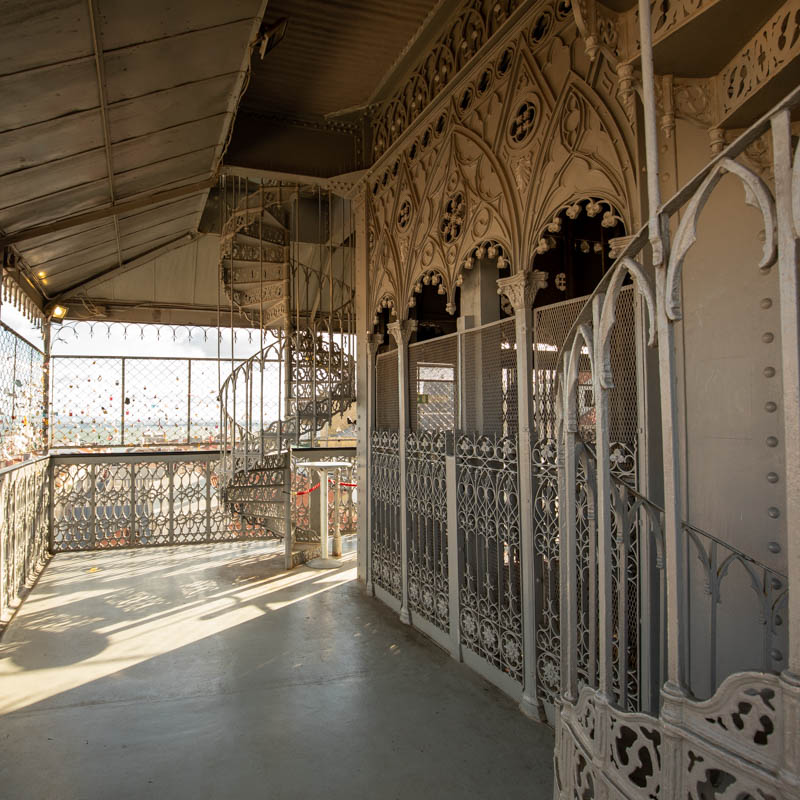
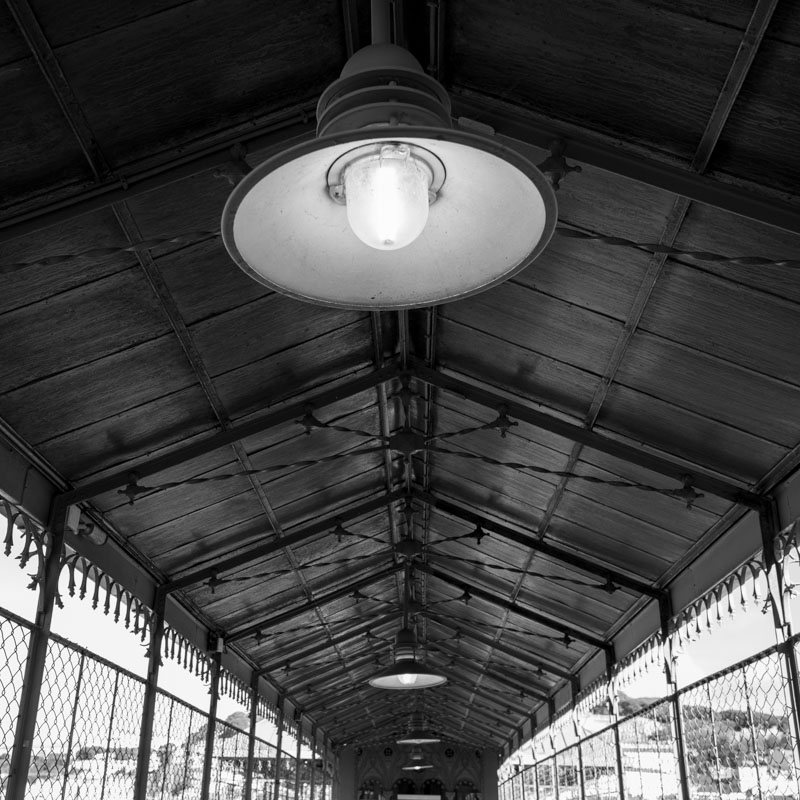
The architectural distinctiveness of the Santa Justa Lift lies in the way iron engineering was treated with decorative ambition. The structure is made up of two metal towers about 45 metres high, linked together and supported on a solid base of pillars and vertical beams, with an upper walkway completing the connection to Carmo. Instead of using a purely functional language, the whole adopts a revivalist vocabulary inspired by Neo-Gothic forms, visible in the pointed arches, metal filigree and lace-like design that lightens the mass of the tower. The interior of the cabins, lined with wood and mirrors, adds a note of comfort and elegance to what is essentially a mechanical device. The different levels are linked by a spiral staircase, and the upper termination was conceived as a point from which to observe the city. More than a simple lift, the monument brings together mobility, architecture and urban setting in a single object.

More context

The wooden cabins are an excellent place to begin, because they show that this work was designed not only to carry passengers, but also to stage the vertical journey itself. It is worth paying attention to the contrast between the carefully finished cabin interiors and the outer iron structure, far more exposed and almost lace-like, rising among the more restrained buildings of the Baixa. On the upper walkway and near the top, the reading of the site becomes especially clear: on one side lies the Pombaline grid, on the other the approach to Carmo and its ruins, with the hill explaining the lift’s original usefulness. The Neo-Gothic ornament deserves slow attention, especially in the arches, railings and the vertical sequence of openings. When the top is accessible, the view helps identify Rossio, São Jorge Castle, the Tagus and the compact outline of the historic centre. That dialogue between mechanism, panorama and city is what makes Santa Justa particularly memorable.

Gallery

Elevador de Santa Justa 1
Elevador de Santa Justa 2
Elevador de Santa Justa 3
Elevador de Santa Justa 4
Elevador de Santa Justa 5

Nearby places

View all