Lisboa · Lisboa
Museu Arqueológico do Carmo
Few places in Lisbon bring together ruin and memory as eloquently as the Carmo Archaeological Museum. Housed in the former church of the convent founded by Nuno Álvares Pereira at the end of the fourteenth century, it preserves the great Gothic arches left open to the sky since the 1755 earthquake, making it one of the city’s most striking witnesses to the disaster. In 1864, Joaquim Possidónio Narciso da Silva created here the first museum of art and archaeology in Portugal, with the aim of saving endangered works and fragments of heritage. The result is a singular museum, where medieval tombs, Roman inscriptions, objects from the Castro de Vila Nova de São Pedro and pre-Columbian mummies coexist beneath the same wounded arches. Between the silence of the stone and the strangeness of the collection, Carmo seems to preserve more than objects: it preserves the very idea of Lisbon as a city shaped by loss, survival and reinvention.
Why it matters
The Carmo Archaeological Museum occupies the ruins of the former Church of the Convent of Santa Maria do Carmo, in Largo do Carmo, Lisbon. The church was founded in 1389 by D. Nuno Álvares Pereira and became one of the city’s great Gothic landmarks. The 1755 earthquake caused severe damage and destroyed almost all its religious and artistic contents. Reconstruction work began in 1756, but was suspended in 1834, when the religious orders were dissolved in Portugal; as a result, the naves and transept remained roofless. In 1864, one year after the creation of the Portuguese Archaeologists’ Association, Joaquim Possidónio Narciso da Silva founded the museum here. Its purpose was to preserve pieces from ruined buildings and dispersed heritage. The result is a museum born from loss, but also from the will to study and protect the country’s material memory.
Architecture and history
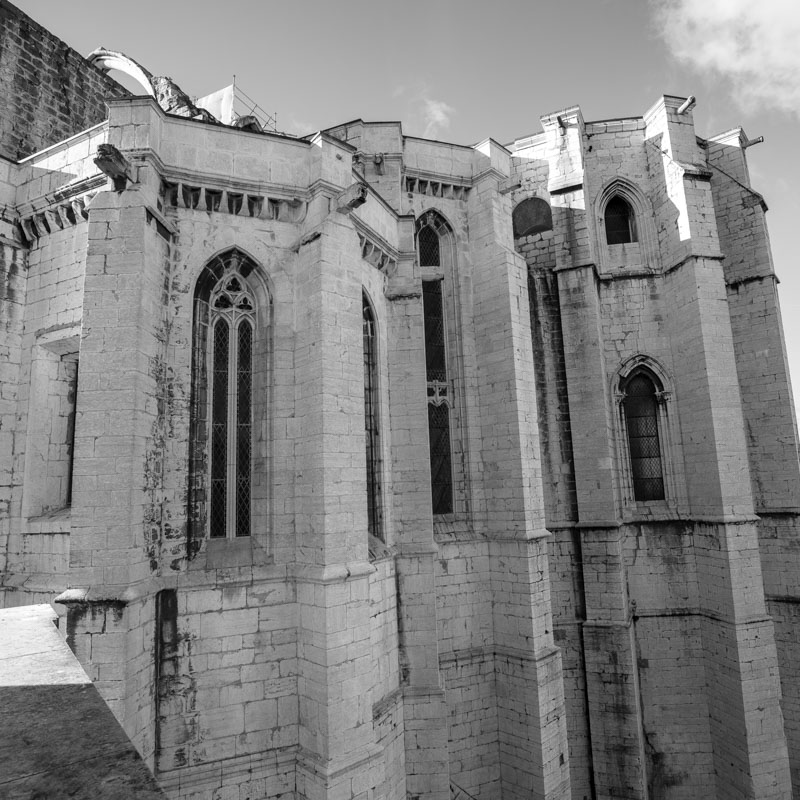
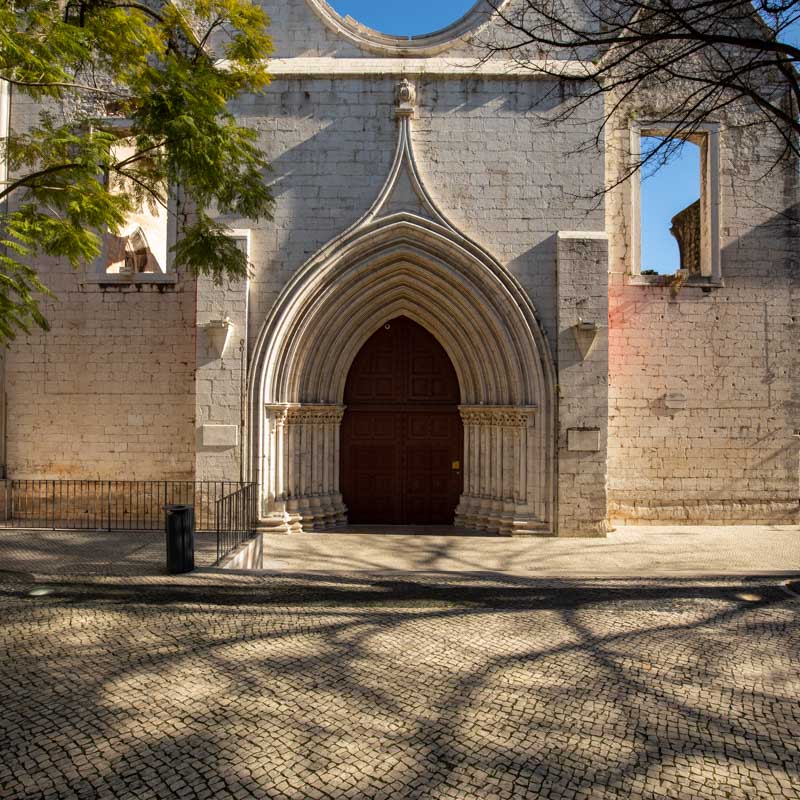
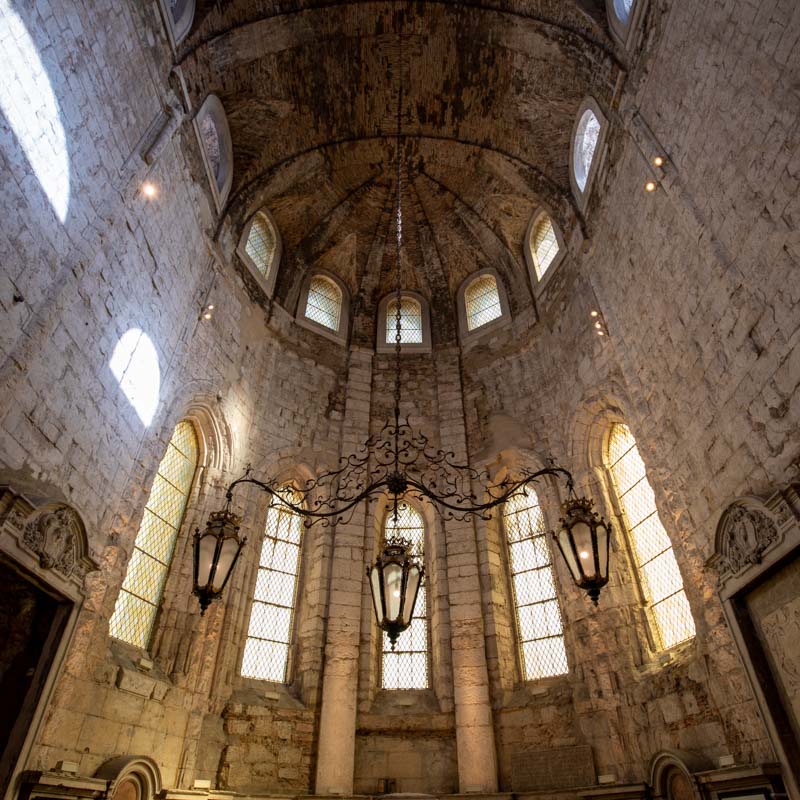
The nave open to the sky is the feature that most strongly shapes the Carmo experience. The building preserves early structures from the 14th and 15th centuries, including the west and south portals and the area of the former chancel. The church followed a Latin-cross plan, with three naves of five bays, a projecting transept and a chancel flanked by four apsidal chapels. The main façade is divided into three sections; in the centre, the arched portal brings together six archivolts resting on columns with vegetal capitals, and above it the truncated rose window can still be seen. Inside, cruciform pillars separate the naves and support pointed arches. The side chapels and the corbels from which the vaults once sprang help visitors imagine the former roof. The ruin, therefore, is not merely absence: it shows how Gothic architecture organised weight, light and height.
More context
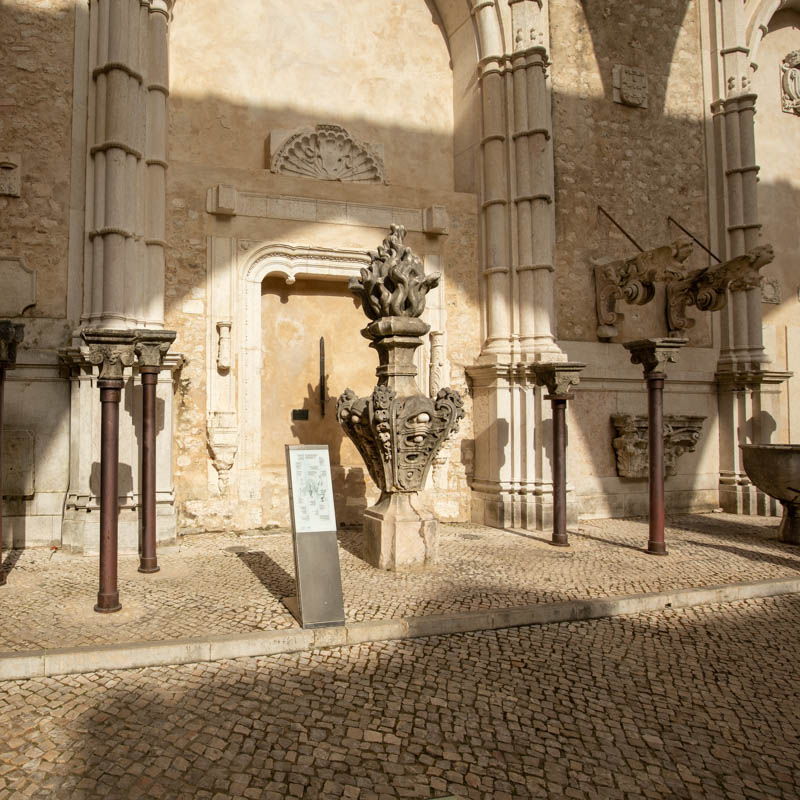
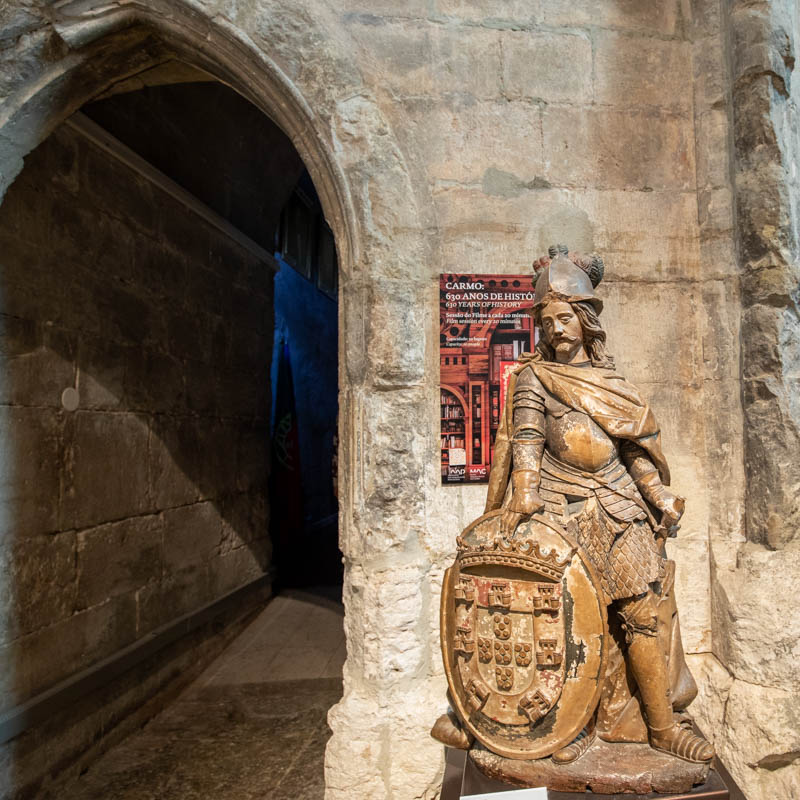
The route through the naves allows two stories to be read at the same time: the interrupted medieval church and the museum created to save fragments from many sources. Notice the pointed arches, the pillars and the roofless walls, because they make visible the mark of the earthquake and the 19th-century conservation choices. In the rooms and in the former chancel area, the collection brings together Roman epigraphy, sculpture, tiles, coats of arms, funerary monuments and archaeological pieces. The section from the Castro of Vila Nova de São Pedro, in Azambuja, brings visitors close to the Chalcolithic; the pre-Columbian ceramics and mummies broaden the horizon beyond Portugal. Among the objects highlighted by the museum are the Sarcophagus of the Muses, the tomb of D. Fernando I, a Manueline window and the model of the Church of Carmo, useful for comparing the former building with the present ruin.
Gallery