Lisboa · Lisboa
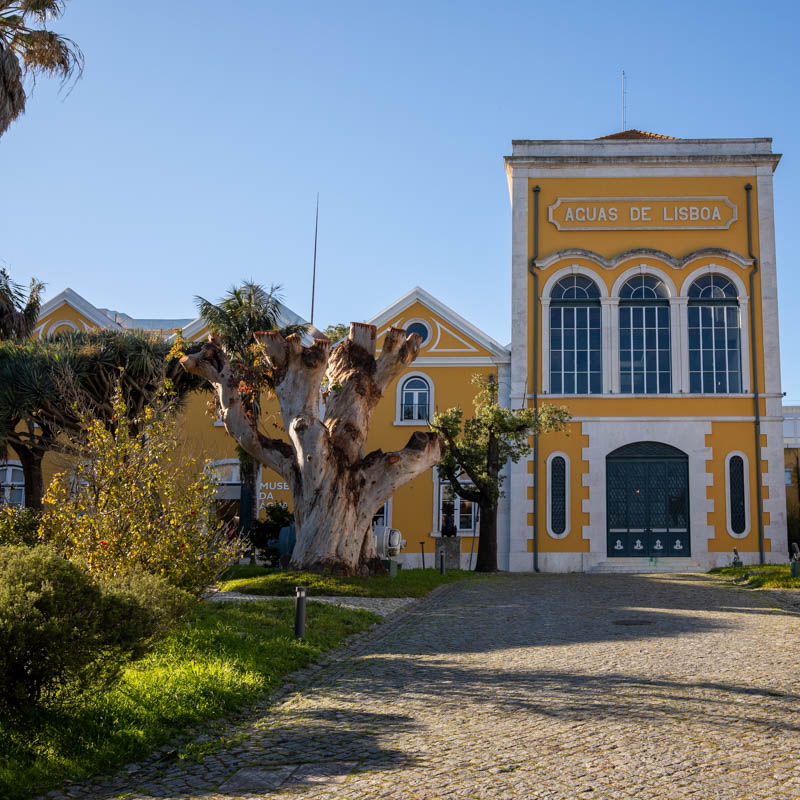
Estação Elevatória a Vapor dos Barbadinhos / Museu da Água
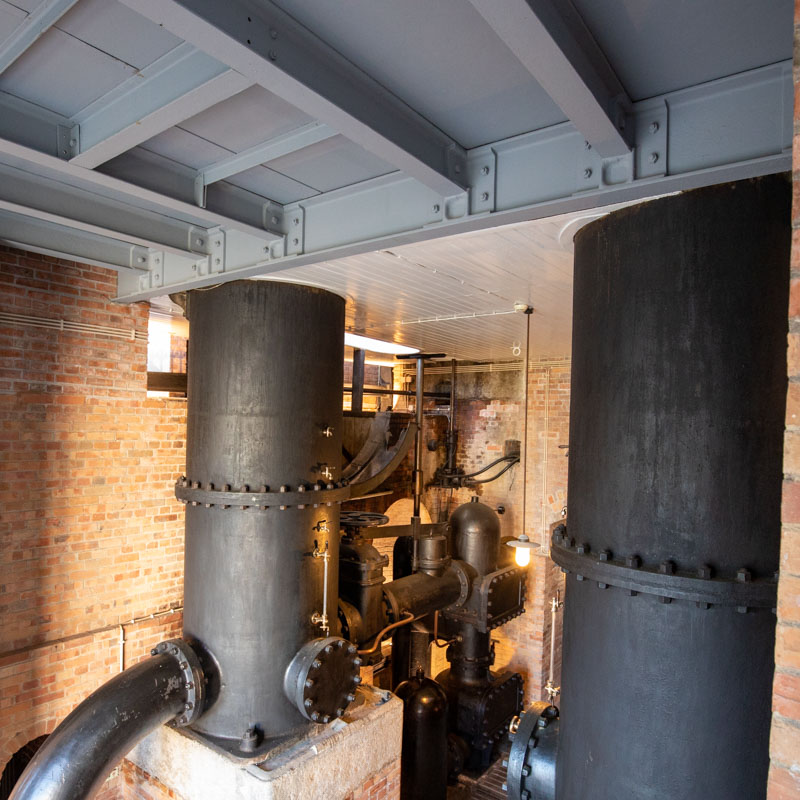
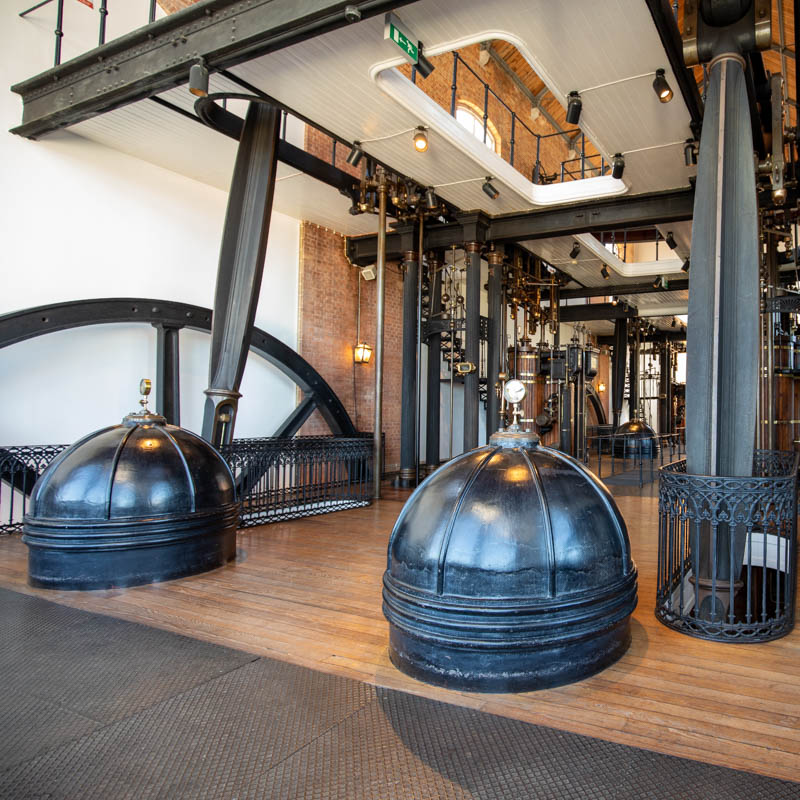
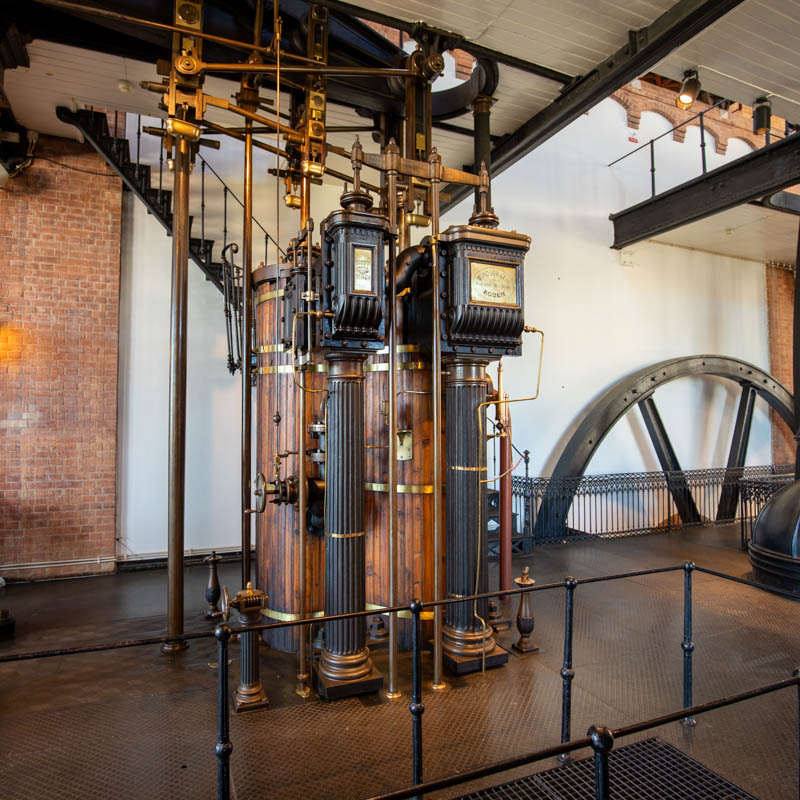
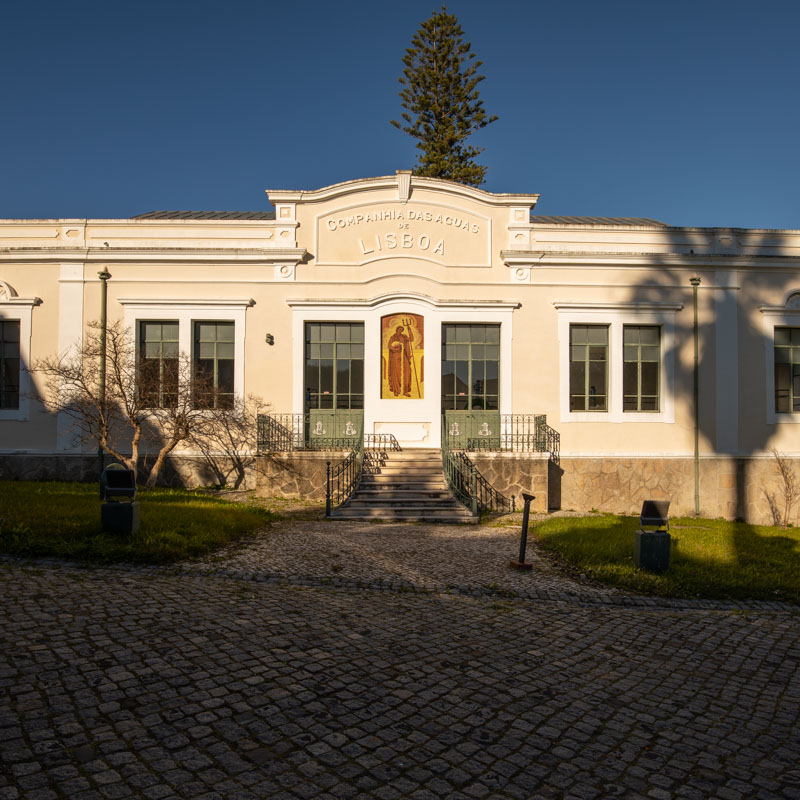
In Barbadinhos, the Water Museum occupies a place where engineering took on the scale of a monument. The former steam pumping station was inaugurated in 1880, beside the reservoir that received water from the Alviela aqueduct, and it was created to answer a very practical need: bringing more water to a growing Lisbon. For decades, it played a decisive role in the city’s supply system, lifting water to higher areas and allowing the domestic network to expand. Today, what makes the visit memorable is the striking Machine Hall, where four steam engines and their pumps are still preserved among iron structures, walkways and volumes that still convey the force of the industrial age. The building, classified as a Property of Public Interest ensemble, shows how a utilitarian infrastructure can become living heritage. Here, Lisbon is also told through water, coal and ingenuity.
Why it matters
The Barbadinhos Steam Pumping Station was born from a very practical need: Lisbon was growing, and the water carried by the Águas Livres Aqueduct was no longer enough. To strengthen the supply, the Alviela Aqueduct was built between 1871 and 1880, designed to bring water from the Olhos de Água springs of the River Alviela, 114 kilometres north of the city. The final reservoir was installed within the grounds of a former Franciscan convent, occupied by the Italian Barbadinhos between 1747 and 1834, which gave the place its name. Beside that reservoir, the steam station was built and opened on 3 October 1880. Its role was to raise water from the Alviela into the urban network, including the Verónica and Penha de França reservoirs, the latter also called the Cisterna do Monte. It worked continuously until 1928 and marks a decisive stage in Lisbon’s modern water supply.
Architecture and history
The building was organised into three parts that clearly reveal its 19th-century industrial logic: the coal store, the boiler area and the steam-engine area. On the upper floor of the main section was the Machine Room, where four machines by the French manufacturer E. Windsor & Fils, of Rouen, acquired in 1876, operated. On the ground floor was the Pump Room, linked to the task of raising water to higher parts of the city. In another section stood five boilers, fed by the coal stored in the building. The former exterior chimney, 40 metres high and 1.8 metres in internal diameter, removed smoke from combustion. The boilers and chimney were demolished in the 1950s, but the preserved machines and pumps still allow visitors to understand the essential operation of the station.
More context
The Machine Room is the key point for reading the whole site. Its large metal structures show the physical scale needed to turn water collected far from Lisbon into a regular urban supply. Notice the separation between the driving force on the upper floor and the pumps on the ground floor: this arrangement helps explain the path between energy, movement and distribution. The absence of the boilers and chimney also tells part of the story, recalling the adaptations made after the end of steam service. The permanent exhibition of the Water Museum, housed in this building, connects Barbadinhos with the museum’s other sites and explains subjects such as the history of Lisbon’s water supply, the Águas Livres Aqueduct, the urban water cycle and sustainability. The result is a visit in which the machinery, the building and the city explain one another.
Gallery