Estação Ferroviária de Santa Apolónia

Lisboa · Lisboa

Estação Ferroviária de Santa Apolónia

StationXIXIndustrial Architecture
Av. Infante Dom Henrique 1, 1100-105 Lisboa4.3 Rating · 12620 min

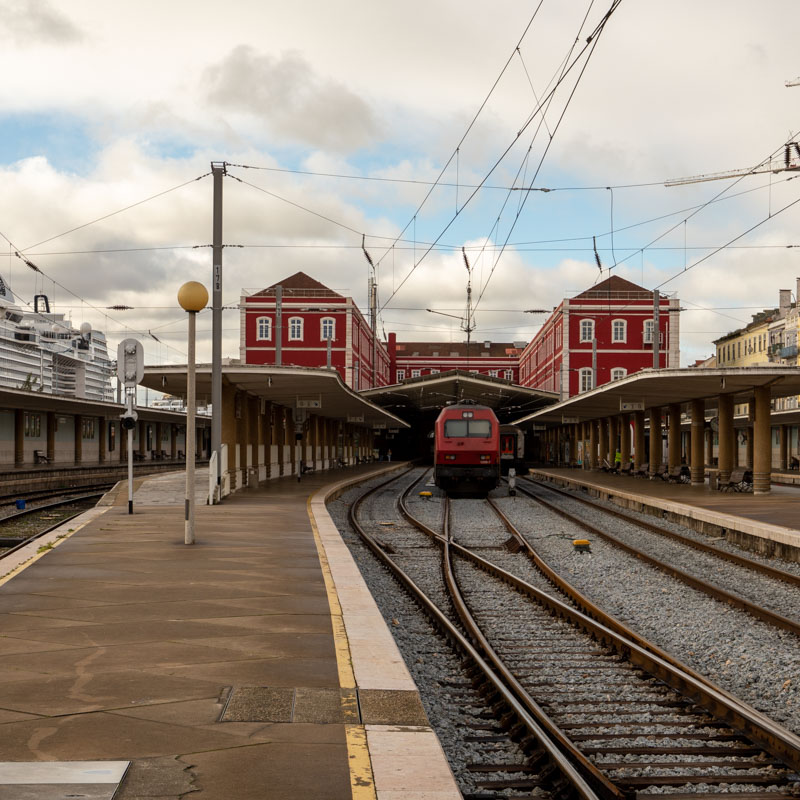
Few places show Lisbon’s entry into modernity as clearly as Santa Apolónia Railway Station. It was here that Portugal’s first train journey departed in 1856, still from temporary facilities in the former convent of Santa Apolónia. The building we see today, with its neoclassical design and U-shaped plan, opened in 1865, fitted into a narrow strip between the houses and the Tagus, like a true railway gateway to the capital. Over generations, it has received departures, returns and farewells; one of its most symbolic moments came in 1974, when Mário Soares arrived from exile and addressed the crowd from the station balcony. During a visit, it is worth noticing the long nave and the relationship with the river, which still gives the whole place the feeling of an urban quay. Between railway, city and political memory, Santa Apolónia still tells the story of Lisbon in motion.

Why it matters

Santa Apolónia Railway Station holds a decisive place in the history of transport in Portugal, because it was from here that the country’s first railway journey departed on 28 October 1856, linking Lisbon to Carregado. At that stage, the service still operated from temporary facilities installed in the former Convent of Santa Apolónia, while the permanent station was being prepared. The project approved in 1862 brought together the engineers Angel Arribas Ugarte, João Evangelista de Abreu and Lecrenier, and the work, carried out by the French company C.A. Oppermann, was inaugurated on 1 May 1865. Built on a narrow strip between the Tagus and the eastern built-up edge of Lisbon, the station became one of the capital’s great railway gateways. It lost some of its prominence with the opening of Rossio in 1891, but regained importance in the 1950s, when long-distance trains returned to Santa Apolónia. The Metro connection, opened in 2007, once again strengthened its role in the urban and national network.

Architecture and history

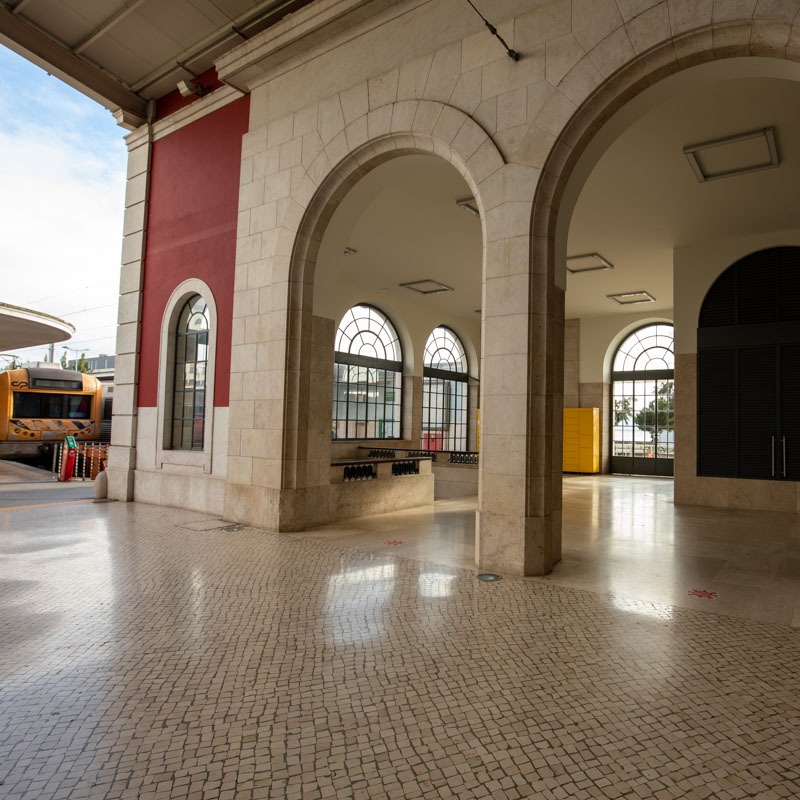
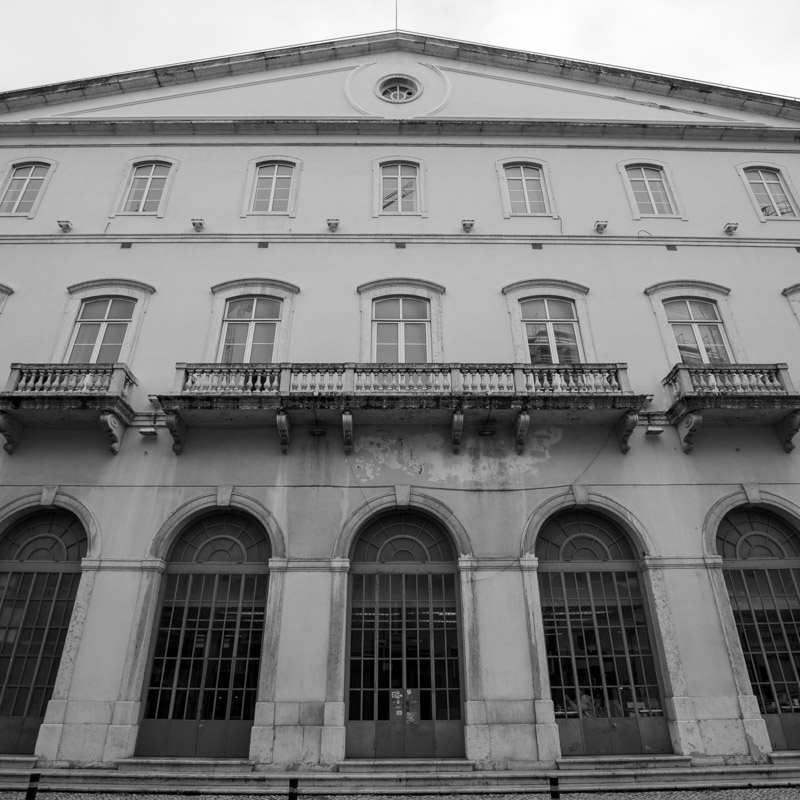
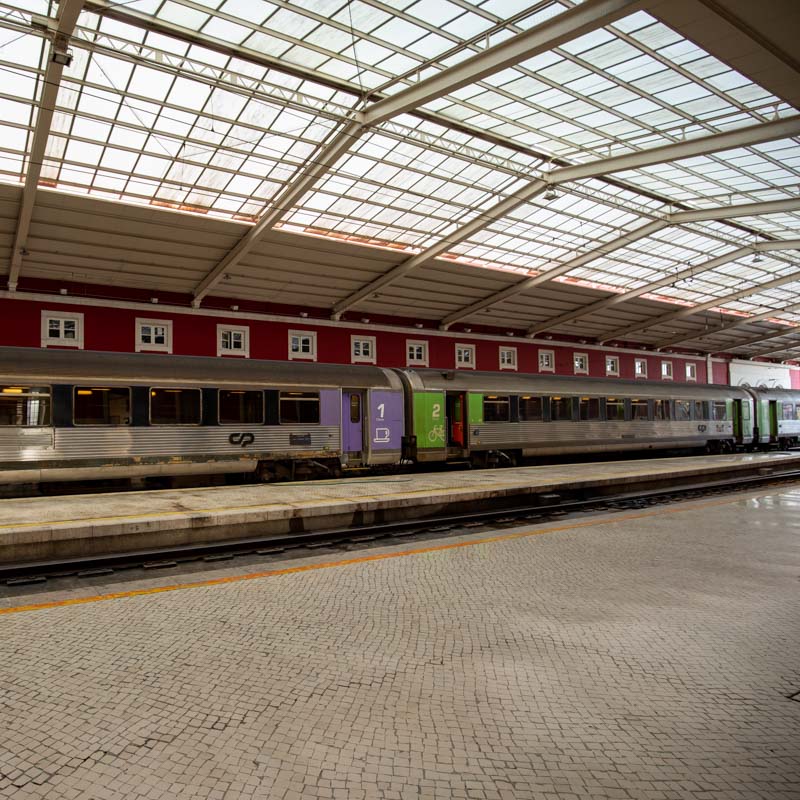
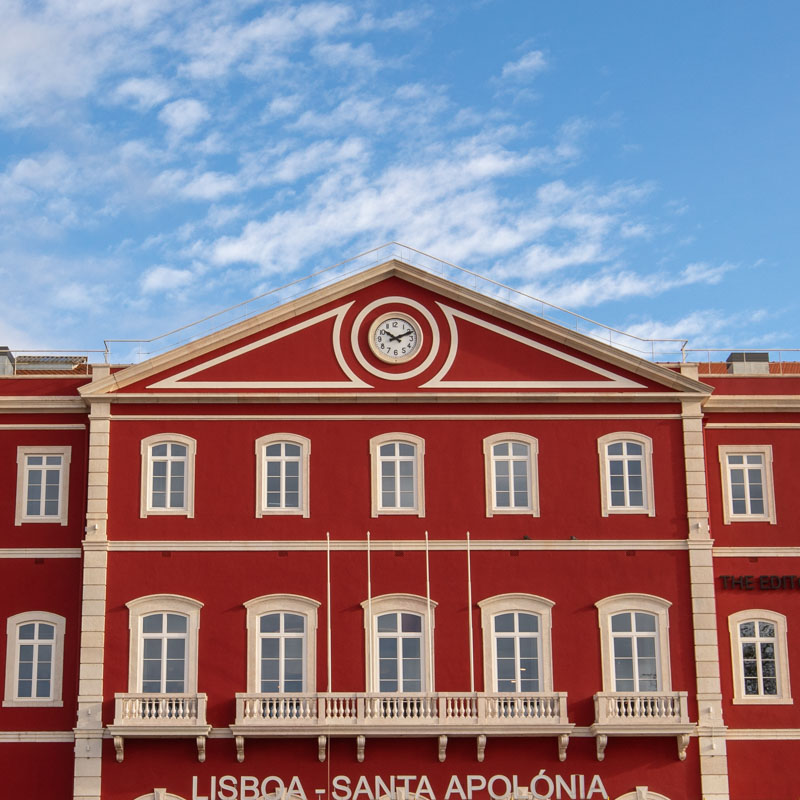
The passenger building is arranged in a U-shaped plan that encloses the railway hall and clearly reflects the scale of mid-nineteenth-century railway engineering. The main façade, symmetrical and neoclassical in language, stands out for its central portico crowned by a pediment, its marked architrave, its round arches and the slight projection of the central body. Inside, the great hall covers the railway space with almost 120 metres in length and around 25 in width, dimensions that were highly impressive for the time. The construction combines brick masonry, limestone ashlar, wrought iron, pine wood and glass, materials that help explain the strength and brightness of the ensemble. In the early years of the twentieth century, the station was enlarged by the addition of another floor, without losing the legibility of its original composition. Its relationship with the river is also essential: before the embankment of today’s Avenida Infante Dom Henrique, the building stood directly beside the Tagus, underlining its former railway and fluvial vocation.

More context

The central pediment and the regular sequence of windows and arches already reveal, from the outside, the formal dignity with which Lisbon presented the new architecture of the railway. Inside the station, the main hall is the most expressive element. It is worth following the repetition of the arched openings, the presence of iron and glass in the roof, and the ending of the tracks within the hall, because all of this reveals the logic of a terminus station. The long scale of the space, designed for departures and arrivals, still carries a rare force in railway buildings that remain in use. Its position between the urban fabric and the riverside edge also deserves attention, especially when the station is seen from the southern side. That setting helps explain why Santa Apolónia was planned as both a rail and river interface, and why it remains a central landmark in Lisbon’s railway history.

Gallery

Estação Ferroviária de Santa Apolónia 1
Estação Ferroviária de Santa Apolónia 2
Estação Ferroviária de Santa Apolónia 3
Estação Ferroviária de Santa Apolónia 4
Estação Ferroviária de Santa Apolónia 5

Nearby places

View all