Porto · Porto
Jardim Botânico do Porto
The Jardim Botânico do Porto is located on Rua do Campo Alegre, in the former Quinta do Campo Alegre, now part of the Museum of Natural History and Science of the University of Porto. With more than four hectares and a layout defined in the late 19th century, it preserves the memory of a recreational estate transformed into a scientific space. In 1895, João Henrique Andresen and Joana Lehmann Andresen acquired the property and altered the gardens and the small palace, creating the Jardim dos Jotas, the Rose Garden and the former tennis court, now the Jardim do Xisto. As the grandparents of Sophia de Mello Breyner Andresen and Ruben A., they also connected the place to Portuguese literature. In 1949, the State bought the estate, and in 1951 the Botanical Garden was installed here. Among camellias, groves, lakes, greenhouses, cacti, succulents and arboretum, the garden brings together a living collection, family memory and botanical knowledge.
Why it matters
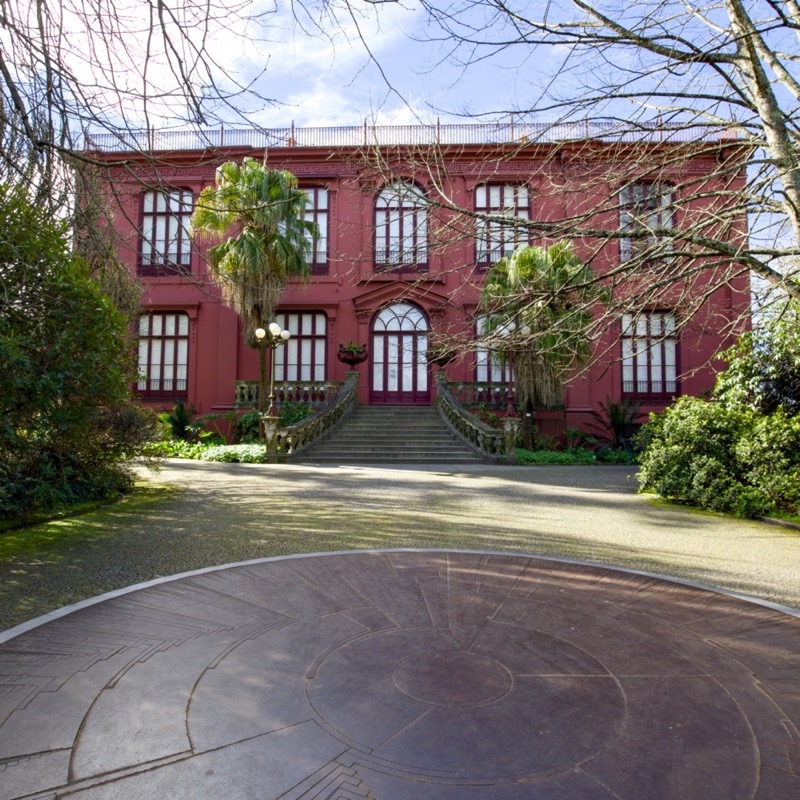
The Porto Botanical Garden is located on the former Campo Alegre Estate, also known as Casa Andresen, in the parish of Lordelo do Ouro along Rua do Campo Alegre. The estate, which changed owners several times during the 19th century, took on its present character from 1895, when it was acquired by Port wine merchant João Henrique Andresen and his wife, Joana Lehmann Andresen. This bourgeois family from Porto introduced a romantic layout with avenues, ornamental corners and a formal garden marked by high camellia hedges. Two of their grandchildren, writers Sophia de Mello Breyner Andresen and Ruben A., spent much of their childhood and youth here, and immortalised the house and gardens in several literary works. In 1949 the Portuguese State purchased the Campo Alegre Estate, paving the way for the creation of a new botanical garden for the University of Porto after decades in which the city lacked such a space. In 1951 the Porto Botanical Garden was formally established under the management of the Faculty of Sciences and the Gonçalo Sampaio Botany Institute. In the following decades, German landscape architect Franz Karl Koepp and university technicians adapted the grounds to their scientific and public function. Construction of the Arrábida Bridge and its access roads reduced the area from around 12 to about 4 hectares, partially offset by the integration of the neighbouring Burmester Estate. Closed to the public in 1983 due to its state of repair, the garden reopened in 2001 and has been part of the University’s Natural History Museum since 2010 and, from 2015, of the Museum of Natural History and Science. In recent years it has received various national and international distinctions, including museology prizes, the Green Flag Award and the title of International Camellia Garden of Excellence.
Architecture and history
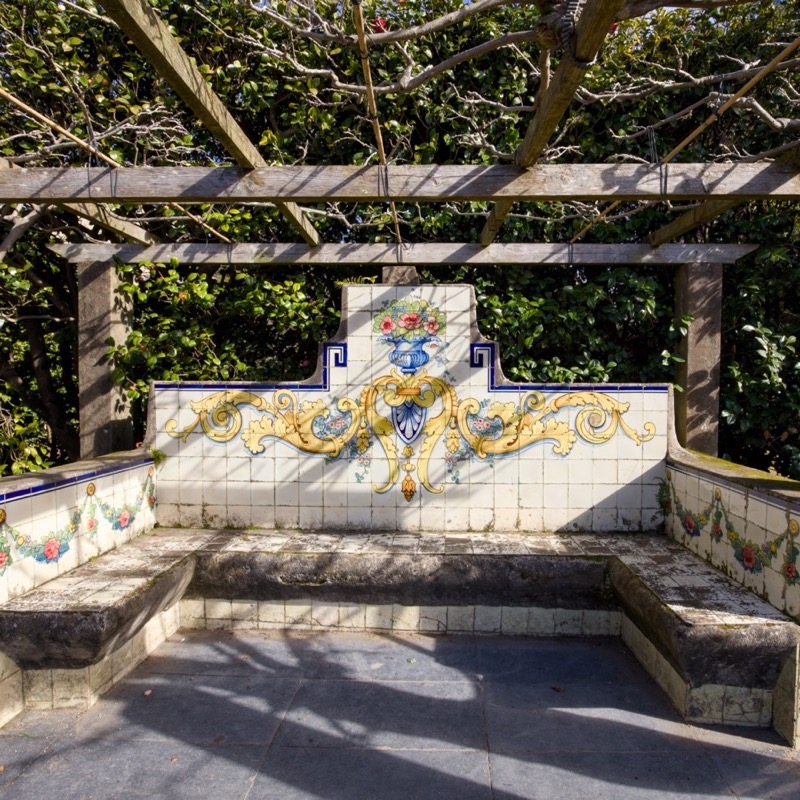
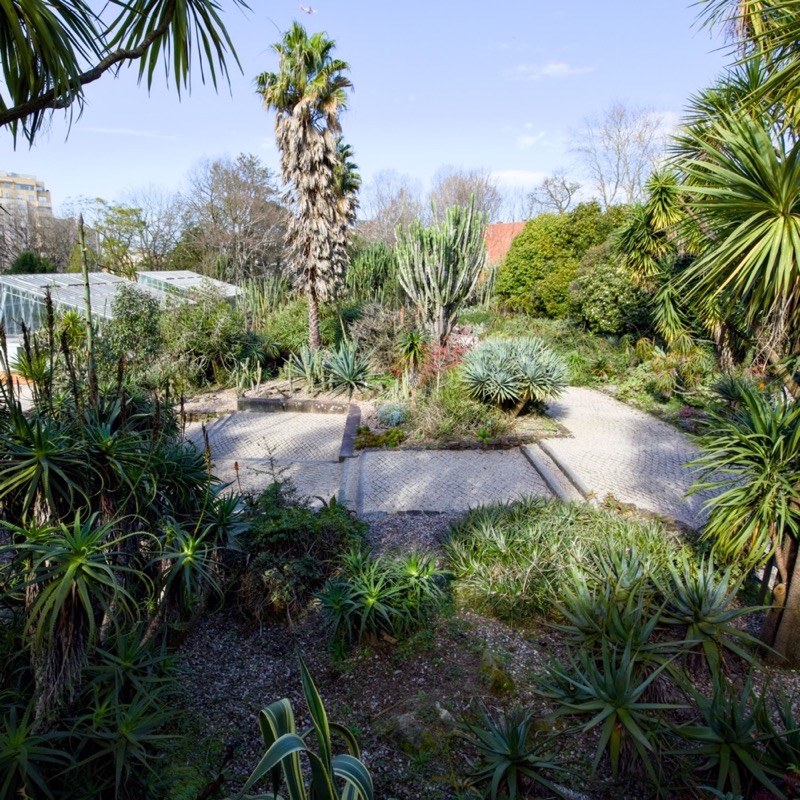
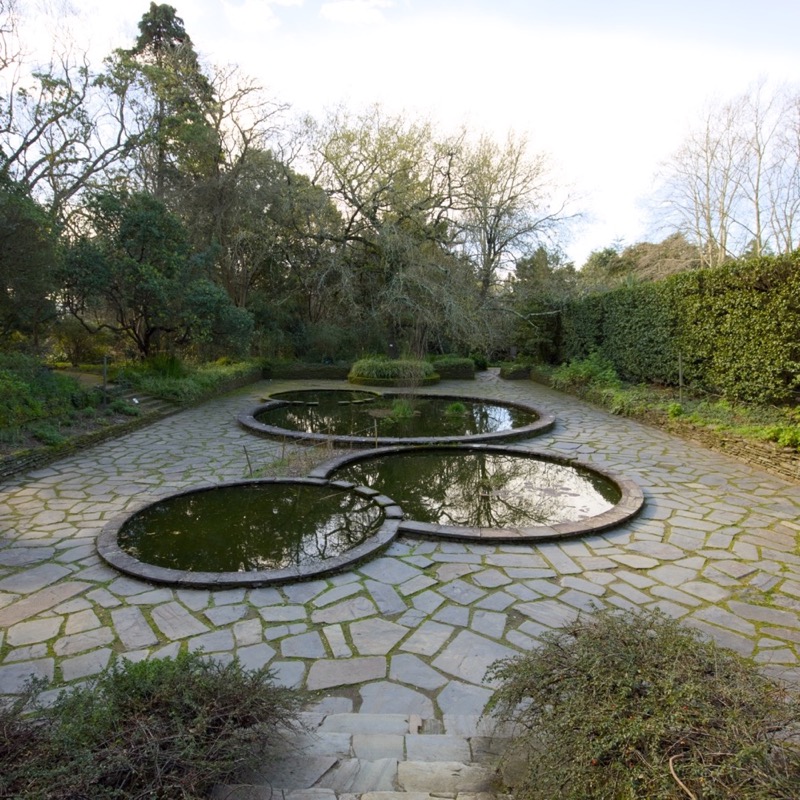
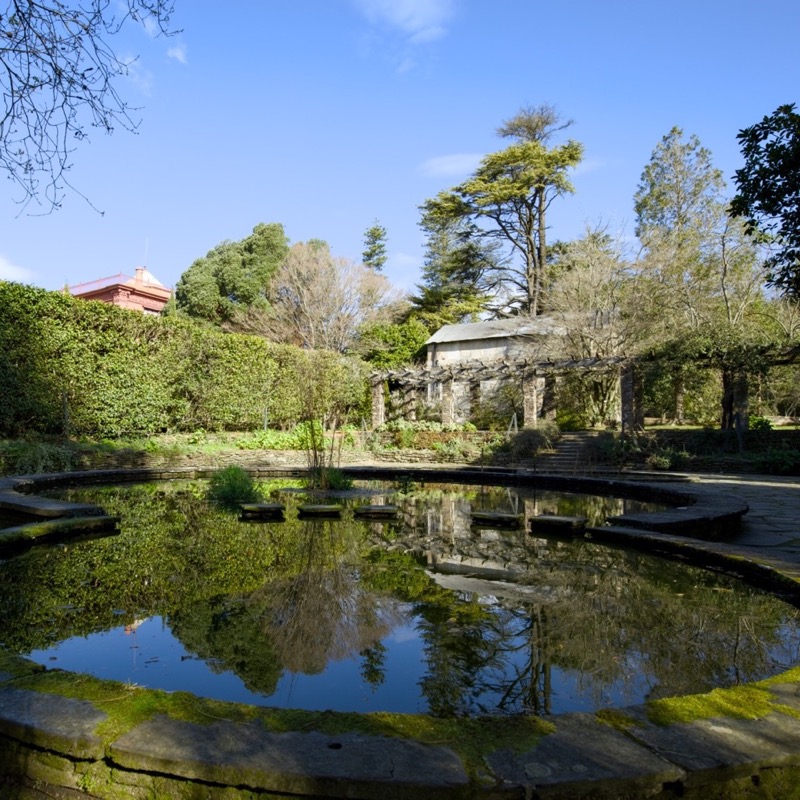
Covering around 4 hectares, the Porto Botanical Garden is laid out on terraces, structured into several levels with distinct features. At the upper level stands Casa Andresen, a 19th-century romantic villa surrounded by a historic formal garden divided into three main compartments: the Rose Garden, the J Letter Garden and the Fish Garden. These geometric spaces are enclosed by tall hedges of Camellia japonica, creating "garden rooms" that combine lawns, rose beds, clipped box hedges and small sculptural elements. The monumental camellia hedges, with hundreds of specimens stretching over more than half a kilometre, have become one of the garden’s trademarks. Halfway down the slope are the greenhouses and the cacti and succulents garden, which brings together species of Opuntia, Agave, Aloe, Euphorbia and other plants adapted to dry environments. The glasshouses house collections of tropical and subtropical plants, orchids and specimens of scientific interest, exploring contrasts in humidity, temperature and light. In different areas there are thematic beds, zones of native flora and experimental plots associated with botanical research. On the lowest terrace lies the arboretum, with collections of conifers, centenary trees, a fernery, aquatic plants and the largest pond in the garden. Here one finds species such as beeches, oaks, magnolias, tulip trees and a large Ginkgo biloba, in a setting approaching a small forest park. Overall, the garden combines traces of 19th-century Romanticism with 20th-century interventions linked to scientific and educational purposes, articulating formal layouts, woodland corners, ponds, bosquets, glasshouses and small ancillary buildings such as Casa Salabert, now converted into a study space. Together with the Gallery of Biodiversity housed in Casa Andresen, it forms an important centre for research, conservation and public engagement with biological diversity.
More context
A visit may begin at Casa Andresen, where the relationship between the mansion and its historic garden can be appreciated. In the forecourt stand busts of figures associated with the site, such as Sophia de Mello Breyner and Ruben A., highlighting its literary dimension. Inside the building is the Gallery of Biodiversity – Ciência Viva Centre, an exhibition dedicated to life on Earth and biological and cultural diversity, which provides a museum complement to the garden visit. From the house, paths lead into the Rose Garden and the J Letter Garden, where visitors can enjoy the camellia hedges that form corridors and green courtyards, particularly striking when in bloom. The Fish Garden and other corners designed during the 20th century reinforce the scenic character of the space, with small changes in level, benches, winding paths and framed views over the arboreal canopy. Moving towards the glasshouses, visitors reach the cacti and succulents garden, where collections are organised by taxonomic groups or ecological adaptations, accompanied by interpretive signage. Descending to the lowest level, the arboretum offers shaded walks among conifers, deciduous trees, exotic species and native plants, punctuated by ferns, clearings and bodies of water. The largest pond, with aquatic vegetation and associated fauna, is one of the quietest points of the circuit. Throughout the garden, information panels and resting areas invite visitors to observe the plants in detail. The garden hosts guided tours, activities for schools and families and seasonal initiatives promoted by the Museum of Natural History and Science of the University of Porto, reinforcing its scientific, educational and heritage role in the city.
Gallery