Porto · Porto
Jardins do Palácio de Cristal
The Jardins do Palácio de Cristal, in Porto, preserve the memory of a place that has changed its face several times. The former Campo da Torre da Marca, known since 1542 for a tower used as a reference point for ships at the Douro bar, received the Palácio de Cristal Portuense in the 19th century. Inaugurated by D. Luís in 1865 for the Portuguese International Exhibition, the iron-and-glass building was designed by Thomas Dillens Jones; the romantic gardens were entrusted to Émile David. The palace was demolished in 1951 and replaced by the Sports Pavilion, today the Pavilhão Rosa Mota. From the original design, the Émile David Garden, the Lime and Plane Tree avenues, the woodland and the terraces over the Douro still remain. Among camellias, fountains, sculptures and viewpoints, the garden keeps alive the bond between city, leisure and landscape.
Why it matters
The Crystal Palace Gardens are one of Porto’s main historic green spaces, located in the parish of Massarelos on a plateau that drops in terraces towards the River Douro. These romantic gardens were designed in the 1860s by the German landscape architect Émile David, in the context of the construction of the then Crystal Palace, inaugurated in 1865 to host the Porto International Exhibition. The original composition linked the large iron-and-glass pavilion to an approximately eight-hectare garden setting, laid out to make the most of views over the Douro and the sea, at a time when the city sought to assert itself as a modern industrial and commercial centre. From the outset, the complex was used for industrial exhibitions, agricultural shows, concerts and social events that marked 19th-century Porto. In 1933 the palace and gardens became the property of Porto City Council, consolidating their public role. The Crystal Palace building was demolished in 1951 to make way for the Sports Pavilion, today the Super Bock Arena – Pavilhão Rosa Mota, while the name "Palácio de Cristal" remained associated with the surrounding gardens. Throughout the second half of the 20th century the grounds were updated, preserving key elements of Émile David’s design – such as the Émile David Garden, the woodland and the main tree-lined avenues – and incorporating new cultural facilities. At the beginning of the 21st century, the inauguration in 2001 of the Almeida Garrett Municipal Library and the creation of thematic gardens, including the Aromatic and Medicinal Plants Garden, the Twin Cities Garden (2009) and the Garden of Feelings (2007), added contemporary layers to this historic urban park.
Architecture and history
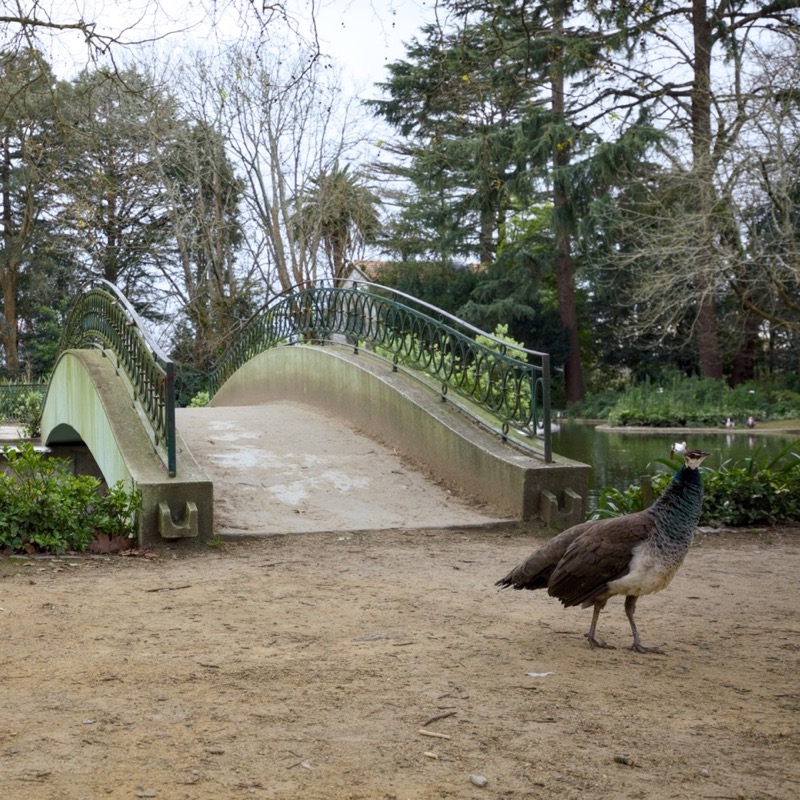
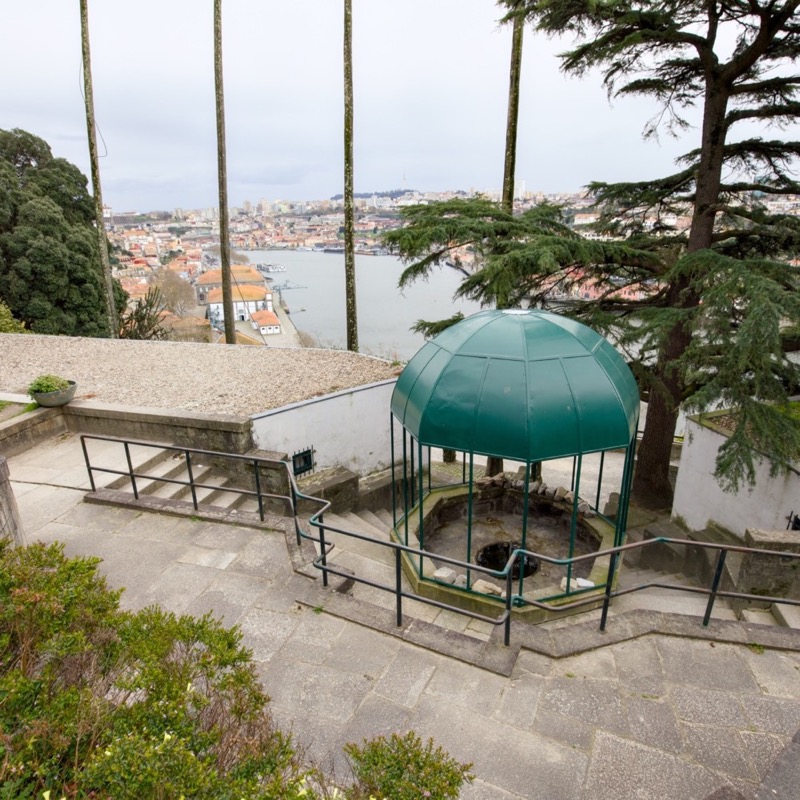
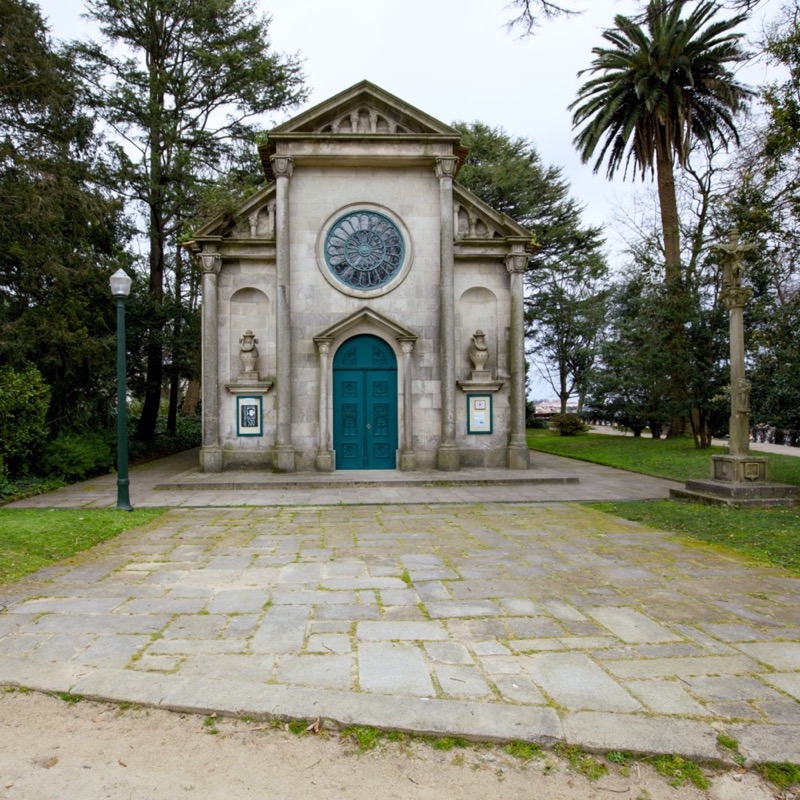
Covering around eight hectares, the Crystal Palace Gardens unfold in terraces that follow the topography from the former Campo da Torre da Marca down the slopes towards the Douro. Émile David’s romantic design combines a formal garden with controlled vistas and a sequence of woodland, clearings and panoramic balconies. At the main entrance lies the Émile David Garden, an open space punctuated by flower beds, fountains and statues of the four seasons, framed by rhododendrons, camellias, araucarias, ginkgos and beeches. From this core, curving avenues and stairways create successive visual links with the river, the city and the dominant volume of the central pavilion. The most distinctive axis of the park is the Avenida das Tílias, lined with rows of lime and plane trees leading to the Rosa Mota Pavilion, a circular building with a hemispherical concrete dome built on the former site of the palace. Along this avenue stand facilities such as the Almeida Garrett Municipal Library, the Acoustic Shell and the Carlos Alberto Chapel, which link the landscape heritage to cultural and public uses. Strategically placed viewpoints, such as the Torre da Marca belvedere and other balconies over the Douro, function as natural terraces overlooking the estuary and the opposite bank of Vila Nova de Gaia. The thematic gardens introduce new readings within this historic framework. The Aromatic and Medicinal Plants Garden presents species of ethnobotanical interest, while the Twin Cities Garden associates trees offered by Porto’s twin cities with a symbolic message of cooperation. The Garden of Feelings is laid out as a small labyrinth in traditional Portuguese cobblestone, where plaques identify plants associated with emotions and where the sculpture "A Dor" ("Pain"), by Teixeira Lopes, stands out. Lawns, dense woodland, ponds and water features, together with more than a thousand trees of different species, give the ensemble an important role in climate regulation, natural drainage and biodiversity promotion within the urban fabric.
More context
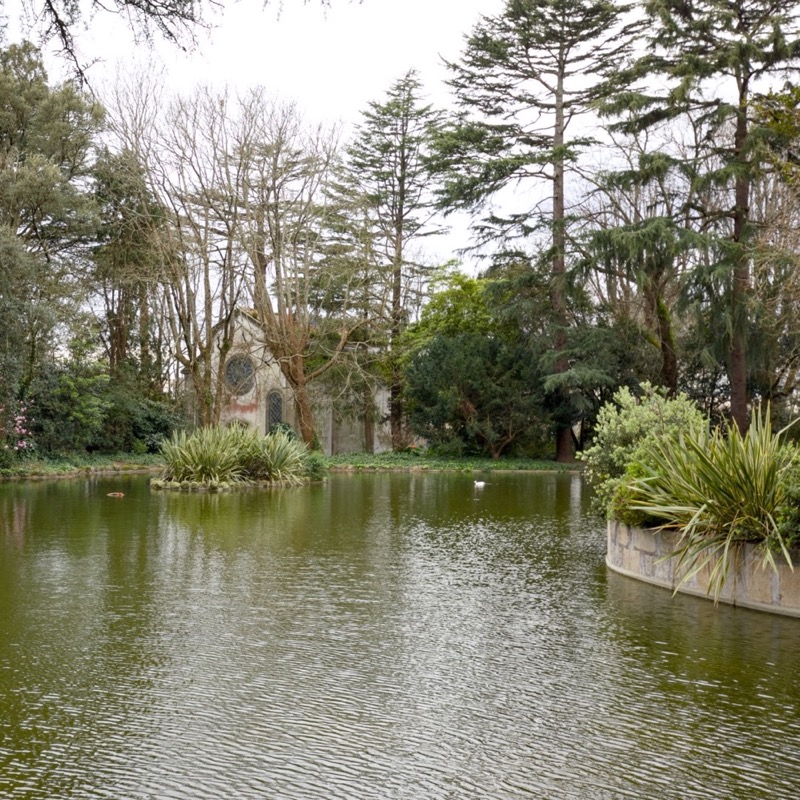
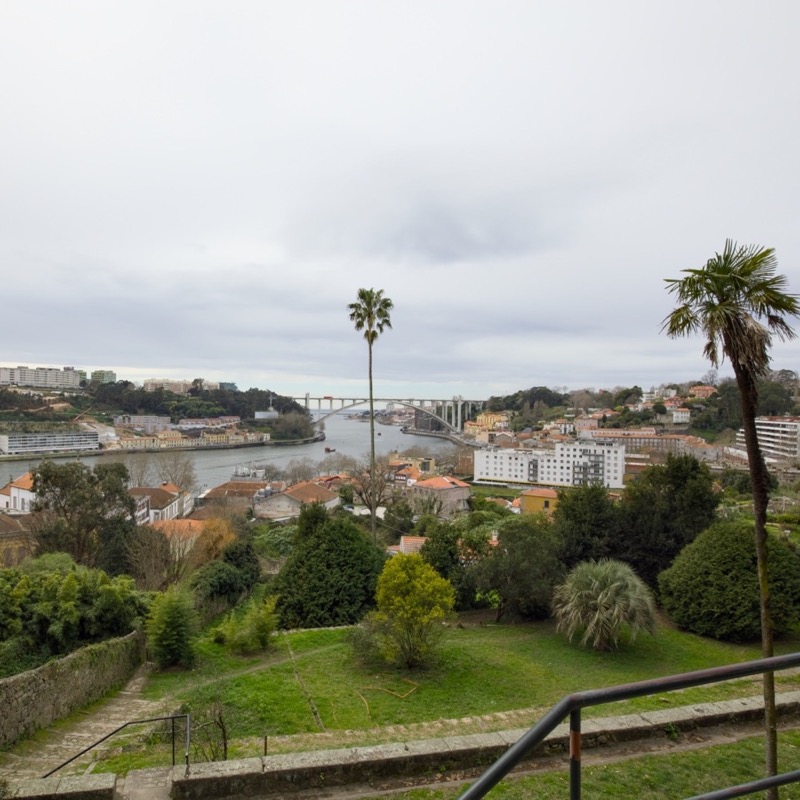
A typical visit may start at the gates on Rua D. Manuel II, leading directly into the Émile David Garden. This first area reveals the scale of the complex, with large grassy clearings, flower beds, fountains and statues of the four seasons framed by mature trees. From here, several paths allow visitors to choose between more formal routes along the avenues or winding trails descending towards the lower terraces. Following the axis of the Avenida das Tílias, visitors pass the Almeida Garrett Municipal Library and the Acoustic Shell and reach the Carlos Alberto Chapel, which recalls the period of exile of the King of Sardinia in Porto. At the centre, the Rosa Mota Pavilion organises the circulation around it, while viewpoints such as the Torre da Marca belvedere and the balconies over the Douro offer sweeping views of the riverside, the bridges and, in the distance, the river mouth. Nearby are the main pond and the so-called Horses’ Lake (Lago dos Cavalinhos), set among classified trees and scattered sculptures. On the terraces facing the river lie some of the most sought-after corners. The Aromatic and Medicinal Plants Garden, the Twin Cities Garden and the Garden of Feelings invite more contemplative walks, where vegetation is accompanied by thematic signage. The Rose Garden and the woodland area provide shade and routes among horse-chestnuts, palm trees and camellias, with additional viewpoints over the Douro and Vila Nova de Gaia. At the edge of the gardens, the Quinta da Macieirinha, housing the Romantic Museum and the Port Wine Solar, and the nearby Casa Tait extend the visit and connect the park with other heritage sites linked to 19th-century Porto.
Gallery