Lisboa · Lisboa
Jardim Botânico Tropical
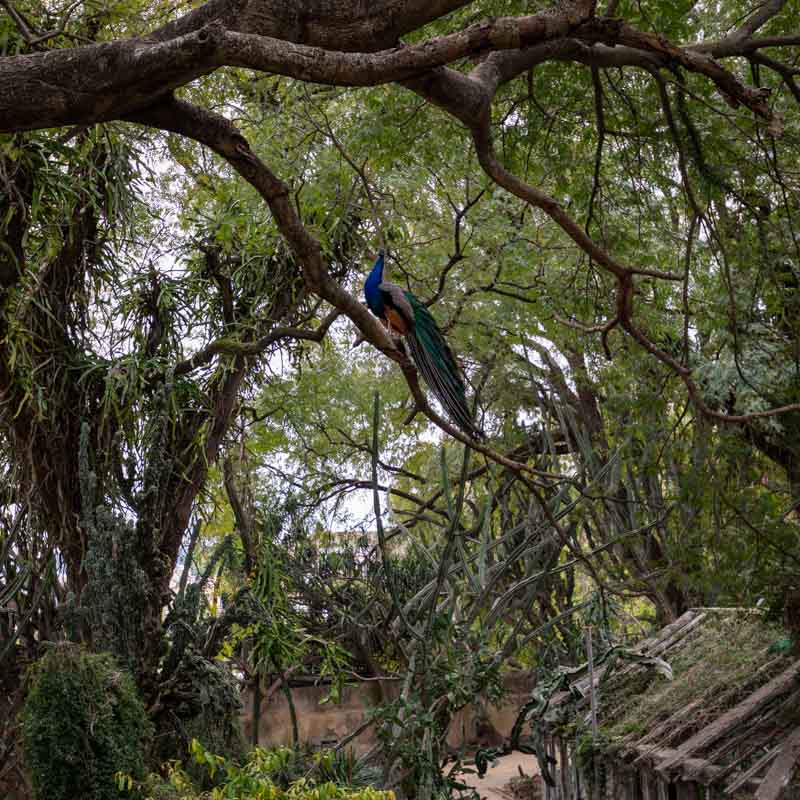
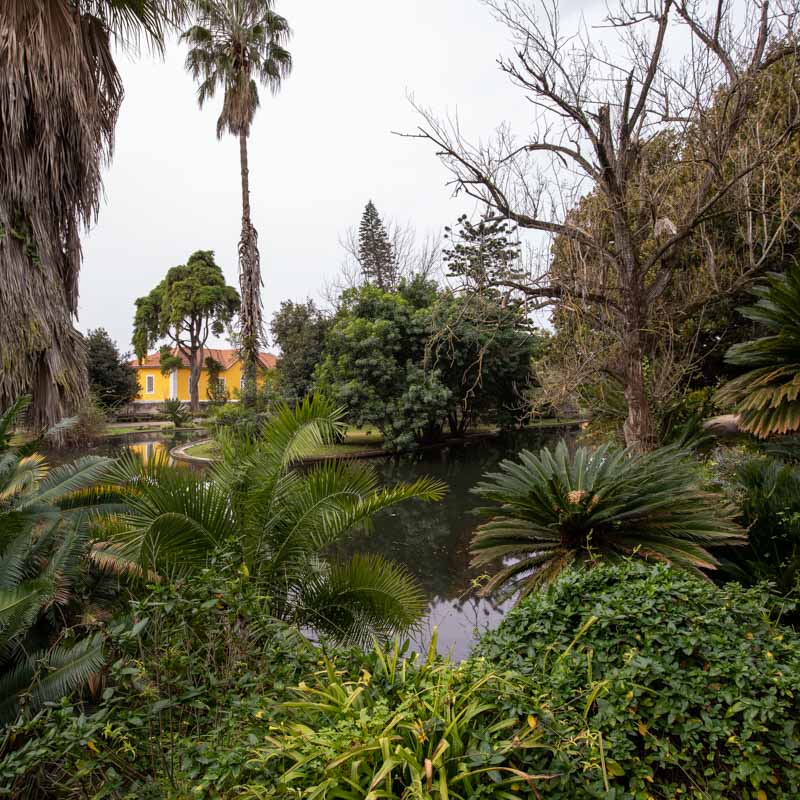
In Belém, the Tropical Botanical Garden brings together, in a single place, the elegance of an old royal estate and the more complex memory of Portugal’s colonial past. The landscape still bears traces of the eighteenth century, when King João V acquired these grounds, but the scientific garden was born in 1906 as the Colonial Garden, created for teaching and experimentation in tropical agriculture, and moved here a few years later. In 1940, the Portuguese World Exhibition left marks that are still visible, such as the Macau Arch and the fourteen busts scattered through the grounds, recalling another layer of its history. Between the long avenue of palm trees, the lakes, the greenhouses and around six hundred tropical and subtropical species, the walk feels both exuberant and meditative. What makes this garden singular is not only its botanical collection: it is the way nature, science, art and memory meet in a place that shows, quietly, that gardens too can tell the story of a country.
Why it matters
In Belém, the Tropical Botanical Garden grew from a scientific idea linked to teaching and agricultural experimentation in tropical territories. It was created in 1906, in the context of colonial agricultural services and Colonial Agricultural Education, under the name Jardim Colonial. First installed elsewhere in Lisbon, it moved to the grounds of the Belém Palace in the early 20th century and became established there as a garden for the study, acclimatisation and display of plants. Its history gained another layer in 1940, when the Portuguese World Exhibition concentrated the Colonial Section in this space. That origin now calls for a double reading: the garden preserves valuable botanical heritage, but it also bears witness to ways of representing the Portuguese colonial empire. Since 2015 it has been part of the University of Lisbon. The classification of the ensemble as a National Monument in 2007 recognises this crossing of nature, science and historical memory.
Architecture and history
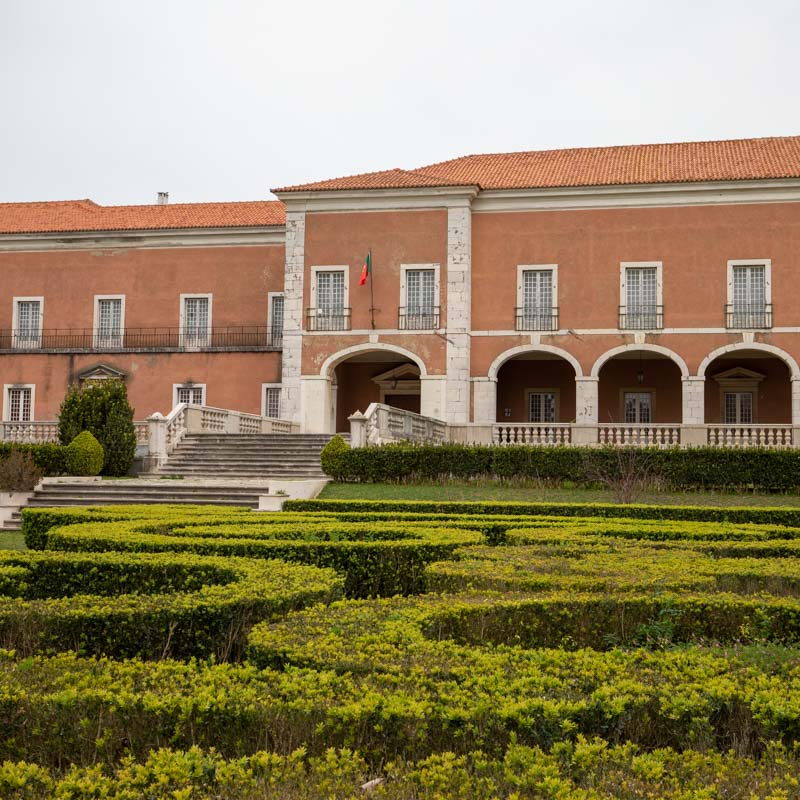
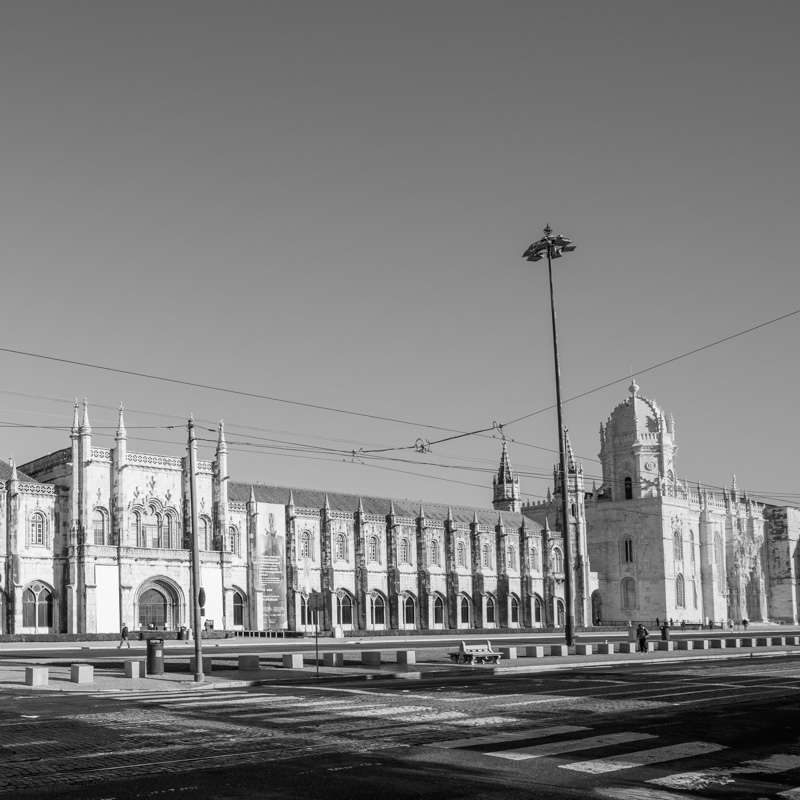
The layout combines scientific garden, historic estate and exhibition setting. Among the tropical and subtropical vegetation stand buildings from different periods, especially the Palácio dos Condes da Calheta, the Casa da Direção, the Casa do Veado and the Great Greenhouse. The latter, in early 20th-century iron architecture, recalls the importance of greenhouses in the acclimatisation and observation of plants. The ensemble does not work as a purely landscaped garden: paths, lakes, avenues, walls and buildings guide the eye and reveal the various phases of use of the space. The presence of statuary and structures associated with the 1940 Exhibition adds a visual dimension that should be read with historical context. Rather than a neutral image of the tropics, the garden shows a cultural organisation constructed in Lisbon. The proximity of the Belém Palace and the Jerónimos Monastery reinforces its integration into Belém’s monumental landscape.
More context
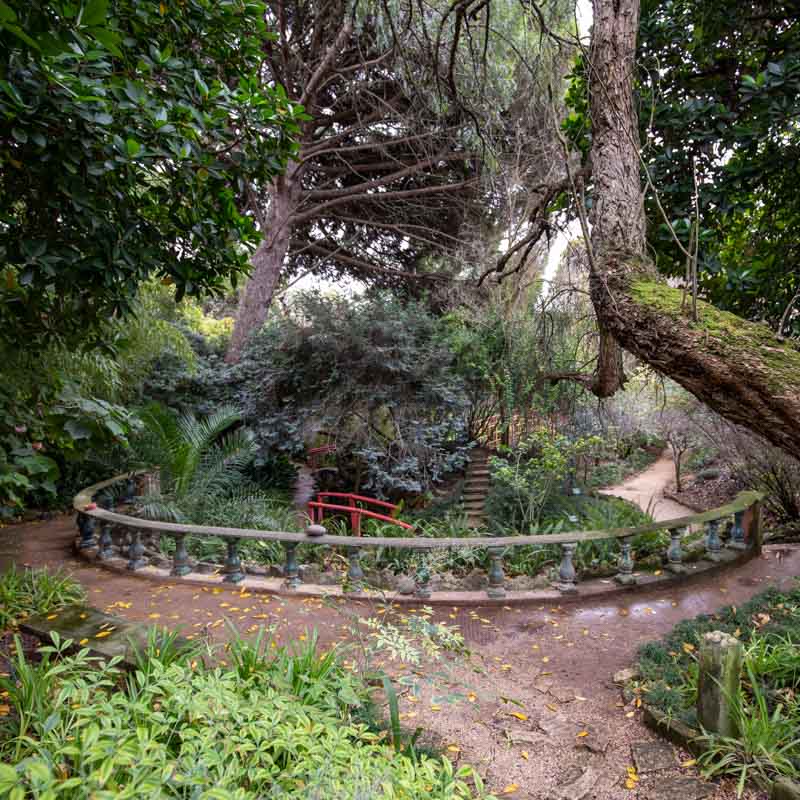
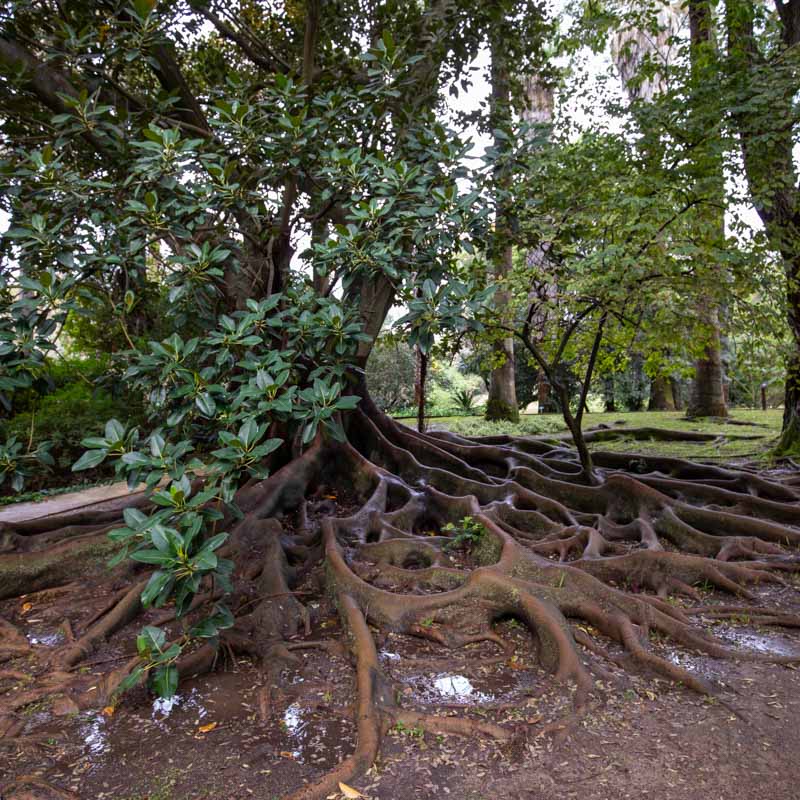
The plant collections deserve slow observation. The garden contains more than 500 species from several continents, including rare specimens and species that are threatened or already extinct in their countries of origin. Notice the palm avenues, the shaded corners, the lakes and the way the plants create successive small environments. The Oriental Garden, with the Macao Arch built for the Portuguese World Exhibition of 1940, helps explain how botany, staging and colonial propaganda crossed paths in this place. Also observe the Great Greenhouse, the Palácio dos Condes da Calheta and the statuary scattered through the garden: they are not merely decorative elements, but marks of the space’s different functions. The visit becomes richer when the plants are seen alongside these historical layers.
Gallery