Lisboa · Lisboa
Museu Igreja de São Roque
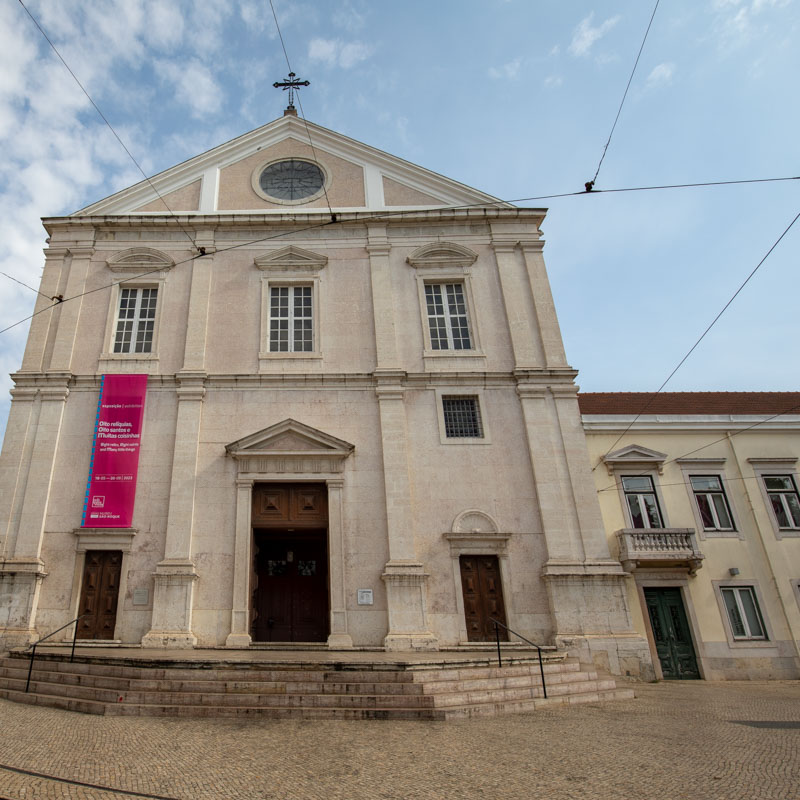
In Bairro Alto, the Church and Museum of São Roque show how a sober façade can conceal one of Lisbon’s greatest artistic surprises. Linked to the former Jesuit professed house, the church was the first Jesuit church in Portugal and one of the rare buildings in the city to survive the 1755 earthquake almost intact. Its single nave, designed for preaching, opens onto richly decorated side chapels filled with Mannerist tiles, painting and gilded woodwork. The most famous is the Chapel of St John the Baptist, commissioned by King João V in Rome, blessed by Pope Benedict XIV and brought to Lisbon in three ships, in an episode that gives the site an unexpectedly European scale. Next door, the São Roque Museum, founded in 1905, extends the visit with sacred art, objects from Asia and the treasure connected to the chapel, showing how faith, power and global circulation also shaped this Lisbon hill.
Why it matters
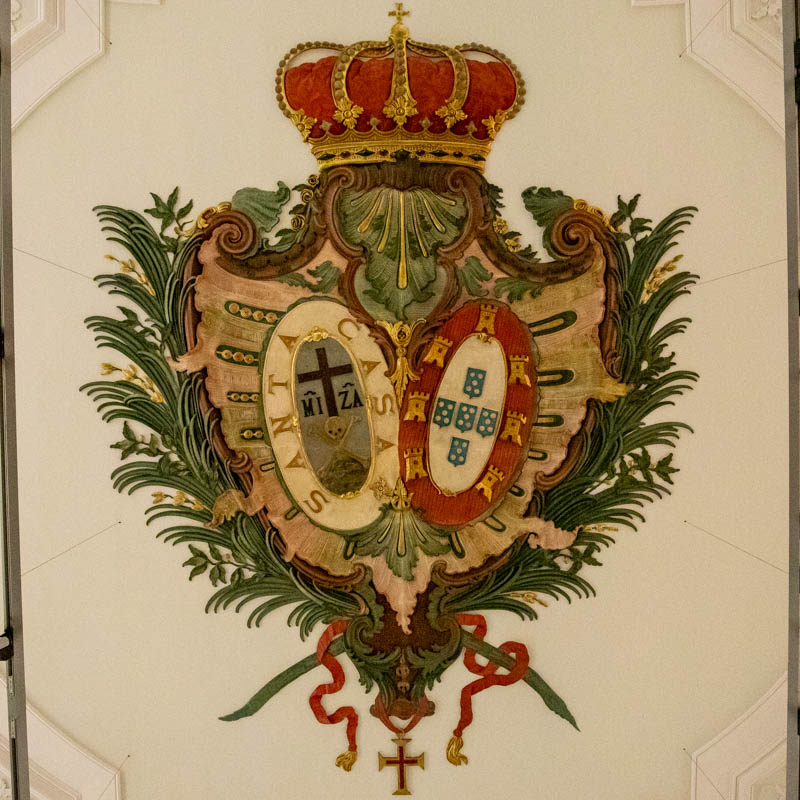
The Church and Museum of São Roque show a Lisbon shaped by Catholic renewal after the Council of Trent. The church was inaugurated in 1573 and belonged to the former Professed House of the Society of Jesus, built beside the earlier hermitage of São Roque. The building responded to a form of worship in which preaching, listening and the clarity of images were highly important. In 1768, after the expulsion of the Jesuits from Portugal, the church and professed house were given to the Santa Casa da Misericórdia de Lisboa. The museum opened to the public on 11 January 1905, under the name Museum of the Treasury of the Chapel of Saint John the Baptist. Today, the complex allows several stories to be followed in the same place: the old devotion to Saint Roch, the Jesuit presence, the work of the Misericórdia and the formation of a collection of Portuguese, Italian and Asian sacred art.
Architecture and history
The single nave, shallow chancel and eight side chapels give the church an immediate reading. This arrangement, traditionally called a “hall church”, helps focus attention on the altar, the spoken word and the images. The façade is simple, but the interior brings together painting, gilded carving, tiles, reliquaries, marbles and liturgical objects of great visual richness. In the upper part of the nave, large canvases represent episodes from the life of Saint Ignatius of Loyola. The trompe-l’oeil painted ceiling, executed between 1587 and 1589, creates the illusion of domes and enlarges the space without changing the structure of the church. The Chapel of Saint John the Baptist stands out for its precious materials and precise finish: gilded bronze, mosaics, marbles, wood and ivory inlays, reliefs and marble sculptures form a space designed to impress through light, colour and scale.
More context
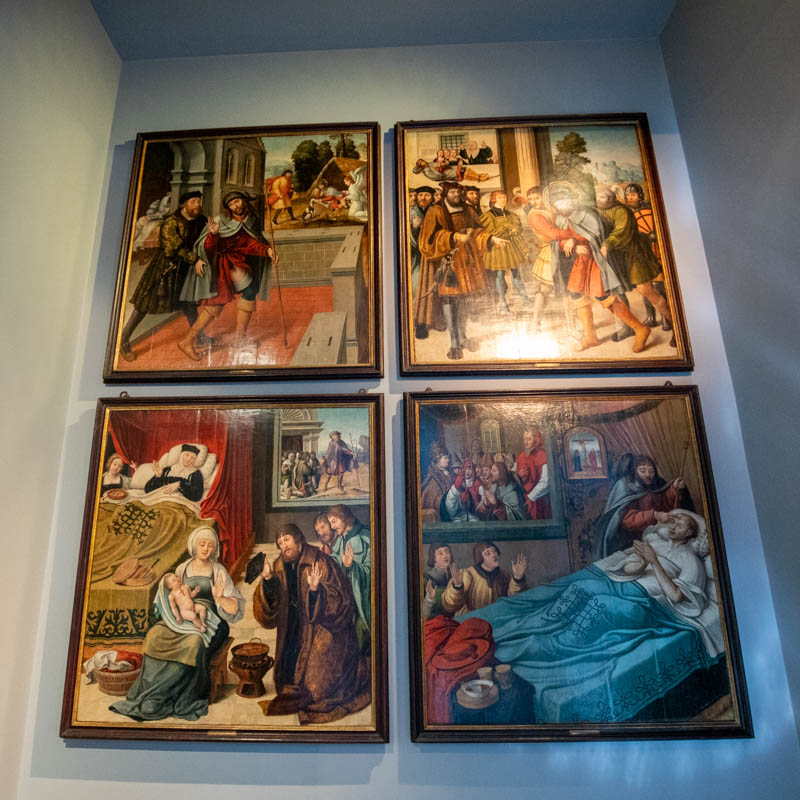
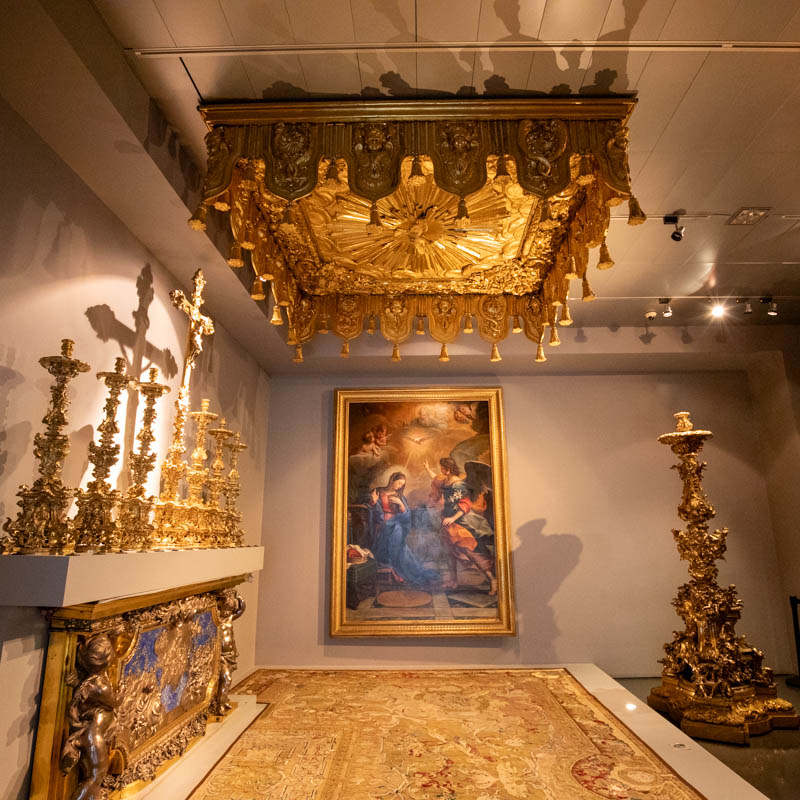
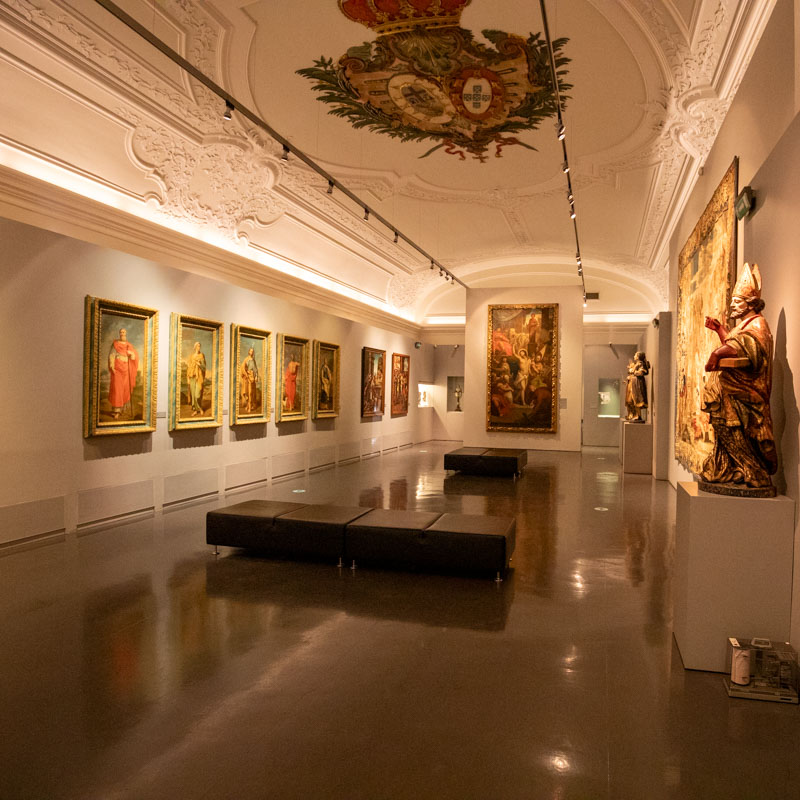
The Chapel of Saint John the Baptist is the point where the dialogue between Lisbon and Rome becomes most visible. It was commissioned by King João V in 1742 from the architects Luigi Vanvitelli and Nicola Salvi, built in Rome and then sent to Lisbon, where it was assembled in the space of the former Chapel of the Holy Spirit. In the museum, the route is organised into five sections that help visitors read the complex: the Hermitage of São Roque, the Society of Jesus, Asian Art, the Chapel of Saint John the Baptist and the Misericórdia de Lisboa. Notice the Asian objects, linked to trade, export and the Jesuit mission in the East, and the Italian pieces of gold and silverwork, vestments and books used in the chapel’s liturgy. The sacristy, organ and ceiling complete the visit, showing how art, devotion and ceremony crossed paths in this space.
Gallery