Museu Nacional de Etnologia

Lisboa · Lisboa

Museu Nacional de Etnologia

MuseumXXCivil Architecture
Avenida da Ilha da Madeira, 1400-203 Lisboa4.2 Rating · 1,07240 min

In Lisbon, the National Museum of Ethnology shows how a museum can preserve objects and, at the same time, the very history of Portuguese anthropology. Created in 1965 under the impetus of Jorge Dias and a decisive generation of researchers, it was born with an unusual ambition: to represent the cultures of the world without limiting itself to Portugal or to the former overseas territories. The current building, inaugurated in 1976, houses collections gathered through fieldwork and accompanied by photographic, film and sound archives that give them context and depth. More than a parade of rarities, the visit gains strength in the visible storage galleries and the small permanent displays, where rural tools, popular instruments, masks, puppets and dolls reveal very different ways of living, celebrating and imagining. Between the Rural Life Gallery, Amazonia and pieces from Indonesia, it becomes clear that this museum does not look at cultures as distant curiosities: it brings gestures, knowledge and memories closer together, and makes that closeness its true strength.

Why it matters

In Restelo, the National Museum of Ethnology helps visitors understand the transition from Portuguese ethnography to modern anthropology. It was created in 1965 with a broad programme: to represent the cultures of different peoples of the world, without limiting itself to Portugal or to the territories then under Portuguese administration. Its origin is linked to the research work begun by Jorge Dias and by the team that studied material cultures, rural practices, traditional technologies and societies beyond Europe. The museum brings together objects collected through fieldwork, study missions, acquisitions and donations, but its value does not lie only in the size of its holdings. Each object is treated as part of a social, technical, ritual or everyday context. For this reason, the museum presents both objects and ways of researching, documenting and interpreting cultures.

Architecture and history

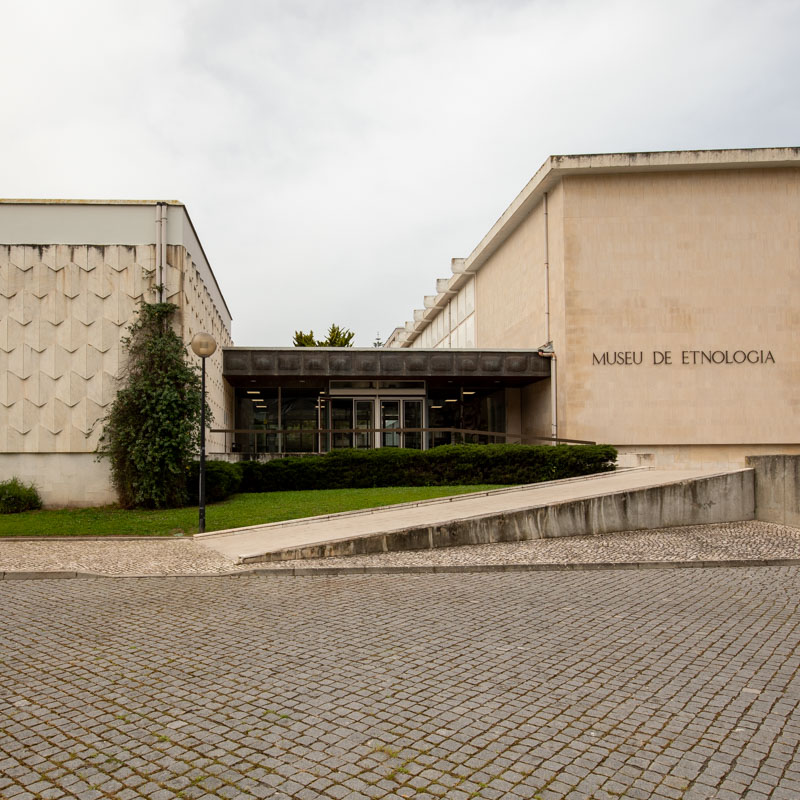
The Restelo building was inaugurated in 1976 and designed by António Saragga Seabra to meet the needs of a research museum. Its interior organisation distinguishes public areas, exhibition rooms, technical services and storage areas, giving great importance to the conservation and study of the collections. This makes the building less monumental and more functional, conceived for keeping, observing, comparing and documenting. In 2000, the extension by Eduardo Trigo de Sousa added a library/media library, new storage areas and the surrounding garden. The visitable reserves are an essential feature of the museum: instead of completely hiding the objects that are not on display, they bring the public closer to the logic of conservation and classification. The building therefore helps explain that an ethnology museum is not only a gallery, but also a place of archives, research and material memory.

More context

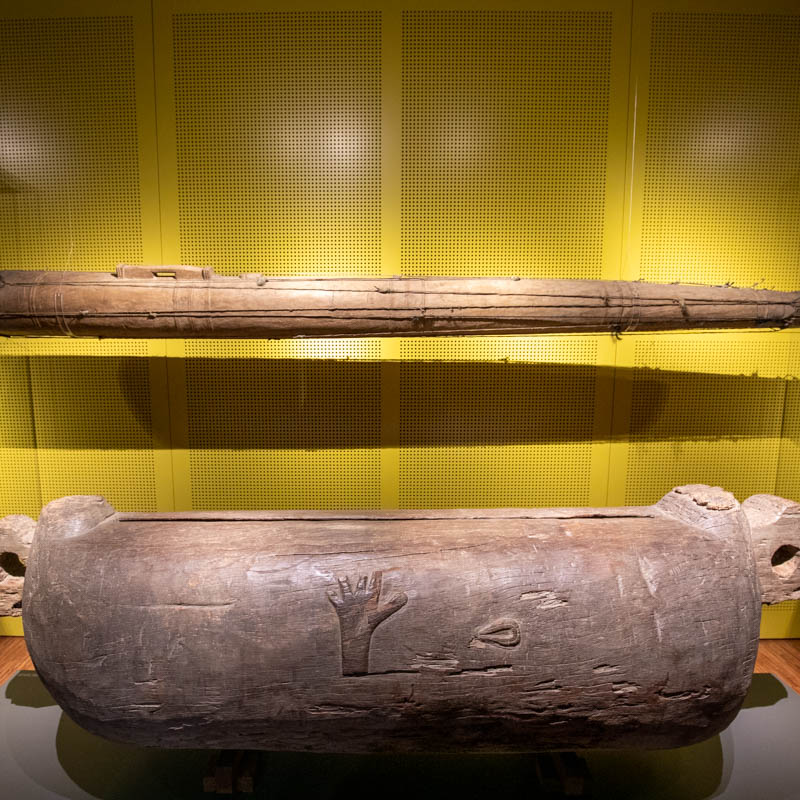
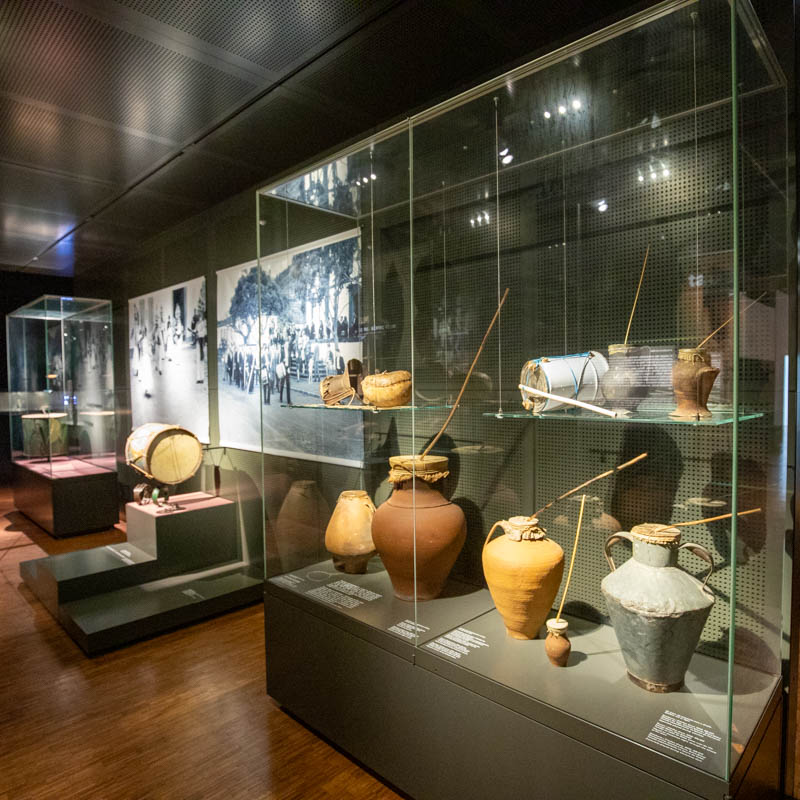
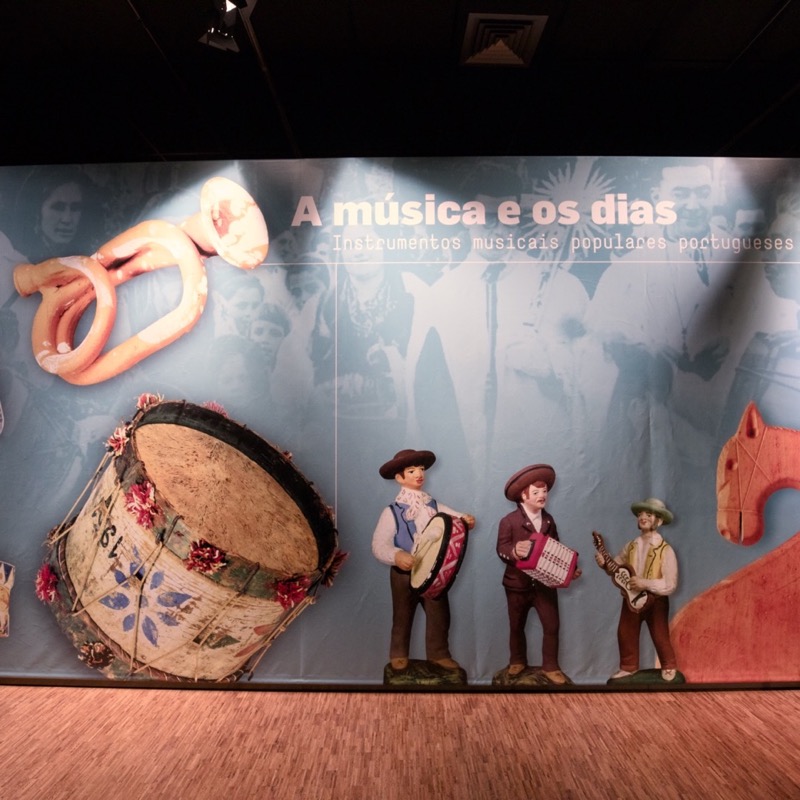
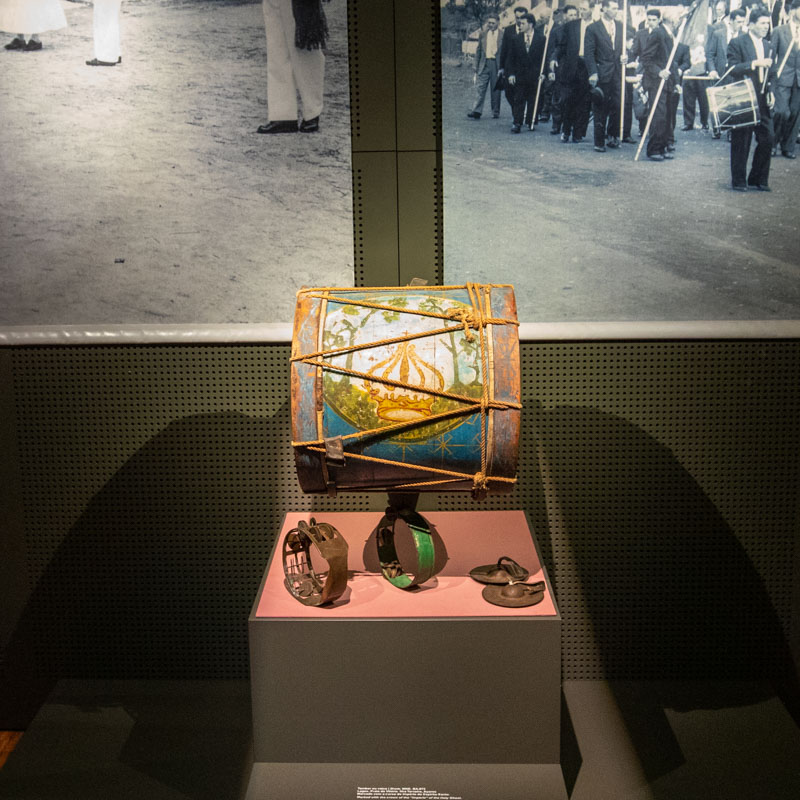
The visitable reserves are a central point of the visit. In the Galleries of Rural Life, notice how agricultural tools, transport systems, textile technologies, milling, domestic objects and shepherds’ shelters reveal practical solutions connected with the Portuguese territory. The route follows themes of production, transformation, conservation and preparation of goods, helping to relate objects to work and daily life. In the Amazon Galleries, notice the organisation by groups and display cases, which makes it possible to distinguish origins, functions and cultural contexts. The permanent exhibitions add other scales of interpretation: Balinese shadow puppets, Portuguese popular musical instruments, Cabinda pot lids with proverbs, and masks and puppets from Mali show how sound, word, performance, body and image are also heritage. The most important thing is to observe the pieces as evidence of living uses, not as simple curiosities.

Gallery

Museu Nacional de Etnologia 1
Museu Nacional de Etnologia 2
Museu Nacional de Etnologia 3
Museu Nacional de Etnologia 4
Museu Nacional de Etnologia 5

Nearby places

View all