Entroncamento · Santarém
Museu Nacional Ferroviário
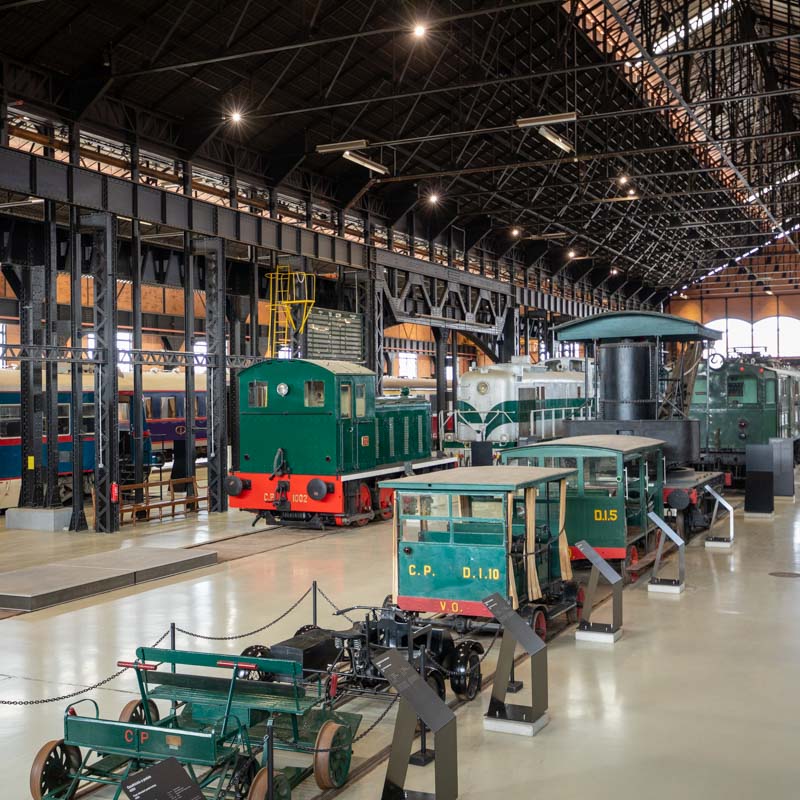
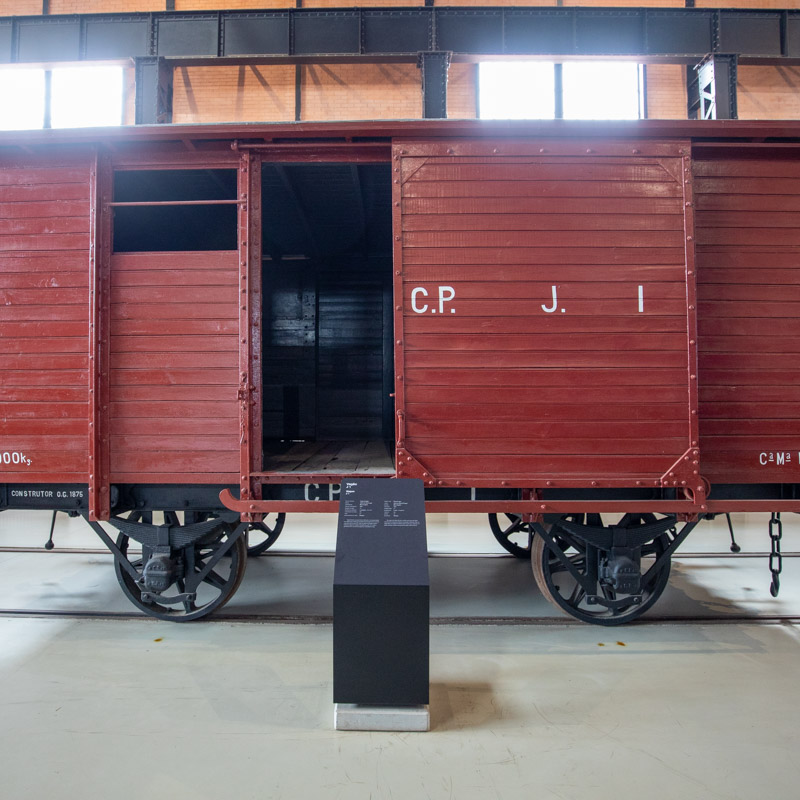
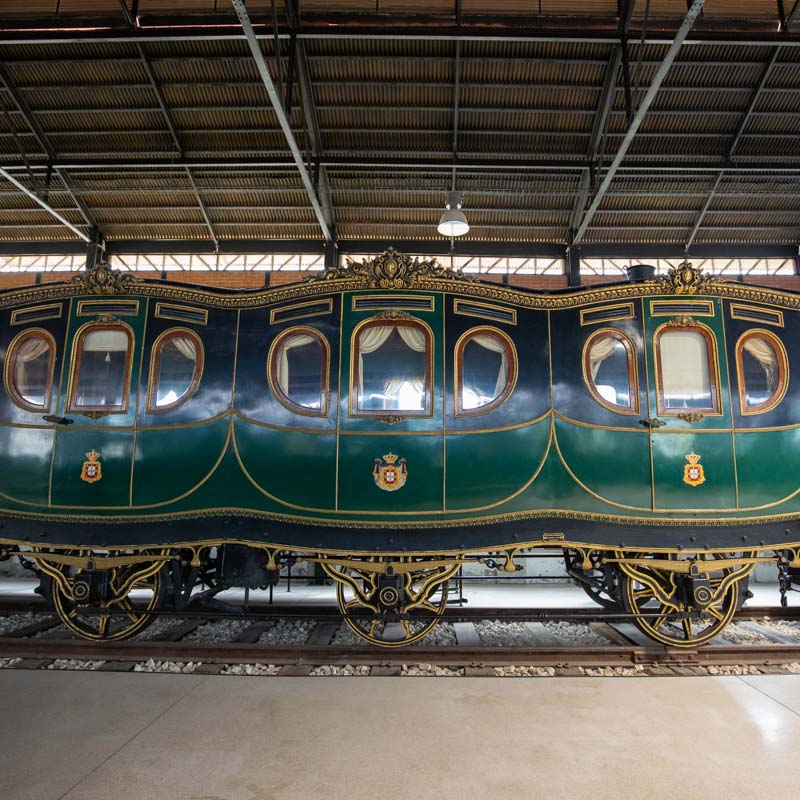
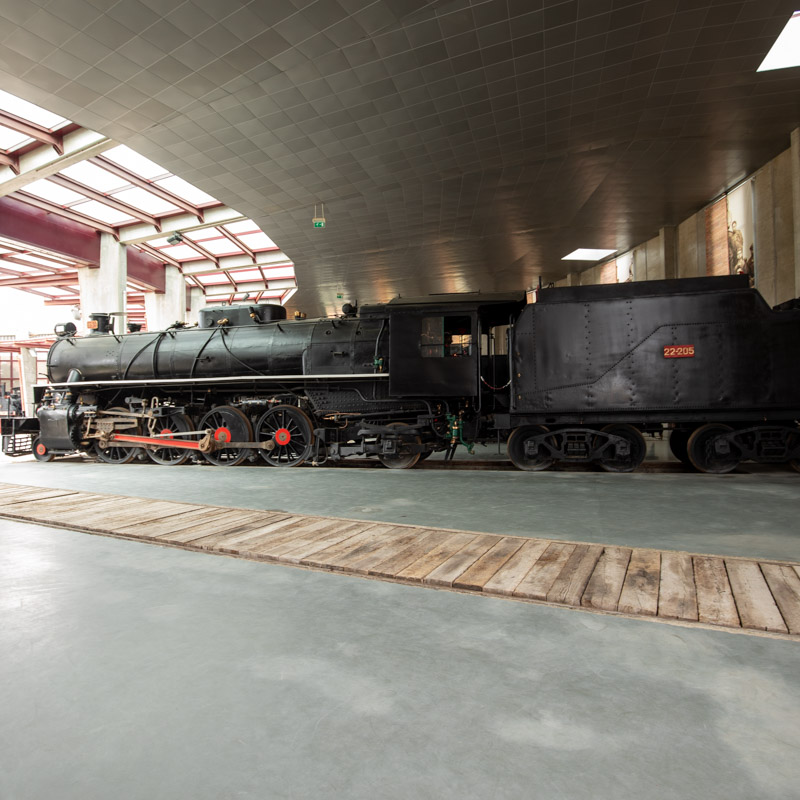
At the Entroncamento Railway Complex, the National Railway Museum tells more than 160 years of railway history in Portugal. Its headquarters are in Entroncamento, but the museum has a national scope and includes centres in several parts of the country. The collection brings together around 36,000 objects, from rolling stock, such as locomotives, carriages and wagons, to track, workshop, signalling, station, ticketing, safety, catering, health and documentary material. The route occupies historic buildings linked to the former railway complex, now transformed into exhibition spaces. Among its most evocative pieces are the Royal Train, the Presidential Train, the Steam Workshops and the Locomotive Roundhouse. Created in 2005, the Fundação Museu Nacional Ferroviário Armando Ginestal Machado safeguards this technical and social heritage, where machines, objects and memories show how the train transformed territories, work and everyday life.
Why it matters
In Entroncamento, a city deeply shaped by the railway, the National Railway Museum occupies part of the former local Railway Complex. It was inaugurated on 18 May 2015, International Museum Day, although the creation of the National Railway Museum had been approved in 1991 and its foundation was established in 2005. The choice of Entroncamento makes sense: the city grew around the crossing of lines and railway work. The museum tells more than 160 years of railway history in Portugal, from steam traction to themes of future transport. Its headquarters form part of a national network of museum centres, allowing railway memories from several regions to be preserved. The collection, with around 36,000 objects, shows that the railway was technology, work, travel, public service and also part of Portuguese everyday life.
Architecture and history
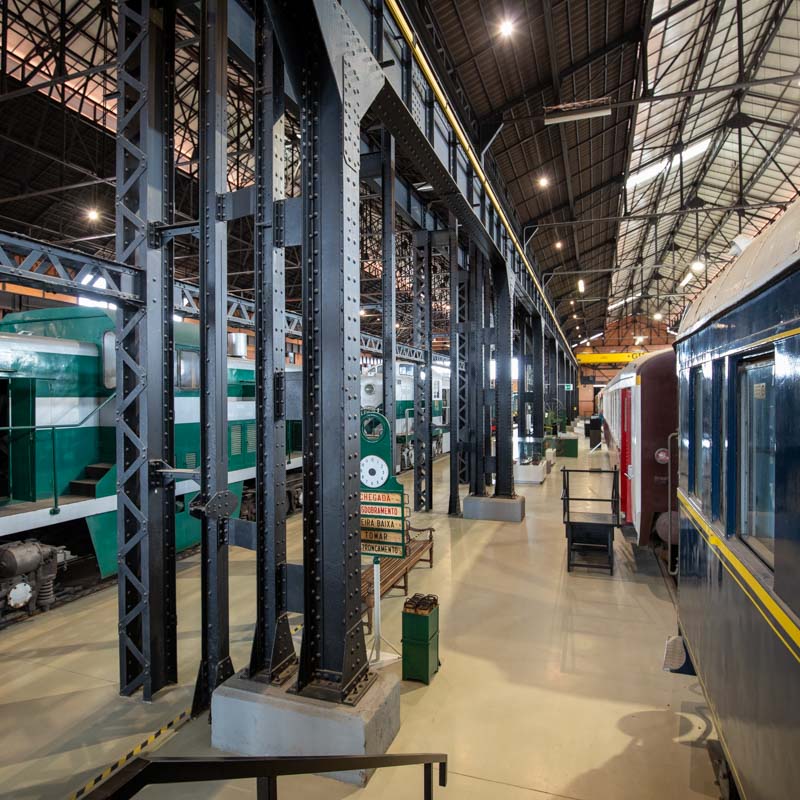
The museum space preserves the real scale of a railway complex. The permanent exhibition is spread across three buildings, within an area of 4.5 hectares crossed by 19 railway lines. This dimension is essential, because locomotives, carriages, saloons and wagons cannot be understood merely as display-case objects. They need rails, platforms, workshops and broad industrial volumes. Among the most relevant spaces are Building 20, the former Steam Workshops and the Locomotive Roundhouse. The roundhouse preserves the technical memory of circulation and maintenance, as this type of building worked with a turntable to direct locomotives. The workshop naves, in turn, help visitors understand the invisible labour that kept trains moving. The museum’s architecture does not conceal its industrial origin: it uses it as part of the narrative.
More context
The Royal Train and the Presidential Train are essential points of the visit, because they show how the train also served the representation of the State. The first was associated with journeys by the royal family between Barreiro and Vila Viçosa; the second served heads of state and their entourages between 1910 and 1970. Among the locomotives, notice the difference between steam, diesel and electricity, as each technology changed speed, maintenance and the travel experience. The smaller objects also deserve attention: tickets, fare tables, station equipment, signalling, workshop tools, catering items and clothing tell the human story that accompanies the machines. The Steam Workshops help visitors imagine railway work as a routine of precision, strength and coordination. As a whole, the museum turns a former infrastructure into a clear reading of mobility, industry and social memory.
Gallery