Santarém areas

Santarém

Ourém

2 places in Santarém.

Map
CastleNatural Monument
Castelo e Paço dos Condes de Ourém4.5

Castelo e Paço dos Condes de Ourém

Castle • Ourém, Santarém

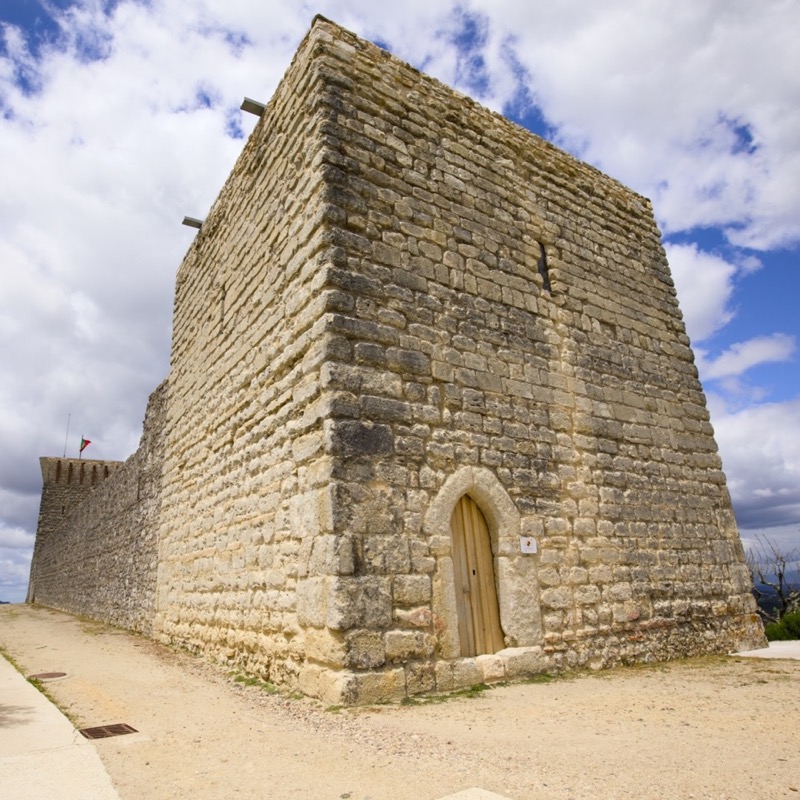
At the top of the Medieval Village of Ourém, the Castle and the Palace of the Counts bring together different centuries in a single silhouette of stone. The castle, associated with the Christian reconquest of the region by King Afonso Henriques in 1136, was built between the 12th and 13th centuries. Its triangular enclosure, marked by three quadrangular towers, preserves at its centre a cistern that recalls the site’s defensive role. In the 15th century, Afonso, 4th Count of Ourém, had the Palace of the Counts and the towers built as his official residence. The central residential tower, flanked to the south by two defensive towers, shows a seigneurial assertion that is rare in the Portuguese landscape. The complex suffered major destruction in the 1755 earthquake and deteriorated again during the French Invasions. Classified as a National Monument since 1910, it continues to mark, at the top of the hill, the military and comital memory of Ourém.
Monumento Natural das Pegadas de Dinossáurios4.2

Monumento Natural das Pegadas de Dinossáurios

Natural Monument • Ourém, Santarém

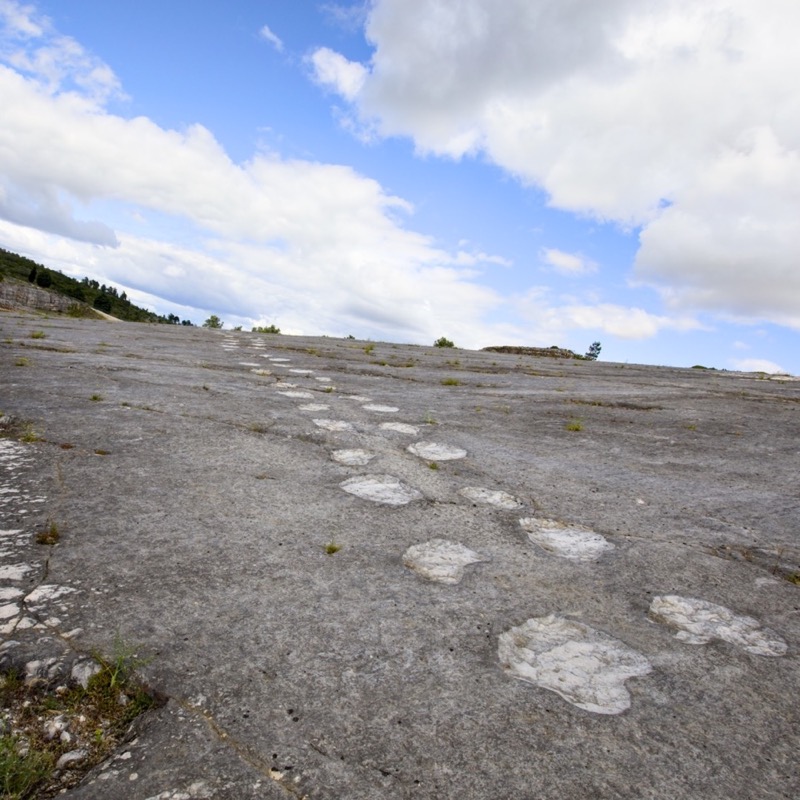
The Ourém/Torres Novas Dinosaur Footprints Natural Monument lies in the Serra de Aire, near the village of Bairro, on the boundary between the municipalities of Ourém and Torres Novas. The former Pedreira do Galinha quarry revealed a limestone slab where hundreds of footprints of sauropod dinosaurs, large four-legged herbivores from the Jurassic, have been preserved. The site was classified in 1996, by Regulatory Decree no. 12/96, with the aim of conserving the Cabeço dos Casanhos ichnofossil deposit, promoting its scientific study and communicating its environmental and palaeoenvironmental value. On the rocky surface, the footprints are arranged in around twenty trackways; the longest reach 142 and 147 metres, creating a concrete reading of these animals’ movement. The interpretive route allows visitors to observe elliptical marks from the feet and smaller impressions from the hands, inscribed in the limestone like a silent sequence of their steps.