
LxDiscover
ExploreMapRoutesRegionsAbout
Get the app

Map · 6 / 203

Explore the map

Regions:
Convento de Cristo4.7

Convento de Cristo

Convent • Tomar, Santarém

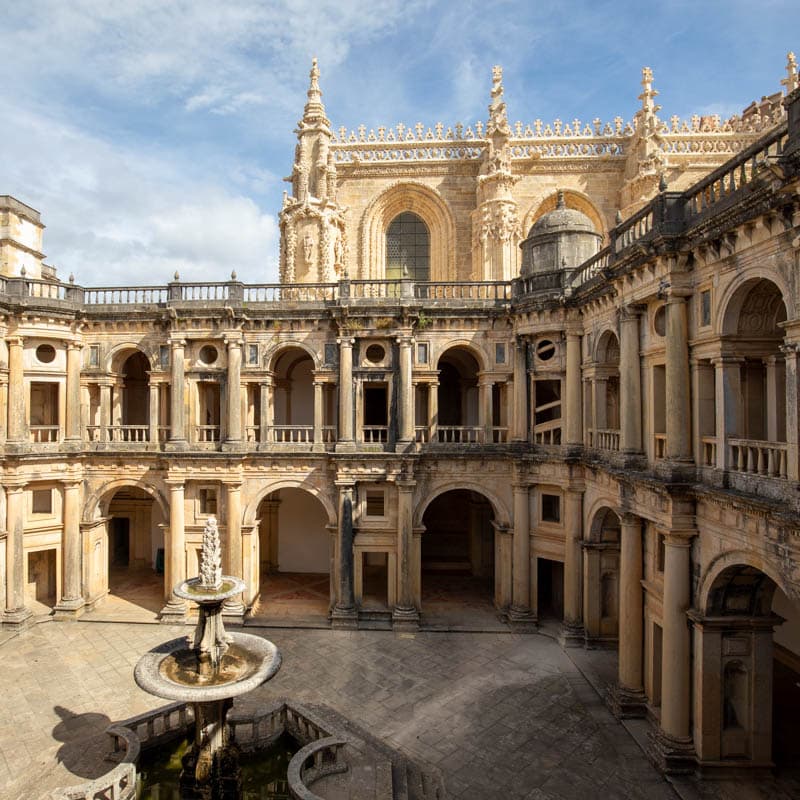
On a hilltop overlooking Tomar, the Convent of Christ brings together the former Templar Castle, the convent of the Order of Christ and other spaces connected with its historic enclosure. Its history begins in 1160, with the foundation of the castle by the Templars. At its centre stands the Charola, a Romanesque oratory inspired by the Holy Sepulchre in Jerusalem, later enriched with painting, sculpture and gilded woodcarving. After the extinction of the Templars, the Order of Christ received this heritage; under Prince Henry the Navigator new cloisters were built, and King Manuel I enlarged the convent church, where the celebrated Chapter House Window stands out. Built over several centuries, the complex brings together Romanesque, Gothic, Manueline, Renaissance, Mannerist and Baroque elements. Inscribed on the UNESCO World Heritage List in 1983, it remains a monumental reading of Portuguese history.
Castelo de Tomar4.7

Castelo de Tomar

Castle • Tomar, Santarém

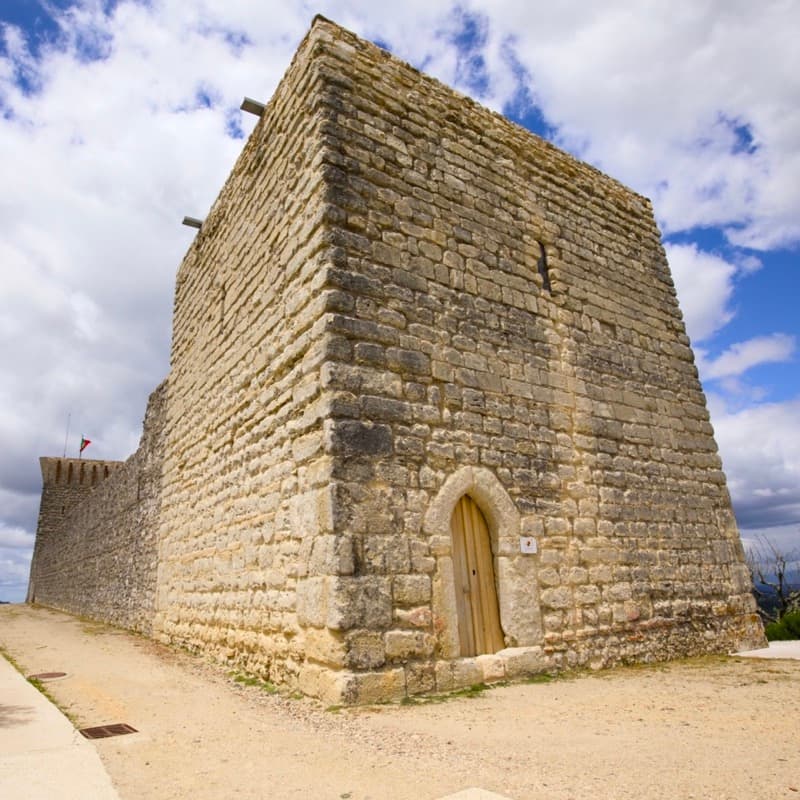
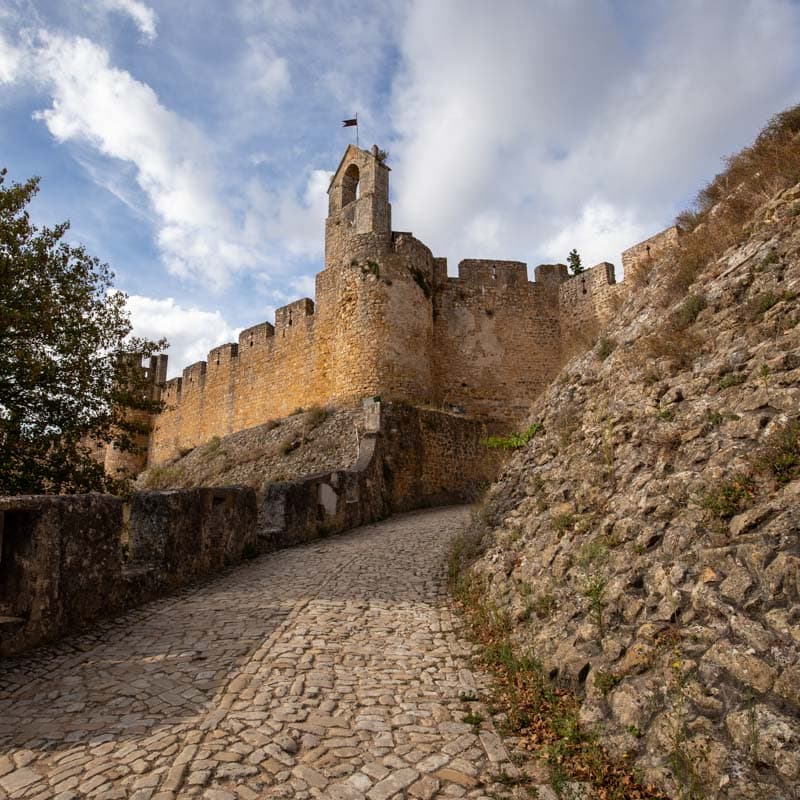
On the hilltop overlooking Tomar, the Castle of Tomar marks the beginning of the great Convent of Christ complex. The fortification began to be built in 1160, after the donation of the region to the Templars, and is linked to Gualdim Pais, master of the Order of the Temple. Its position protected a strategic point between the Tagus and Coimbra, then the capital of the kingdom. Even today, Romanesque military solutions associated with the Templars can be read in the walls, such as the sloping base that strengthened them, and the keep, rising above the citadel. In the lower enclosure stood the former fortified town; to the west was placed the Charola, the Templar oratory that would later become part of the Convent of Christ. Classified as a National Monument in 1910 and included in the ensemble inscribed by UNESCO in 1983, the castle preserves the defensive memory that shaped Tomar.

Museu Nacional Ferroviário4.7

Museu Nacional Ferroviário

Museum • Entroncamento, Santarém

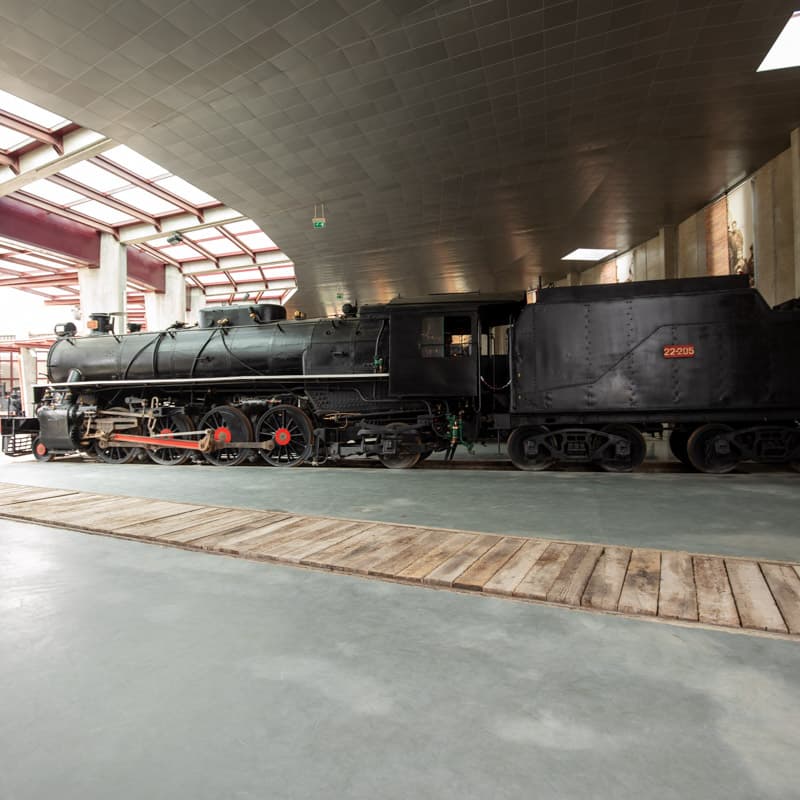
At the Entroncamento Railway Complex, the National Railway Museum tells more than 160 years of railway history in Portugal. Its headquarters are in Entroncamento, but the museum has a national scope and includes centres in several parts of the country. The collection brings together around 36,000 objects, from rolling stock, such as locomotives, carriages and wagons, to track, workshop, signalling, station, ticketing, safety, catering, health and documentary material. The route occupies historic buildings linked to the former railway complex, now transformed into exhibition spaces. Among its most evocative pieces are the Royal Train, the Presidential Train, the Steam Workshops and the Locomotive Roundhouse. Created in 2005, the Fundação Museu Nacional Ferroviário Armando Ginestal Machado safeguards this technical and social heritage, where machines, objects and memories show how the train transformed territories, work and everyday life.

Castelo de Santarem4.5

Castelo de Santarem

Castle • Santarém, Santarém

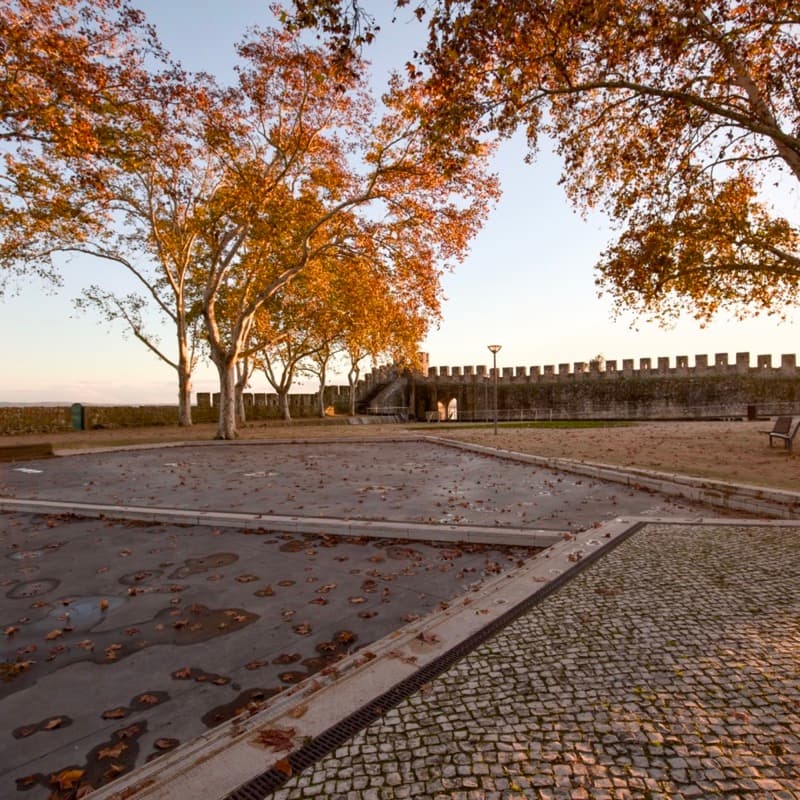
In Santarém, the so-called Castle of Santarém survives mainly in the remains of the walls and gates that surrounded the former citadel. The walled complex has its origins in the period of Muslim occupation and was consolidated and enlarged during the First Dynasty, after the Reconquest and in the reign of King Fernando. The stronghold was taken by King Afonso Henriques in 1147, a moment associated with the remodelling of its early structures. The castle included the Alcáçova enclosure and the walled perimeter of the town, with a partial barbican; its walls had gates and posterns that organised access. Today, at Portas do Sol, sections of wall, three towers and the former Porta do Sol remain, transformed into a panoramic balcony over the Tagus and the Lezíria. The Porta de Santiago, the castle’s main entrance, preserves its pointed arch and the city’s defensive memory. The complex is classified as a Property of Public Interest.

Castelo e Paço dos Condes de Ourém4.5

Castelo e Paço dos Condes de Ourém

Castle • Ourém, Santarém

At the top of the Medieval Village of Ourém, the Castle and the Palace of the Counts bring together different centuries in a single silhouette of stone. The castle, associated with the Christian reconquest of the region by King Afonso Henriques in 1136, was built between the 12th and 13th centuries. Its triangular enclosure, marked by three quadrangular towers, preserves at its centre a cistern that recalls the site’s defensive role. In the 15th century, Afonso, 4th Count of Ourém, had the Palace of the Counts and the towers built as his official residence. The central residential tower, flanked to the south by two defensive towers, shows a seigneurial assertion that is rare in the Portuguese landscape. The complex suffered major destruction in the 1755 earthquake and deteriorated again during the French Invasions. Classified as a National Monument since 1910, it continues to mark, at the top of the hill, the military and comital memory of Ourém.

Monumento Natural das Pegadas de Dinossáurios4.2

Monumento Natural das Pegadas de Dinossáurios

Natural Monument • Ourém, Santarém

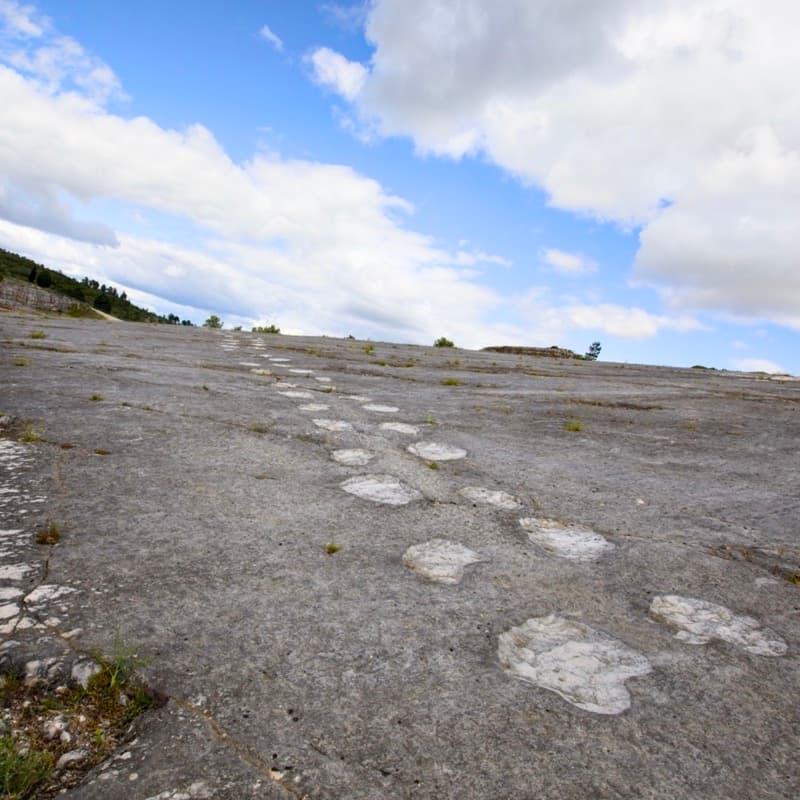
The Ourém/Torres Novas Dinosaur Footprints Natural Monument lies in the Serra de Aire, near the village of Bairro, on the boundary between the municipalities of Ourém and Torres Novas. The former Pedreira do Galinha quarry revealed a limestone slab where hundreds of footprints of sauropod dinosaurs, large four-legged herbivores from the Jurassic, have been preserved. The site was classified in 1996, by Regulatory Decree no. 12/96, with the aim of conserving the Cabeço dos Casanhos ichnofossil deposit, promoting its scientific study and communicating its environmental and palaeoenvironmental value. On the rocky surface, the footprints are arranged in around twenty trackways; the longest reach 142 and 147 metres, creating a concrete reading of these animals’ movement. The interpretive route allows visitors to observe elliptical marks from the feet and smaller impressions from the hands, inscribed in the limestone like a silent sequence of their steps.