Lisboa · Lisboa
Miradouro das Portas do Sol
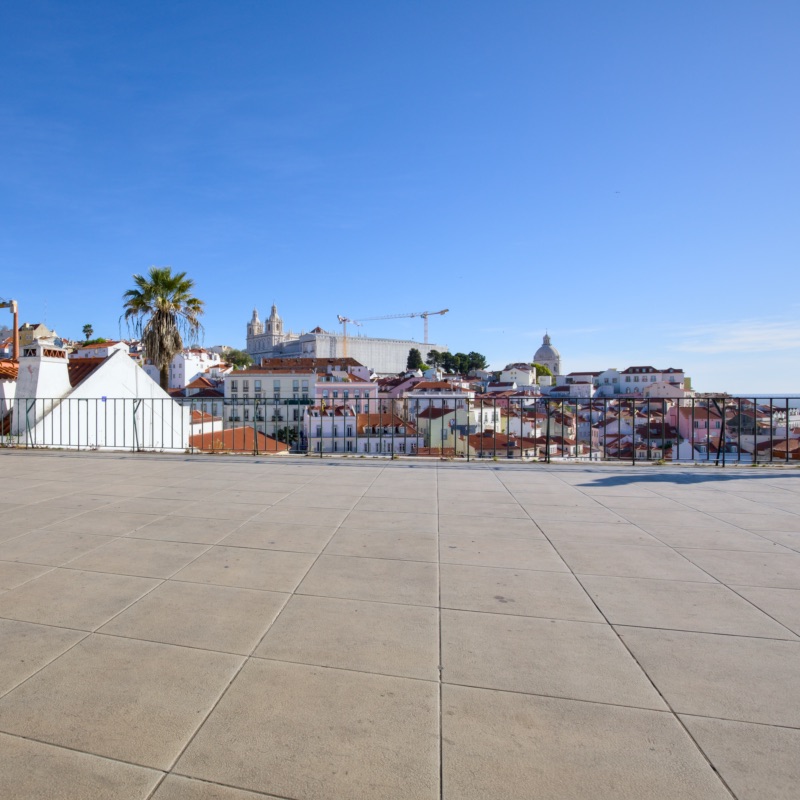
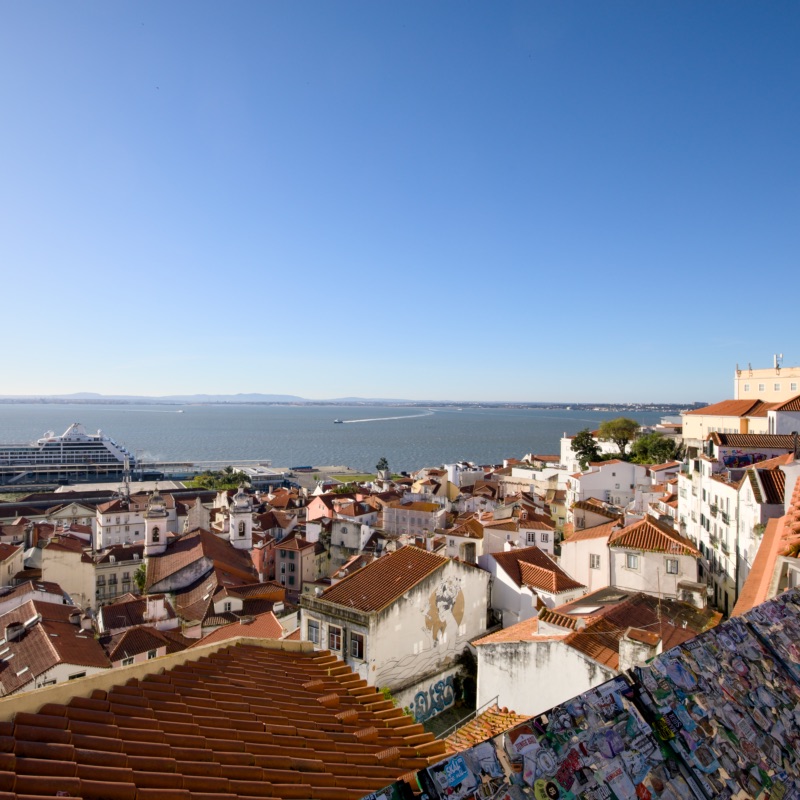
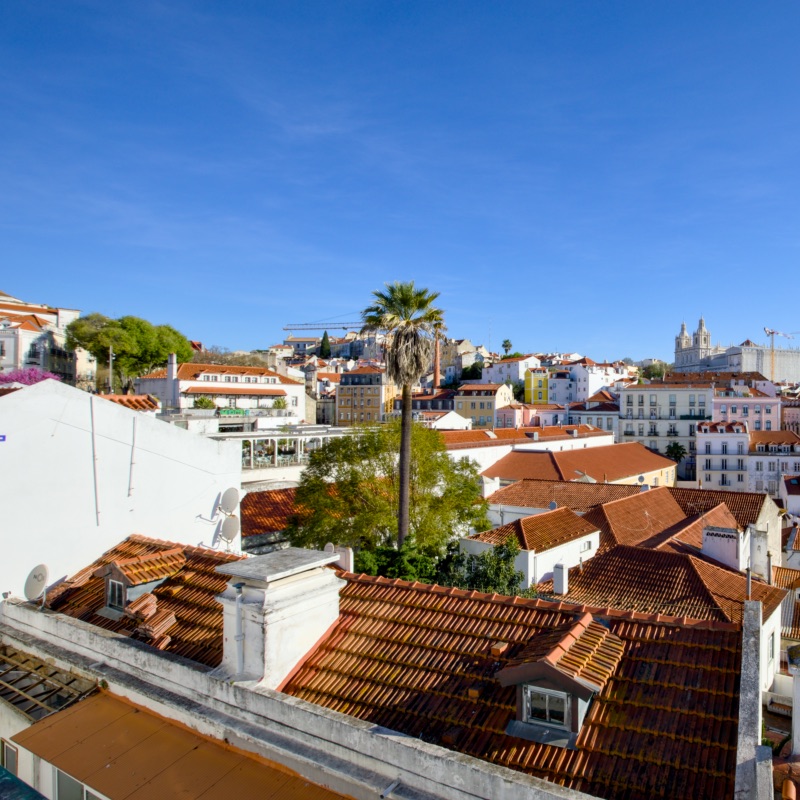
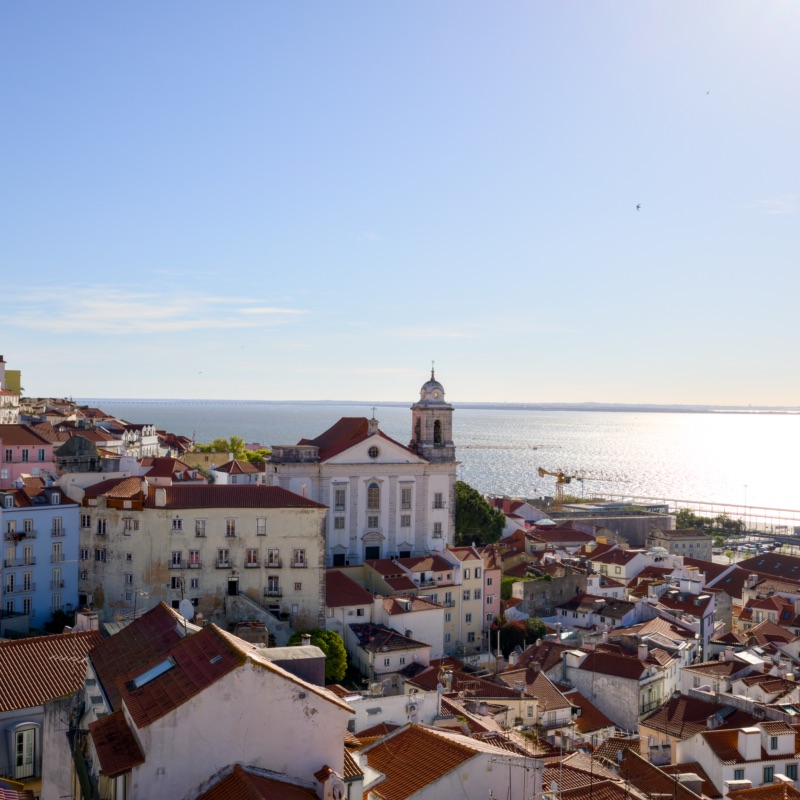
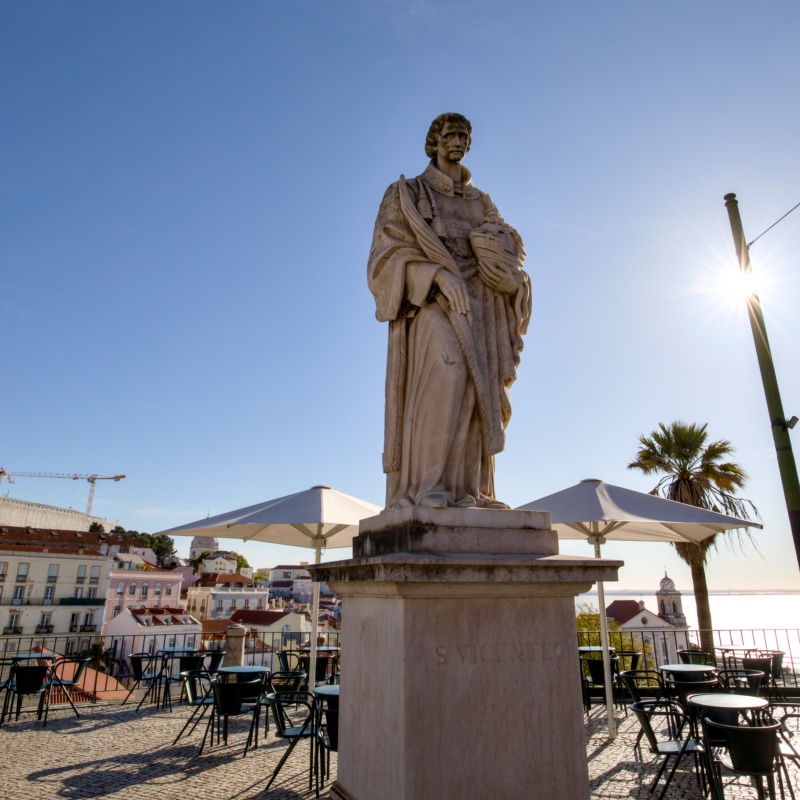
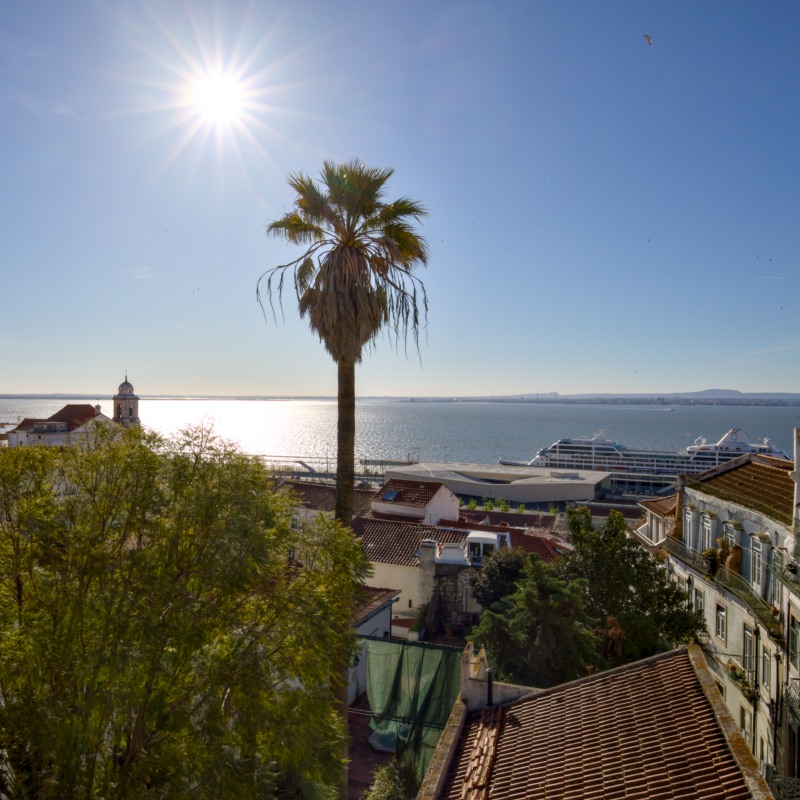
The Portas do Sol Viewpoint, in Lisbon, owes its name to an old city gate, facing east, that once stood on this site. Today, the place works as an open balcony over the historic slope of Alfama and the Tagus. From here, the National Pantheon, Azurara Palace, traces of the Moorish Wall and the Church of São Vicente de Fora can be distinguished, forming a clear reading of old Lisbon. In the centre of the space stands the statue of São Vicente, Lisbon’s patron saint, represented with the boat and two ravens that form part of the city’s symbols. Between vanished walls, houses descending the hill and monuments that still organise the horizon, the viewpoint shows how the urban landscape preserves names, devotions and memories much older than the present.
Why it matters
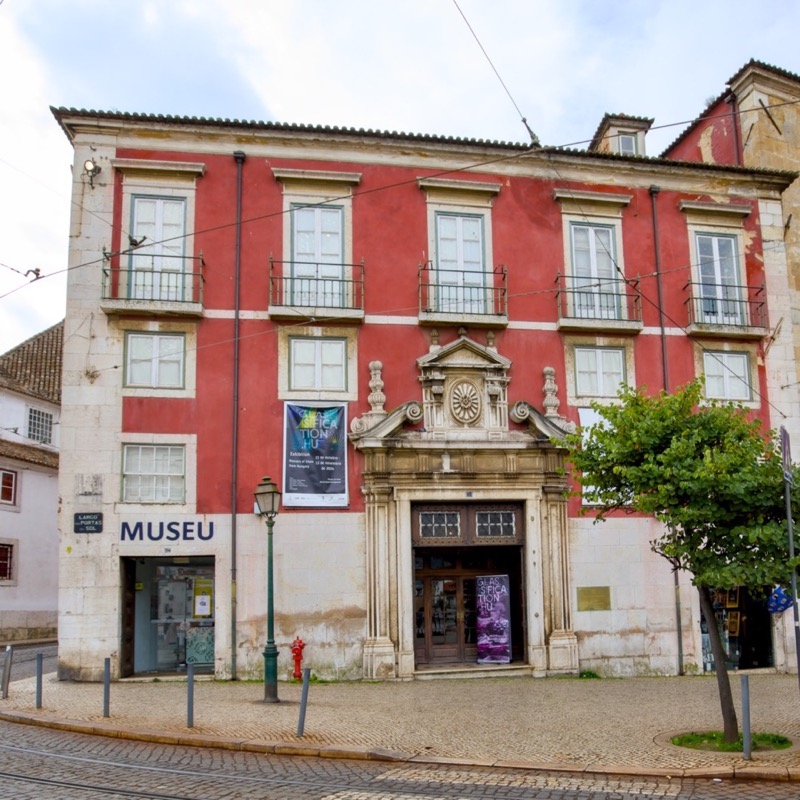
The Miradouro das Portas do Sol stands on the eastern slope of Lisbon’s historic centre, on the upper edge of Alfama, and takes its name from an old city gate that once faced east. The name therefore preserves the memory of medieval walled Lisbon and of this point’s role in access to the city. Today, the square and viewpoint form part of one of the most emblematic areas of the Castle Hill, yet their importance comes from several historical layers: the Islamic legacy of the Cerca Moura, the Christian expansion after the conquest of 1147, and the gradual enhancement of the river-facing landscape overlooking the Tagus. The present form of the site was also shaped by twentieth-century urban interventions. Documentation from the Lisbon Municipal Archive records demolitions and operations aimed at "opening up views" in this area, creating broad panoramas over Alfama and the river and turning this part of the city into a scenic observation point. Facing the viewpoint is Palácio Azurara, a seventeenth-century building later restored with the collaboration of Raul Lino to house part of Ricardo do Espírito Santo Silva’s collection, the basis of the institution that remains there today. The square also includes a statue of Saint Vincent, Lisbon’s patron saint, whose iconography refers to the boat and ravens associated with the Vincentian tradition and with the city’s coat of arms itself.
Architecture and history
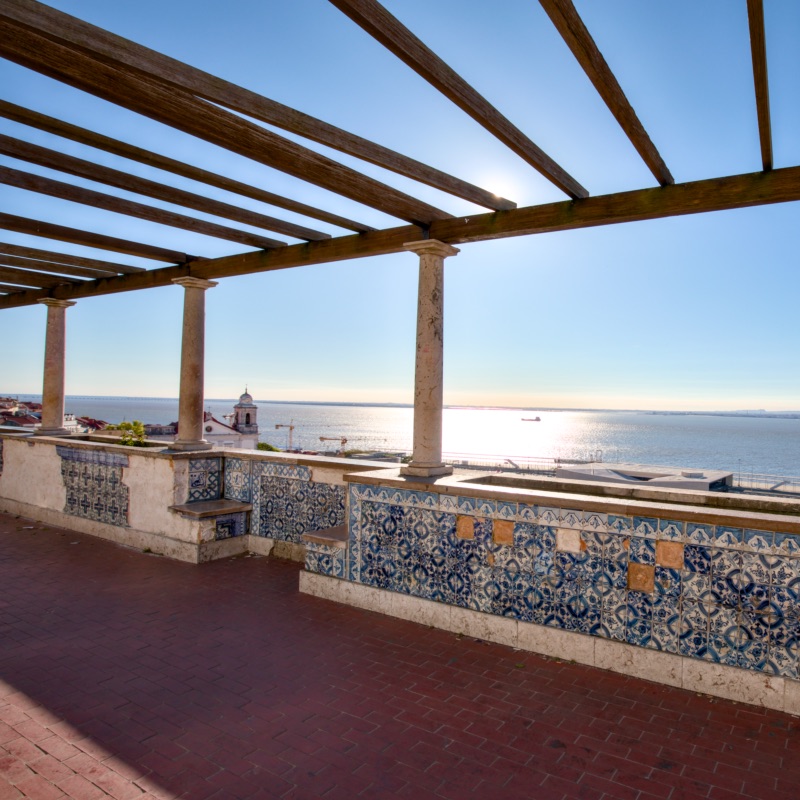
Rather than a single monument, Portas do Sol should be understood as an urban and landscape ensemble. The viewpoint works as a broad balcony over Alfama and the Tagus, laid out as an open platform bordered by railings that frame one of Lisbon’s most recognisable panoramas. The architectural strength of the place lies precisely in this composition of topography, public space and horizon: the slopes of the hill, Alfama’s dense rooftops, the bell towers and domes rising from the urban fabric, and the luminous presence of the river together create a continuous reading of the historic city. Municipal sources describe it as a true balcony over Alfama and the Tagus and as a privileged terrace above the São Vicente hill. The built surroundings reinforce this character. From the viewpoint one can see remains of the Cerca Moura, the silhouette of the Church and Monastery of São Vicente de Fora, the National Pantheon and Palácio Azurara, whose later aristocratic restoration preserved period interiors and its own heritage value. In the immediate surroundings, the Church of São Brás and Santa Luzia, built beside the wall and historically linked to the Order of Malta, adds figurative tilework to the ensemble, including the well-known panel depicting the conquest of Lisbon. In this way, the architectural interest of Portas do Sol does not depend only on the paving or the design of the square, but on the relationship between viewpoint, walls, historic buildings and urban panorama.
More context
A visit should begin with the viewing platform itself, where the city can be read almost in layers. In the foreground appear the rooftops and streets of Alfama; further on stand out the dome of the National Pantheon and the large complex of São Vicente de Fora; nearby, Palácio Azurara recalls the presence of the Ricardo do Espírito Santo Silva Foundation. This is an especially useful point for understanding how the neighbourhood descends towards the Tagus and how the terrain shaped Lisbon’s urban fabric. It is also worth seeking out the visible remains of the Cerca Moura, as they help connect the name Portas do Sol with the former city gate that once stood in this sector. A few steps away, the route should continue to the Church of São Brás and Santa Luzia and to the neighbouring Santa Luzia Viewpoint. The church, historically associated with the Knights of Malta, displays tile panels of considerable iconographic interest, while the adjoining viewpoint offers another perspective over Alfama, closer to the rooftops and framed by pergola and garden. In Largo das Portas do Sol, the statue of Saint Vincent also deserves attention, as it refers to the city’s long-standing devotion and to the symbolism of the boat with ravens so present in Lisbon’s municipal arms. Taken together, these elements allow the visitor to experience not only a celebrated view, but a place where landscape, medieval memory, civic devotion and architectural heritage meet with unusual clarity.
Routes
Explore this place in a cultural route
Gallery