All routes
Castelo, Alfama and Lisbon Viewpoints

Lisboa route preview

Castelo, Alfama and Lisbon Viewpoints

One of the best routes for feeling Lisbon's hills. It includes stairs and climbs, but it is worth doing slowly, with time to stop at the viewpoints

6 stops4-5 hoursModerate

Why this route

Fortress, historic churches, and balconies over the city

One of the best routes for feeling Lisbon's hills. It includes stairs and climbs, but it is worth doing slowly, with time to stop at the viewpoints

Route preview

Stops shown in this example

Explore Lisboa →
1
Castelo de S. Jorge4.5

Castelo de S. Jorge

Castle • Lisboa, Lisboa

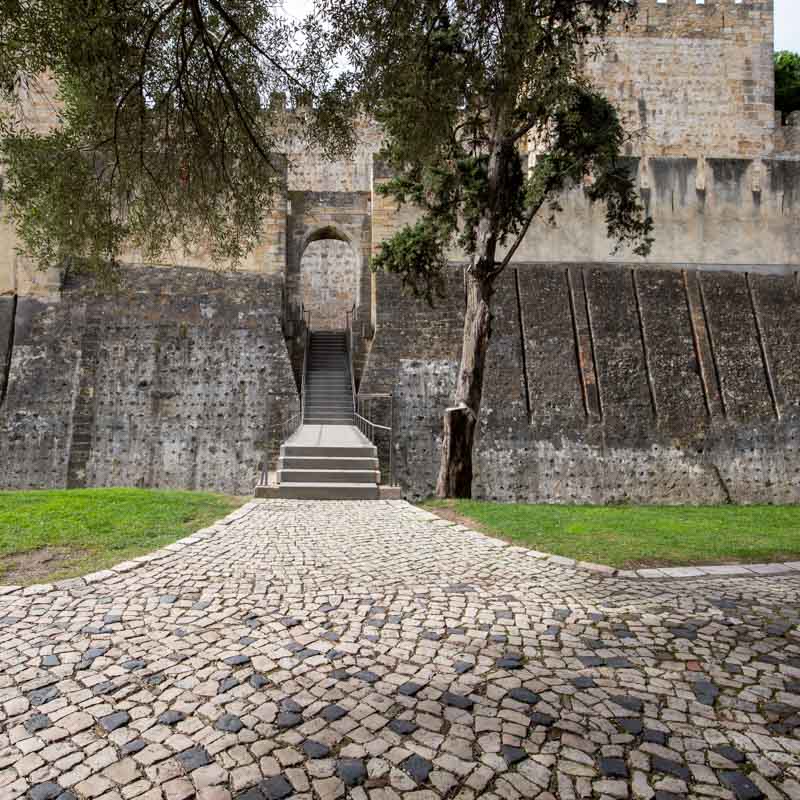
Rising from the highest point of old Lisbon, São Jorge Castle seems to gather almost the whole biography of the city into one place. The hill had been occupied since very early times, but the fortification we recognise today took shape in the Islamic period, as the last defensive stronghold of the citadel. After the conquest of 1147 by Afonso Henriques, the castle entered its brightest age: it became a royal palace, housed the court, the royal archive and major ceremonies, and from here the city’s rooftops, estuary and gateways could be watched over. When the royal residence moved down to the riverside, the complex lost its central role, was turned to military use and suffered after the 1755 earthquake, before being rediscovered in the great restoration campaigns of the twentieth century. Today, among walls, archaeological remains and the Camera Obscura in the Tower of Ulysses, it remains a rare place to understand Lisbon in layers, between stone, memory and horizon.
2
Miradouro de Santa Luzia4.7

Miradouro de Santa Luzia

Viewpoint • Lisboa, Lisboa

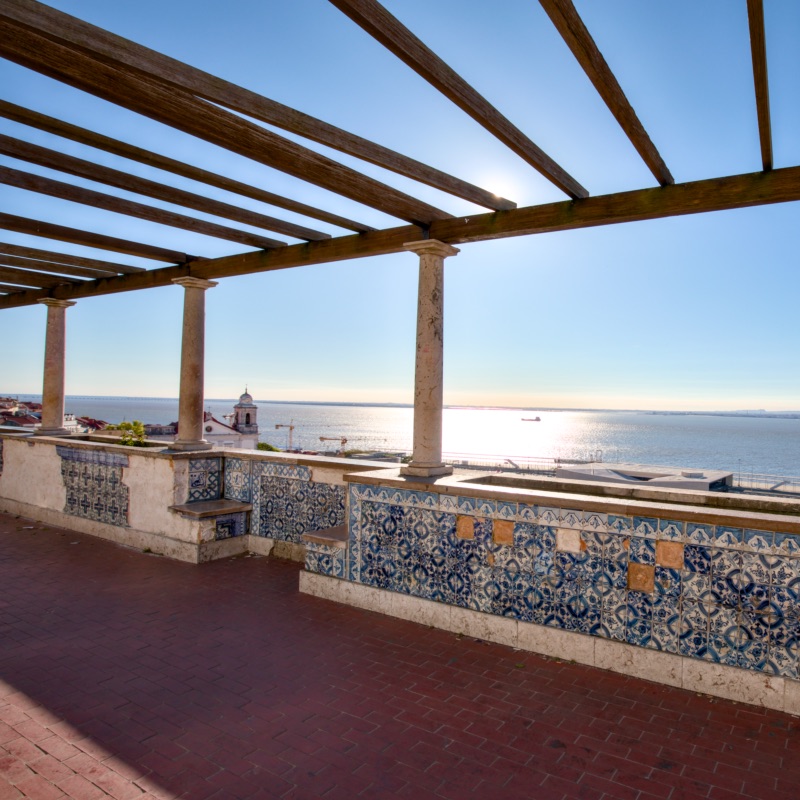
The Santa Luzia Viewpoint, in Lisbon, opens beside the Church of Santa Luzia and São Brás, over the neighbourhood of Alfama and the Tagus. Integrated into the Júlio de Castilho Garden, it combines the role of an urban balcony with a strong decorative presence. The façade and walls are covered with historic tiles, many produced by the Viúva Lamego Factory. On the southern wall, two panels by António Quaresma preserve episodes from Lisbon’s memory: Praça do Comércio before the 1755 earthquake and Christians attacking São Jorge Castle. Another figurative panel, made up of 20 by 80 tiles, occupies the lower level of the garden. Between the view over neighbourhood and river, and the narrative painted in tiles, the viewpoint turns Alfama into a landscape read in depth.

3
Miradouro das Portas do Sol4.7

Miradouro das Portas do Sol

Viewpoint • Lisboa, Lisboa

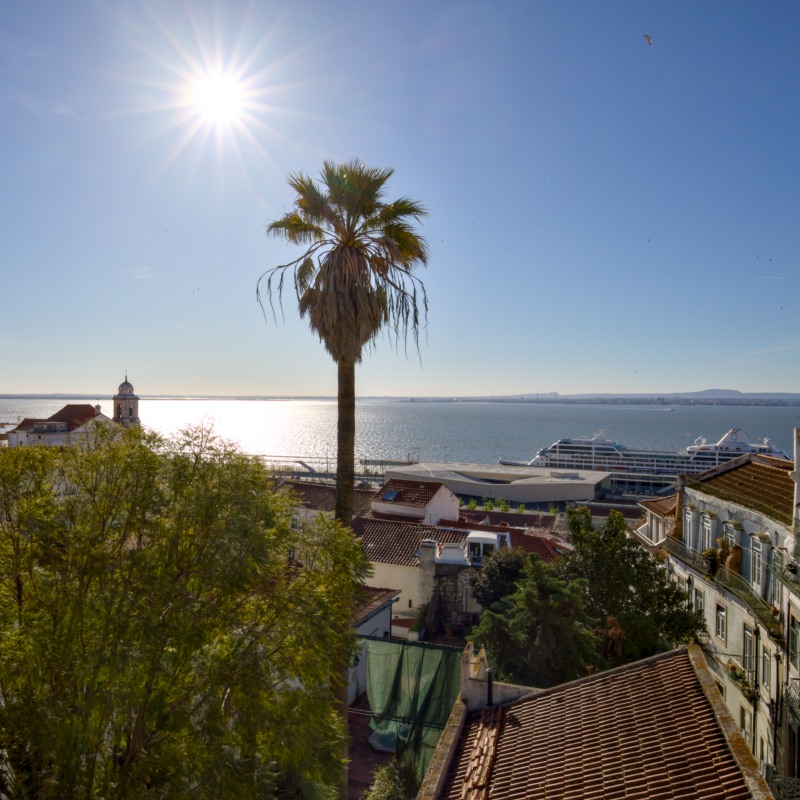
The Portas do Sol Viewpoint, in Lisbon, owes its name to an old city gate, facing east, that once stood on this site. Today, the place works as an open balcony over the historic slope of Alfama and the Tagus. From here, the National Pantheon, Azurara Palace, traces of the Moorish Wall and the Church of São Vicente de Fora can be distinguished, forming a clear reading of old Lisbon. In the centre of the space stands the statue of São Vicente, Lisbon’s patron saint, represented with the boat and two ravens that form part of the city’s symbols. Between vanished walls, houses descending the hill and monuments that still organise the horizon, the viewpoint shows how the urban landscape preserves names, devotions and memories much older than the present.

4
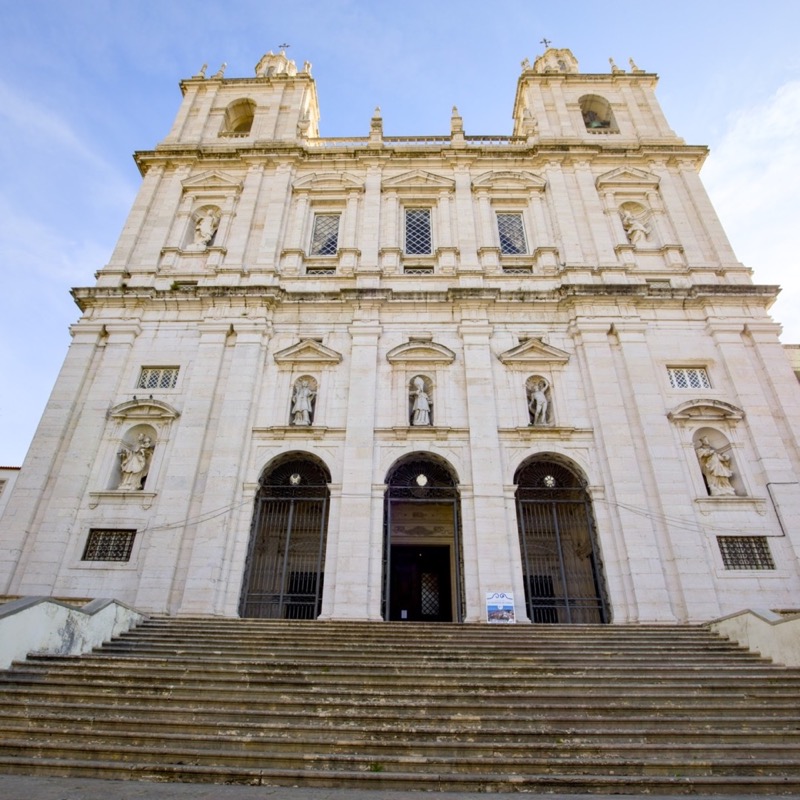
Igreja de São Vicente de Fora4.6

Igreja de São Vicente de Fora

Convent • Lisboa, Lisboa

In Largo de São Vicente, in Lisbon, the Church of São Vicente de Fora stands as one of the great architectural statements of the Philippine period. The origin of the complex dates back to 1147, when King Afonso Henriques ordered the foundation, outside the city walls, of a monastery dedicated to Saint Vincent, after the conquest of the city. The reconstruction of the church and monastery advanced at the beginning of the reign of Philip I, with work associated with Juan de Herrera, Filipe Terzi and Baltazar Álvares. The sober façade, with two towers integrated into the frontispiece, announces an interior with a single nave, transept and deep chancel, covered by a barrel vault with coffers. The crossing lost its dome in the 1755 earthquake. In the 17th and 18th centuries, the complex received inlaid marbles and tile panels. Classified as a National Monument since 1910, the church preserves a severe and monumental presence on the hill of São Vicente.

5
Igreja da Graça4.6

Igreja da Graça

Church • Lisboa, Lisboa

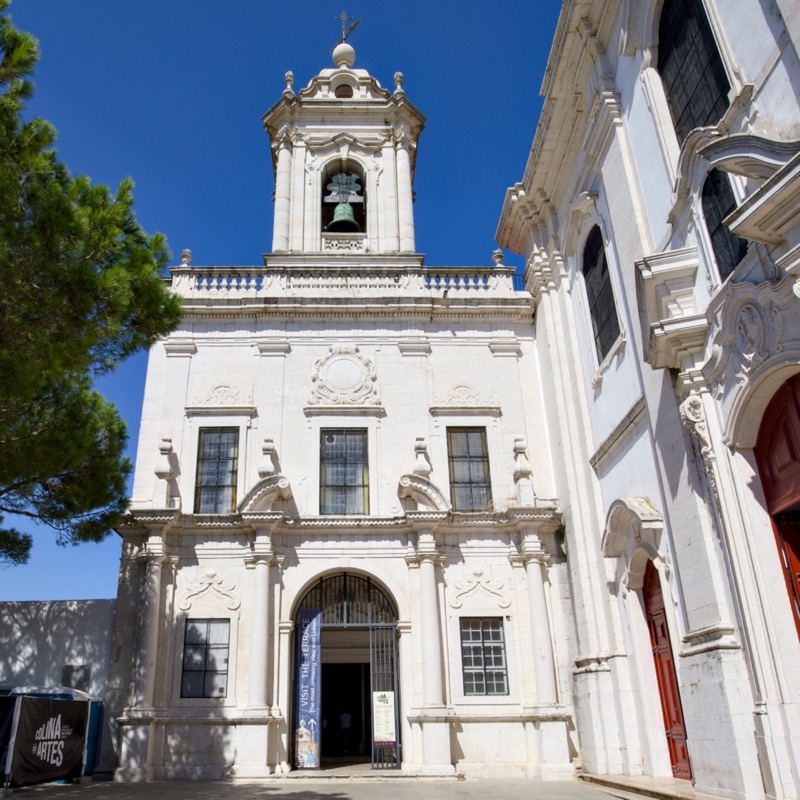
High on Graça hill, in Lisbon, the Church of Graça and the former Convent of Nossa Senhora da Graça preserve a history that spans more than seven centuries. Construction of the convent began in 1271, for the shod hermit friars of Saint Augustine, under the patronage of King Afonso III. The complex was rebuilt in the 16th century and suffered severe ruin in the 1755 earthquake, before being reconstructed with the late-Baroque character that marks the church today. The double façade brings together the church and the former convent entrance, above which rises the bell tower, dated 1738. Inside, the Rococo gilded-wood altars, tiles from several centuries and 18th-century sculptures stand out. The sacristy preserves Baroque decoration, the tomb of D. Mendo de Fóios and the allegorical ceiling by Pedro Alexandrino de Carvalho. The complex is classified as a National Monument.

6
Miradouro da Senhora do Monte4.8

Miradouro da Senhora do Monte

Viewpoint • Lisboa, Lisboa

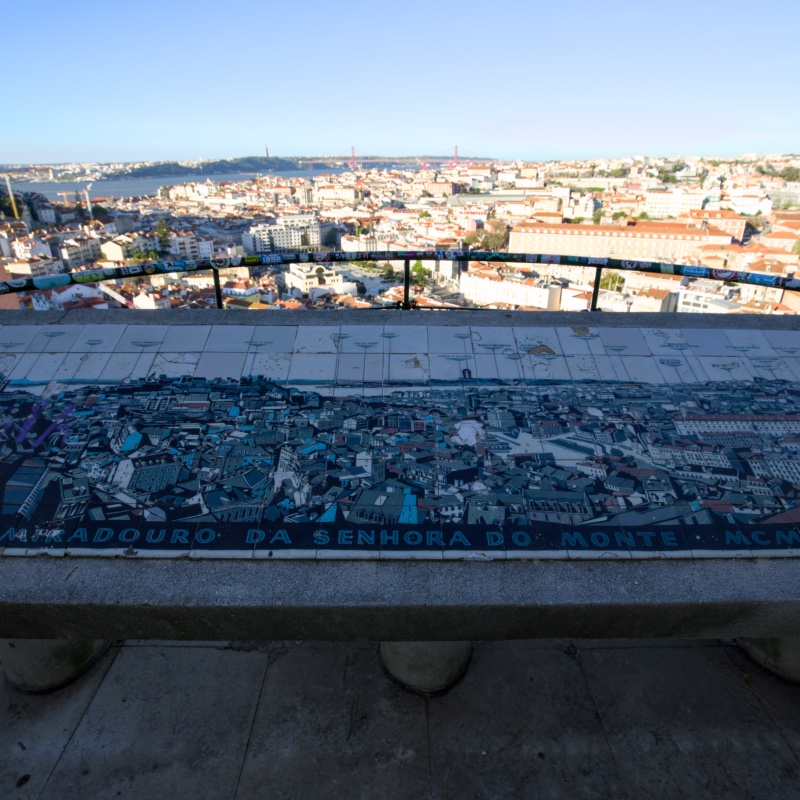
The Senhora do Monte Viewpoint, in Lisbon, opens beside the Chapel of Nossa Senhora do Monte, on the old Monte de São Gens. From this elevated balcony, the city appears in recognisable layers: São Jorge Castle, the River Tagus, the Pombaline Baixa, the hill of São Roque with the ruins of the Carmo Convent, Mouraria, the Castle Hill, the avenues and recent buildings stretching northwards, and several gardens. The proximity of the chapel adds an ancient devotional memory to the panorama: municipal sources place its origin in the time of the Christian reconquest, linked to the hermitage of the Calced Augustinians. Thus, the viewpoint is not only a high point from which to observe Lisbon. It brings together landscape, topography and religious tradition, showing how the city can be read both through the shape of its hills and through the places that remained upon them.

More routes

Continue exploring

Get the app

Take LxDiscover with you

Explore Portugal with a cultural guide for monuments, museums, gardens, palaces, viewpoints, and historic places in Lisbon, Porto, Sintra, and other regions.

Use the map, follow cultural routes, read editorial context, save places, and track your visits with the visit passport.

Free features

  • Interactive map to discover places of interest
  • Detailed information about monuments, museums, and cultural sites
  • Favorites for the places you want to visit
  • Selected routes to start exploring

Premium subscription

  • Curated routes with ordered stops, duration, and difficulty
  • Thematic collections with editorial context for each area
  • Visit passport for progress, visited places, and achievements
  • Advanced map, planning, and proximity alert tools
LxDiscover map screen
LxDiscover routes screen
LxDiscover visit passport screen