
LxDiscover
ExploreMapRoutesRegionsAbout
Get the app

Map · 7 / 203

Explore the map

Regions:
Mosteiro da Batalha4.7

Mosteiro da Batalha

Monastery • Batalha, Leiria

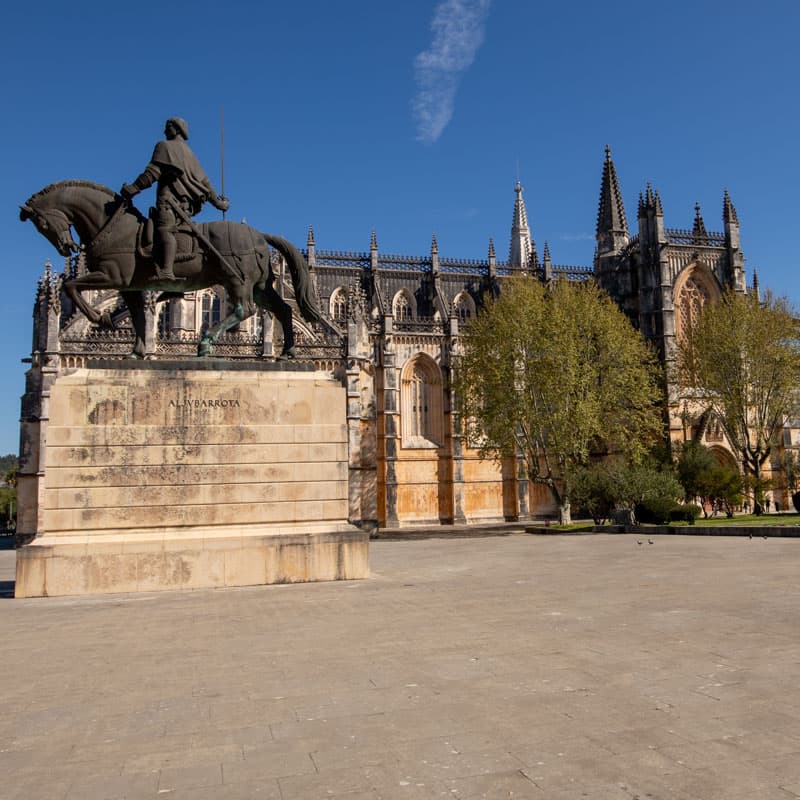
At the Monastery of Batalha, the memory of a victory was turned into stone. King João I ordered it to be built in fulfilment of the vow he made after Aljubarrota, and what began as an act of thanksgiving became, for more than a century and a half, the great building site of the Portuguese monarchy. Here the late Gothic and the Manueline styles took shape, yet the place impresses as much for its history as for its form: the soaring nave, the lace-like Royal Cloister and the Unfinished Chapels give the whole complex a solemn, restless beauty. In the Founder’s Chapel, the tomb of João I and Philippa of Lancaster, surrounded by the tombs of their children, also makes the monastery the symbolic heart of the Avis dynasty. Between convent silence, filtered light and golden stone, one understands why this monument is at once a memory of independence, a royal pantheon and one of the most striking creations of Portuguese art.
Mosteiro de Alcobaça4.6

Mosteiro de Alcobaça

Monastery • Alcobaça, Leiria

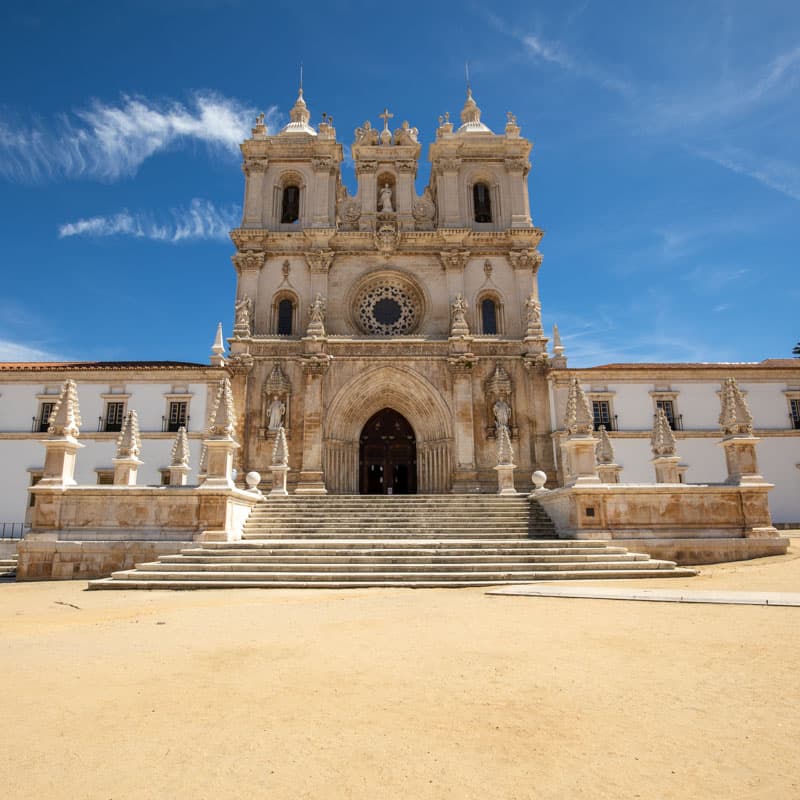
In Alcobaça, monumental scale rises from an ideal of discipline and silence. Founded in 1153 by King Afonso Henriques and entrusted to the Cistercians, the monastery became the order’s main house in Portugal and one of the most remarkable monastic complexes in Europe. Building began in 1178, and the church introduced the new Gothic language here with an almost severe clarity, faithful to the spirit of Cister. That austerity takes on another intensity before the tombs of King Pedro and Inês de Castro, fourteenth-century masterpieces in which love, death and Christian hope were carved with rare symbolic force. The monastery is also a complete organism, made up of cloister, refectory, chapter house and the famous eighteenth-century kitchen, where one senses how monastic life joined prayer, study and work. Between luminous stone and the order of its spaces, Alcobaça preserves the ambition of turning daily life into a form of eternity.

Castelo de Óbidos4.7

Castelo de Óbidos

Castle • Óbidos, Leiria

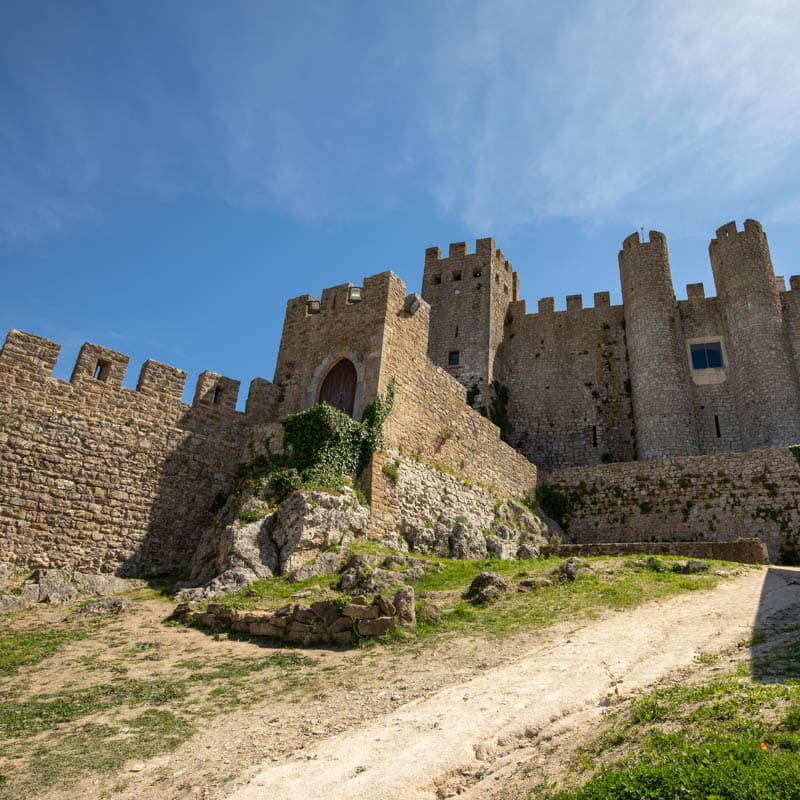
In Óbidos, the castle does not merely dominate the town: it almost merges with it. Raised on an ancient fortified site, consolidated in the Muslim period and taken by the Christians in 1148, it was enlarged by several kings, above all Dinis and Fernando, until it gained the ring of walls that still shapes the skyline today. In 1210, the town passed to the House of the Queens, and the castle also became a residence sought by the court, leaving Óbidos with a very distinctive royal memory. In the Paço dos Alcaides, the Manueline windows recall that palatial dimension, while the ramparts reveal how fortress and houses form a single body. There is, however, a less obvious detail: part of the medieval image that captivates visitors today was also fixed by twentieth-century restorations. Perhaps that is why Óbidos is so striking: it seems untouched, yet it is also a patient construction of memory.

Castelo de Porto de Mós4.4

Castelo de Porto de Mós

Castle • Porto de Mós, Leiria

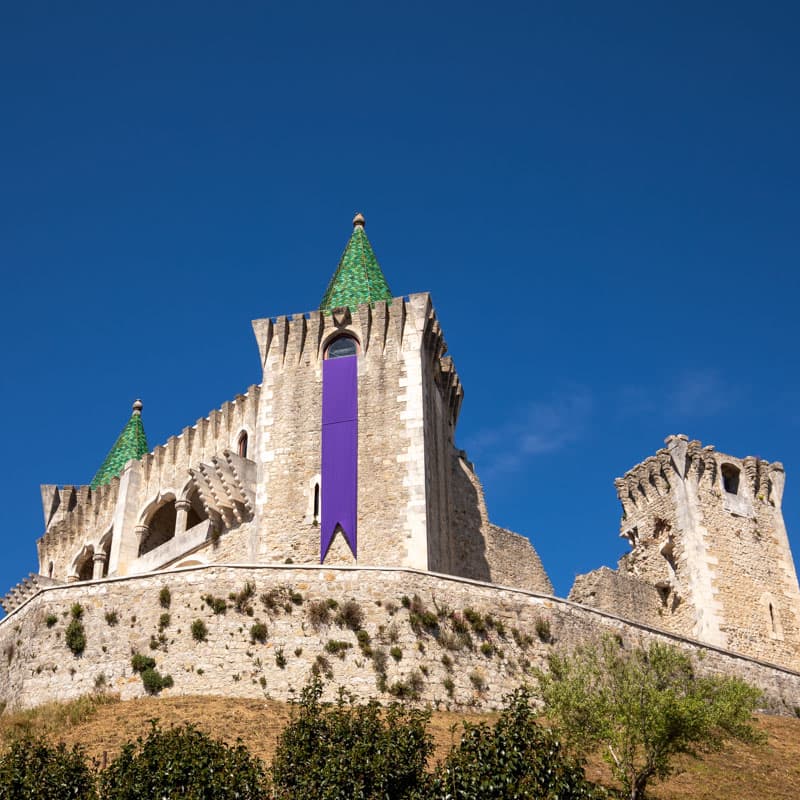
In Porto de Mós, the castle is recognised from afar by the green spires that give it an almost theatrical silhouette. The fortress began under the initiative of Portugal’s first kings and was enlarged by King Dinis, but it gained its most distinctive profile in the fifteenth century, when Afonso, Count of Ourém, added a palace-like residence with a panoramic loggia and a pentagonal plan of unusual clarity. On the eve of Aljubarrota, it housed the Portuguese army; afterwards, it moved away from war and closer to comfort and display. Abandonment and earthquakes, above all the one in 1755, left it in ruins, until twentieth-century restorations gave the town back its most emblematic image. From the top of the hill, between pale stone and balconies open to the landscape, one understands why this castle seems to bring together two natures: a medieval fortress and a dreamed palace.

Santuario do Senhor Jesus da Pedra4.4

Santuario do Senhor Jesus da Pedra

Church • Óbidos, Leiria

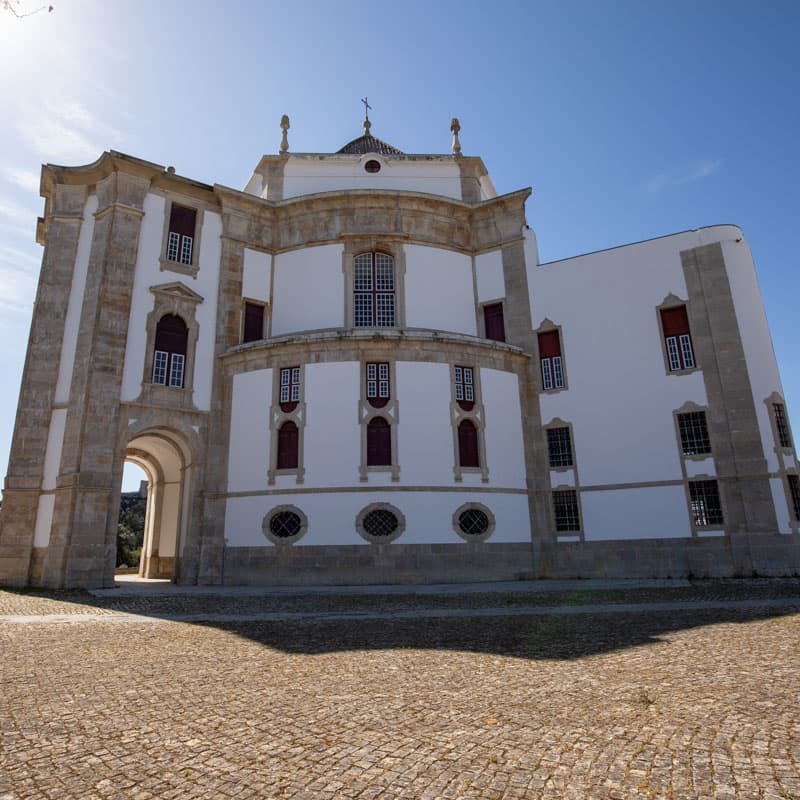
Outside the walls of Óbidos, beside the road to Caldas da Rainha, the Sanctuary of Senhor Jesus da Pedra stands out for its unusual form and for the devotion that gave rise to it. The present church was built between 1740 and 1747, to a design by Captain Rodrigo Franco, architect of the Patriarchal See, in a period associated with the patronage of D. Tomás de Almeida and King João V. Its centralised plan combines a cylindrical exterior body with a hexagonal interior; around it are arranged the chancel, the sacristy and the bell towers. In the churchyard remain the pilgrims’ lodging house and a Rococo fountain. Inside, the chancel holds the stone image of the Crucified Christ, placed in a small shrine within the altarpiece, accompanied by a painting of Calvary by André Gonçalves. Classified as a Monument of Public Interest in 2013, it preserves, in its open forecourt, a direct visual relationship with the town of Óbidos.

Grutas de Mira de Aire4.7

Grutas de Mira de Aire

Caves • Mira de Aire, Leiria

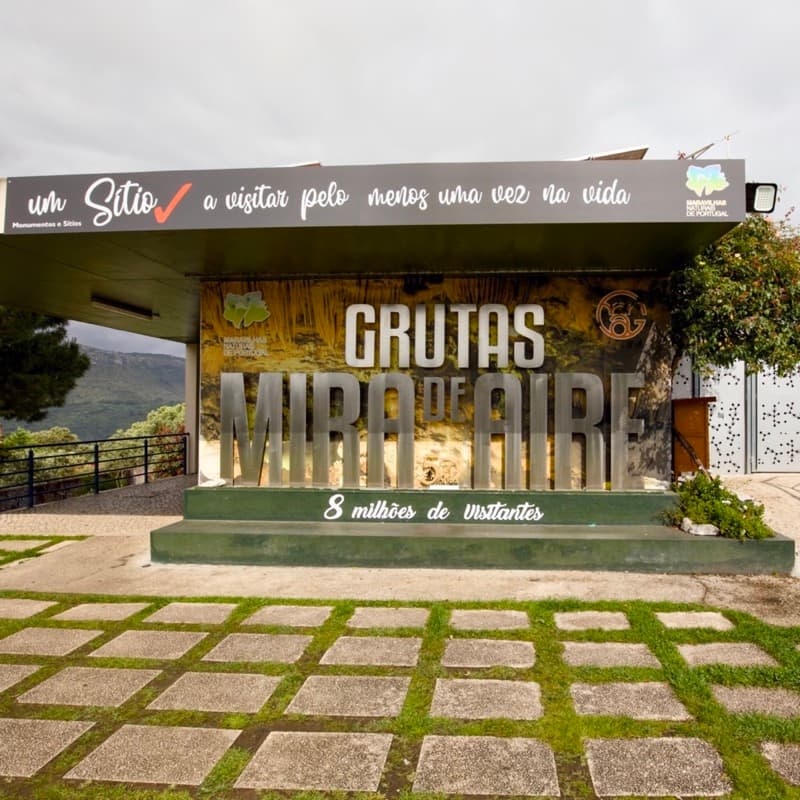
The Mira de Aire Caves, located in Mira de Aire, in the municipality of Porto de Mós, open to the public part of the underground world of the Gruta dos Moinhos Velhos, in the Estremenho Limestone Massif. The first documented descent took place on 27 July 1947; in 1955, the site was classified as a Property of Public Interest, and on 11 August 1974 it received its first visitors. The cave is the result of the slow action of rainwater on limestone, which opened galleries and shafts and formed stalactites, stalagmites and columns. With 11 known kilometres and only part open to visitors, the municipality presents them as the largest tourist caves in Portugal. Along the underground route, lighting highlights chambers, limestone forms and water, with names such as the Organ, the Black River and the Great Lake. In 2010, they were voted one of Portugal’s 7 Natural Wonders.

Bacalhôa Buddha Eden4.7

Bacalhôa Buddha Eden

Garden/Park • Bombarral, Leiria

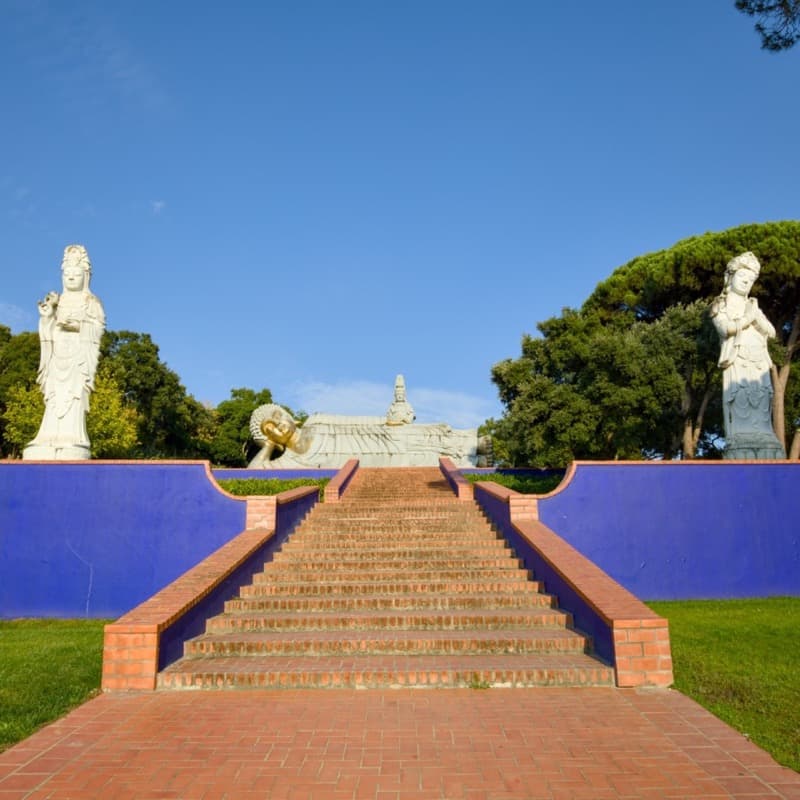
In Carvalhal, in the municipality of Bombarral, Bacalhôa Buddha Eden turns Quinta dos Loridos into a vast open-air sculpture garden. Created in response to the destruction of the giant Buddhas in Afghanistan, it covers around 35 hectares and is presented as the largest oriental garden in Europe. Among lakes, pagodas, sculpted dragons and large golden Buddhas, the route gathers sculptures spread across the landscape, for which more than six thousand tons of marble and granite were used. The site is not limited to Buddhist imagery: it also includes a modern and contemporary sculpture garden and another devoted to African Shona sculpture from Zimbabwe. The scale of the place and the alternation of water, vegetation and stone create a very distinctive landscape, where art and nature coexist with deliberate calm, in a place born from a cultural response to destruction.