All routes
Lisbon Historic Center

Lisbon route preview

Lisbon Historic Center

Route between Baixa and Castelo. The final climb to Castelo de S. Jorge is the most demanding stretch

4 stops3-4 hoursModerate

Why this route

Historic Baixa and hilltop castle

Route between Baixa and Castelo. The final climb to Castelo de S. Jorge is the most demanding stretch

Route preview

Stops shown in this example

Explore Lisboa →
1
Praça do Comércio e Cais das Colunas

Praça do Comércio e Cais das Colunas

Square • Lisboa, Lisboa

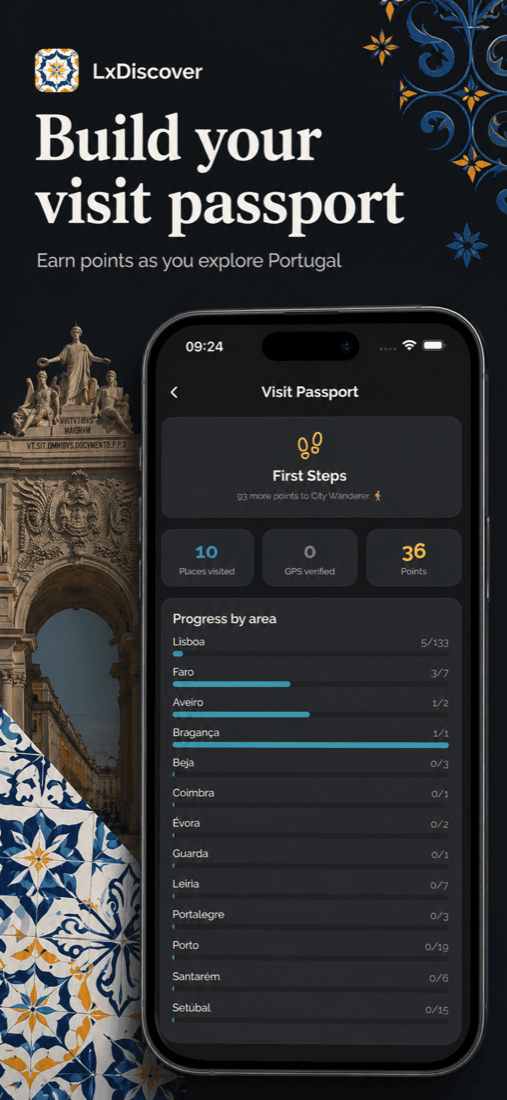
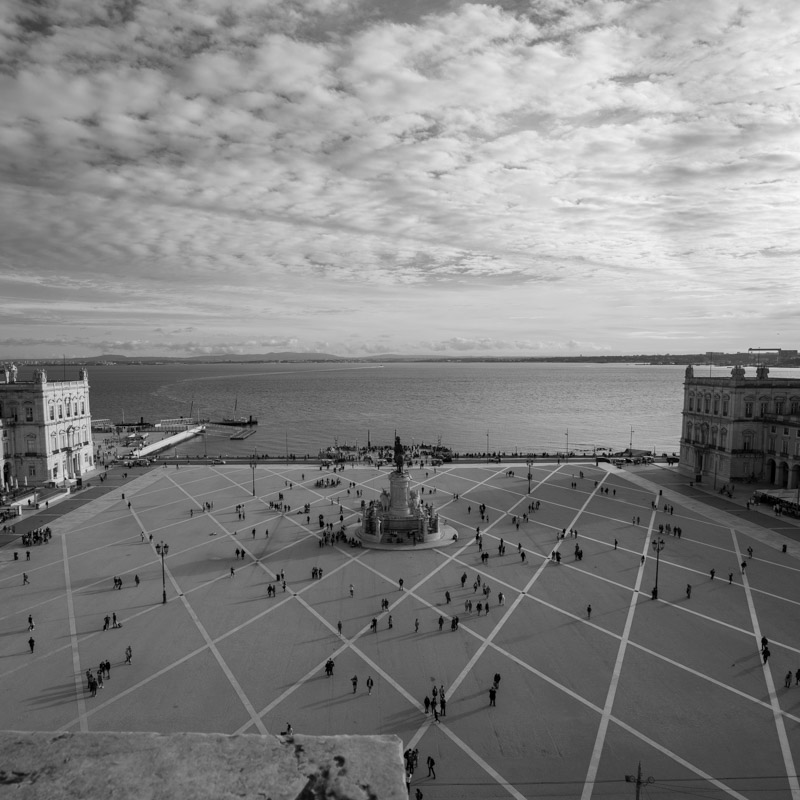
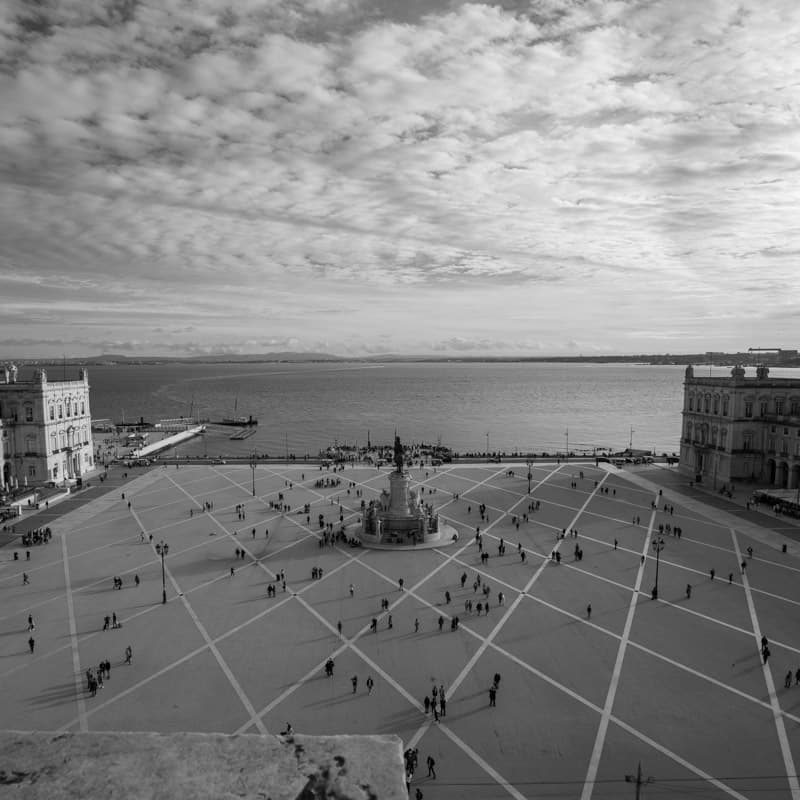
Few places explain Lisbon as clearly as Praça do Comércio and Cais das Colunas. Before the 1755 earthquake, the Ribeira Palace stood here; after the catastrophe, the Pombaline reconstruction turned the old Terreiro do Paço into a regular square open to the Tagus, expressing the capital’s new commercial and political role. The long arcades, the towers and the equestrian statue of King José the First give the whole ensemble the solemnity of a great urban stage, yet it is by the river that the place gains a different intensity. Cais das Colunas, conceived within this new bond between city and water, served as Lisbon’s ceremonial landing place for those arriving by river. Today, between the square’s luminous geometry, the broad horizon of the estuary and the steps that almost touch the Tagus, this ensemble still shows that Lisbon has always understood itself best when facing the river.
2
Arco Triunfal da Rua Augusta

Arco Triunfal da Rua Augusta

Arch • Lisboa, Lisboa

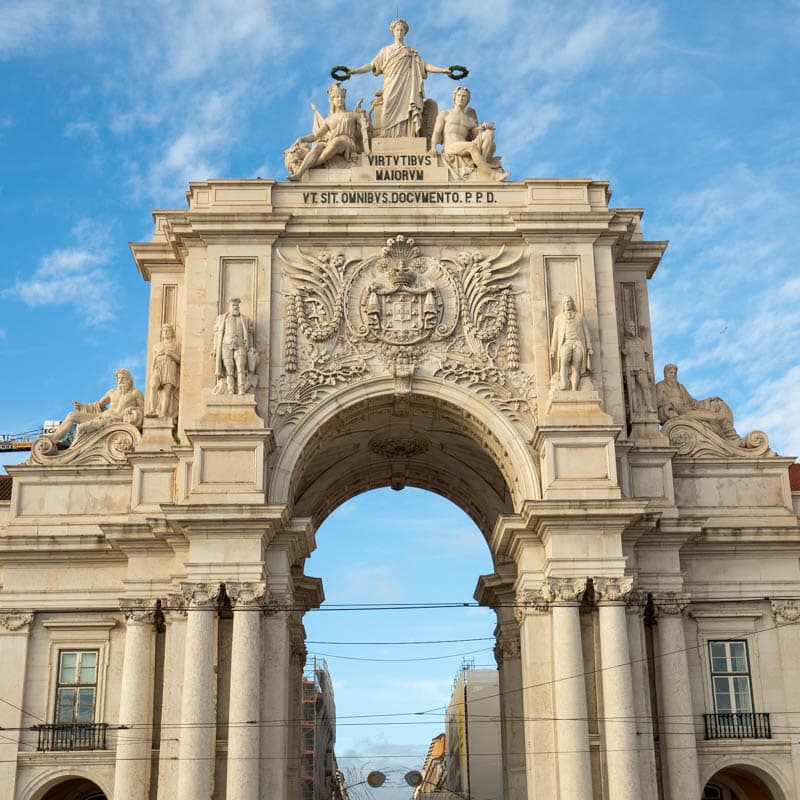
More than a monumental entrance, the Rua Augusta Triumphal Arch is the great symbolic gateway to the Lisbon that rose again after the 1755 earthquake. Conceived in the context of the Pombaline reconstruction, it took more than a century to reach its final form, and that delay says much about the city’s slow reinvention. At the top, Glory crowns Genius and Valour; below, figures such as Vasco da Gama, Viriato, Nuno Álvares Pereira and the Marquis of Pombal turn the monument into a statement of memory and power. It is also worth noticing the Latin inscription, dedicated to the virtues of the ancients, and the way the arch frames the Baixa, Praça do Comércio and the Tagus. Seen up close, it impresses with its scale and sculptural relief; seen from above, it offers one of the clearest readings of the Pombaline plan and of Lisbon’s deep bond with the river.

3
Sé de Lisboa

Sé de Lisboa

Church • Lisboa, Lisboa

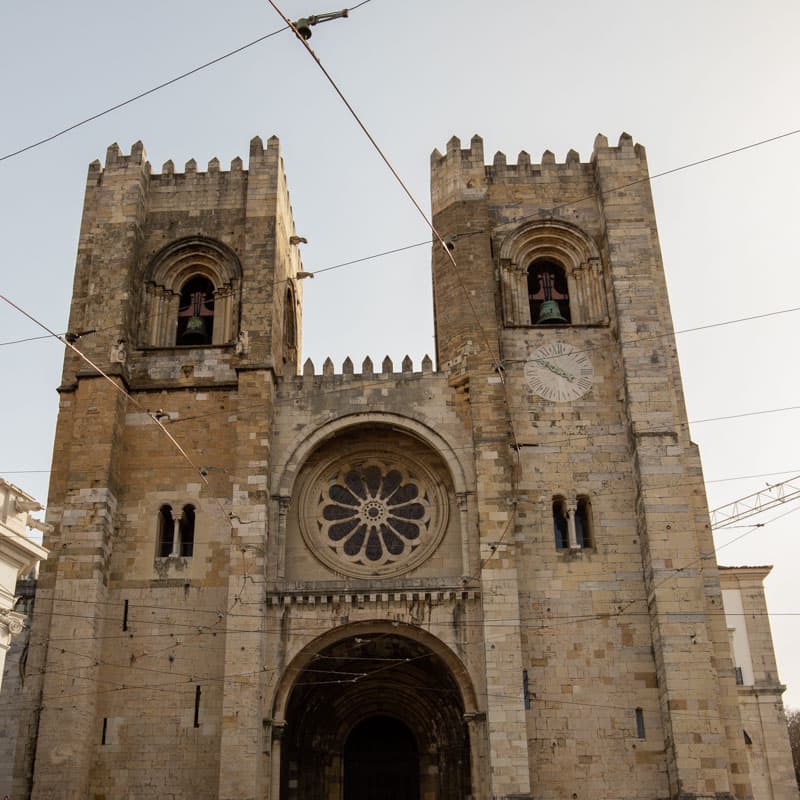
Between Alfama and the Baixa, Lisbon Cathedral seems to gather whole centuries of the city into a single building. Construction began in 1147, just after the Christian conquest of Lisbon, and the Romanesque church changed over time with the same upheavals that shaped the capital itself. To the Gothic cloister commissioned by King Dinis was added, in the fourteenth century, the ambulatory chevet ordered by Afonso IV to receive pilgrims coming to venerate the relics of Saint Vincent, a rare solution that still sets the cathedral apart. The 1755 earthquake destroyed important parts of the complex, and the restorations of the twentieth century gave it the Neo-Romanesque appearance we know today, with the rose window and twin towers dominating the square. Inside, medieval stone lives alongside traces of other periods; and in the baptistry, one is reminded that Saint Anthony was baptised here, a detail that links the Sé not only to Lisbon’s history, but also to its most intimate devotion.

4
Castelo de S. Jorge

Castelo de S. Jorge

Castle • Lisboa, Lisboa

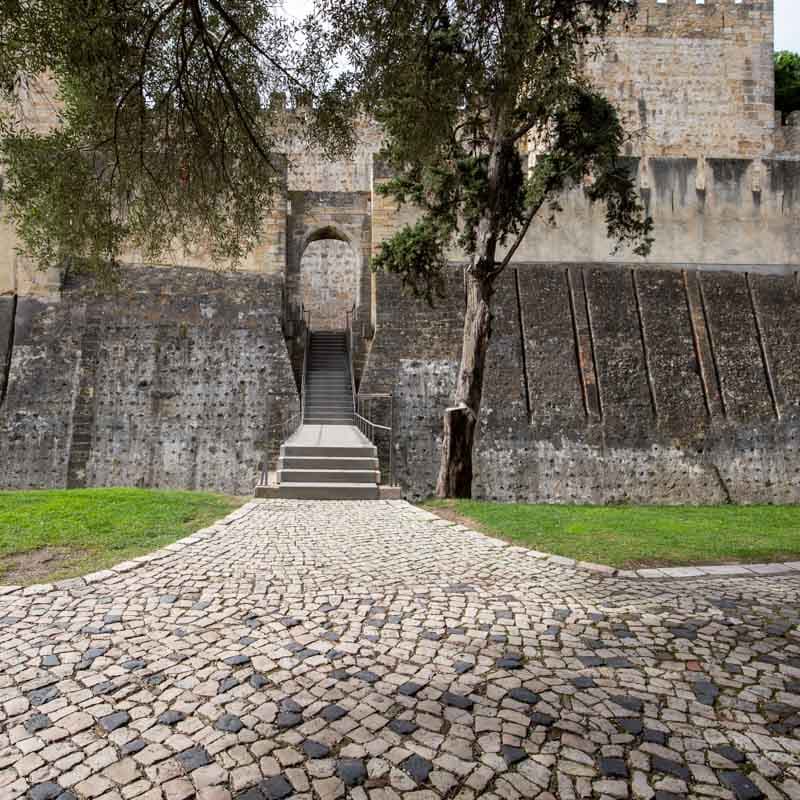
Rising from the highest point of old Lisbon, São Jorge Castle seems to gather almost the whole biography of the city into one place. The hill had been occupied since very early times, but the fortification we recognise today took shape in the Islamic period, as the last defensive stronghold of the citadel. After the conquest of 1147 by Afonso Henriques, the castle entered its brightest age: it became a royal palace, housed the court, the royal archive and major ceremonies, and from here the city’s rooftops, estuary and gateways could be watched over. When the royal residence moved down to the riverside, the complex lost its central role, was turned to military use and suffered after the 1755 earthquake, before being rediscovered in the great restoration campaigns of the twentieth century. Today, among walls, archaeological remains and the Camera Obscura in the Tower of Ulysses, it remains a rare place to understand Lisbon in layers, between stone, memory and horizon.

More routes

Continue exploring

Take the LxDiscover App with you

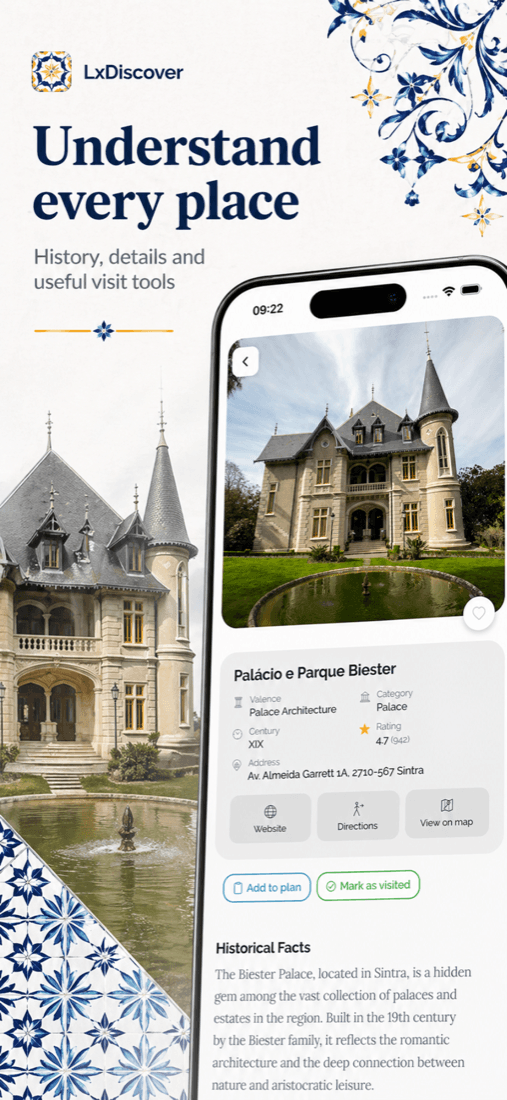
Explore Portugal with a cultural guide for monuments, museums, gardens, palaces, viewpoints, and historic places in Lisbon, Porto, Sintra, and other regions.

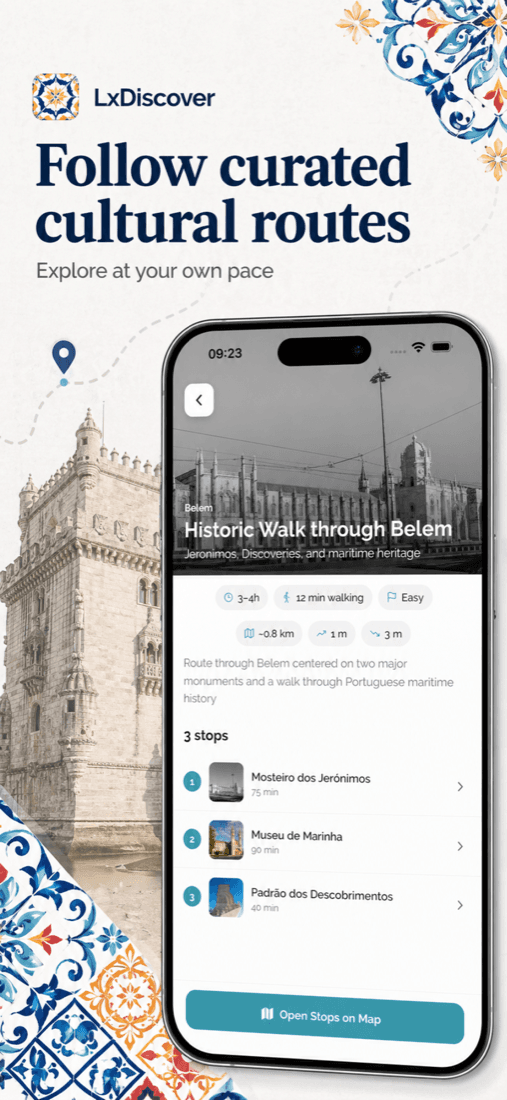
Use the map, follow cultural routes, read editorial context, save places, and track your visits with the visit passport.

Free features

  • Interactive map to discover places of interest
  • Detailed information about monuments, museums, and cultural sites
  • Favorites for the places you want to visit
  • Selected routes to start exploring

Premium subscription

  • Curated routes with ordered stops, duration, and difficulty
  • Thematic collections with editorial context for each area
  • Visit passport for progress, visited places, and achievements
  • Advanced map, planning, and proximity alert tools
LxDiscover map screen
LxDiscover routes screen
LxDiscover visit passport screen