Itinerary

1 Day in Sintra: A Practical Cultural Itinerary

Sintra can work as a single cultural day when the plan stays focused. This itinerary connects the village centre, the Moorish ridge, Pena and Regaleira as a compact introduction to the landscape.

The sequence is built around cultural contrast: a royal palace in the village, a defensive hilltop castle, a Romantic palace above the trees, and an esoteric estate near the historic centre. Each stop links to its own page for the longer cultural context.

The stops

  1. 1
    Start of the dayAllow around 90 minutes

    Palácio Nacional de Sintra

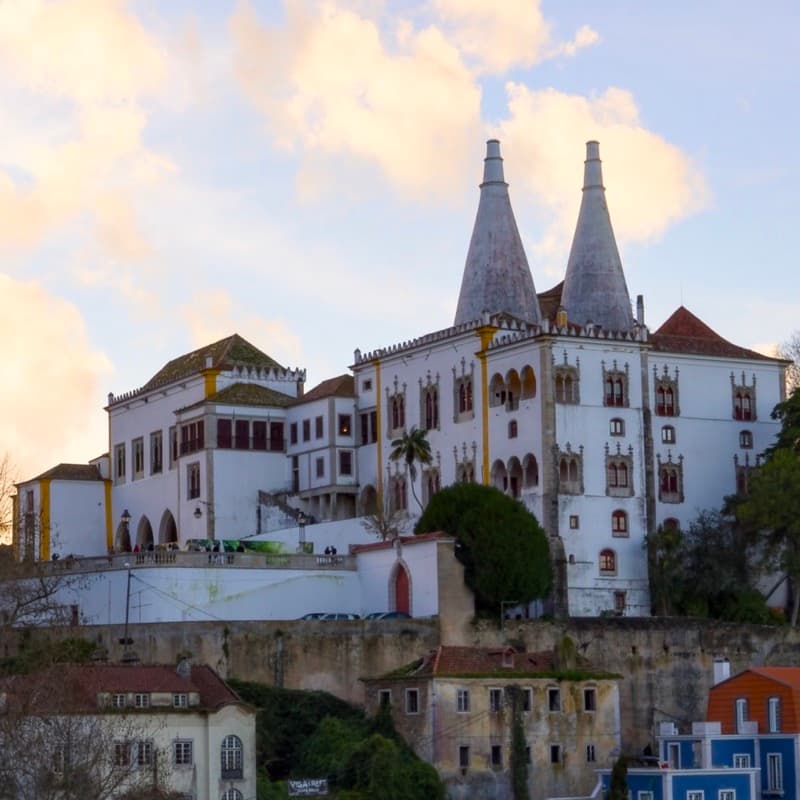
    Start at the oldest palace in Sintra, in the village centre with its twin conical kitchen chimneys. The tiled interiors trace 600 years of Portuguese court life and the building doubles as a useful orientation to the rest of the day.

    Context: Begin with the royal centre of Sintra before moving to the hilltop monuments and later Romantic estates.

    Look for: The twin kitchen chimneys, tiled rooms and courtly interiors that explain why the palace anchors the village.

    Palácio Nacional de Sintra4.5

    Palácio Nacional de Sintra

    Palace • Sintra, Lisboa

    The National Palace of Sintra seems to rise out of the town itself, with its two white chimneys announcing a place where royal history has remained intact. With a thousand years of life behind it, and as the only Portuguese medieval royal palace preserved in its entirety, it was inhabited by almost all the kings and queens of Portugal, who left behind layers of Gothic, Manueline and Mudéjar architecture. Inside, the palace surprises less through its façade than through the intimacy of its rooms and the ceilings that speak of power, taste and memory. It is worth lingering in the Hall of Coats of Arms, where Manuel the First places himself at the centre of a noble order represented by seventy-two heraldic shields, and in the famous Hall of Magpies, whose painted ceiling of one hundred and thirty-six birds still provokes questions, because its exact meaning remains unknown. Visiting this palace is like entering a royal house still inhabited by ceremony and secrecy.

  2. 2
    Mid-morningAllow around 90 minutes

    Castelo dos Mouros

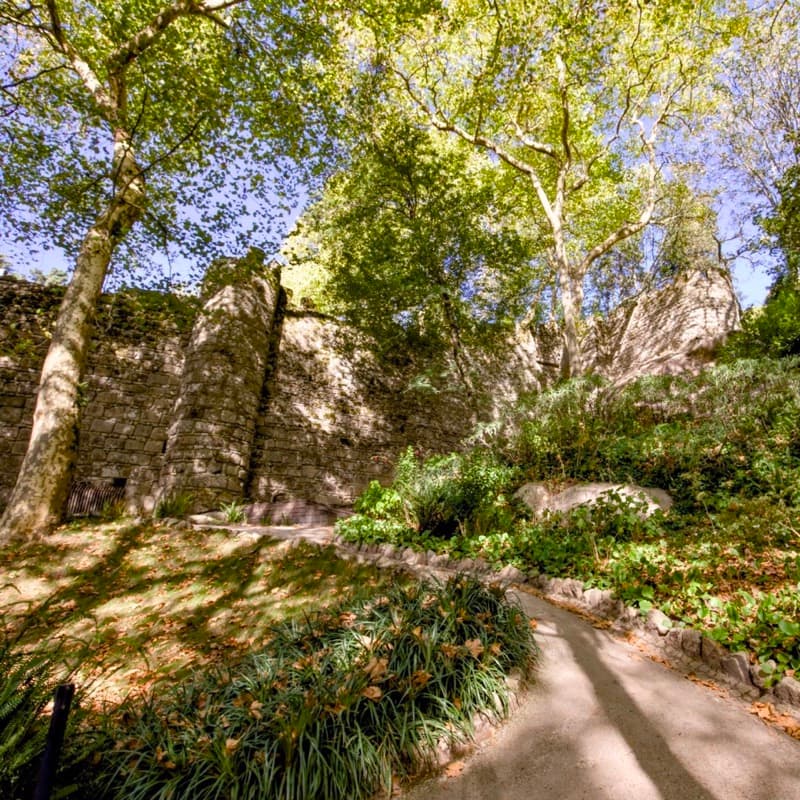
    Climb the Moorish castle’s serrated walls along the granite ridge above the village. The view back over Sintra and out toward the Atlantic is the best wide panorama of the day, and the medieval ramparts are short to walk end-to-end.

    Context: Move from the courtly village centre to the older defensive ridge that frames Sintra from above.

    Look for: Wear shoes that grip — the ramparts have steep stone steps and no handrails on the highest sections.

    Castelo dos Mouros4.6

    Castelo dos Mouros

    Castle • Sintra, Lisboa

    On one of the peaks of the Sintra Mountains, the Moorish Castle follows the rocky relief with granite walls that adapt to the mountain. The fortification, of Muslim foundation, dates back to the 10th century and occupied a strategic position in the defence of the territory of Sintra and the maritime approaches to Lisbon. Within and around the walls there was a settlement, today identified as the Islamic Quarter; silos carved into the rock can still be seen, used to preserve foodstuffs such as cereals. In 1147, after the conquest of Lisbon and Santarém, Sintra was handed over to King Afonso Henriques. With Christian settlement, the space gave way to a medieval village, which included the Church of São Pedro de Canaferrim. In the 19th century, King Fernando II promoted restoration works according to Romantic taste. Since 1995, it has formed part of the Cultural Landscape of Sintra, a UNESCO World Heritage Site.

  3. 3
    Early afternoonAllow around two hours, longer if you walk the park

    Palácio Nacional da Pena

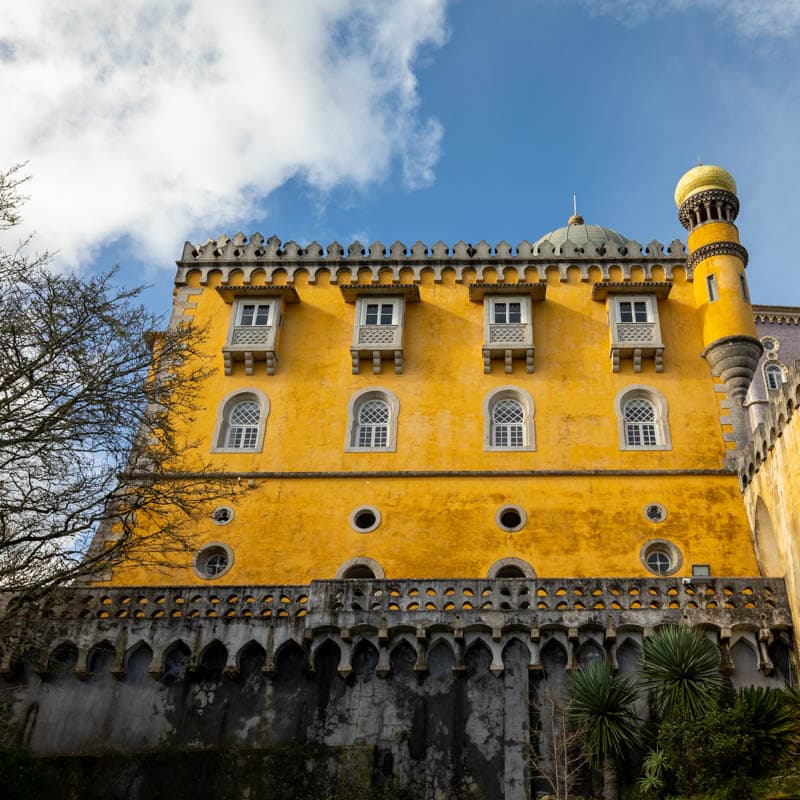
    The icon of 1840s Romantic eclecticism: yellow and pink walls, Moorish arches, German neo-Gothic towers. The surrounding park is part of the same Romantic landscape, with gardens and lakes below the palace.

    Context: Place Pena after the Moorish ridge to keep the hilltop monuments together in the same part of the landscape.

    Look for: The contrast between revivalist styles, bright colour, defensive forms and garden design.

    Palácio Nacional da Pena4.4

    Palácio Nacional da Pena

    Palace • Sintra, Lisboa

    The National Palace of Pena rises above the hills as a romantic fantasy turned into stone. Dreamed up by Ferdinand the Second, the Artist King, it grew from the transformation of a former Hieronymite monastery into a summer palace for the royal family, where nineteenth-century taste blends medieval, Manueline, Moorish and Renaissance references without losing its harmony. Inside, the old church, cloister and apartments preserve the memory of a place once lived in; outside, Triton’s Terrace offers one of the palace’s most fascinating details, with its hybrid figure symbolically linking the aquatic and terrestrial worlds. From the Courtyard of Arches, too, the scenic ambition of Pena becomes clear, framing the hills, the park and the Atlantic as part of the palace itself. It was here that Queen Amélia received the news of the proclamation of the Republic. Few places tell so well the story of dream, power and the end of an era.

  4. 4
    Late afternoon (optional)Allow around 90 minutes

    Palácio e Quinta da Regaleira

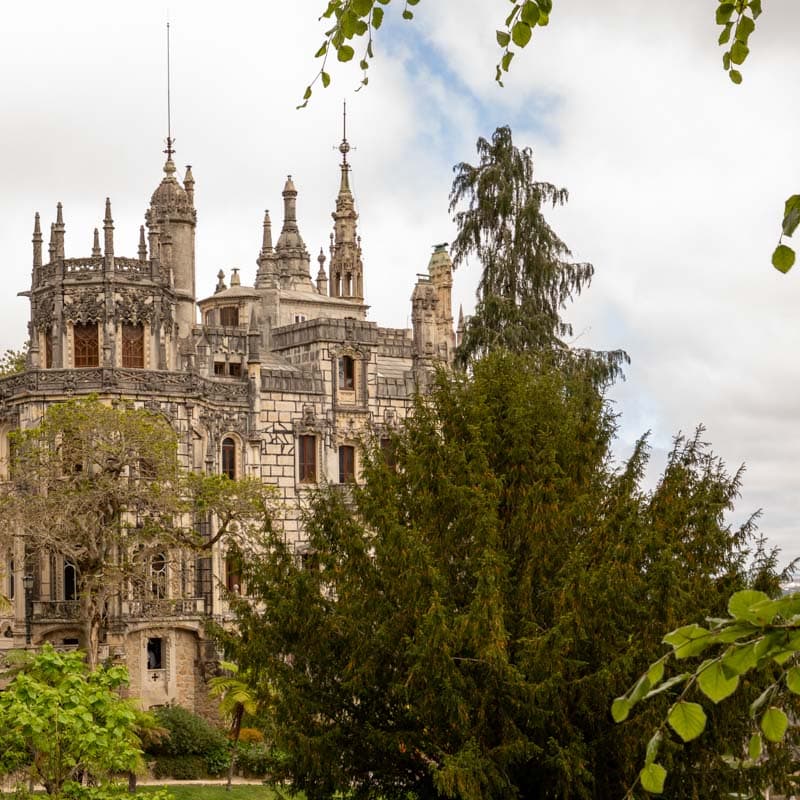
    The strangest of the Sintra estates: a private 19th-century palace of esoteric symbolism, with initiation wells, grottoes and a subterranean spiral staircase. Doable if you’ve kept good pace through the day — otherwise save it for a second visit.

    Context: End with a village-side estate whose symbolism feels very different from Pena’s public Romantic drama.

    Look for: The initiation well, grottoes and layered symbolic route through the estate.

    Palácio e Quinta da Regaleira4.7

    Palácio e Quinta da Regaleira

    Palace • Sintra, Lisboa

    In Sintra, the Palace and Quinta da Regaleira feel less like a country house than like a world imagined in stone, water and vegetation. António Augusto Carvalho Monteiro bought the property in 1892 and, with Luigi Manini, transformed it between 1904 and 1910 into a theatrical ensemble where Neo-Manueline, Gothic, Renaissance and Classical forms meet with almost operatic freedom. The palace and chapel rise like parts of a larger enigma: in the park, lakes, grottoes, tunnels and the famous Initiation Well create a landscape charged with symbolic allusions, some linked to Masonic, Templar and Rosicrucian imagery. It is no surprise that people in Sintra called it the “Wedding Cake”. Yet Regaleira also impresses through its harmony with the hills and the way each corner seems designed to be discovered slowly. Part of the Cultural Landscape of Sintra, it shows how late Romanticism could turn a garden into a narrative and a visit into an experience of mystery.

Planning context

Start in the historic village

Begin with the village palace to understand Sintra as a court landscape before moving into the hills and private estates around it.

Keep the route compact

The stops are chosen to show different layers of Sintra without turning the day into a checklist of every palace and garden.

Use the place pages

Open each stop page for the deeper history, architectural notes and nearby cultural context before deciding how much time to spend there.

Keep the day flexible

Treat Regaleira as the flexible final stop: it works well if the day still has space, and it can also stand alone on a second Sintra visit.

Take this itinerary with you

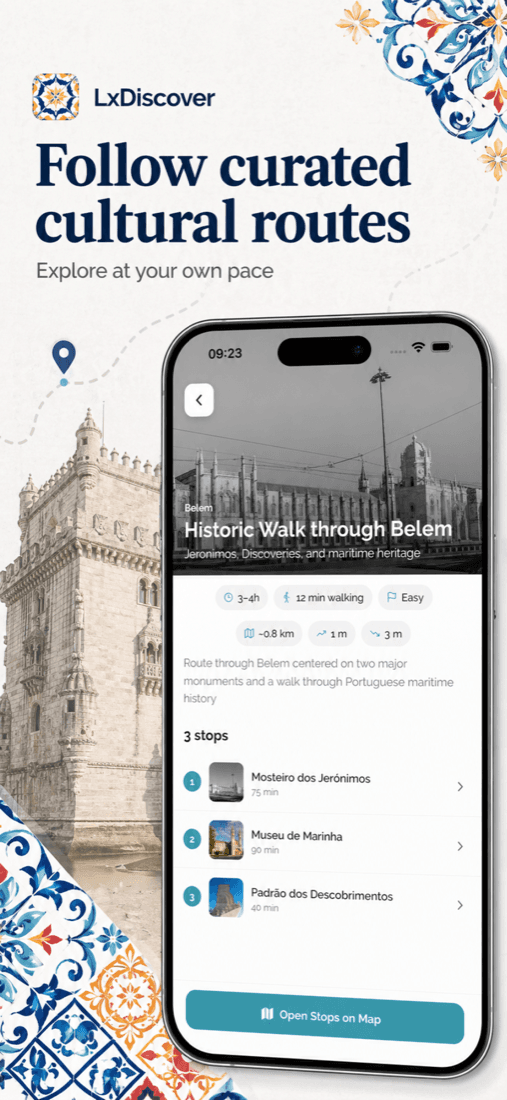
The LxDiscover app keeps the stops, place pages and cultural context together so you can follow the itinerary as you explore Sintra.

Open the app

Continue exploring

Take the LxDiscover App with you

Explore Portugal with a cultural guide for monuments, museums, gardens, palaces, viewpoints, and historic places in Lisbon, Porto, Sintra, and other regions.

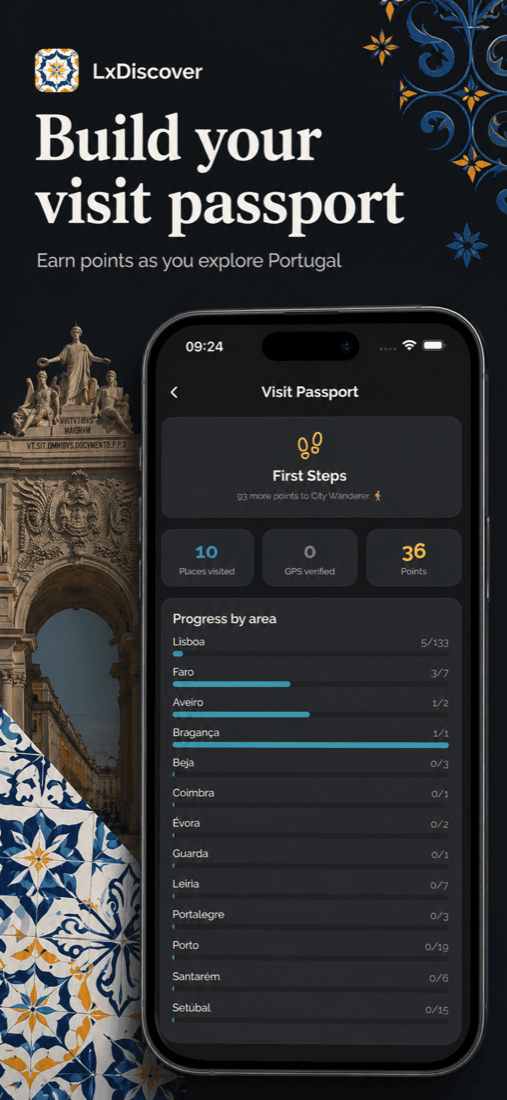
Use the map, follow cultural routes, read editorial context, save places, and track your visits with the visit passport.

Free features

  • Interactive map to discover places of interest
  • Detailed information about monuments, museums, and cultural sites
  • Favorites for the places you want to visit
  • Selected routes to start exploring

Premium subscription

  • Curated routes with ordered stops, duration, and difficulty
  • Thematic collections with editorial context for each area
  • Visit passport for progress, visited places, and achievements
  • Advanced map, planning, and proximity alert tools
LxDiscover map screen
LxDiscover routes screen
LxDiscover visit passport screen