 4.7
4.7Parque e Palácio de Monserrate
Palace • Sintra, Lisboa
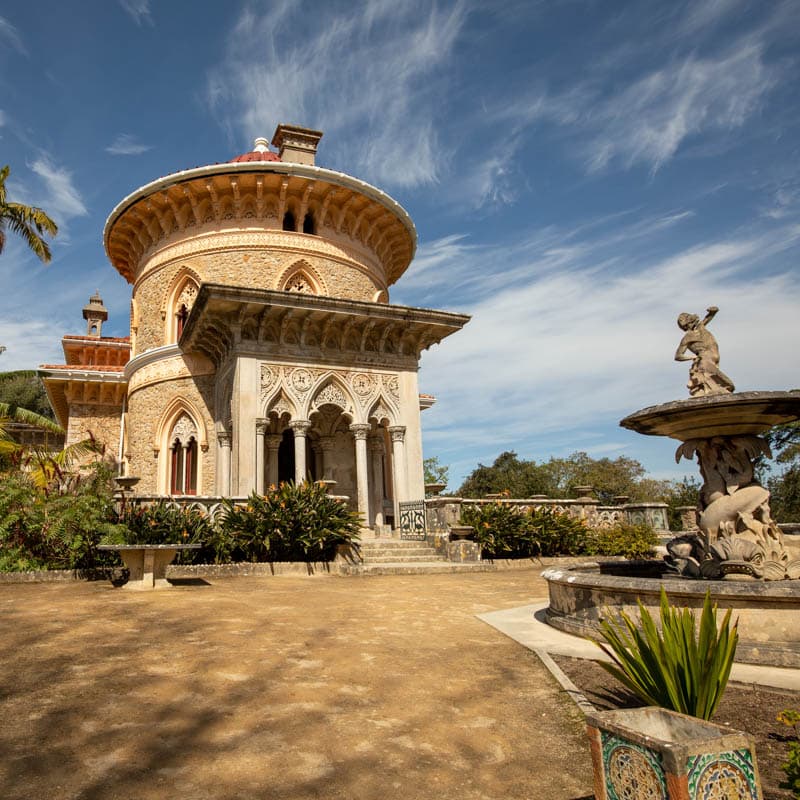
At Monserrate, Romanticism seems to have taken on an almost vegetal form. The story of the place begins in 1540, with the hermitage ordered by Frei Gaspar Preto, but the setting that dazzles visitors today gained a different scale in the nineteenth century: after the stay of William Beckford and the admiration that Lord Byron gave it in Childe Harold’s Pilgrimage, Francis Cook bought the estate in 1863 and had the palace built that still defines it today. Designed by James Knowles Junior, the building blends Gothic, Indian and Moorish echoes with unexpected lightness, especially in the octagonal atrium, where the sound of the fountain and the light filtered through the dome create an almost unreal atmosphere. Outside, the park matters as much as the palace: exotic species were arranged by geographical areas, taking advantage of the hills’ microclimates, and turned Monserrate into one of Portugal’s most remarkable botanical gardens. Among ruins, tree ferns, lakes and winding paths, everything here seems made to surprise without haste.