
Explore Portugal by region

Regions

Santarém

10 places across Entroncamento, Ourém, Santarém, Tomar, Torres Novas, Vila Nova da Barquinha.

Map
CastleConventInterpretive CentreMuseumNatural Monument
Convento de Cristo4.7

Convento de Cristo

Convent • Tomar, Santarém

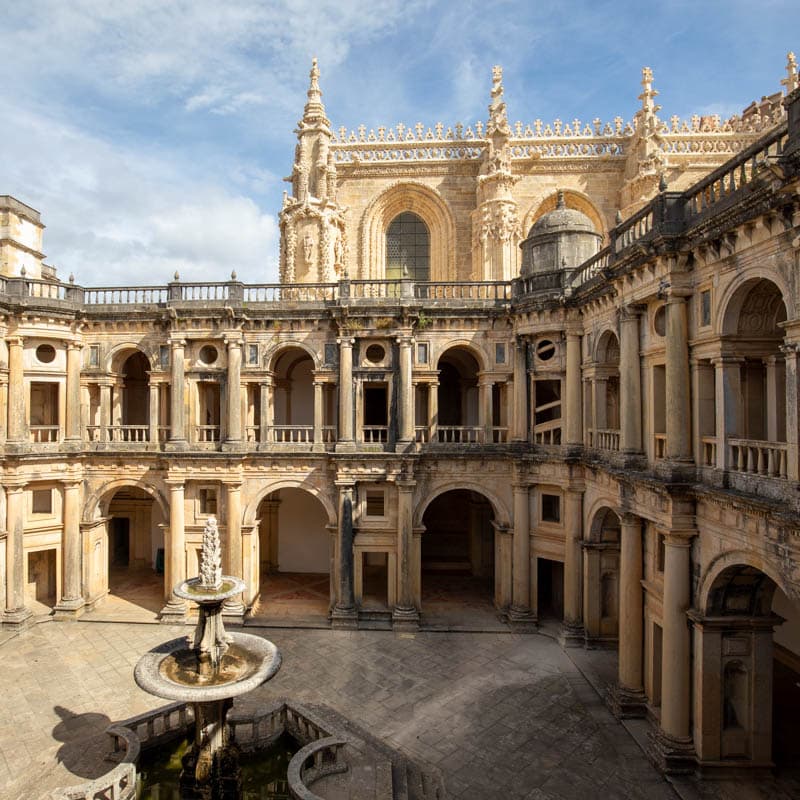
The Convent of Christ, in Tomar, preserves the rotunda of the old Templar church within an ensemble enlarged over centuries. During the Manueline period, a new nave was connected to the central space by a great arch, and the building acquired the celebrated Chapter Window. The cloisters recall different phases of religious life, from Prince Henry's time to the reforms of João the Third. The Pegões Aqueduct supplied the water the community needed. Church, meeting spaces, infirmary and other rooms show the variety of tasks the convent had to accommodate. Its history unfolds through buildings that enlarged and transformed the medieval foundation.
Castelo de Tomar4.6

Castelo de Tomar

Castle • Tomar, Santarém

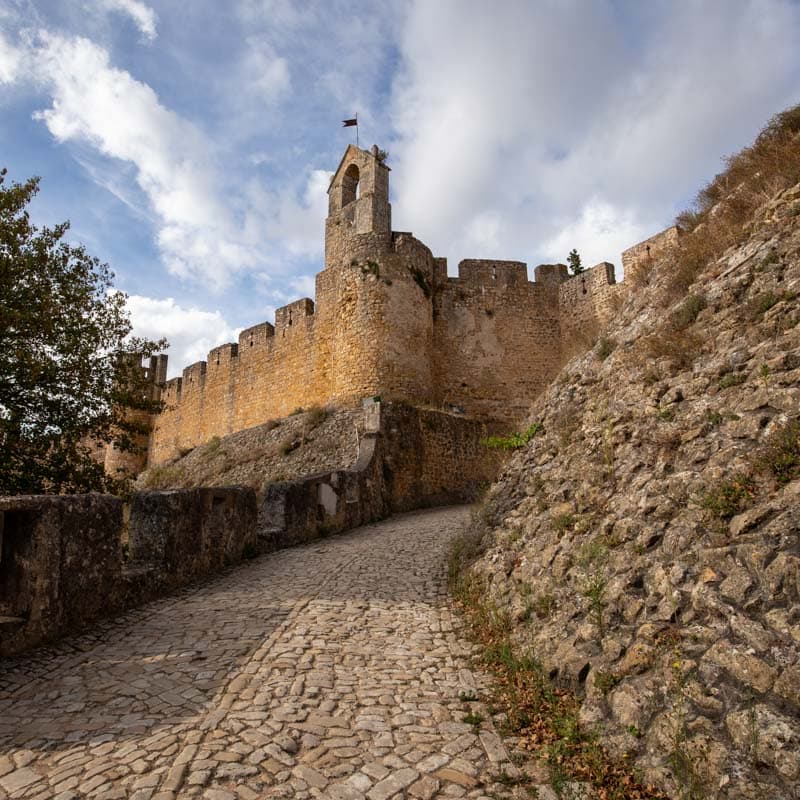
Founded by Gualdim Pais in 1160, Tomar Castle brought defence, housing and worship together within one Templar fortification. The almedina sheltered the settlement, while the parade ground and inner citadel had other roles within the enclosure. Military features include the alambor, a sloping base beside the walls. The rotunda served religious life and would become part of the Convent of Christ's church. After the Templars, the Order of Christ continued to occupy and transform the site. The castle reveals an early phase of Tomar, when the community, military spaces and religious house shared the same protected ensemble.

Museu Nacional Ferroviário4.7

Museu Nacional Ferroviário

Museum • Entroncamento, Santarém

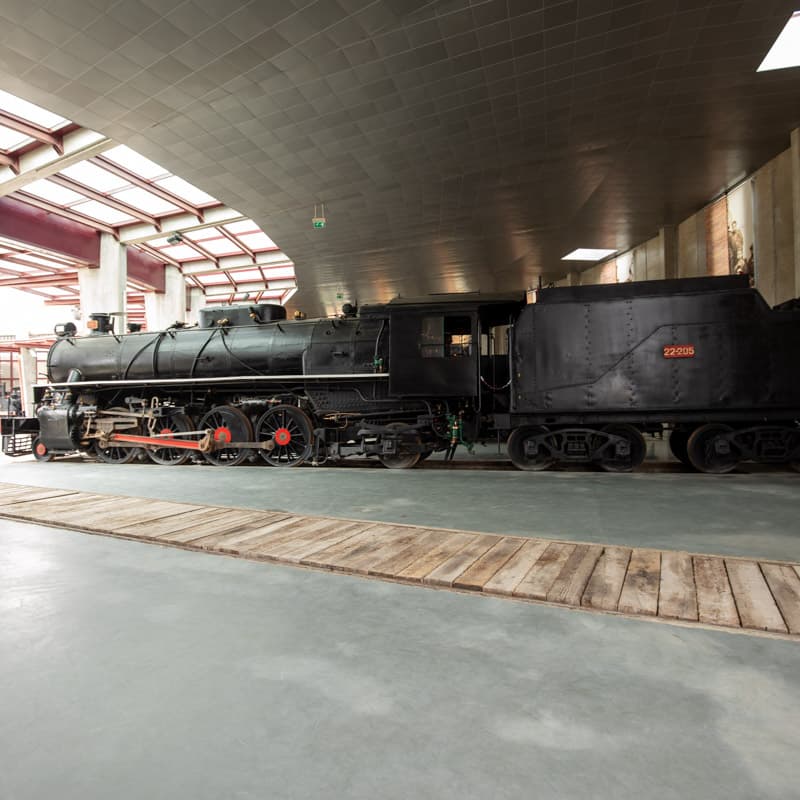
The National Railway Museum in Entroncamento opened in 2015 in former railway facilities. Locomotives, carriages, tools and documents present the work needed to maintain a railway network. The Royal Train and Presidential Train show how rail also served the head of state before and after the establishment of the Republic. Smaller objects add stories of tickets, fares, vocational training and support services. The old workshops provide context for the machines they now house. The museum presents a train as part of a larger organisation, made up of vehicles, buildings and people who prepared every journey.

Castelo de Santarém4.5

Castelo de Santarém

Castle • Santarém, Santarém

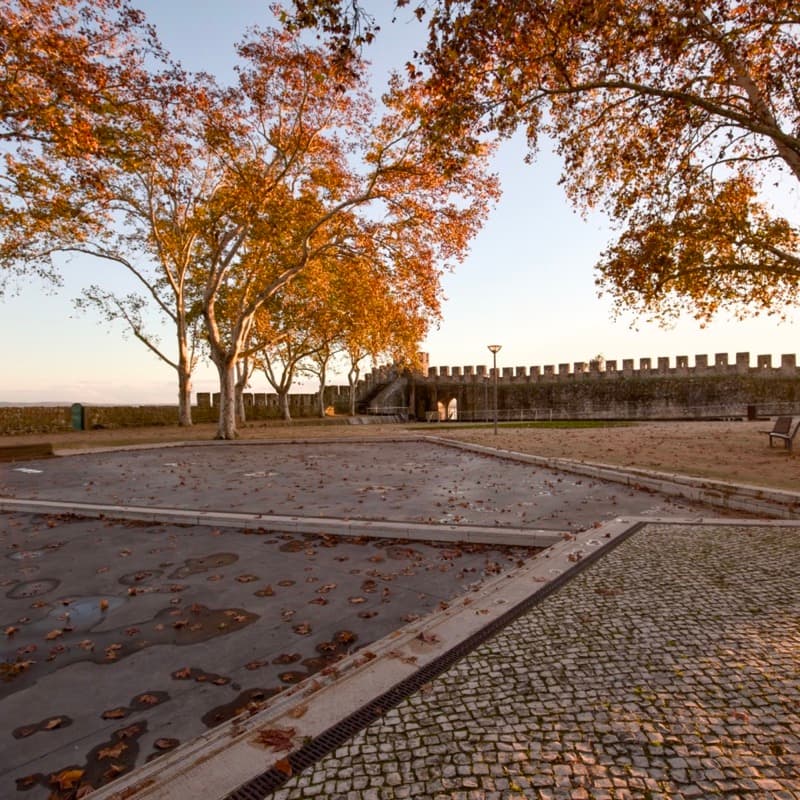
The Castelo de Santarém survives in an unusual form: its former citadel is now the Jardim das Portas do Sol. The walls recall the town's defences, while the viewpoint opens onto the Tagus and its floodplain. The fortifications underwent medieval alterations and lost several gates and towers as the town grew. Later, the garden gave the high enclosure a new purpose. Among trees, planting beds and tiled benches, that change becomes clear. The Urbi Scallabis interpretation centre adds the history of successive occupations. This place brings together what remains of the castle and the ways Santarém turned it into a public space.

Castelo e Paço dos Condes de Ourém4.5

Castelo e Paço dos Condes de Ourém

Castle • Ourém, Santarém

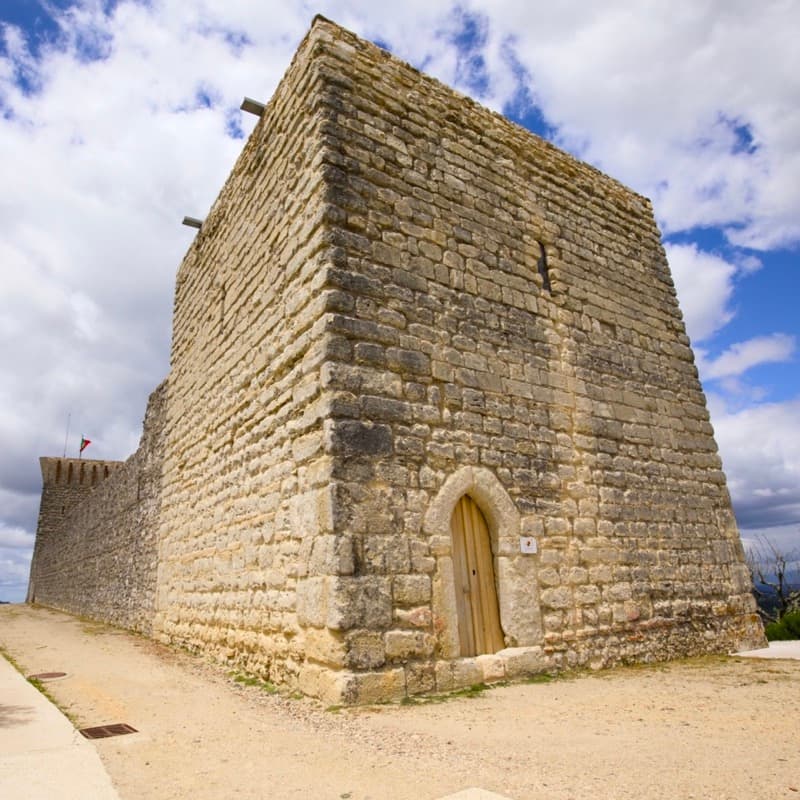
Ourém's castle and counts' palace show two ways of expressing power in the same place. The medieval castle has a triangular plan and three towers. The palace, built around 1450 by Afonso, fourth Count of Ourém, combines an aristocratic residence with bastion towers and Italian and North African references. Look for the brick frieze and the cistern in the older enclosure. Earthquakes, war and the movement of administration to the valley left their marks. Today, the complex forms part of Ourém's Municipal Museum, where the surviving architecture, ruins and conservation work can be read as successive chapters of the same story.

Monumento Natural das Pegadas de Dinossáurios4.2

Monumento Natural das Pegadas de Dinossáurios

Natural Monument • Ourém, Santarém

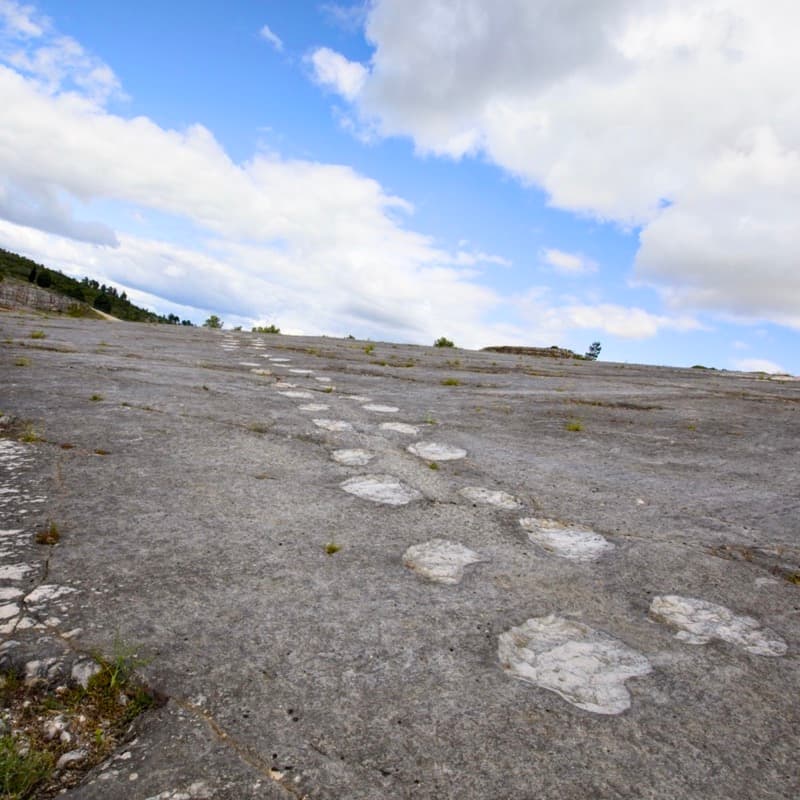
A limestone surface at Bairro preserves dinosaur footprints dating back around 175 million years. At the Natural Monument of Dinosaur Footprints of Ourém and Torres Novas, also known as Pedreira do Galinha, around twenty sauropod trackways can be seen. One stretches for 147 metres. The sequence of steps brings a time long before human presence closer to view. An educational circuit connects these marks with the landscape of the Serras de Aire e Candeeiros Natural Park. Their age, size and quality have earned the site international recognition alongside the separate fossil site of Vale de Meios.

Castelo de Almourol4.6

Castelo de Almourol

Castle • Vila Nova da Barquinha, Santarém

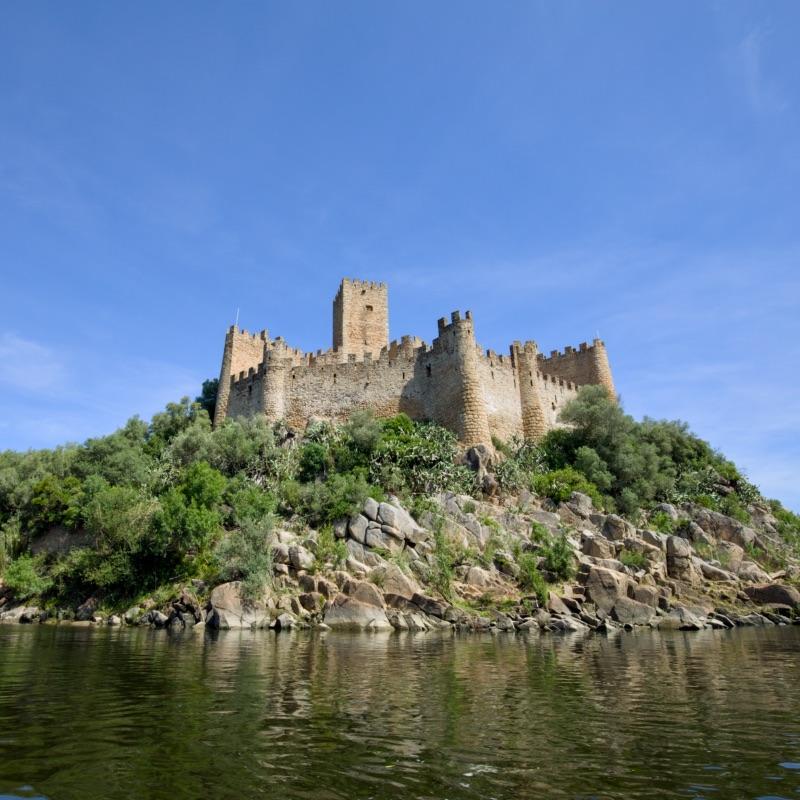
Castelo de Almourol stands on a small island in the Tagus, retaining the marks of its twelfth-century Templar reconstruction. An inscription above the main entrance records work completed in 1171 under Gualdim Pais. Nine circular towers reinforce the walls, and the keep stands prominently within them. Today's image includes other periods: the regular battlements come from nineteenth-century Romantic interventions, and the castle was later adapted as an official residence of the Republic. Its interest lies both in rock and water and in the history of preservation and transformation that shaped its familiar outline.

Castelo de Torres Novas4.4

Castelo de Torres Novas

Castle • Torres Novas, Santarém

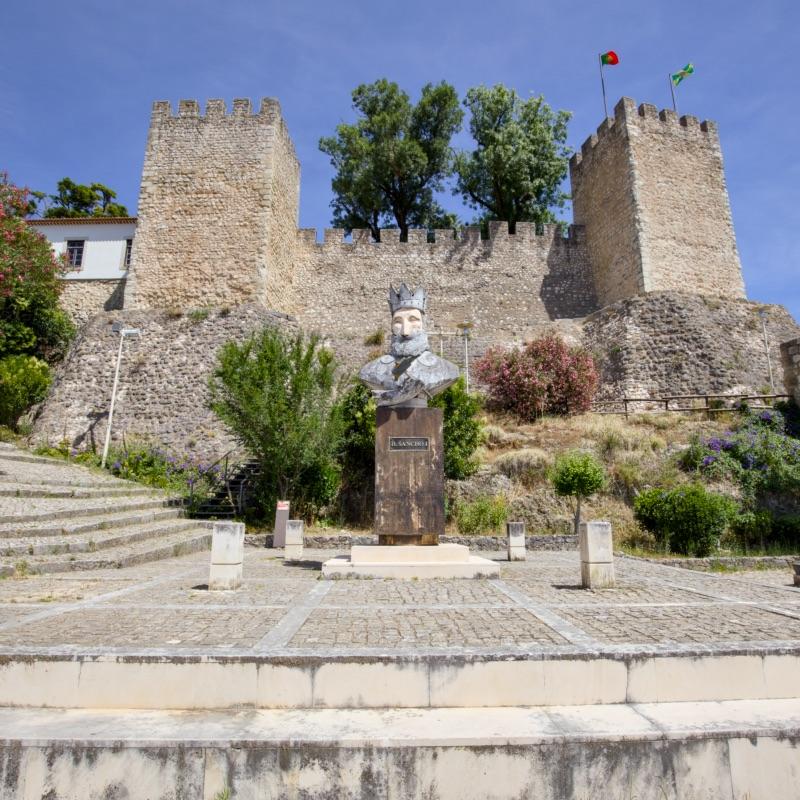
Castelo de Torres Novas encloses a garden within eleven towers and an almost pentagonal wall. Its history connects with Dom Sancho the First, who captured the castle and granted the town's first charter in 1190. Destruction and adaptation followed: the enclosure once contained a cemetery, while the former governor's house became a prison. Today, the towers frame views of the city and Serra de Aire. João Cutileiro's statue recalls the king through an interpretation inspired by an old engraving. The monument reveals the transition from fortress to public space while retaining its military form.

Museu Municipal Carlos Reis4.5

Museu Municipal Carlos Reis

Museum • Torres Novas, Santarém

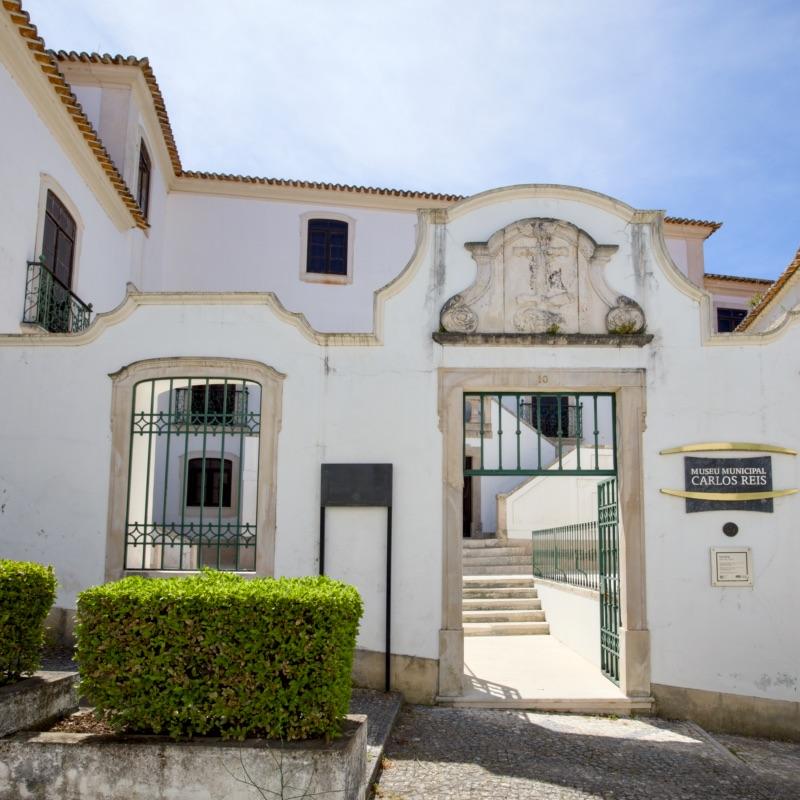
Museu Municipal Carlos Reis in Torres Novas gathers more than its namesake's work. At Casa Mogo de Melo, his landscapes and portraits accompany religious painting and sculpture from local institutions. A model of the eighteenth-century town connects historic places with today's centre. Founded in 1933, the museum received the painter's name after his death and returned to this house in 1993. It also preserves furniture and documents, including his personal letters. The collection leads from looking at paintings to understanding their maker and the city that preserves them.

Central do Caldeirão4.8

Central do Caldeirão

Interpretive Centre • Torres Novas, Santarém

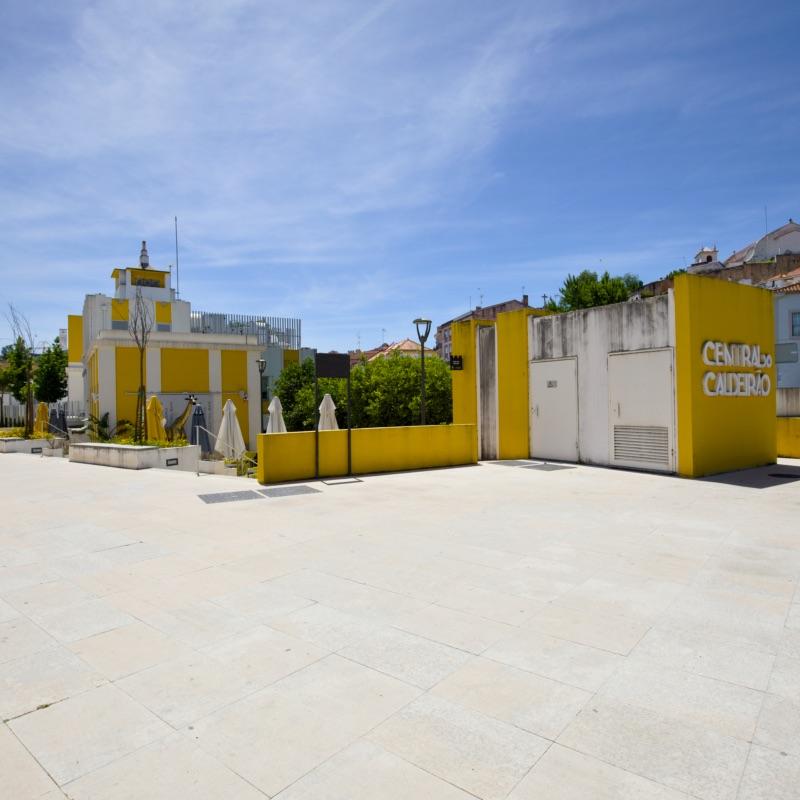
Central do Caldeirão preserves the history of electricity generation and distribution in Torres Novas. Activity began in the nineteen-twenties, and today's building opened in 1940. Converted into a museum in 2023, it retains original industrial equipment, including a transformer, three-phase motor and circuit breaker. Specialists restored the pieces to explain the work once carried out here. Donated objects and former workers' memories also belong to the collection. Machinery and testimony show how the city's lighting depended on a particular installation and the people who kept it running.