Places

Cultural places in Portugal

Browse LxDiscover places across monuments, museums, palaces, viewpoints, gardens, churches and historic sites. Use this hub to start planning, then open the app for map-based routes, saved places and short cultural audio guides.

6 places

Places in Lisboa

Explore on the map
Palácio Nacional da Ajuda4.7

Palácio Nacional da Ajuda

Palace • Lisboa, Lisboa

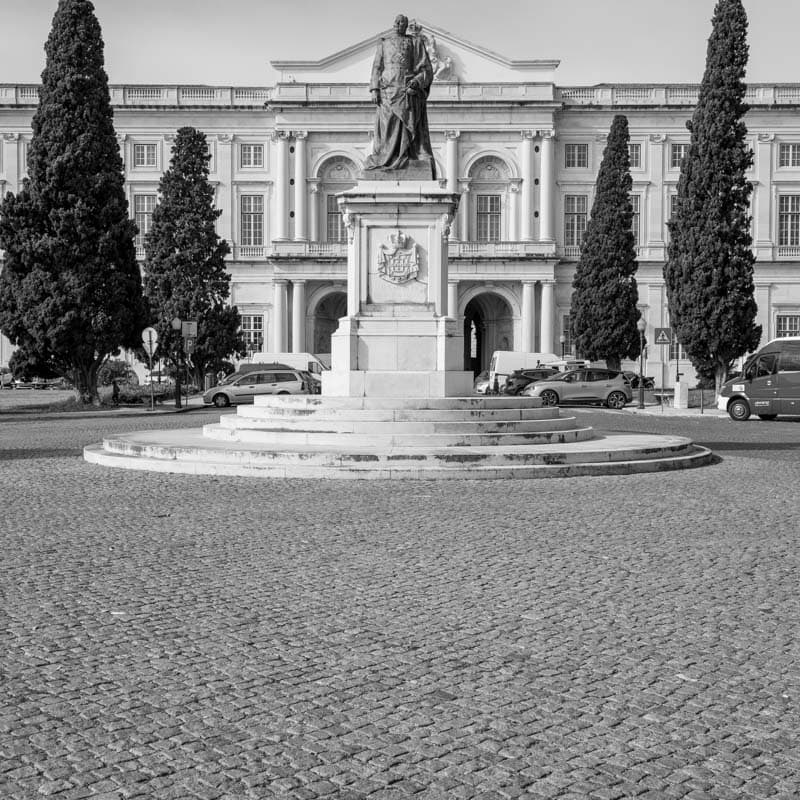
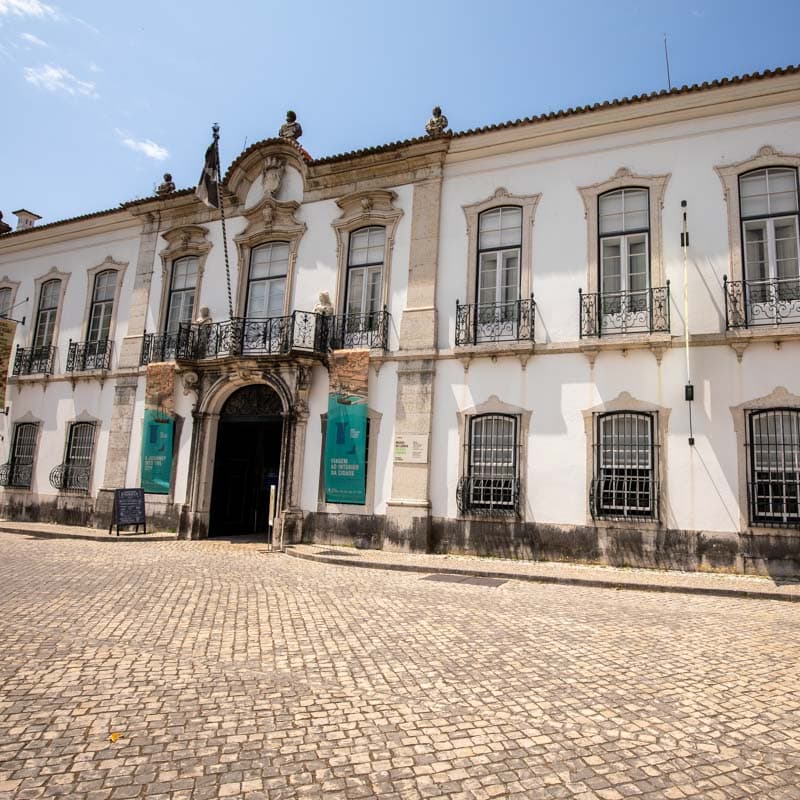
High on Ajuda hill, this neoclassical palace speaks less of completed triumph than of ambition, interruption and endurance. Conceived at the start of the nineteenth century to replace the wooden Real Barraca built after the earthquake, it was never fully finished, held back by the court’s departure to Brazil and by repeated financial difficulties. Even so, it became the royal family’s official residence from the reign of King Luís the First, and it was under Queen Maria Pia that it gained the domestic and ceremonial brilliance still felt in its interiors today. During a visit, it is worth lingering in the Throne Room, the state salons and the private apartments, because few places in Lisbon preserve so authentically the taste and protocol of nineteenth-century court life. Between its view over the Tagus, its splendour and its intimacy, Ajuda National Palace leaves the rare impression of a royal home suspended in time, made even more compelling by the fact that it was never entirely completed.
Parque da Quinta do Monteiro-Mor4.5

Parque da Quinta do Monteiro-Mor

Palace • Lisboa, Lisboa

In Lumiar, the Quinta do Monteiro-Mor Park, now known as the Monteiro-Mor Botanical Park, is one of those places where Lisbon seems to gain time and depth. Created in the eighteenth century as part of an aristocratic leisure estate and associated with Vandelli, it still preserves the logic of a historic garden, orchard, vegetable garden, woodland and water corners spread across about eleven hectares. As you walk through it, you can still sense the site’s old botanical and collecting vocation, marked by rare species and by very different settings unfolding from one area to the next. It is no coincidence that the first known Araucaria heterophylla in mainland Portugal is found here. The park extends the memory of the Monteiro-Mor palaces and is in dialogue with the museums installed on the estate, yet what lingers most is the atmosphere: stairways, pools, deep shade and an almost unexpected serenity. It is a garden best discovered slowly, between science, landscape and memory.

Palácio Fronteira4.5

Palácio Fronteira

Palace • Lisboa, Lisboa

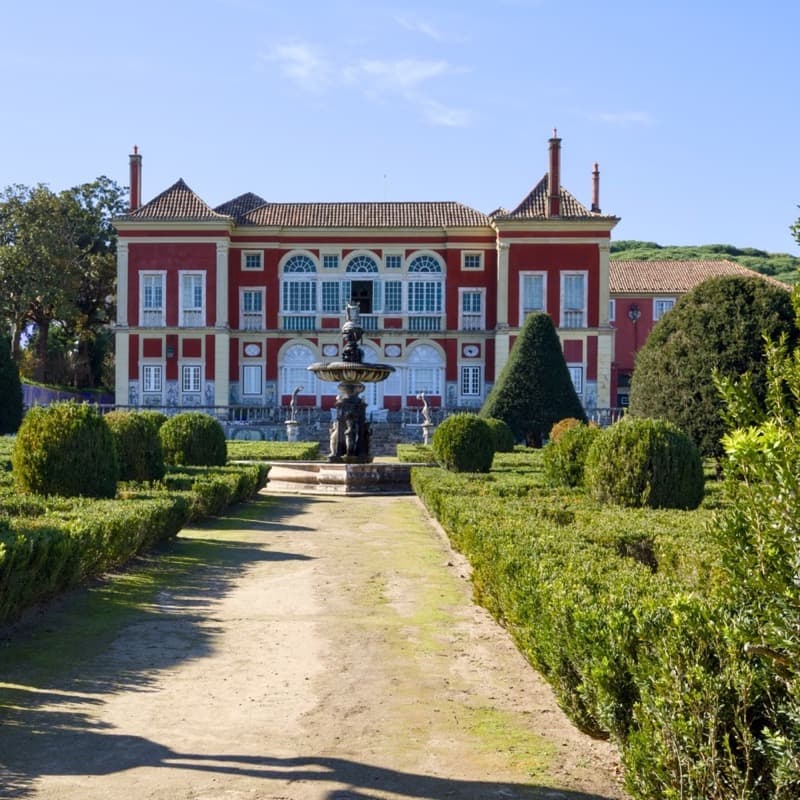
Palácio Fronteira is located in São Domingos de Benfica, Lisbon, on the former grounds of a recreational estate. Its main core was commissioned around 1670 by D. João de Mascarenhas, 1st Marquis of Fronteira, and D. Madalena de Castro, and was initially intended as a summer residence. After the 1755 Earthquake, the palace was enlarged and became the family’s main residence. Today it is still inhabited by the founder’s descendants and also functions as a house-museum. The complex, classified as a National Monument, brings together palace, gardens, vegetable garden and woodland. Its strength lies in the relationship between architecture, garden and tilework: the Tanque dos Cavaleiros, the Galeria dos Reis, the Formal Garden, the Garden of Venus, the Casa do Fresco and the Terrace of the Arts form a scenic route where water, sculpture and ceramics interact with rare continuity.

Palácio e Quinta de Beau-Séjour4.3

Palácio e Quinta de Beau-Séjour

Palace • Lisboa, Lisboa

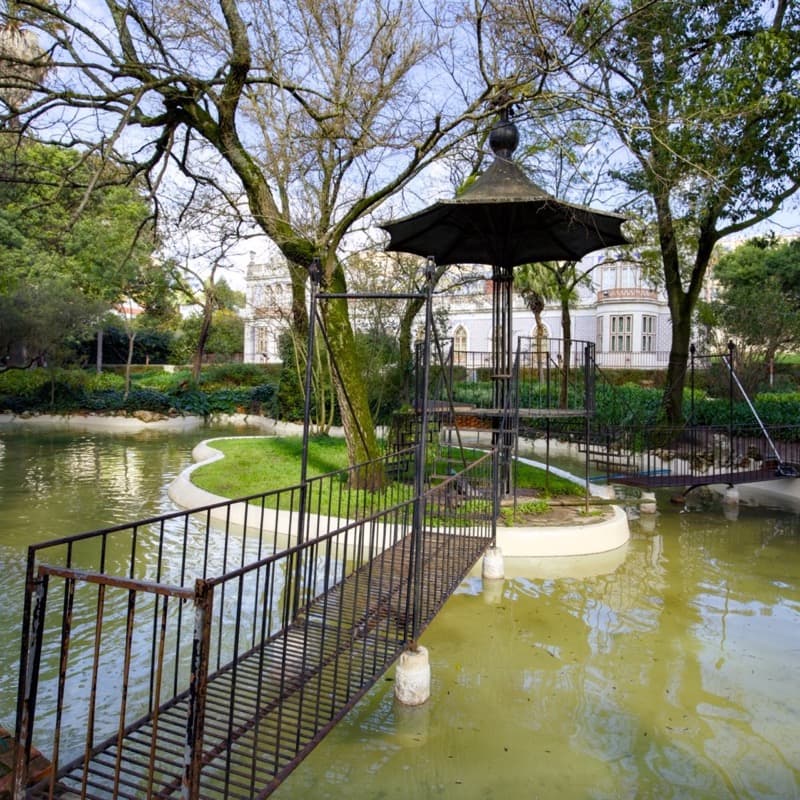
The Palácio e Quinta de Beau-Séjour is located in São Domingos de Benfica, Lisbon, on the former Quinta dos Loureiros. In 1849, D. Ermelinda Allen Monteiro de Almeida, Baroness and Viscountess of Regaleira, acquired the property, gave it the name Beau-Séjour and commissioned a summer house surrounded by exotic vegetation. In 1859, the estate was bought by António José Leite Guimarães, Baron of Glória, who introduced improvements, including the tile covering of the façade and the enlargement of the lake. Later, his nephews, José Leite Guimarães and Maria da Glória Leite, commissioned the interior decoration from artists connected to the Grupo do Leão. Classified as a Monument of Public Interest, the ensemble brings together a small palace, a romantic garden and agricultural memory. Today it houses the Gabinete de Estudos Olisiponenses, dedicated to the study of Lisbon’s history and culture.

Palácio de Santos - Embaixada de França4.5

Palácio de Santos - Embaixada de França

Palace • Lisboa, Lisboa

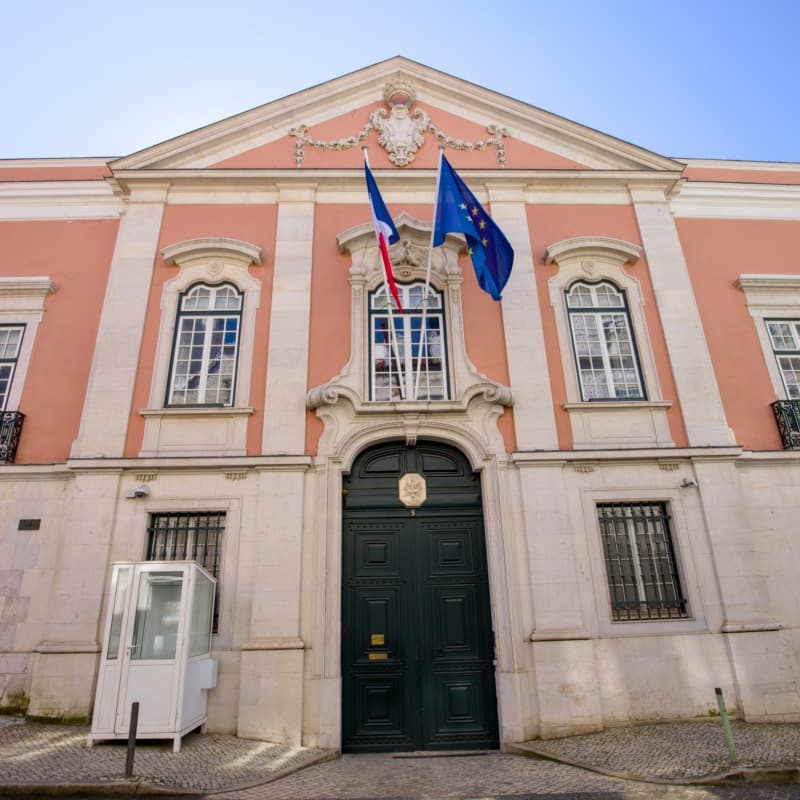
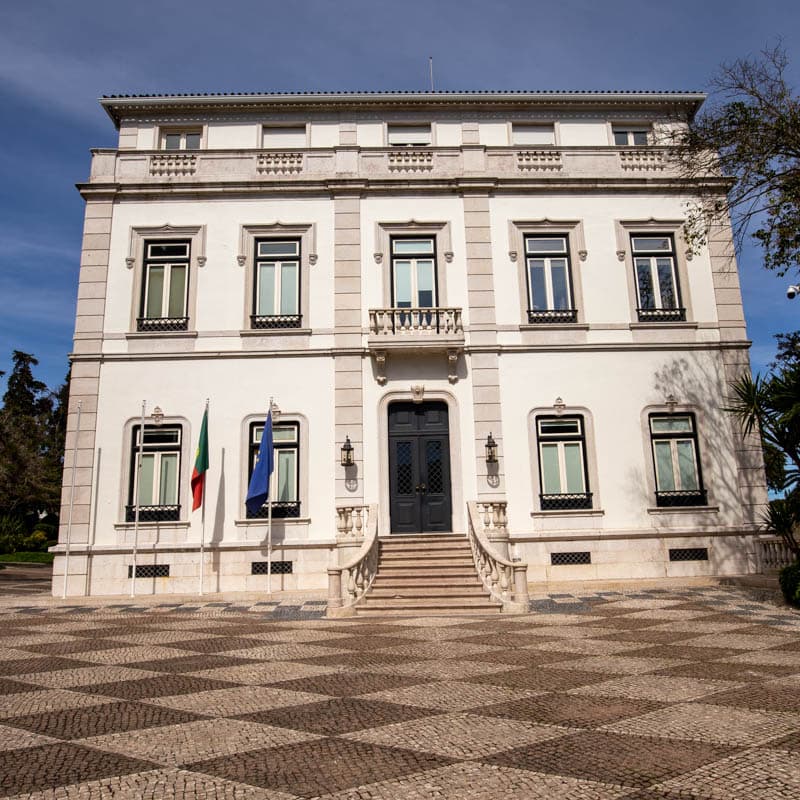
The Palácio de Santos, in Lisbon, is also known as the Palácio de Abrantes and today houses the French Embassy in Portugal. The memory of the site is much older than the palace: the history associated with the building links it to the martyrs Veríssimo, Máxima and Júlia; after the conquest of Lisbon in 1147, King Afonso Henriques ordered a new hermitage to be built here. The site became a convent and, in the 15th century, was transformed into a palatial residence. The form recognised today owes much to the Lancastre family, who commissioned a major building campaign from João Antunes in the 17th century. The building survived the 1755 earthquake and preserves interiors with a strong Baroque presence. Among them, the Porcelain Room stands out, with a carved wooden pyramidal ceiling filled with 267 Chinese porcelain plates. In the ceremonial rooms, painted ceilings and mythological decoration extend the palace’s history as a setting of power, taste and diplomacy.

Palácio dos Condes de Tomar - Brotéria4.5

Palácio dos Condes de Tomar - Brotéria

Palace • Lisboa, Lisboa

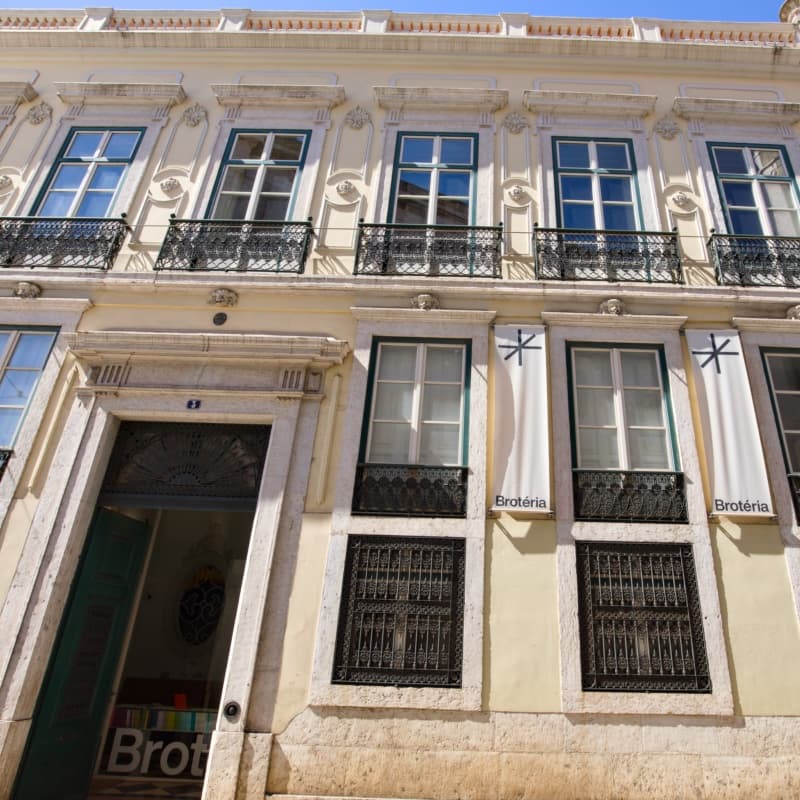
The Palace of the Counts of Tomar, in Lisbon, is today home to Brotéria, a cultural centre of the Society of Jesus. The building has its origins in 16th-century structures and gained its palatial form in the 19th century, linked to António Bernardo da Costa Cabral, first Count and Marquis of Tomar. Its history has passed through very different uses: it was an aristocratic residence, the headquarters of the Royal British Club and, for decades, Lisbon’s Municipal Newspaper and Periodicals Library. After being acquired by Santa Casa da Misericórdia de Lisboa and rehabilitated, it opened in 2020 as a house of culture. Brotéria brings together a magazine, library, gallery, bookshop, café and courtyard, bringing into the old palace a programme of thought, art and contemporary debate. The great central staircase and the interiors with Romantic decoration recall the building’s former life, now inhabited by books, exhibitions and public conversation.

Get the app

Take LxDiscover with you

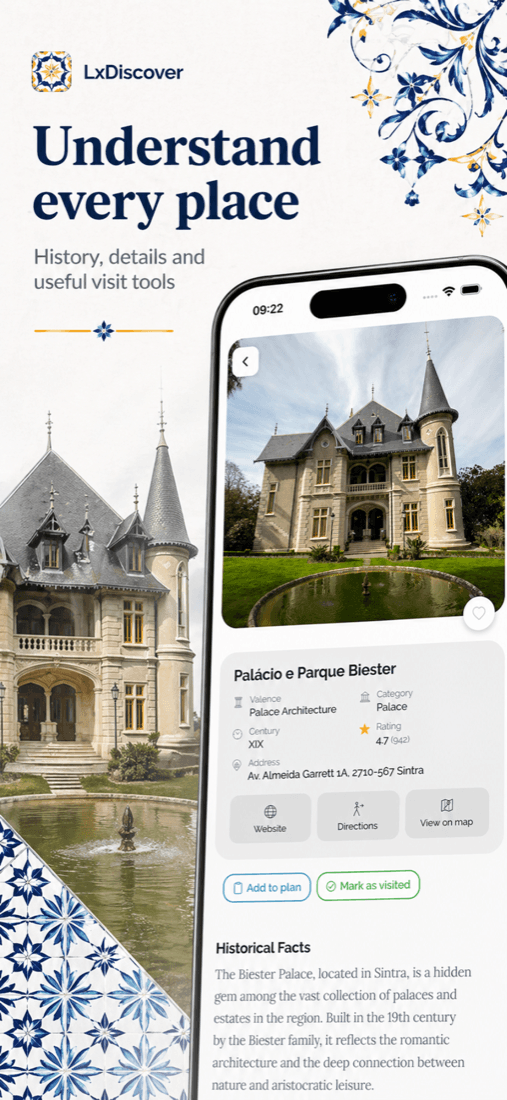
Explore Portugal with a cultural guide for monuments, museums, gardens, palaces, viewpoints, and historic places in Lisbon, Porto, Sintra, and other regions.

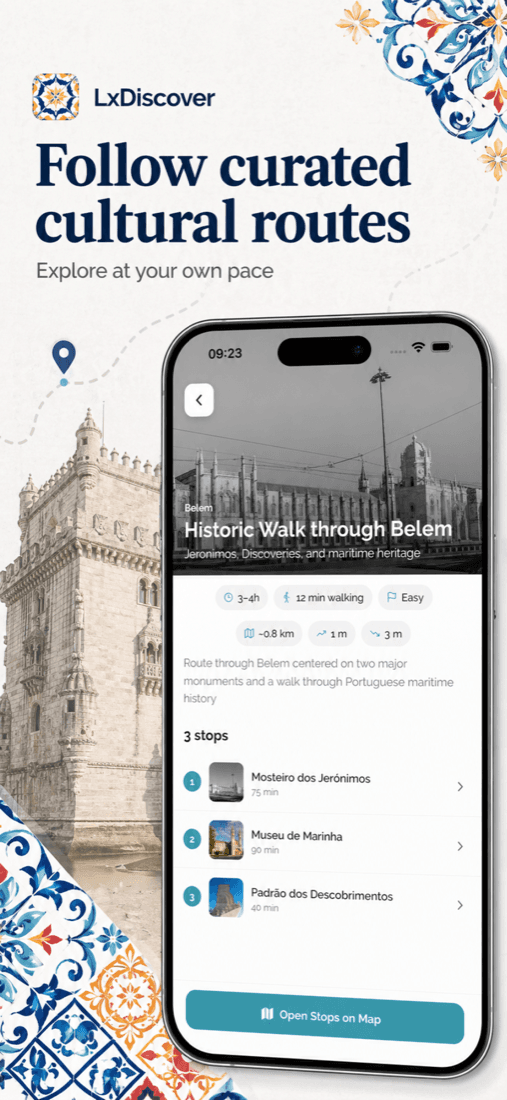
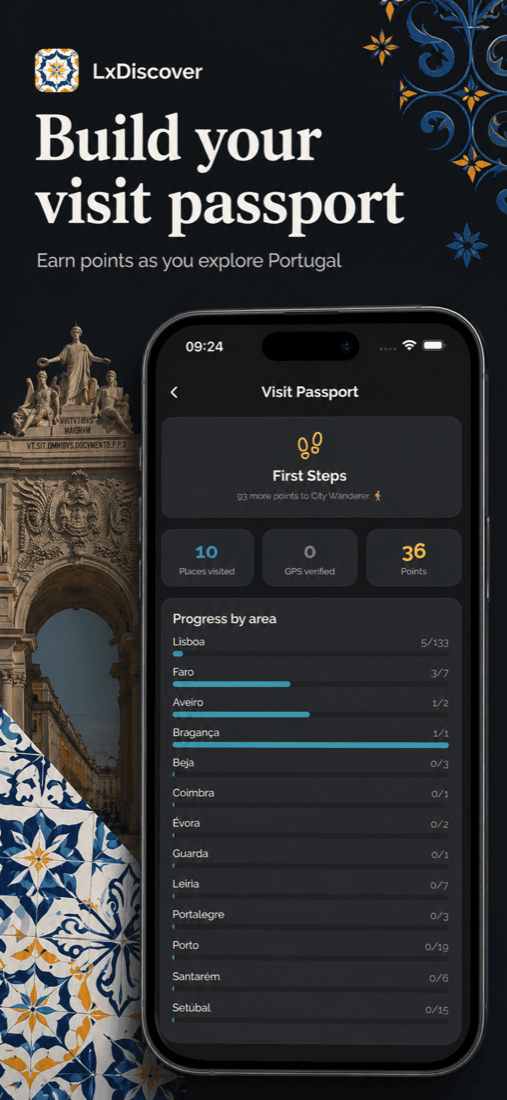
Use the map, follow cultural routes, read editorial context, save places, and track your visits with the visit passport.

Free features

  • Interactive map to discover places of interest
  • Detailed information about monuments, museums, and cultural sites
  • Favorites for the places you want to visit
  • Selected routes to start exploring

Premium subscription

  • Curated routes with ordered stops, duration, and difficulty
  • Thematic collections with editorial context for each area
  • Visit passport for progress, visited places, and achievements
  • Advanced map, planning, and proximity alert tools
LxDiscover map screen
LxDiscover routes screen
LxDiscover visit passport screen