
Places

Cultural places in Portugal

Browse LxDiscover places across monuments, museums, palaces, viewpoints, gardens, churches and historic sites. Use this hub to start planning, then open the app for map-based routes, saved places and short cultural audio guides.

7 places

Places in Sintra

Explore on the map
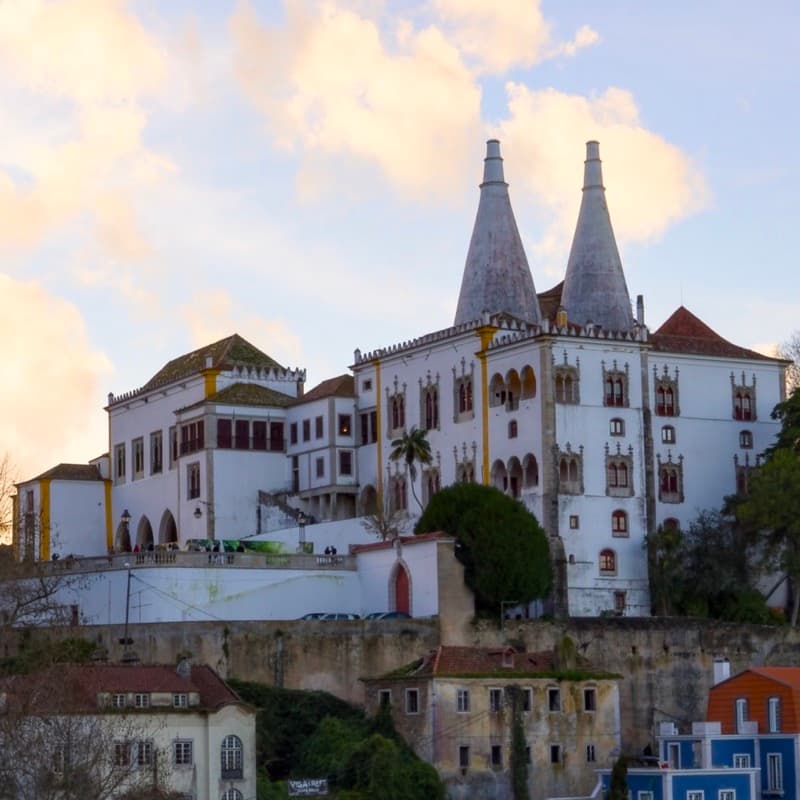
Palácio Nacional de Sintra4.5

Palácio Nacional de Sintra

Palace • Sintra, Lisboa

The National Palace of Sintra seems to rise out of the town itself, with its two white chimneys announcing a place where royal history has remained intact. With a thousand years of life behind it, and as the only Portuguese medieval royal palace preserved in its entirety, it was inhabited by almost all the kings and queens of Portugal, who left behind layers of Gothic, Manueline and Mudéjar architecture. Inside, the palace surprises less through its façade than through the intimacy of its rooms and the ceilings that speak of power, taste and memory. It is worth lingering in the Hall of Coats of Arms, where Manuel the First places himself at the centre of a noble order represented by seventy-two heraldic shields, and in the famous Hall of Magpies, whose painted ceiling of one hundred and thirty-six birds still provokes questions, because its exact meaning remains unknown. Visiting this palace is like entering a royal house still inhabited by ceremony and secrecy.
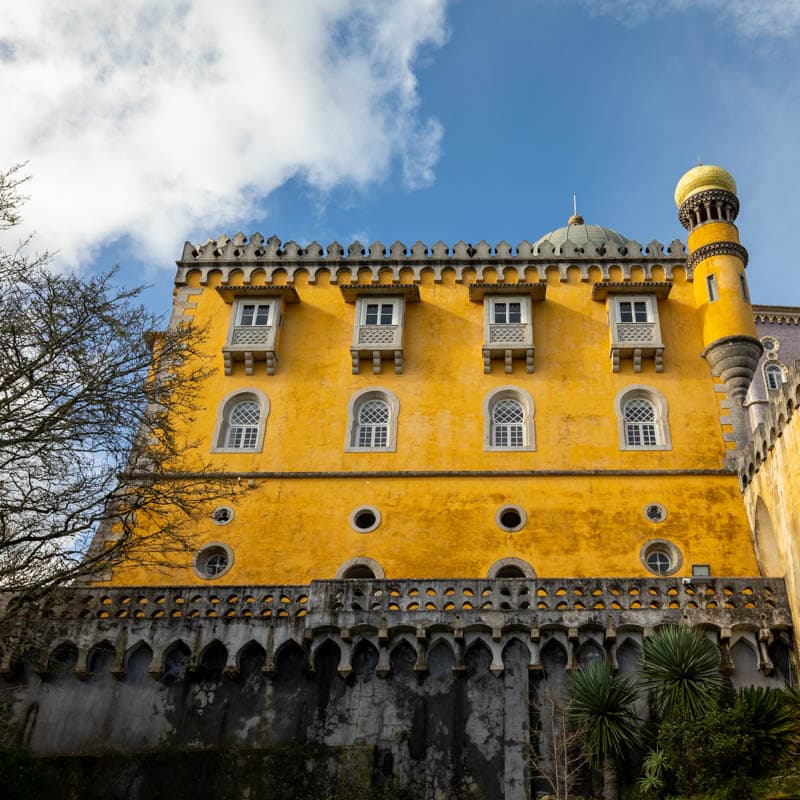
Palácio Nacional da Pena4.4

Palácio Nacional da Pena

Palace • Sintra, Lisboa

The National Palace of Pena rises above the hills as a romantic fantasy turned into stone. Dreamed up by Ferdinand the Second, the Artist King, it grew from the transformation of a former Hieronymite monastery into a summer palace for the royal family, where nineteenth-century taste blends medieval, Manueline, Moorish and Renaissance references without losing its harmony. Inside, the old church, cloister and apartments preserve the memory of a place once lived in; outside, Triton’s Terrace offers one of the palace’s most fascinating details, with its hybrid figure symbolically linking the aquatic and terrestrial worlds. From the Courtyard of Arches, too, the scenic ambition of Pena becomes clear, framing the hills, the park and the Atlantic as part of the palace itself. It was here that Queen Amélia received the news of the proclamation of the Republic. Few places tell so well the story of dream, power and the end of an era.

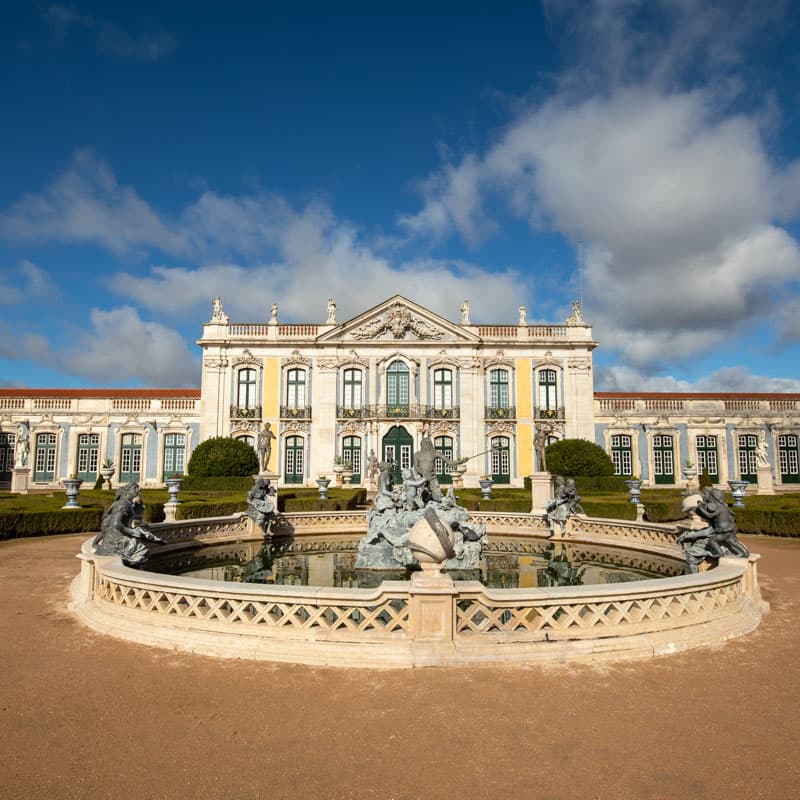
Palácio Nacional e Jardins de Queluz4.6

Palácio Nacional e Jardins de Queluz

Palace • Sintra, Lisboa

In Queluz, the Portuguese court still seems to breathe among luminous state rooms and gardens designed for pleasure. Born from a country house belonging to the Casa do Infantado, the palace was enlarged from 1747 for the infante D. Pedro, the future D. Pedro III, and under Jean-Baptiste Robillion it acquired the rococo elegance that still defines it today. After the fire at the Real Barraca da Ajuda in 1794, it became the official residence of Queen Maria I and the prince regents, until the royal family left for Brazil in 1807. Queluz also holds a rare emotion: D. Pedro IV was born and died here, in the famous Quarto D. Quixote. In the gardens, it is worth slowing down beside the parterres, the mythological sculpture and the Canal dos Azulejos, where the royal family once drifted by boat to the sound of music. Few places unite palatial intimacy, courtly theatre and the art of outdoor living with such grace.

Parque e Palácio de Monserrate4.7

Parque e Palácio de Monserrate

Palace • Sintra, Lisboa

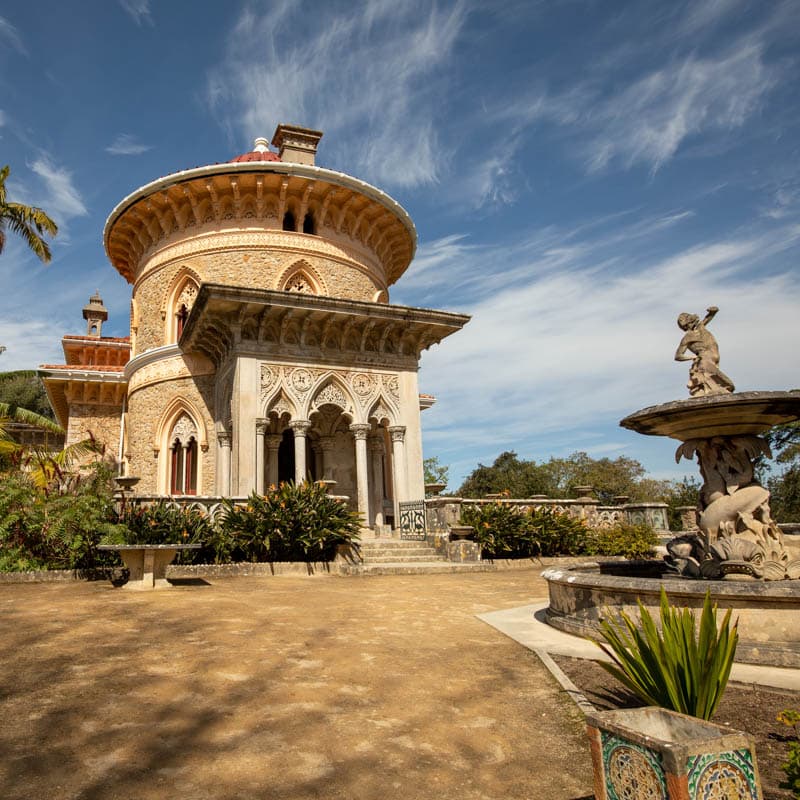
At Monserrate, Romanticism seems to have taken on an almost vegetal form. The story of the place begins in 1540, with the hermitage ordered by Frei Gaspar Preto, but the setting that dazzles visitors today gained a different scale in the nineteenth century: after the stay of William Beckford and the admiration that Lord Byron gave it in Childe Harold’s Pilgrimage, Francis Cook bought the estate in 1863 and had the palace built that still defines it today. Designed by James Knowles Junior, the building blends Gothic, Indian and Moorish echoes with unexpected lightness, especially in the octagonal atrium, where the sound of the fountain and the light filtered through the dome create an almost unreal atmosphere. Outside, the park matters as much as the palace: exotic species were arranged by geographical areas, taking advantage of the hills’ microclimates, and turned Monserrate into one of Portugal’s most remarkable botanical gardens. Among ruins, tree ferns, lakes and winding paths, everything here seems made to surprise without haste.

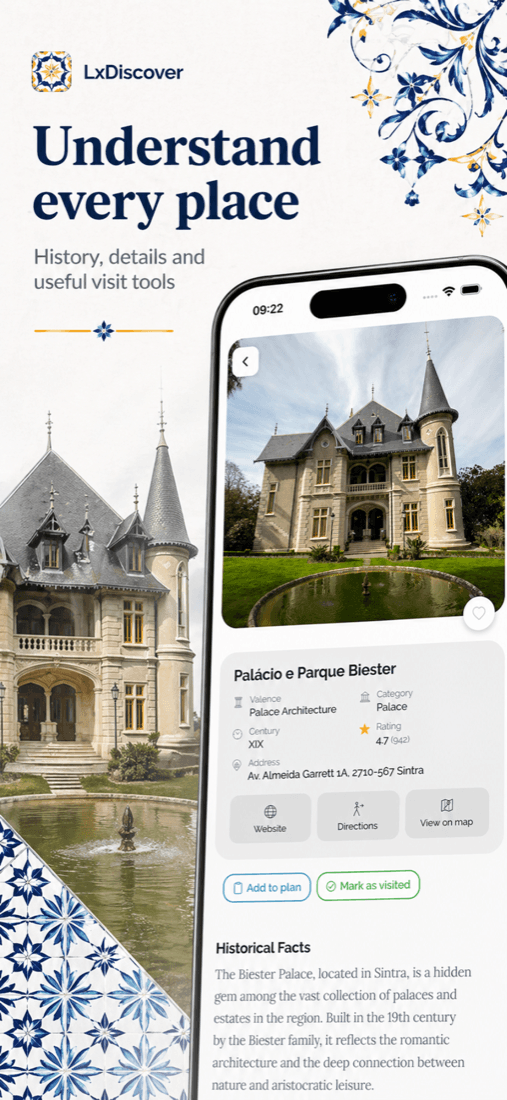
Palácio e Parque Biester4.7

Palácio e Parque Biester

Palace • Sintra, Lisboa

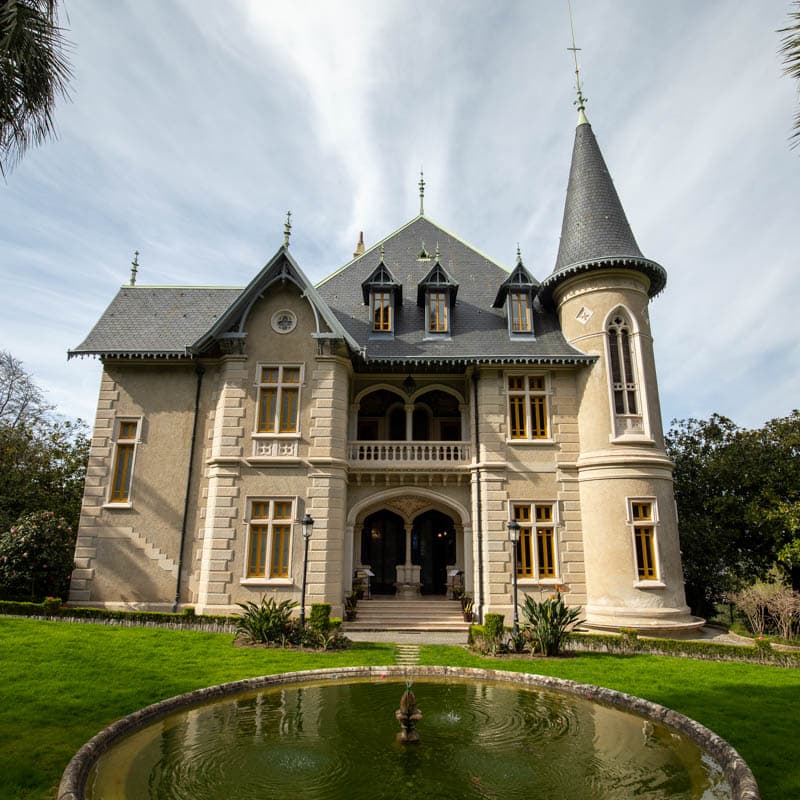
In Sintra, Palácio e Parque Biester show how late Romanticism could be both theatrical and intimate at the same time. Built in the last decade of the nineteenth century for the Biester family, the palace was designed by José Luiz Monteiro and enriched by Luigi Manini and Leandro Braga, in a dialogue of decorative painting, carved wood and revivalist forms that gives it an almost theatrical air. After a long private life, it opened to the public in 2022, finally allowing visitors to move through rooms shaped for domestic life yet filled with symbolic imagination. Outside, the park designed by the French landscaper François Nogré descends the hillside in terraces, with watercourses, exotic species and viewpoints towards the Moorish Castle and, farther away, the sea. Gruta da Pena, set into a rocky recess, deepens that blend of staged nature and mystery. Among turrets, ferns and winding paths, Biester helps one understand that in Sintra Romanticism was not only a style: it was a way of inhabiting the landscape.

Palácio e Quinta da Regaleira4.7

Palácio e Quinta da Regaleira

Palace • Sintra, Lisboa

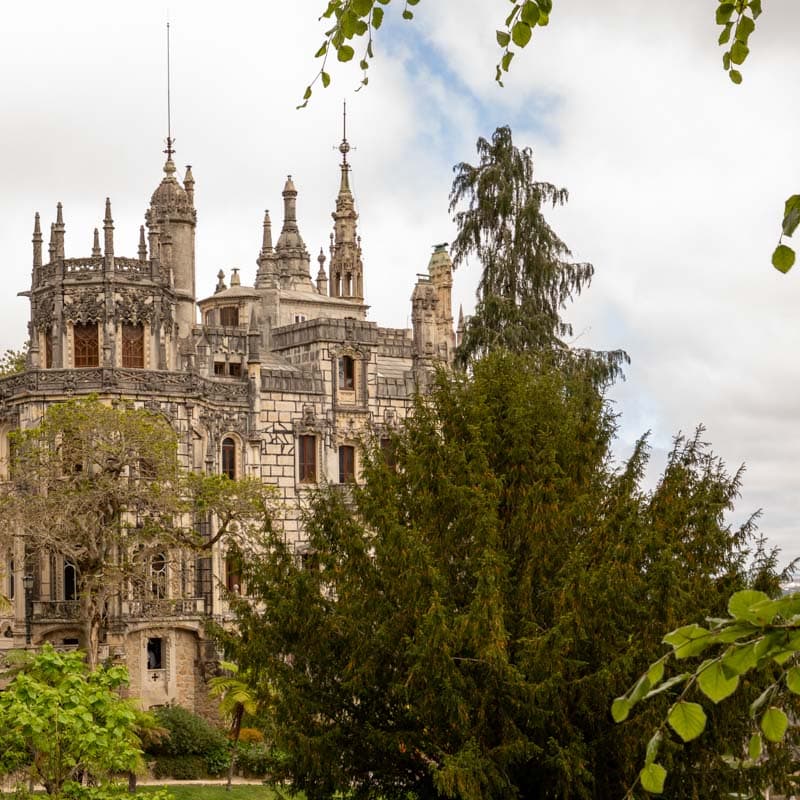
In Sintra, the Palace and Quinta da Regaleira feel less like a country house than like a world imagined in stone, water and vegetation. António Augusto Carvalho Monteiro bought the property in 1892 and, with Luigi Manini, transformed it between 1904 and 1910 into a theatrical ensemble where Neo-Manueline, Gothic, Renaissance and Classical forms meet with almost operatic freedom. The palace and chapel rise like parts of a larger enigma: in the park, lakes, grottoes, tunnels and the famous Initiation Well create a landscape charged with symbolic allusions, some linked to Masonic, Templar and Rosicrucian imagery. It is no surprise that people in Sintra called it the “Wedding Cake”. Yet Regaleira also impresses through its harmony with the hills and the way each corner seems designed to be discovered slowly. Part of the Cultural Landscape of Sintra, it shows how late Romanticism could turn a garden into a narrative and a visit into an experience of mystery.

Vila Sassetti4.6

Vila Sassetti

Palace • Sintra, Lisboa

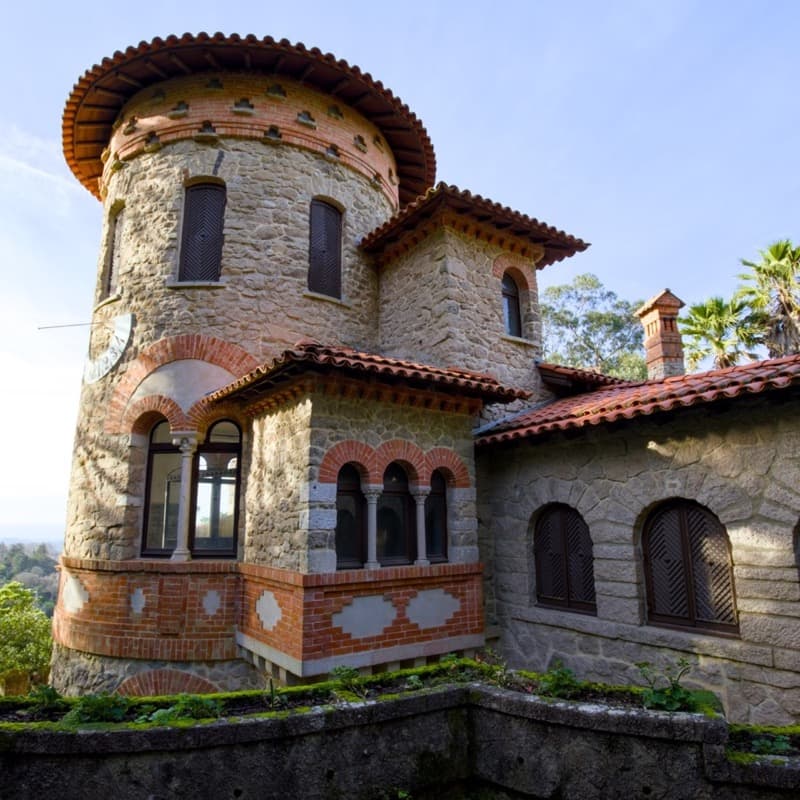
Vila Sassetti is located on the northern slope of the Serra de Sintra, between the Historic Centre and the path that climbs towards the Moorish Castle and Pena Park. The property began to take shape in 1885, when Victor Carlos Sassetti, born in Sintra and the owner of hotels in Lisbon and in the town, acquired the land to build a leisure residence there. Work began in 1890, with a design by the architect and set designer Luigi Manini. Inspired by the castles of Lombardy, the building is distinguished by its central three-storey circular tower, irregular volumes and the use of Sintra granite on the exterior cladding. The garden, also designed by Manini, develops along a winding path crossed by an artificial watercourse. Between architecture, vegetation and small tanks, Vila Sassetti reveals the most scenic side of Sintra Romanticism.

Get the app

Take LxDiscover with you

Explore Portugal with a cultural guide for monuments, museums, gardens, palaces, viewpoints, and historic places in Lisbon, Porto, Sintra, and other regions.

Use the map, follow cultural routes, read editorial context, save places, and track your visits with the visit passport.

Free features

  • Interactive map to discover places of interest
  • Detailed information about monuments, museums, and cultural sites
  • Favorites for the places you want to visit
  • Selected routes to start exploring

Premium subscription

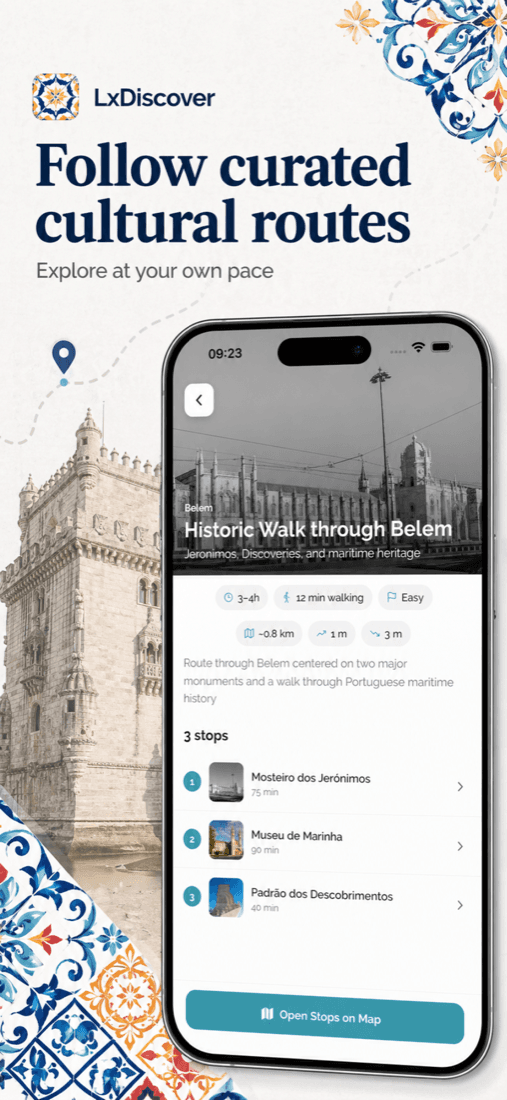
  • Curated routes with ordered stops, duration, and difficulty
  • Thematic collections with editorial context for each area
  • Visit passport for progress, visited places, and achievements
  • Advanced map, planning, and proximity alert tools
LxDiscover map screen
LxDiscover routes screen
LxDiscover visit passport screen