Self-guided cultural guide for Portugal

Discover Portugal with more context

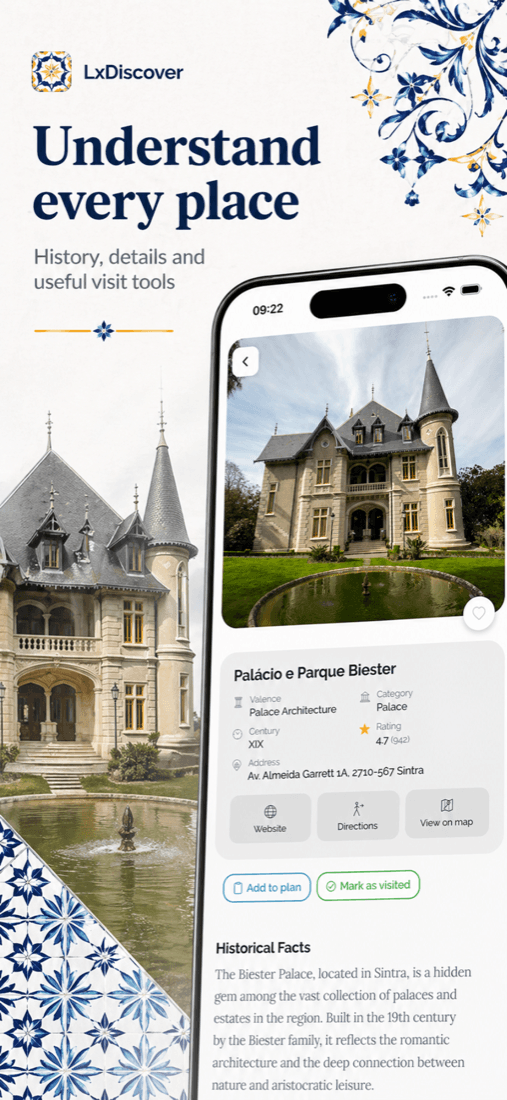
Explore monuments, museums, gardens, viewpoints and cultural routes with LxDiscover. Use the map, read concise cultural context, listen to short audio introductions and track your visits with the app passport.

Explore · 21 / 203

Discover Portugal with context

Regions:
Castelo de S. Jorge4.5

Castelo de S. Jorge

Castle • Lisboa, Lisboa

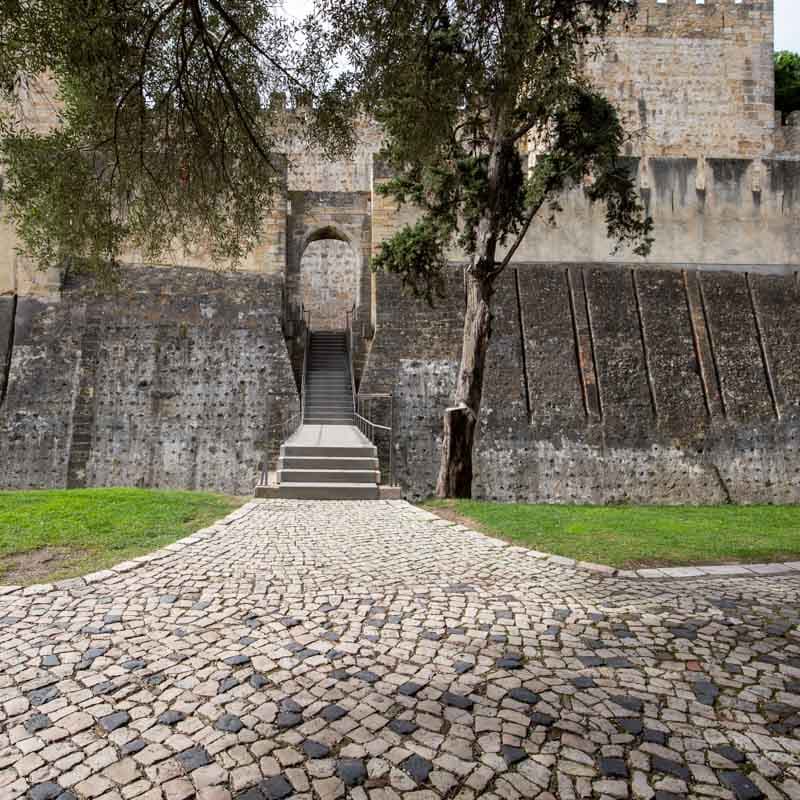
Rising from the highest point of old Lisbon, São Jorge Castle seems to gather almost the whole biography of the city into one place. The hill had been occupied since very early times, but the fortification we recognise today took shape in the Islamic period, as the last defensive stronghold of the citadel. After the conquest of 1147 by Afonso Henriques, the castle entered its brightest age: it became a royal palace, housed the court, the royal archive and major ceremonies, and from here the city’s rooftops, estuary and gateways could be watched over. When the royal residence moved down to the riverside, the complex lost its central role, was turned to military use and suffered after the 1755 earthquake, before being rediscovered in the great restoration campaigns of the twentieth century. Today, among walls, archaeological remains and the Camera Obscura in the Tower of Ulysses, it remains a rare place to understand Lisbon in layers, between stone, memory and horizon.

Castelo de Palmela4.7

Castelo de Palmela

Castle • Palmela, Setúbal

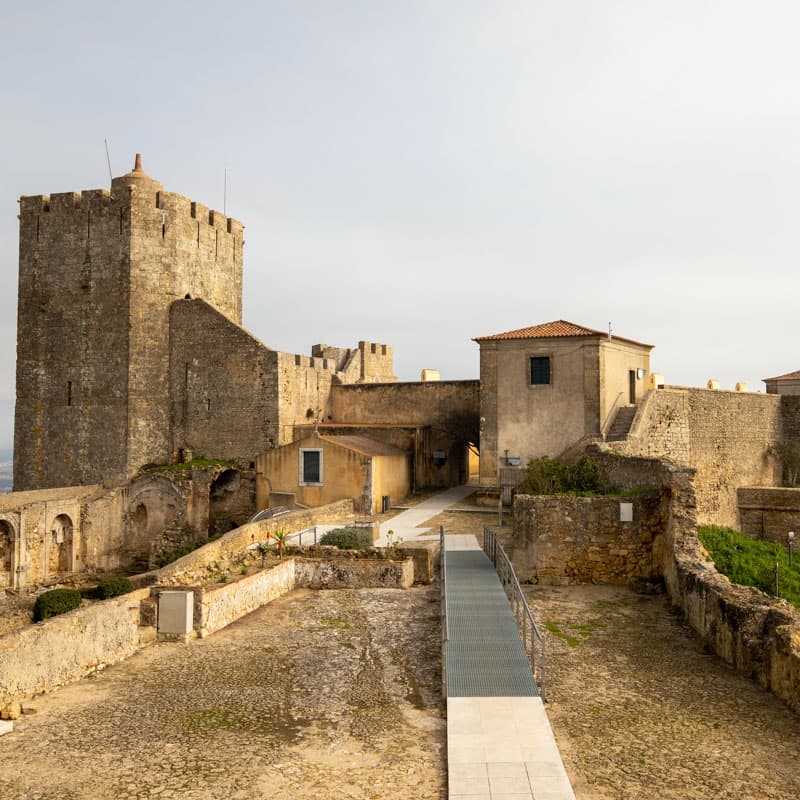
From the top of the hill, Palmela Castle commands one of the widest views in the region, between Arrábida, the Tagus and the Sado. Archaeological excavations have confirmed its Islamic origin, between the eighth and ninth centuries, before the successive captures and recaptures of the Christian Reconquest. Granted to the Knights of Santiago at the end of the twelfth century and linked to the Order for centuries, it became a military, religious and political centre that was crucial to the organisation of the territory. Even now, the keep, the ruins of Santa Maria and the austere Church of Santiago reveal that layering of periods and powers. It is worth climbing slowly and lingering on the walls: from there, it becomes clear why Palmela was such a strategic lookout. One episode is especially memorable — from here, great warning fires were lit to announce the approach of the troops of D. Nuno Álvares Pereira.

Castelo de Sesimbra4.6

Castelo de Sesimbra

Castle • Sesimbra, Setúbal

Perched above the bay, Sesimbra Castle is the last Portuguese castle over the sea to preserve its medieval layout, and that singular quality is felt at once in its walls opening towards the horizon. Of Islamic origin, it passed through conquest and reconquest until it was definitively secured on the Christian side at the beginning of the thirteenth century, when the town received its charter; soon afterwards, it was entrusted to the Order of Santiago, which strengthened the enclosure and its defensive role. Throughout the Middle Ages, it was a key stronghold in guarding the coast, but from the fifteenth century onwards the population gradually moved down towards the bay, drawn by fishing and shipbuilding. Today, as you walk through the alcáçova, the keep, the wall walk and the church within the ramparts, that long shift of centre and outlook becomes clear. Above all, linger over the view: between the town and the sea, Sesimbra seems to tell its whole story at once.

Forte de São Filipe4.6

Forte de São Filipe

Fort • Setúbal, Setúbal

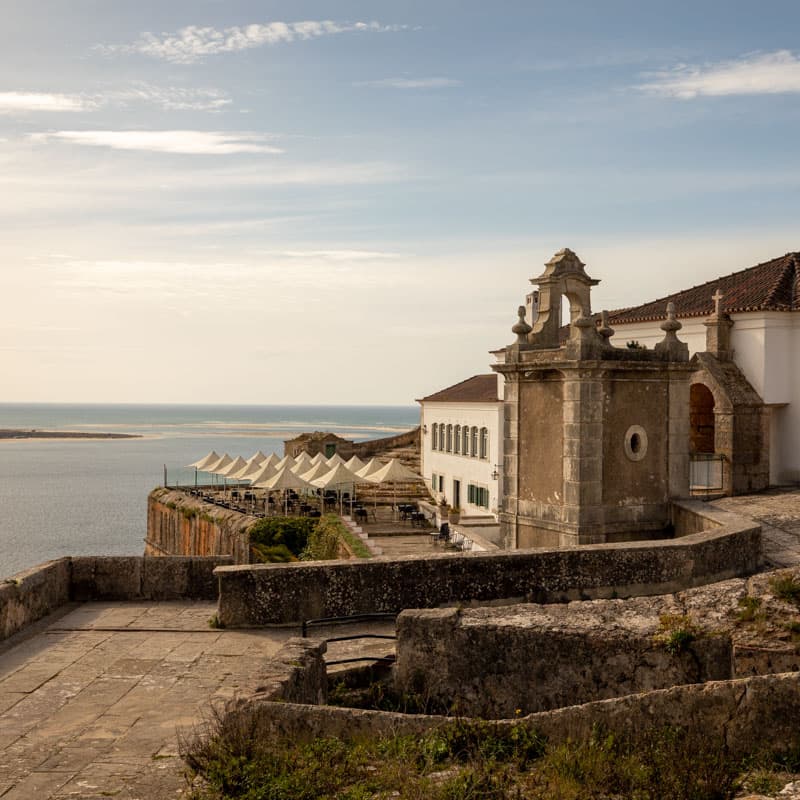
Perched on the hill above Setúbal, the Fort of São Filipe watches over both the Sado estuary and the city it was meant to keep under guard for centuries. It was commissioned by Philip I in the aftermath of the crisis of 1580, when the weakness of the town’s defences had become clear and control over Setúbal had gained new political importance. Its six-pointed star plan, fitted to the steep terrain, gives it the stern character of military architecture designed to deter. After the Restoration, the fort took on a different meaning and even served as a prison. Today, beyond the sweeping view over Setúbal, Tróia and the Arrábida hills, one detail deserves special attention: the small Baroque chapel, lined with blue-and-white tiles by Policarpo de Oliveira Bernardes, showing scenes from the life of Saint Philip. Few places reveal so clearly how war, power and landscape meet in a single setting.

Castelo de Óbidos4.7

Castelo de Óbidos

Castle • Óbidos, Leiria

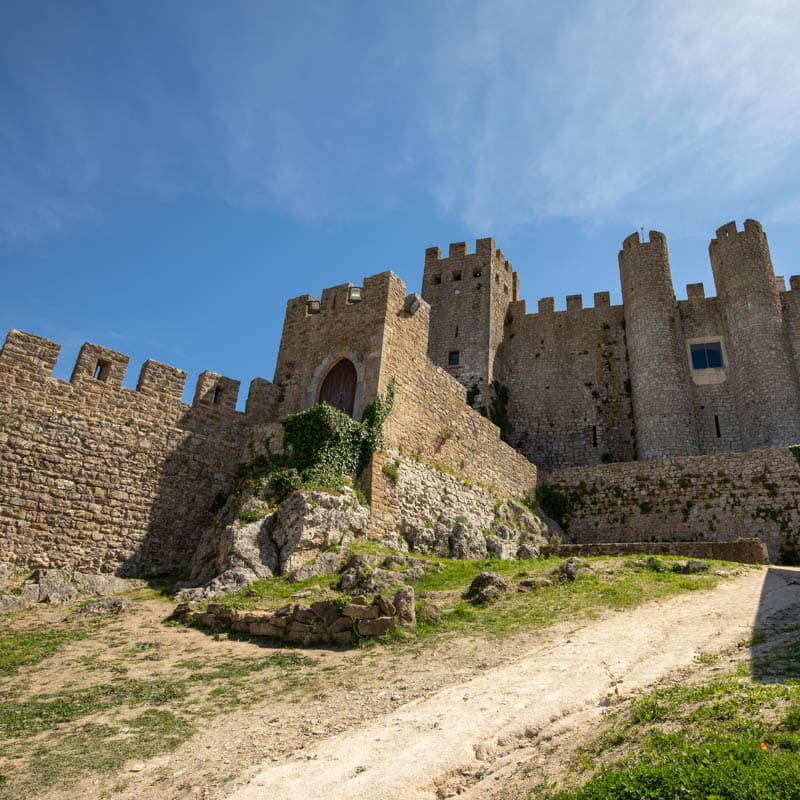
In Óbidos, the castle does not merely dominate the town: it almost merges with it. Raised on an ancient fortified site, consolidated in the Muslim period and taken by the Christians in 1148, it was enlarged by several kings, above all Dinis and Fernando, until it gained the ring of walls that still shapes the skyline today. In 1210, the town passed to the House of the Queens, and the castle also became a residence sought by the court, leaving Óbidos with a very distinctive royal memory. In the Paço dos Alcaides, the Manueline windows recall that palatial dimension, while the ramparts reveal how fortress and houses form a single body. There is, however, a less obvious detail: part of the medieval image that captivates visitors today was also fixed by twentieth-century restorations. Perhaps that is why Óbidos is so striking: it seems untouched, yet it is also a patient construction of memory.

Castelo de Porto de Mós4.4

Castelo de Porto de Mós

Castle • Porto de Mós, Leiria

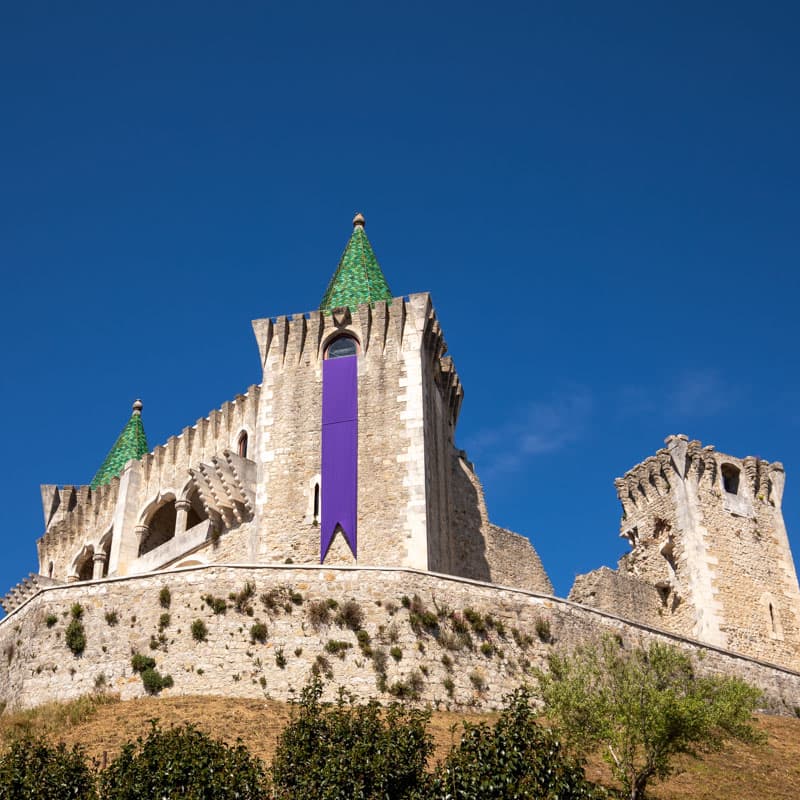
In Porto de Mós, the castle is recognised from afar by the green spires that give it an almost theatrical silhouette. The fortress began under the initiative of Portugal’s first kings and was enlarged by King Dinis, but it gained its most distinctive profile in the fifteenth century, when Afonso, Count of Ourém, added a palace-like residence with a panoramic loggia and a pentagonal plan of unusual clarity. On the eve of Aljubarrota, it housed the Portuguese army; afterwards, it moved away from war and closer to comfort and display. Abandonment and earthquakes, above all the one in 1755, left it in ruins, until twentieth-century restorations gave the town back its most emblematic image. From the top of the hill, between pale stone and balconies open to the landscape, one understands why this castle seems to bring together two natures: a medieval fortress and a dreamed palace.

Castelo de Bragança4.6

Castelo de Bragança

Castle • Bragança, Bragança

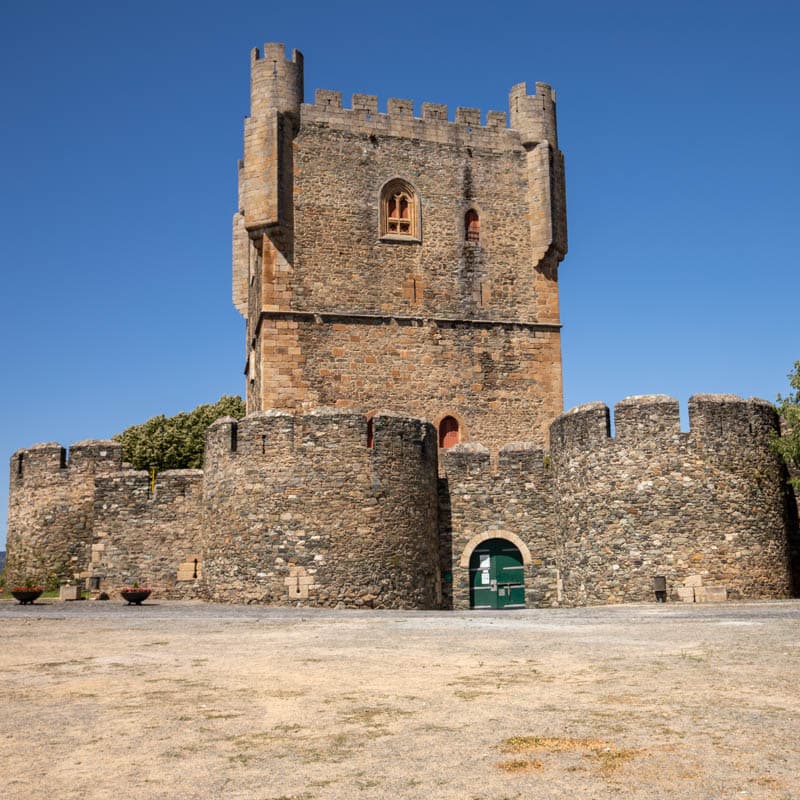
In Bragança, the castle does more than crown the city: within its walls it shelters a small citadel where medieval life still seems to retain a human scale. The story begins with King Sancho I, who in 1187 granted a charter to the new settlement and ordered its first walls to be built in order to secure the Trás-os-Montes frontier; King Dinis strengthened the enclosure and, in the fifteenth century, João I began the fortress that can still be recognised today, dominated by the powerful keep completed under Afonso V. From the top, the view opens over Portuguese mountains and Leonese lands, recalling that this was for centuries a place of watchfulness. Yet Bragança is also distinguished by what it contains within the walls: the Domus Municipalis, a singular example of Romanesque civil architecture in the Iberian Peninsula, gives the whole site a rare character, somewhere between fortified town, civic memory and frontier castle.

Castelo de Tomar4.7

Castelo de Tomar

Castle • Tomar, Santarém

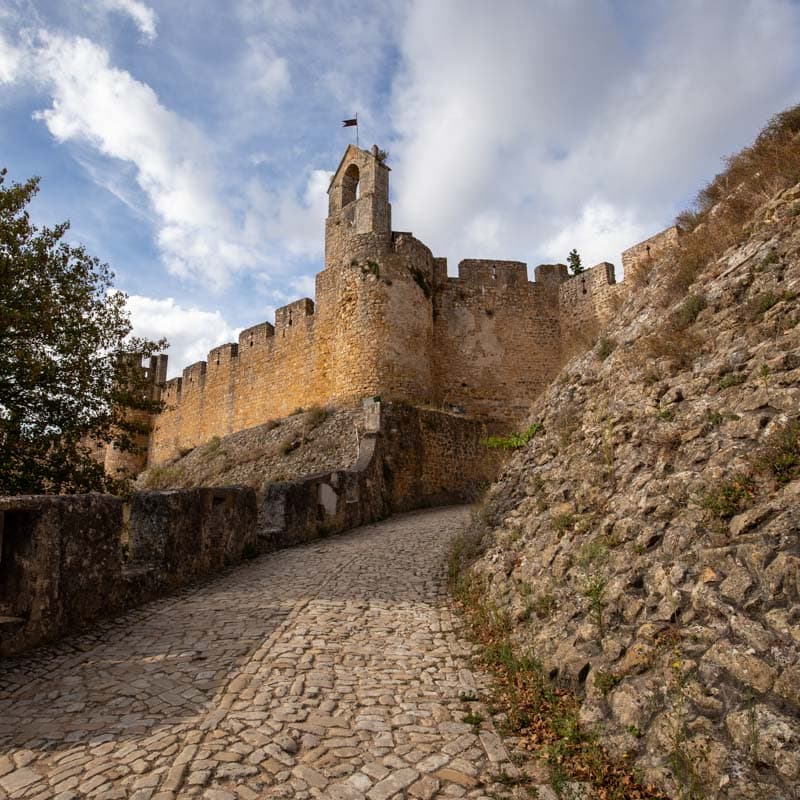
On the hilltop overlooking Tomar, the Castle of Tomar marks the beginning of the great Convent of Christ complex. The fortification began to be built in 1160, after the donation of the region to the Templars, and is linked to Gualdim Pais, master of the Order of the Temple. Its position protected a strategic point between the Tagus and Coimbra, then the capital of the kingdom. Even today, Romanesque military solutions associated with the Templars can be read in the walls, such as the sloping base that strengthened them, and the keep, rising above the citadel. In the lower enclosure stood the former fortified town; to the west was placed the Charola, the Templar oratory that would later become part of the Convent of Christ. Classified as a National Monument in 1910 and included in the ensemble inscribed by UNESCO in 1983, the castle preserves the defensive memory that shaped Tomar.

Castelo dos Mouros4.6

Castelo dos Mouros

Castle • Sintra, Lisboa

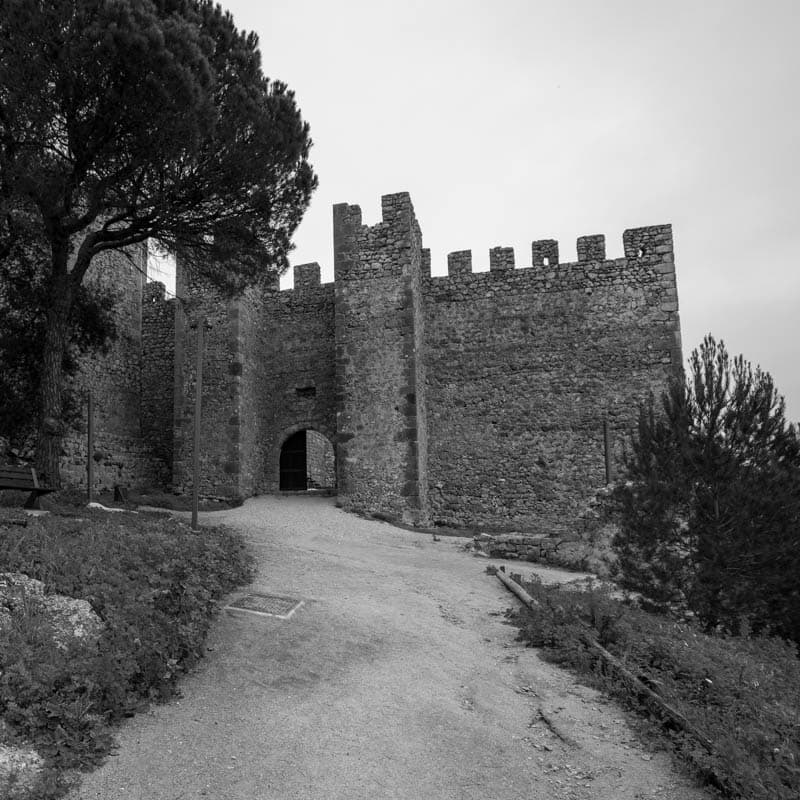
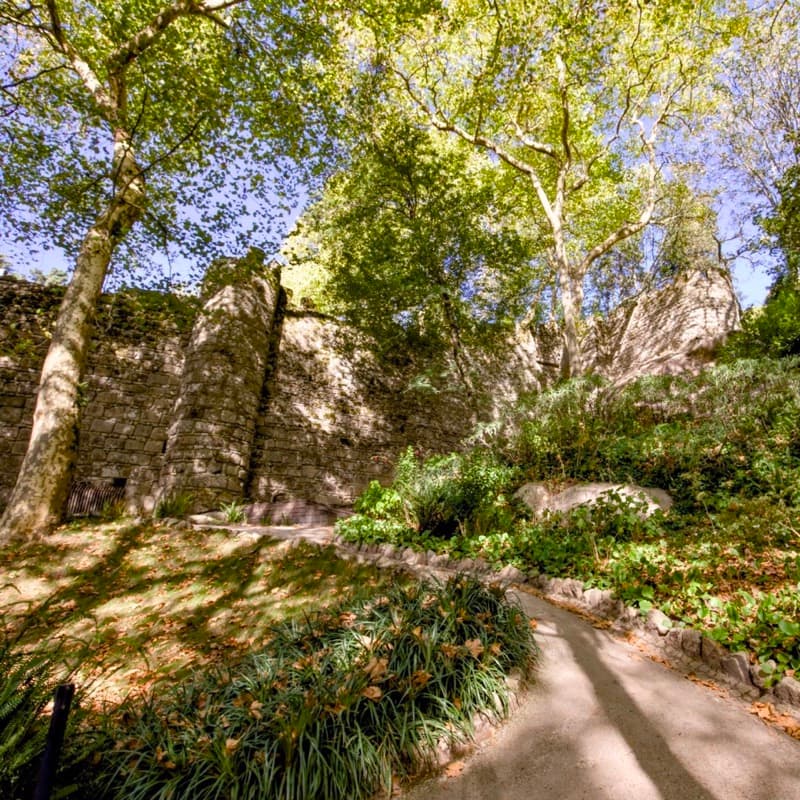
On one of the peaks of the Sintra Mountains, the Moorish Castle follows the rocky relief with granite walls that adapt to the mountain. The fortification, of Muslim foundation, dates back to the 10th century and occupied a strategic position in the defence of the territory of Sintra and the maritime approaches to Lisbon. Within and around the walls there was a settlement, today identified as the Islamic Quarter; silos carved into the rock can still be seen, used to preserve foodstuffs such as cereals. In 1147, after the conquest of Lisbon and Santarém, Sintra was handed over to King Afonso Henriques. With Christian settlement, the space gave way to a medieval village, which included the Church of São Pedro de Canaferrim. In the 19th century, King Fernando II promoted restoration works according to Romantic taste. Since 1995, it has formed part of the Cultural Landscape of Sintra, a UNESCO World Heritage Site.

Castelo de Santarem4.5

Castelo de Santarem

Castle • Santarém, Santarém

In Santarém, the so-called Castle of Santarém survives mainly in the remains of the walls and gates that surrounded the former citadel. The walled complex has its origins in the period of Muslim occupation and was consolidated and enlarged during the First Dynasty, after the Reconquest and in the reign of King Fernando. The stronghold was taken by King Afonso Henriques in 1147, a moment associated with the remodelling of its early structures. The castle included the Alcáçova enclosure and the walled perimeter of the town, with a partial barbican; its walls had gates and posterns that organised access. Today, at Portas do Sol, sections of wall, three towers and the former Porta do Sol remain, transformed into a panoramic balcony over the Tagus and the Lezíria. The Porta de Santiago, the castle’s main entrance, preserves its pointed arch and the city’s defensive memory. The complex is classified as a Property of Public Interest.

Short cultural audio guides

Listen to cultural context before and during your visit

Listen to concise cultural introductions for selected places. Ideal before entering a monument, while walking between stops, or when you want quick context without reading a long article.

Available in the appLearn how it works

Get the app

Take LxDiscover with you

Explore Portugal with a cultural guide for monuments, museums, gardens, palaces, viewpoints, and historic places in Lisbon, Porto, Sintra, and other regions.

Use the map, follow cultural routes, read editorial context, save places, and track your visits with the visit passport.


Free features

  • Interactive map to discover places of interest
  • Detailed information about monuments, museums, and cultural sites
  • Favorites for the places you want to visit
  • Selected routes to start exploring

Premium subscription

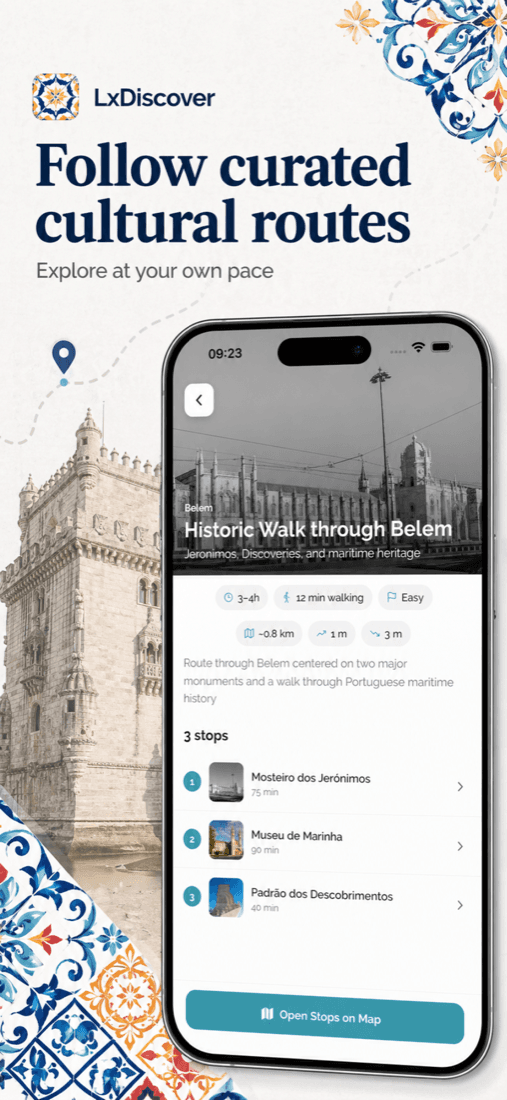
  • Curated routes with ordered stops, duration, and difficulty
  • Thematic collections with editorial context for each area
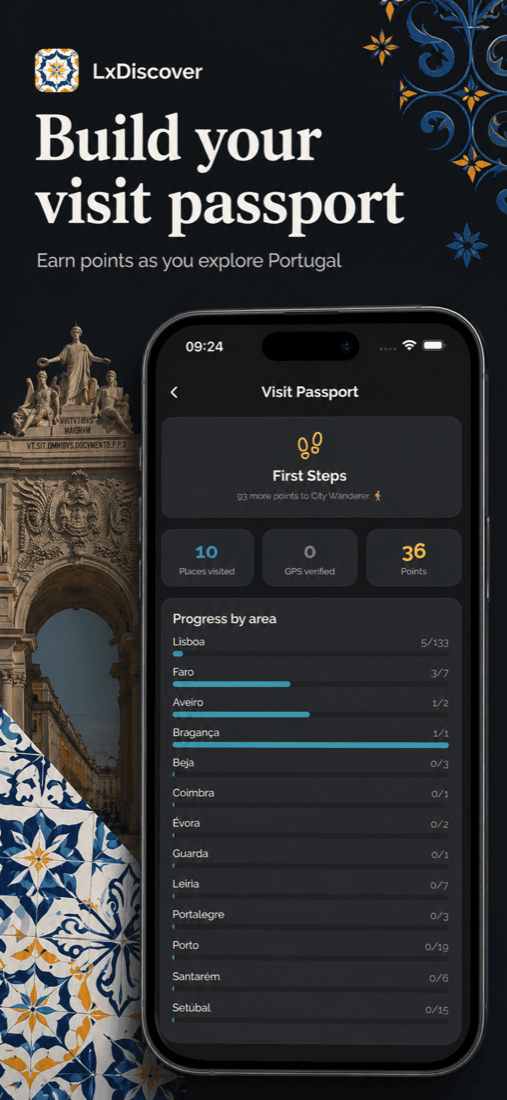
  • Visit passport for progress, visited places, and achievements
  • Advanced map, planning, and proximity alert tools
LxDiscover map screen
LxDiscover routes screen
LxDiscover visit passport screen

Highlights in Lisboa

View all