Self-guided cultural guide for Portugal

Discover Portugal with more context

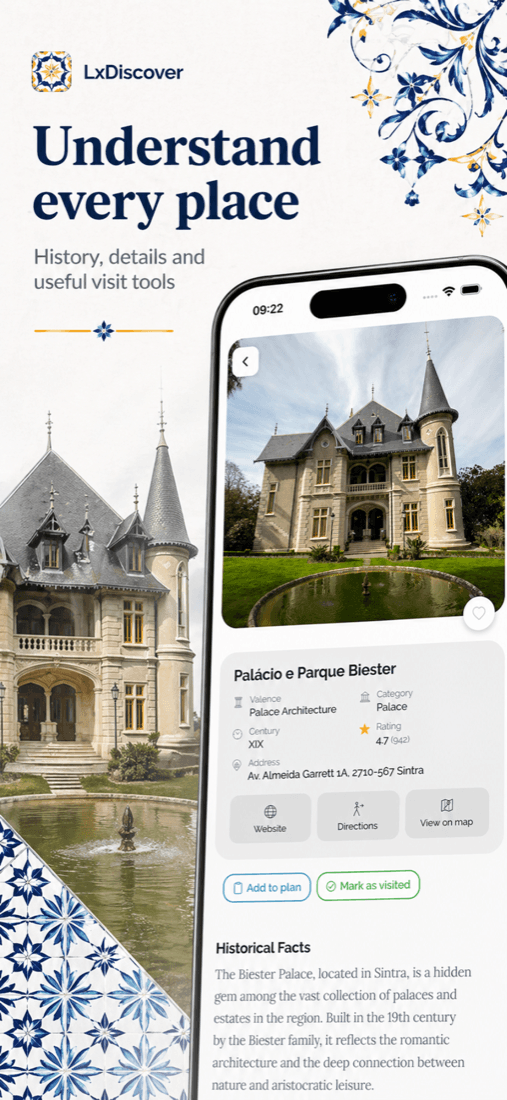
Explore monuments, museums, gardens, viewpoints and cultural routes with LxDiscover. Use the map, read concise cultural context, listen to short audio introductions and track your visits with the app passport.

Explore · 26 / 203

Discover Portugal with context

Regions:
Jardim da Estrela4.6

Jardim da Estrela

Garden/Park • Lisboa, Lisboa

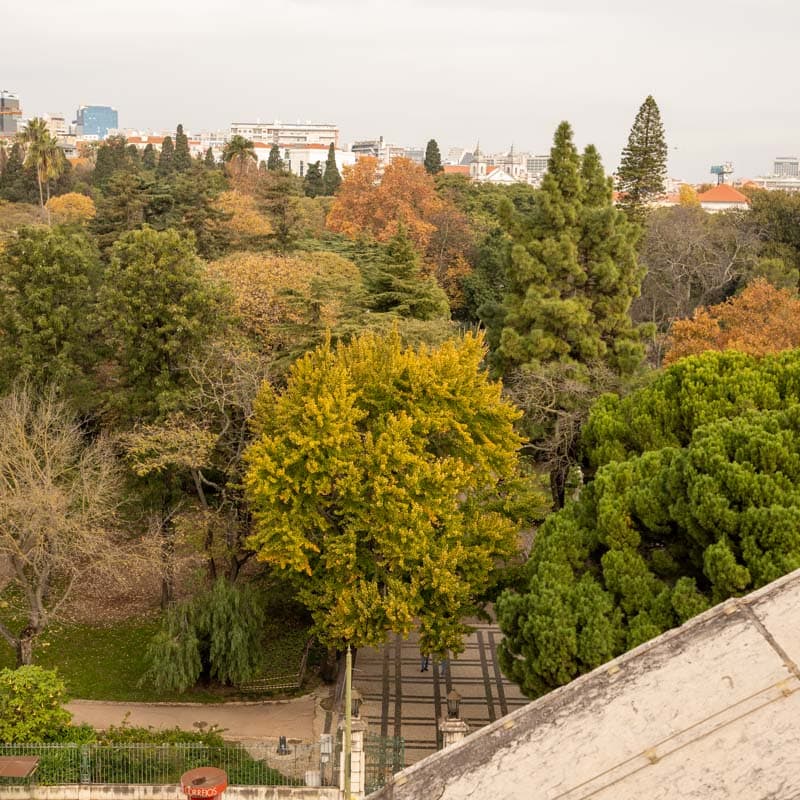
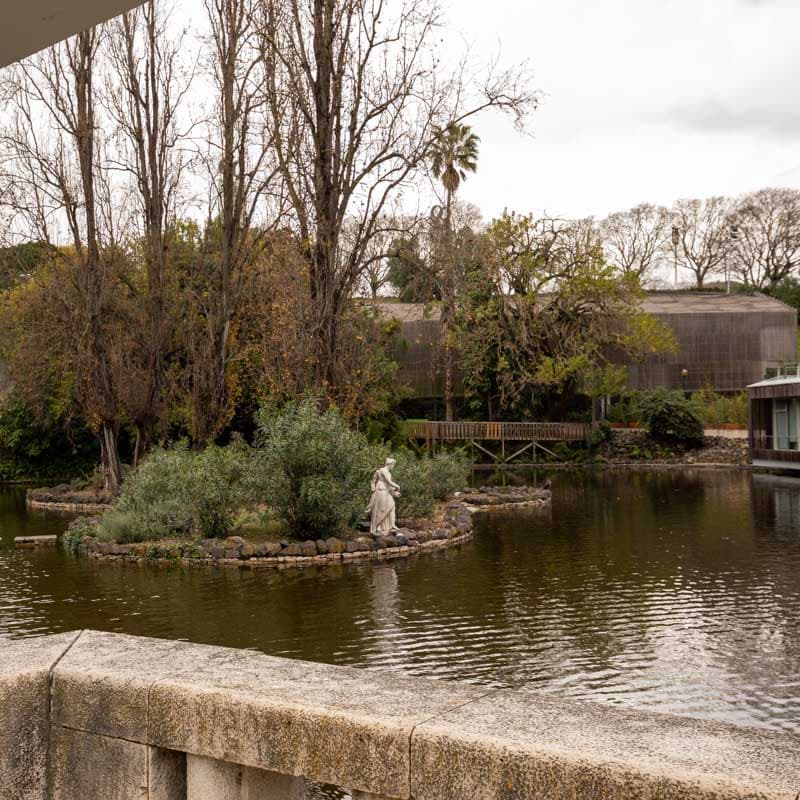
Jardim da Estrela has the rare calm of a romantic garden that still feels like the city’s living room. Commissioned in 1842 and inaugurated in 1852, opposite the basilica, it created a refuge of winding paths, lakes and shade where Lisbon also learned how to stroll. Its English-style layout, varied vegetation and wrought-iron bandstand of 1884 give it elegance, yet what lingers most is the way it brings together nature and urban life: ducks and carp on the water, readers at the library kiosk, families on the grass and concerts that restore the garden’s old public vocation. There is also a particularly charming detail: the white chalet of Casa do Jardim da Estrela, now a cultural venue, opened in 1882 as the first kindergarten in Portugal, joining nature and education in an idea far ahead of its time. To walk here is to feel Lisbon soften, almost held in suspension.

Jardim Botânico de Lisboa4.0

Jardim Botânico de Lisboa

Botanical Garden • Lisboa, Lisboa

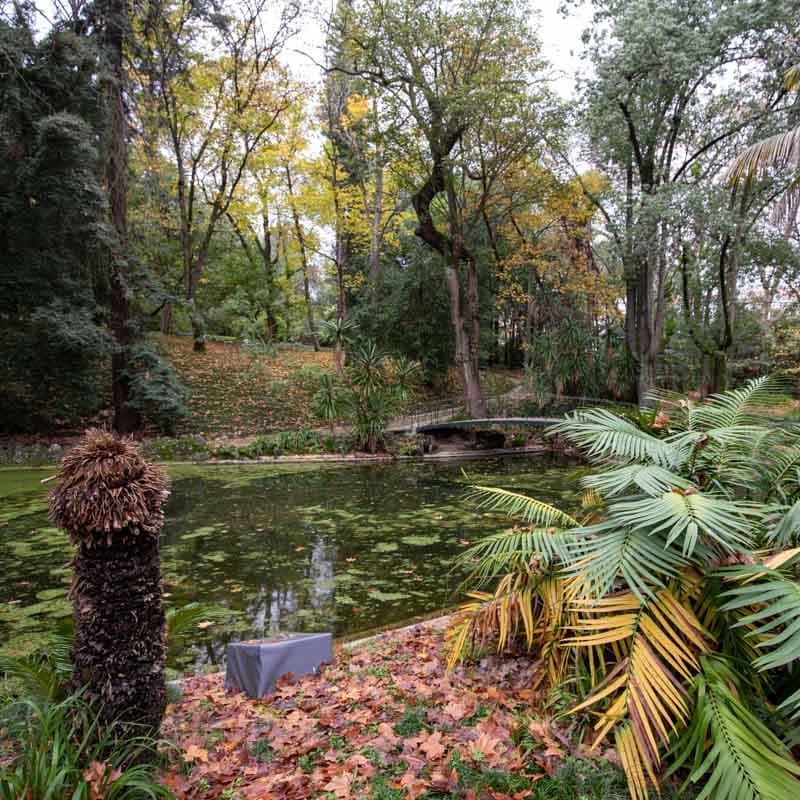
The Botanical Garden of Lisbon is an unexpected refuge in the heart of the city, yet it was born with a very clear scientific purpose. Designed in the mid nineteenth century to support the teaching and study of botany at the Polytechnic School and inaugurated in 1878, it still retains the charm of a garden created to observe, learn and wonder. The more geometric upper area, known as the Classe, opens out with order and light; then the ground falls into the Arboreto, darker and more immersive, where the Avenue of Palms deepens the feeling of stepping away from the city’s noise. Among species from many parts of the world, the collections of cycads, araucarias, palms and tropical figs deserve particular attention, giving the walk a rare botanical richness. Classified as a National Monument, it is a place where Lisbon seems to breathe more slowly.

Jardim do Torel4.6

Jardim do Torel

Garden/Park • Lisboa, Lisboa

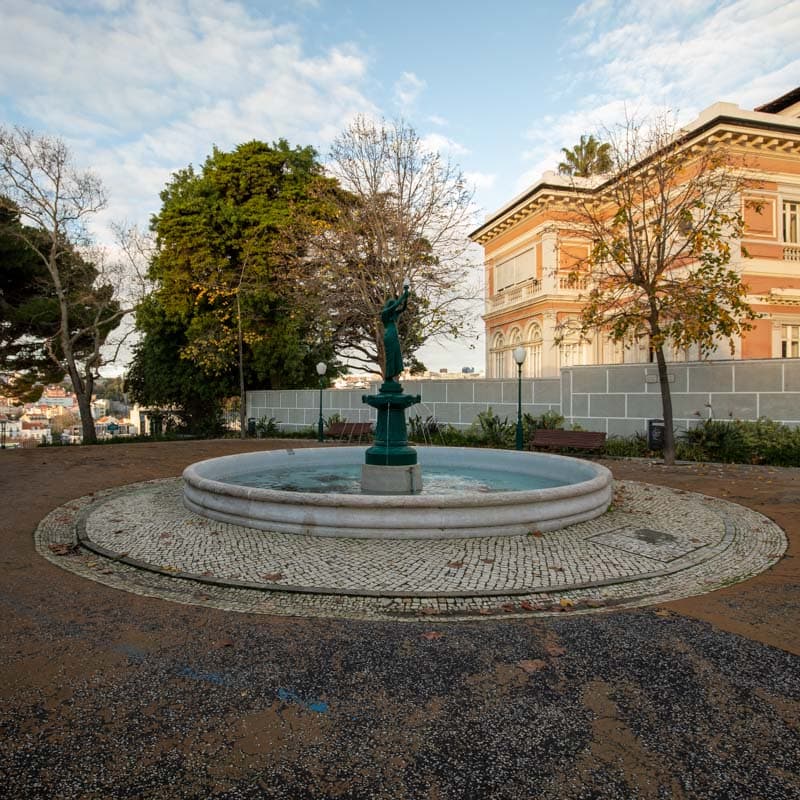
Jardim do Torel has the discretion of places that do not impose themselves and, for that very reason, stay in the memory. Born on the grounds of an early eighteenth-century estate, it takes its name from the magistrate Cunha Thorel and became a public garden and viewpoint when the site was handed to the City Council in 1928. Today, among trees, shade and a sheltered atmosphere, it opens onto a broad view over the valley of Avenida da Liberdade, the hill of São Roque and part of old Lisbon. Around it, the noble houses of the eighteenth and nineteenth centuries deepen the feeling of an urban retreat, almost secret. Reaching it by the Lavra funicular or by Rua do Telhal is part of the charm: the approach prepares the surprise. More than a simple viewpoint, Torel keeps the quiet elegance of a less hurried Lisbon, where the city seems to reveal itself slowly.

Miradouro de São Pedro de Alcântara4.6

Miradouro de São Pedro de Alcântara

Viewpoint • Lisboa, Lisboa

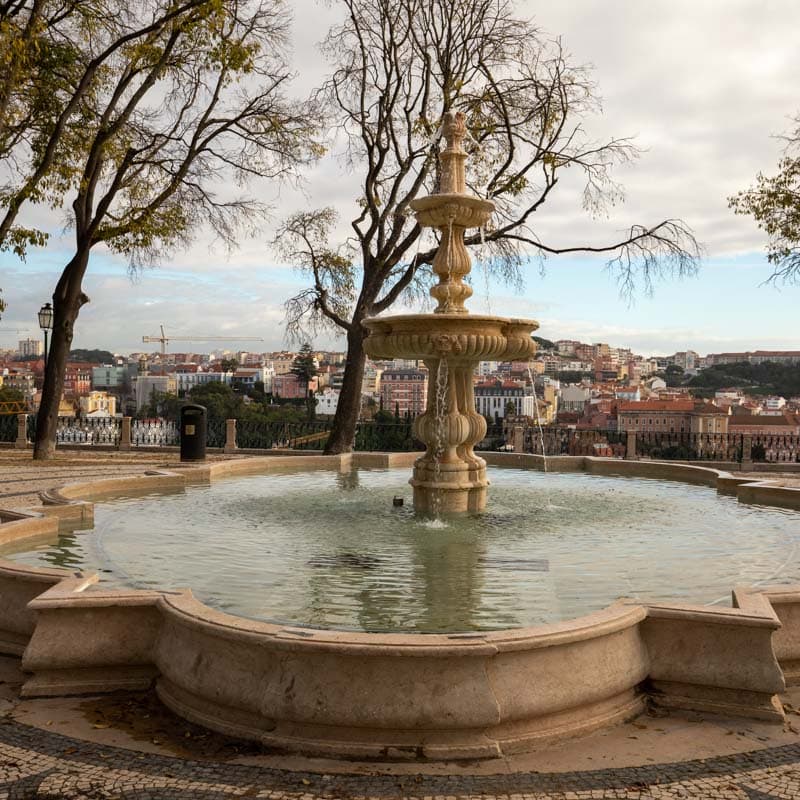
From the top of the São Pedro de Alcântara Viewpoint, Lisbon opens out like a city built in layers. Part of António Nobre Garden, this romantic space is arranged on two terraces linked by stairs and offers one of the broadest panoramas in the capital, from São Jorge Castle and the Cathedral to Baixa, Graça and the valley of Avenida da Liberdade. The power of the place lies both in the view and in the way it frames it. On the upper terrace, among trees and a central fountain, a tile panel designed by Fred Kradolfer helps visitors identify the main landmarks in the landscape. On the lower level, geometric flowerbeds and busts of historical figures and characters from classical mythology extend the atmosphere of romantic Lisbon. More than a viewing point, this is a place that invites you to pause, direct your gaze and understand the city with time and attention.

Estufa Fria4.7

Estufa Fria

Botanical Garden • Lisboa, Lisboa

Hidden on the slope of Eduardo VII Park, the Estufa Fria is one of Lisbon’s most unexpected refuges. It was created from an old basalt quarry, transformed into a sheltered garden and opened to the public in 1933, a fine example of how the city reinvented a scar in the landscape. Today it is divided into the cold, hot and sweet greenhouses, bringing together more than 300 species from several continents, including tree ferns, camellias, begonias and rare or threatened plants. Yet what makes the visit especially memorable is its atmosphere: damp paths, ponds, shade and a silence that feels almost improbable in the middle of the city. There is even a detail that captures the spirit of the place: in the cold greenhouse, the wooden slatted cover lets the rain fall through. It is worth walking slowly and noticing how water, stone and vegetation seem to have found a natural balance here.

Amoreiras 360° Panoramic View4.5

Amoreiras 360° Panoramic View

Viewpoint • Lisboa, Lisboa

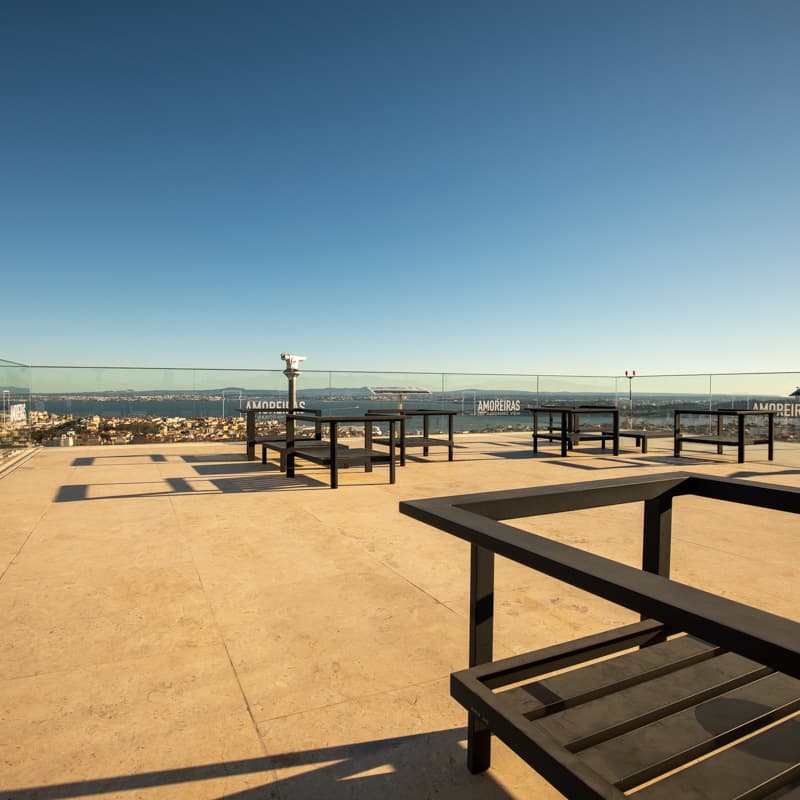
At the top of the Amoreiras Towers, the Amoreiras 360° Panoramic View reveals Lisbon in a way the city rarely allows itself to be seen: whole, wide and surprisingly legible. At 174 metres above sea level, on one of the highest points in the city, this viewpoint offers a continuous reading of the Tagus, São Jorge Castle, the Águas Livres Aqueduct, the Estrela Basilica and the rolling shape of Lisbon’s hills. More than a simple lookout, it is a place that helps you understand the scale and variety of the capital, between old neighbourhoods, major monuments and areas of urban expansion. Set within the Amoreiras Towers complex, opened in 1985 and awarded the Valmor Prize, it has earned a distinctive place in the city’s skyline. It is worth using the viewing scopes and following the maps slowly: from above, Lisbon seems to arrange itself before your eyes, as if the whole city became, for a moment, clearer.

Jardim Botânico Tropical4.3

Jardim Botânico Tropical

Botanical Garden • Lisboa, Lisboa

In Belém, the Tropical Botanical Garden brings together, in a single place, the elegance of an old royal estate and the more complex memory of Portugal’s colonial past. The landscape still bears traces of the eighteenth century, when King João V acquired these grounds, but the scientific garden was born in 1906 as the Colonial Garden, created for teaching and experimentation in tropical agriculture, and moved here a few years later. In 1940, the Portuguese World Exhibition left marks that are still visible, such as the Macau Arch and the fourteen busts scattered through the grounds, recalling another layer of its history. Between the long avenue of palm trees, the lakes, the greenhouses and around six hundred tropical and subtropical species, the walk feels both exuberant and meditative. What makes this garden singular is not only its botanical collection: it is the way nature, science, art and memory meet in a place that shows, quietly, that gardens too can tell the story of a country.

Jardim do Palácio de São Bento4.8

Jardim do Palácio de São Bento

Garden • Lisboa, Lisboa

Behind the solemn façade of Parliament, the Garden of São Bento Palace reveals a more secluded and theatrical side of this place of power. Designed by Cristino da Silva, it is arranged with French-inspired symmetry, in flowerbeds and statues set across small terraces that overcome the steep slope of the ground. A long wall, opened by sixteen niches with fountains, separates it from the Prime Minister’s official residence; at the centre, a double staircase built in the 1940s rises to the upper garden, watched over by sphinxes bearing the Portuguese shields, sculpted by Leopoldo de Almeida. On either side, the allegories of Strength and Justice extend, outdoors, the symbolic language of the parliamentary building. More than a simple green space, this garden seems to turn the rhetoric of politics into stone, water and design, with a serene order that contrasts with the bustle of the city just beyond it.

Tapada das Necessidades4.3

Tapada das Necessidades

Garden/Park • Lisboa, Lisboa

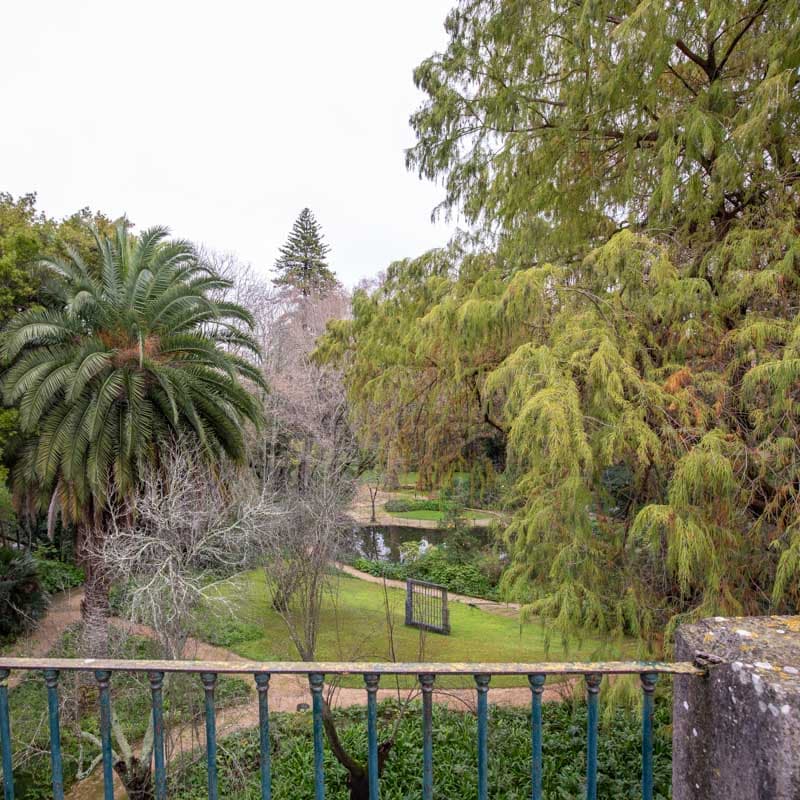
At Tapada das Necessidades, Lisbon keeps a garden where the idea of a Romantic park still lives alongside traces of court life. Created in 1742 beside the complex of Our Lady of Necessities, it began as a walled enclosure linked to the palace and convent, and for a long time it remained a space reserved for monarchs. In the nineteenth century, the grounds gained lakes, exotic vegetation and the character of an English garden, which still gives the place the feeling of a discreet retreat within the city. Between 1855 and 1861, the circular greenhouse commissioned by King Pedro V was added; later, Casa do Regalo and other small pavilions strengthened the site’s theatrical quality. Today, among clearings, shaded paths and Romantic structures, it becomes clear that this is not simply a large garden: it is a rare fragment of Lisbon where landscape and royal memory still mingle.

Zoomarine4.6

Zoomarine

Theme Park • Guia, Faro

In Guia, near Albufeira, Zoomarine opened in 1991 as a theme park devoted to the marine world, but over time it has taken on a broader meaning. Through zoological presentations, aquariums, habitats and water attractions, the site brings together entertainment and environmental awareness, seeking to draw visitors closer to ocean life. That mission becomes especially tangible at Porto d’Abrigo, created in 2002: it was the first Marine Species Rehabilitation Centre in Portugal and it continues to rescue, treat and return animals to the wild in partnership with ICNF. During a visit, the contrast between the park’s lively atmosphere and this quieter conservation work gives the place a distinctive identity. More than a leisure venue, Zoomarine shows how curiosity, when guided well, can turn into knowledge and care for the sea.

Short cultural audio guides

Listen to cultural context before and during your visit

Listen to concise cultural introductions for selected places. Ideal before entering a monument, while walking between stops, or when you want quick context without reading a long article.

Available in the appLearn how it works

Get the app

Take LxDiscover with you

Explore Portugal with a cultural guide for monuments, museums, gardens, palaces, viewpoints, and historic places in Lisbon, Porto, Sintra, and other regions.

Use the map, follow cultural routes, read editorial context, save places, and track your visits with the visit passport.


Free features

  • Interactive map to discover places of interest
  • Detailed information about monuments, museums, and cultural sites
  • Favorites for the places you want to visit
  • Selected routes to start exploring

Premium subscription

  • Curated routes with ordered stops, duration, and difficulty
  • Thematic collections with editorial context for each area
  • Visit passport for progress, visited places, and achievements
  • Advanced map, planning, and proximity alert tools
LxDiscover map screen
LxDiscover routes screen
LxDiscover visit passport screen

Highlights in Lisboa

View all