Lisbon

Lisbon Viewpoints

Lisbon is built on hills, and the city has spent centuries turning that fact into one of its defining pleasures: dozens of named miradouros — viewpoints — laid out where the streets dead-end at a balcony over the Tagus or across a sea of red rooftops. Many are small civic spaces integrated into daily life: a café, a few benches, sometimes a kiosk and a jacaranda tree.

The classic Alfama trio — Portas do Sol, Santa Luzia, Senhora do Monte — gives you the eastern view across the old Moorish quarter to the river. On the western side, São Pedro de Alcântara is the postcard view across Baixa to the castle. Santa Catarina above Cais do Sodré frames the city from another angle.

For something contemporary, the Arco Triunfal da Rua Augusta and Amoreiras 360° add more structured panoramic viewpoints to the older miradouro tradition. The LxDiscover app places each viewpoint on a single map.

14 places

Get the app
Arco Triunfal da Rua Augusta4.7

Arco Triunfal da Rua Augusta

Arch • Lisboa, Lisboa

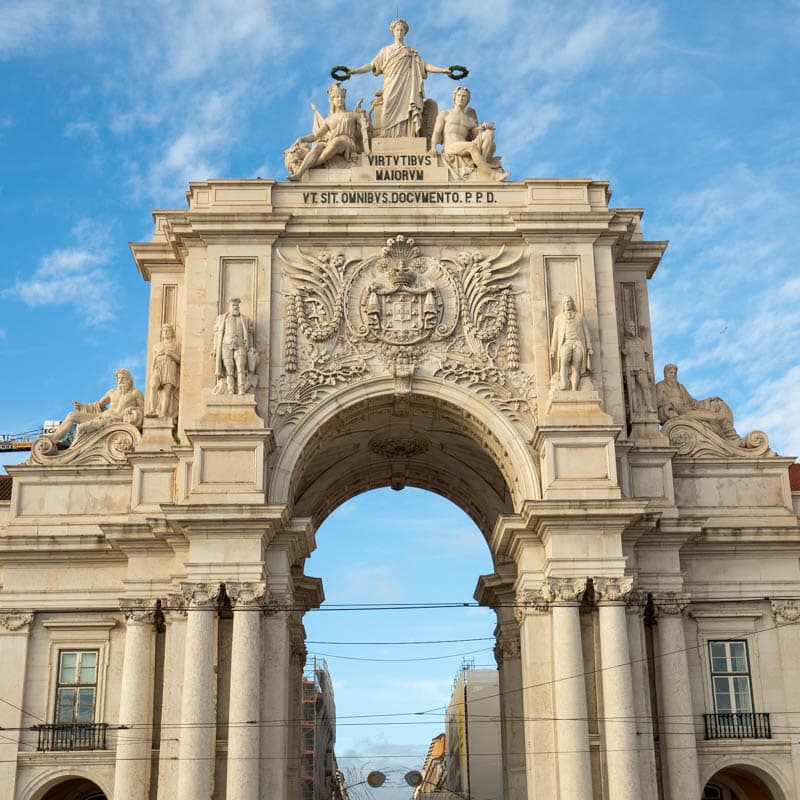
More than a monumental entrance, the Rua Augusta Triumphal Arch is the great symbolic gateway to the Lisbon that rose again after the 1755 earthquake. Conceived in the context of the Pombaline reconstruction, it took more than a century to reach its final form, and that delay says much about the city’s slow reinvention. At the top, Glory crowns Genius and Valour; below, figures such as Vasco da Gama, Viriato, Nuno Álvares Pereira and the Marquis of Pombal turn the monument into a statement of memory and power. It is also worth noticing the Latin inscription, dedicated to the virtues of the ancients, and the way the arch frames the Baixa, Praça do Comércio and the Tagus. Seen up close, it impresses with its scale and sculptural relief; seen from above, it offers one of the clearest readings of the Pombaline plan and of Lisbon’s deep bond with the river.
Jardim do Torel4.6

Jardim do Torel

Garden/Park • Lisboa, Lisboa

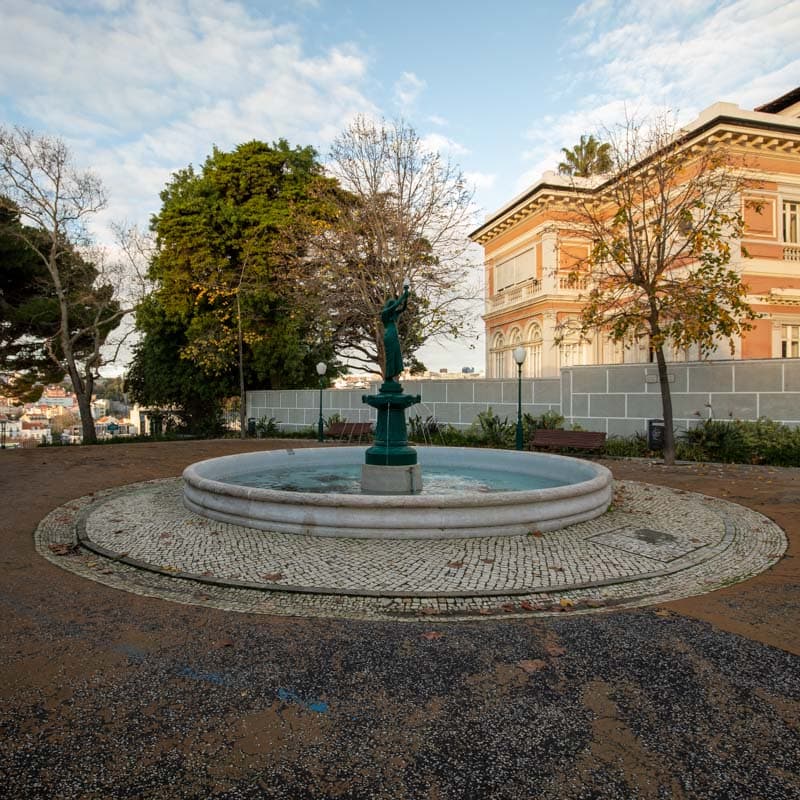
Jardim do Torel has the discretion of places that do not impose themselves and, for that very reason, stay in the memory. Born on the grounds of an early eighteenth-century estate, it takes its name from the magistrate Cunha Thorel and became a public garden and viewpoint when the site was handed to the City Council in 1928. Today, among trees, shade and a sheltered atmosphere, it opens onto a broad view over the valley of Avenida da Liberdade, the hill of São Roque and part of old Lisbon. Around it, the noble houses of the eighteenth and nineteenth centuries deepen the feeling of an urban retreat, almost secret. Reaching it by the Lavra funicular or by Rua do Telhal is part of the charm: the approach prepares the surprise. More than a simple viewpoint, Torel keeps the quiet elegance of a less hurried Lisbon, where the city seems to reveal itself slowly.

Miradouro de São Pedro de Alcântara4.6

Miradouro de São Pedro de Alcântara

Viewpoint • Lisboa, Lisboa

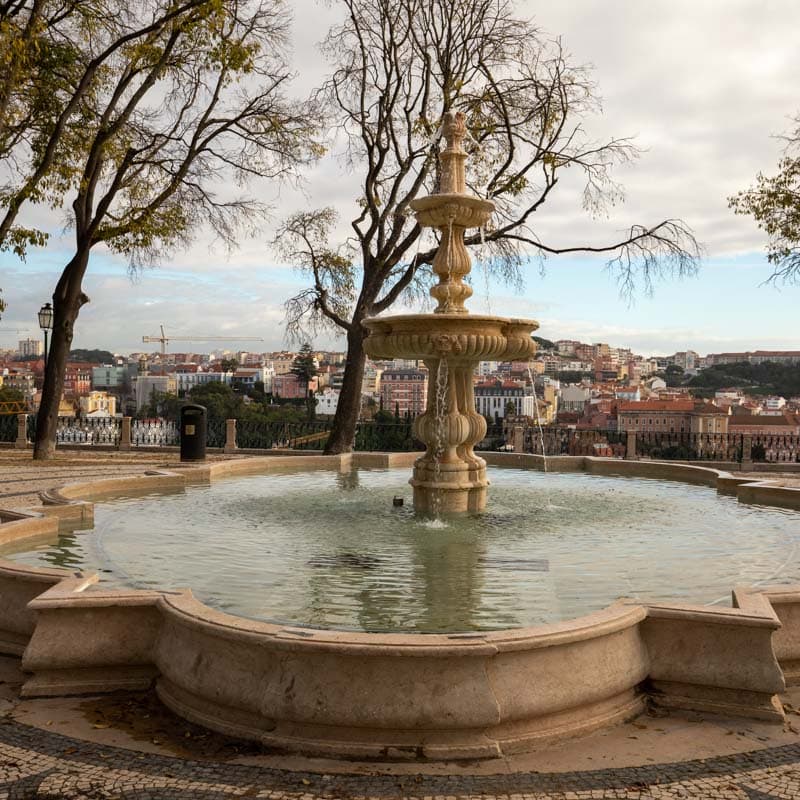
From the top of the São Pedro de Alcântara Viewpoint, Lisbon opens out like a city built in layers. Part of António Nobre Garden, this romantic space is arranged on two terraces linked by stairs and offers one of the broadest panoramas in the capital, from São Jorge Castle and the Cathedral to Baixa, Graça and the valley of Avenida da Liberdade. The power of the place lies both in the view and in the way it frames it. On the upper terrace, among trees and a central fountain, a tile panel designed by Fred Kradolfer helps visitors identify the main landmarks in the landscape. On the lower level, geometric flowerbeds and busts of historical figures and characters from classical mythology extend the atmosphere of romantic Lisbon. More than a viewing point, this is a place that invites you to pause, direct your gaze and understand the city with time and attention.

Elevador de Santa Justa4.1

Elevador de Santa Justa

Elevator • Lisboa, Lisboa

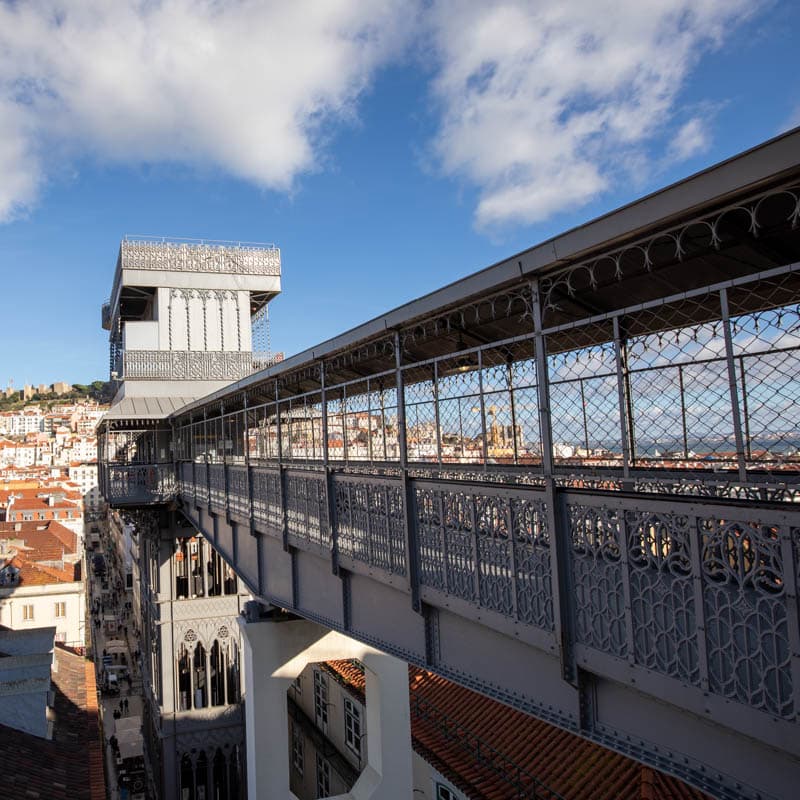
In the heart of Baixa, the Santa Justa Lift shows how Lisbon turned an urban problem into beauty. Opened in 1902 to overcome the steep difference in level between Rua do Ouro and Largo do Carmo, it was designed by Raoul Mesnier du Ponsard and first operated by steam before changing to electricity in 1907. Its iron structure, laced with neo-Gothic arches, makes it far more than a means of transport: it is a rare piece of Lisbon’s industrial architecture and the only vertical lift the city still preserves. During a visit, it is worth noticing the wood-lined cabins, the delicacy of the metal decoration and the suspended walkway leading to Carmo. From the top, among rooftops, ruins and hills, it becomes clear why this monument remains one of Lisbon’s most distinctive images.

Amoreiras 360° Panoramic View4.5

Amoreiras 360° Panoramic View

Viewpoint • Lisboa, Lisboa

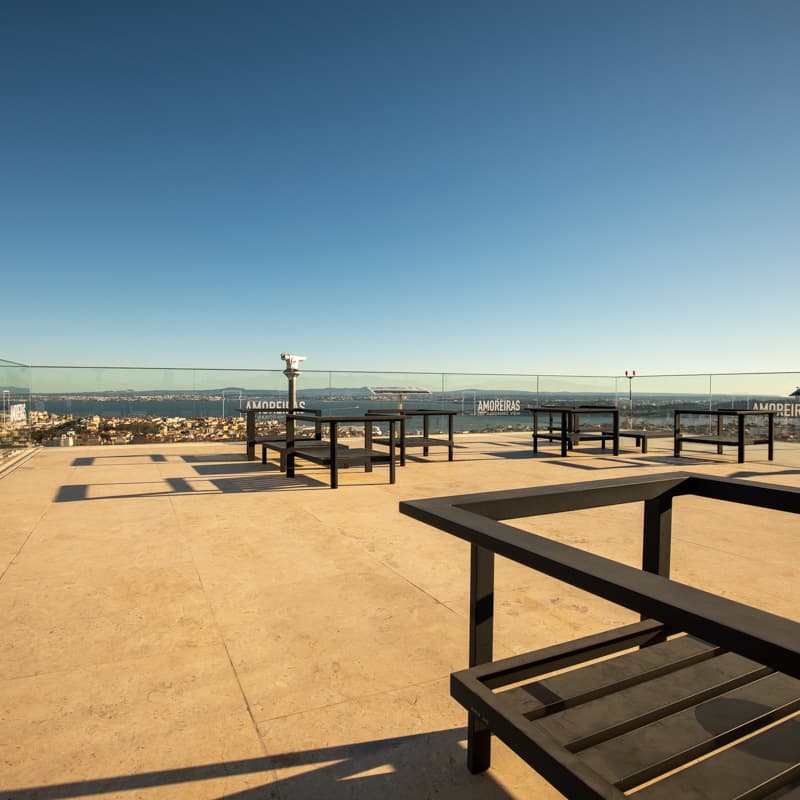
At the top of the Amoreiras Towers, the Amoreiras 360° Panoramic View reveals Lisbon in a way the city rarely allows itself to be seen: whole, wide and surprisingly legible. At 174 metres above sea level, on one of the highest points in the city, this viewpoint offers a continuous reading of the Tagus, São Jorge Castle, the Águas Livres Aqueduct, the Estrela Basilica and the rolling shape of Lisbon’s hills. More than a simple lookout, it is a place that helps you understand the scale and variety of the capital, between old neighbourhoods, major monuments and areas of urban expansion. Set within the Amoreiras Towers complex, opened in 1985 and awarded the Valmor Prize, it has earned a distinctive place in the city’s skyline. It is worth using the viewing scopes and following the maps slowly: from above, Lisbon seems to arrange itself before your eyes, as if the whole city became, for a moment, clearer.

Pilar 7 - Experiência Ponte3.5

Pilar 7 - Experiência Ponte

Tourist Attraction • Lisboa, Lisboa

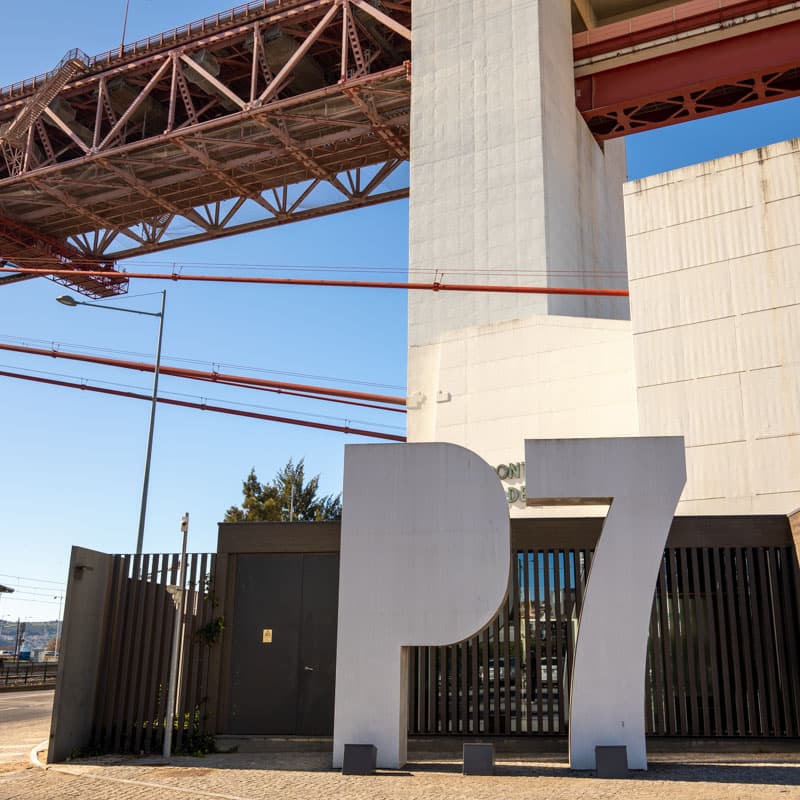
In Alcântara, Pilar 7 - Bridge Experience invites you inside one of Lisbon’s great pieces of machinery. Installed in one of the main pillars of the 25 de Abril Bridge, it was born during the bridge’s conservation works and opened to the public in 2017, turning a technical structure into a place of discovery. The route begins beside the anchorage blocks and continues through an interpretive centre with multimedia displays, the memory of the workers of the 1960s and the story of this crossing, inaugurated in 1966. Then the lift rises to road-deck level and reveals what is rarely seen: the bridge from within, the scale of steel and concrete, the constant sound of traffic and Lisbon opening onto the Tagus. From above, between Alcântara, Belém and the opposite bank, it becomes clear that this is more than a panoramic viewpoint. It is an unexpected way of understanding how the city connects, grows and imagines itself.

Aqueduto das Águas Livres4.5

Aqueduto das Águas Livres

Aqueduct • Lisboa, Lisboa

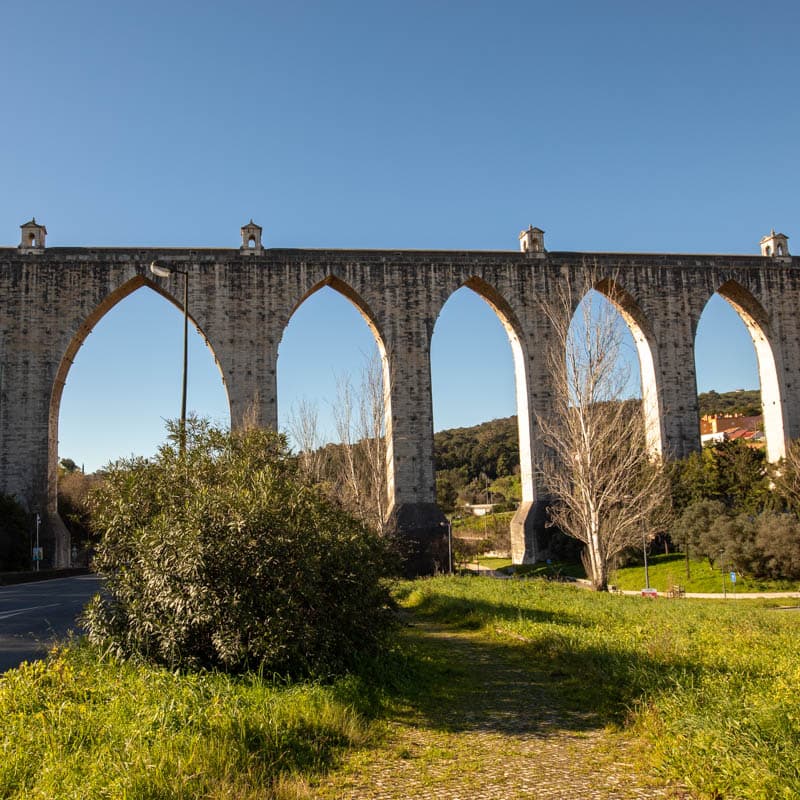
More than a monumental work, the Águas Livres Aqueduct is Lisbon’s grand answer to an old problem: the lack of water. Commissioned by King João V in 1731, the system brought into the city water collected in the Belas area and, throughout the eighteenth century, supplied reservoirs, galleries and fountains that transformed urban life. Its most famous stretch is the one crossing the Alcântara valley: 35 arches over 941 metres, with the largest pointed stone arch in the world, so solid that it survived the earthquake of 1755. During a visit, what impresses most is not ornament but the intelligence of the engineering and the feeling of walking suspended above Lisbon. Between the austerity of the stonework, the scale of the valley and the memory of water entering the capital, it becomes clear why this is one of the city’s most extraordinary monuments.

Torre Vasco da Gama4.5

Torre Vasco da Gama

Viewpoint • Lisboa, Lisboa

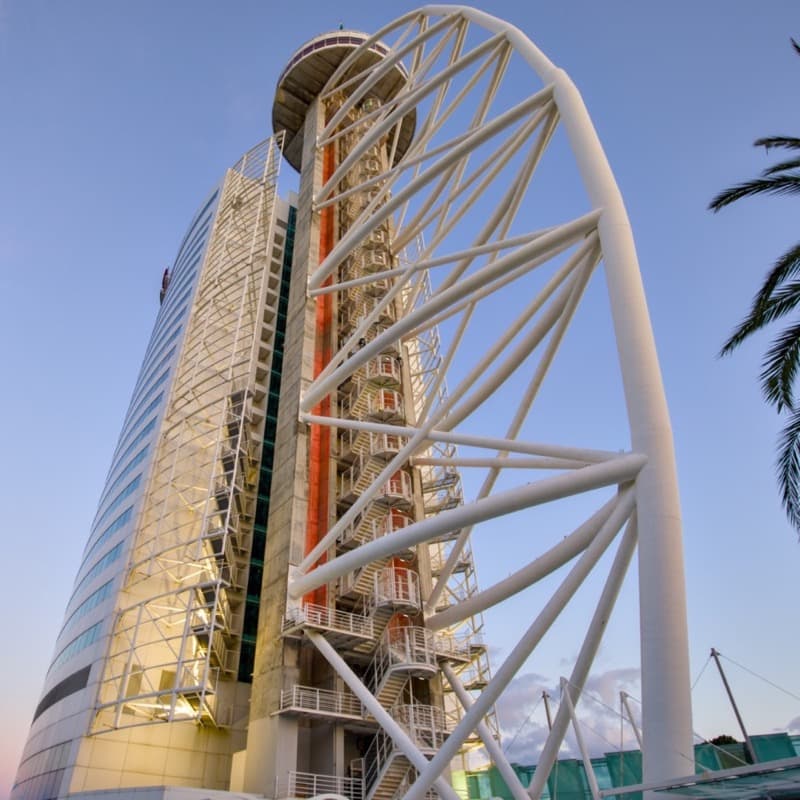
The Vasco da Gama Tower rises beside the Tagus, in Lisbon’s Parque das Nações, as one of the most visible traces of the former Expo’98. At 145 metres, it was built as part of the world exposition and housed the European Union Pavilion on its lower floors. Designed by the architects Leonor Janeiro and Nick Jacobs, it began as an observation tower, with panoramic lifts, a viewpoint and a restaurant at the top. Its silhouette was conceived as a nautical evocation: the vertical body suggests a mast and the metal structure recalls a sail, in dialogue with the name of Vasco da Gama and with the maritime theme of Expo’98. In 2012, the tower gained new life with the opening of the MYRIAD by SANA hotel, in a project by Nuno Leónidas that was integrated into the existing structure. Today, the elevated view over the river and eastern Lisbon continues to define its urban presence.

Miradouro da Senhora do Monte4.8

Miradouro da Senhora do Monte

Viewpoint • Lisboa, Lisboa

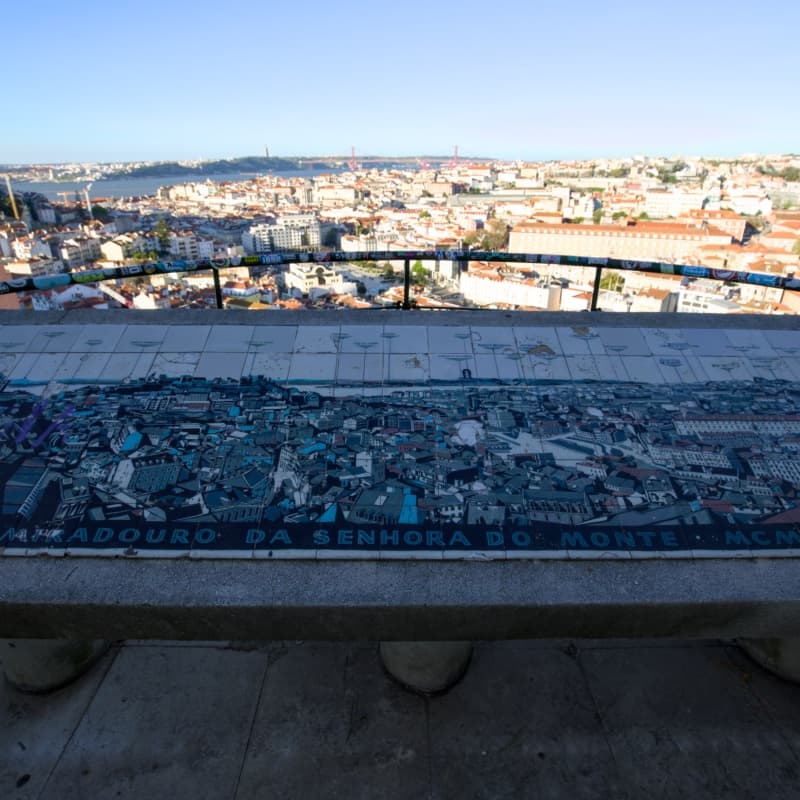
The Senhora do Monte Viewpoint, in Lisbon, opens beside the Chapel of Nossa Senhora do Monte, on the old Monte de São Gens. From this elevated balcony, the city appears in recognisable layers: São Jorge Castle, the River Tagus, the Pombaline Baixa, the hill of São Roque with the ruins of the Carmo Convent, Mouraria, the Castle Hill, the avenues and recent buildings stretching northwards, and several gardens. The proximity of the chapel adds an ancient devotional memory to the panorama: municipal sources place its origin in the time of the Christian reconquest, linked to the hermitage of the Calced Augustinians. Thus, the viewpoint is not only a high point from which to observe Lisbon. It brings together landscape, topography and religious tradition, showing how the city can be read both through the shape of its hills and through the places that remained upon them.

Miradouro Sophia de Mello Breyner Andresen4.2

Miradouro Sophia de Mello Breyner Andresen

Viewpoint • Lisboa, Lisboa

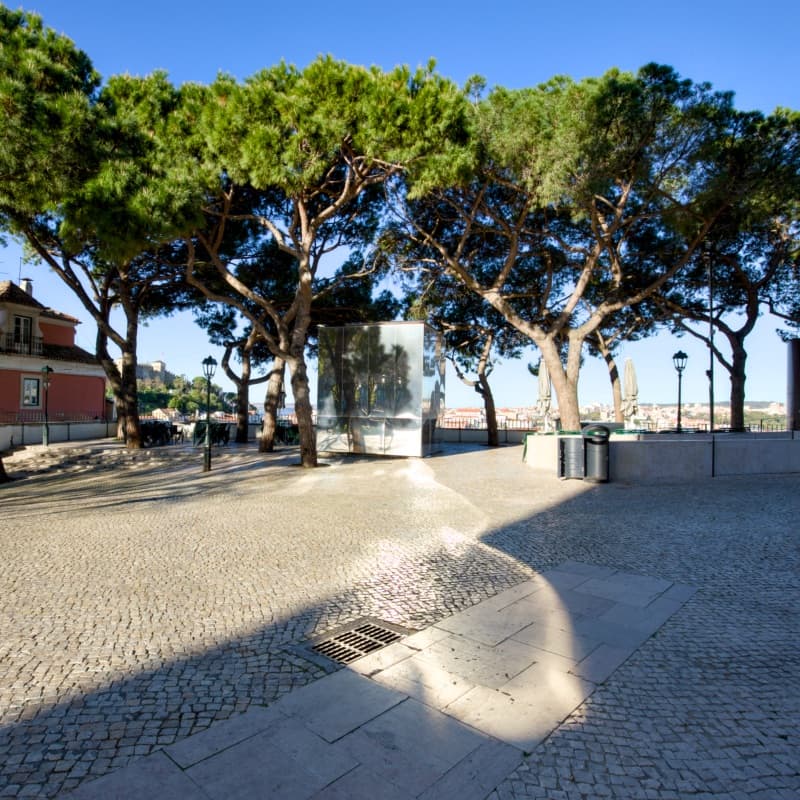
The Sophia de Mello Breyner Andresen Viewpoint, in Lisbon, is the former Graça Viewpoint and opens beside the Church and former Convent of Graça. The paved space, marked by the shade of stone pines, has benches that extend a slow reading of the landscape. From here, the eye travels along the Castle Slope, the rooftops of Mouraria, Martim Moniz Square, the Baixa, the ruins of the Carmo Convent and the São Pedro de Alcântara Viewpoint. Senhora do Monte, Avenidas Novas and more recent buildings can also be distinguished, reminding us that Lisbon grows in layers. Sophia’s bronze bust is a replica of a stone piece from the 1950s, by António Duarte. Between convent, city and poetry, the viewpoint turns the view into a serene form of memory.

Miradouro das Portas do Sol4.7

Miradouro das Portas do Sol

Viewpoint • Lisboa, Lisboa

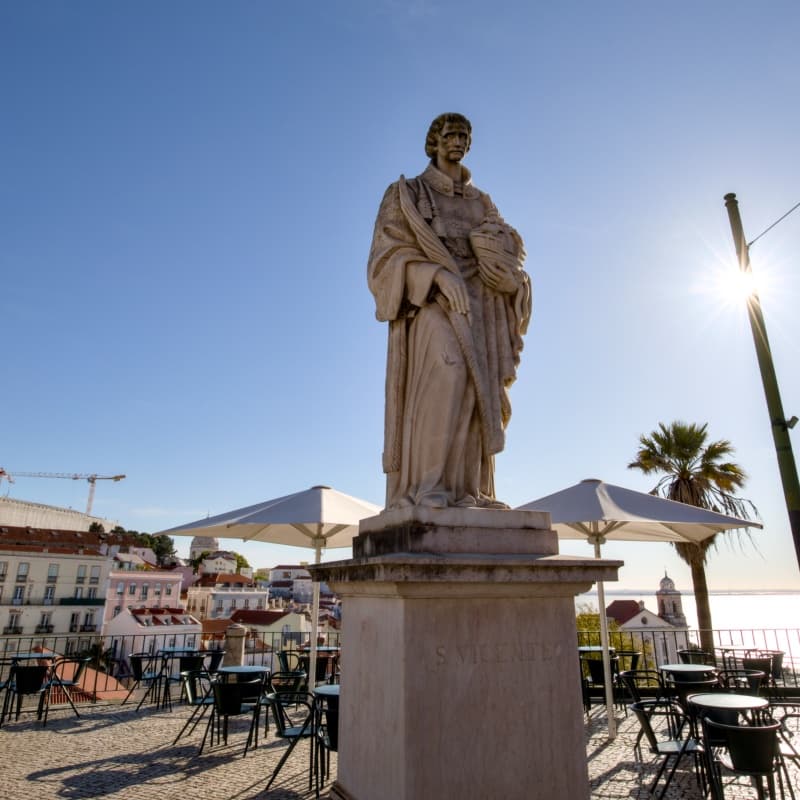
The Portas do Sol Viewpoint, in Lisbon, owes its name to an old city gate, facing east, that once stood on this site. Today, the place works as an open balcony over the historic slope of Alfama and the Tagus. From here, the National Pantheon, Azurara Palace, traces of the Moorish Wall and the Church of São Vicente de Fora can be distinguished, forming a clear reading of old Lisbon. In the centre of the space stands the statue of São Vicente, Lisbon’s patron saint, represented with the boat and two ravens that form part of the city’s symbols. Between vanished walls, houses descending the hill and monuments that still organise the horizon, the viewpoint shows how the urban landscape preserves names, devotions and memories much older than the present.

Miradouro de São Vicente4.6

Miradouro de São Vicente

Viewpoint • Lisboa, Lisboa

The São Vicente Viewpoint, beside Largo das Portas do Sol, in Lisbon, belongs to the group of balconies that open Alfama towards the Tagus. The place is connected to the old city entrance that gave its name to the Portas do Sol square and viewpoint, a gate facing east. From here, the eye crosses the rooftops and churches of Alfama and identifies the National Pantheon, Azurara Palace, traces of the Moorish Wall and the Church of São Vicente de Fora. The presence of São Vicente is marked by the statue placed and inaugurated in October 1970, a work associated with Raul Xavier. Lisbon’s patron saint appears with the boat and two ravens, symbols linked to the tradition of the translation of his relics to the city. Between old city, river and civic devotion, this viewpoint shows how the landscape preserves names that cross the centuries.

Miradouro de Santa Luzia4.7

Miradouro de Santa Luzia

Viewpoint • Lisboa, Lisboa

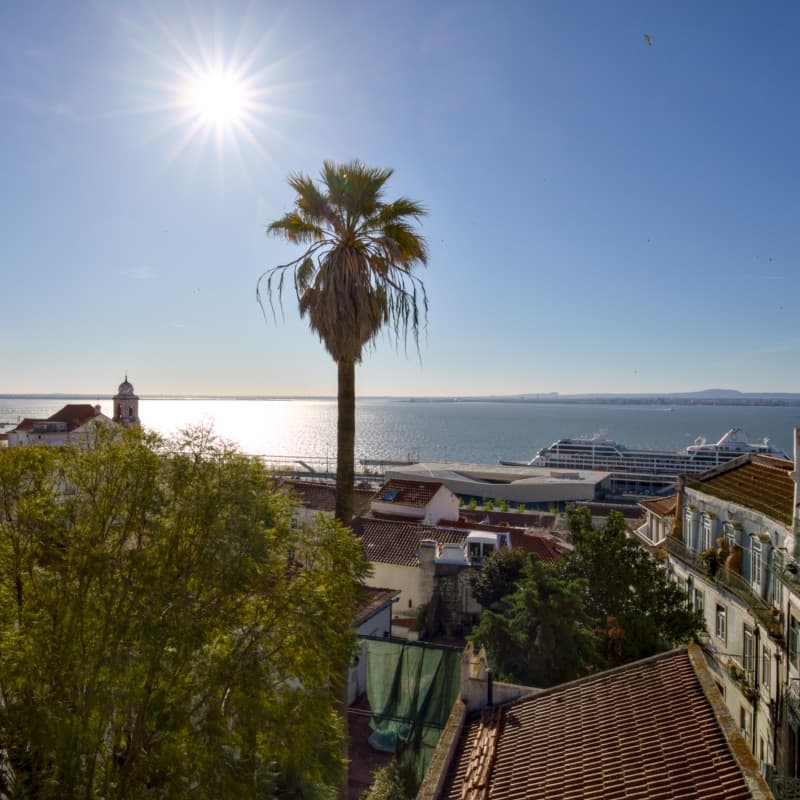
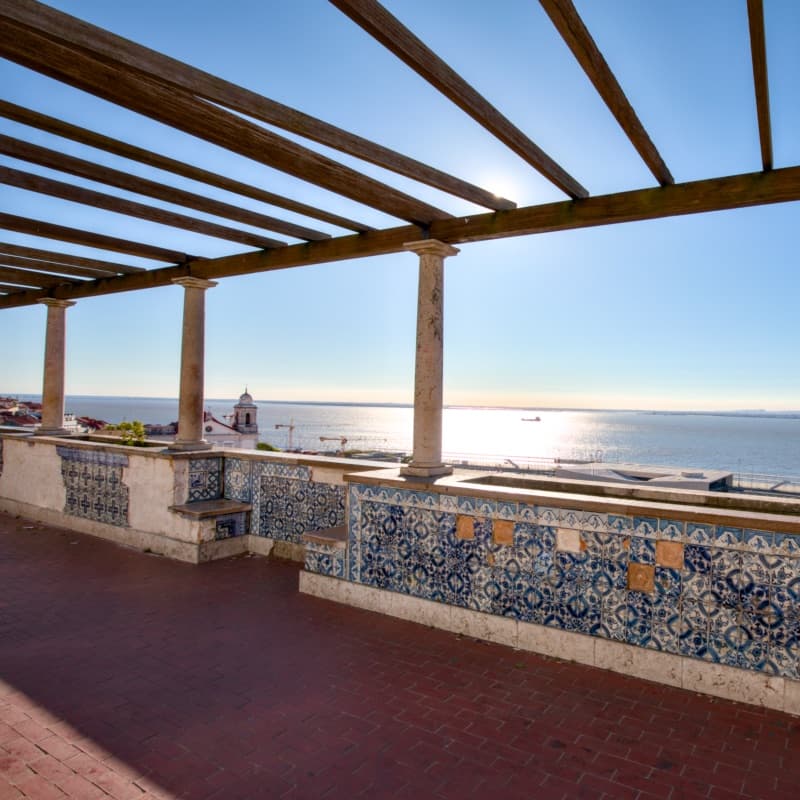
The Santa Luzia Viewpoint, in Lisbon, opens beside the Church of Santa Luzia and São Brás, over the neighbourhood of Alfama and the Tagus. Integrated into the Júlio de Castilho Garden, it combines the role of an urban balcony with a strong decorative presence. The façade and walls are covered with historic tiles, many produced by the Viúva Lamego Factory. On the southern wall, two panels by António Quaresma preserve episodes from Lisbon’s memory: Praça do Comércio before the 1755 earthquake and Christians attacking São Jorge Castle. Another figurative panel, made up of 20 by 80 tiles, occupies the lower level of the garden. Between the view over neighbourhood and river, and the narrative painted in tiles, the viewpoint turns Alfama into a landscape read in depth.

Miradouro de Santa Catarina4.6

Miradouro de Santa Catarina

Viewpoint • Lisboa, Lisboa

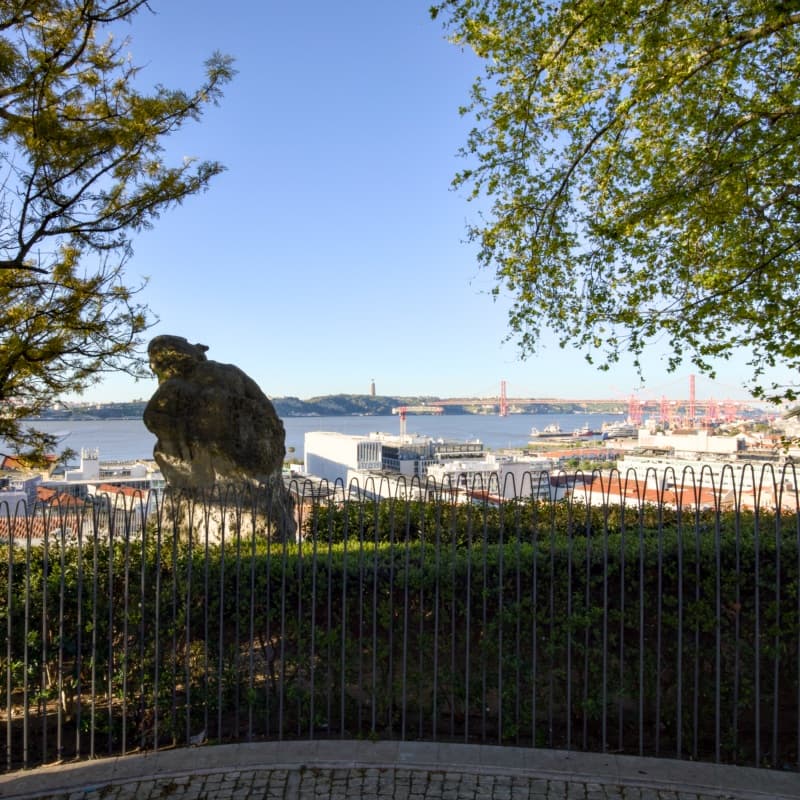
The Santa Catarina Viewpoint, in Lisbon, is also known as the Jardim do Alto de Santa Catarina or the Jardim do Adamastor. Built in 1883, it opens over the Tagus estuary, the 25 April Bridge and the rooftops of the former parish of São Paulo. The space combines a small garden with a wide terrace, where the city is observed towards the river. Its most striking presence is the sculpture of Adamastor, inaugurated on 10 June 1927 on the initiative of Lisbon City Council. The figure, created by Luís de Camões in “The Lusiads”, symbolises the Cape of Storms and the fears associated with Atlantic navigation. Between garden, literature and maritime horizon, the viewpoint turns a view over Lisbon into a visible memory of the Portuguese epic imagination.

Related guides

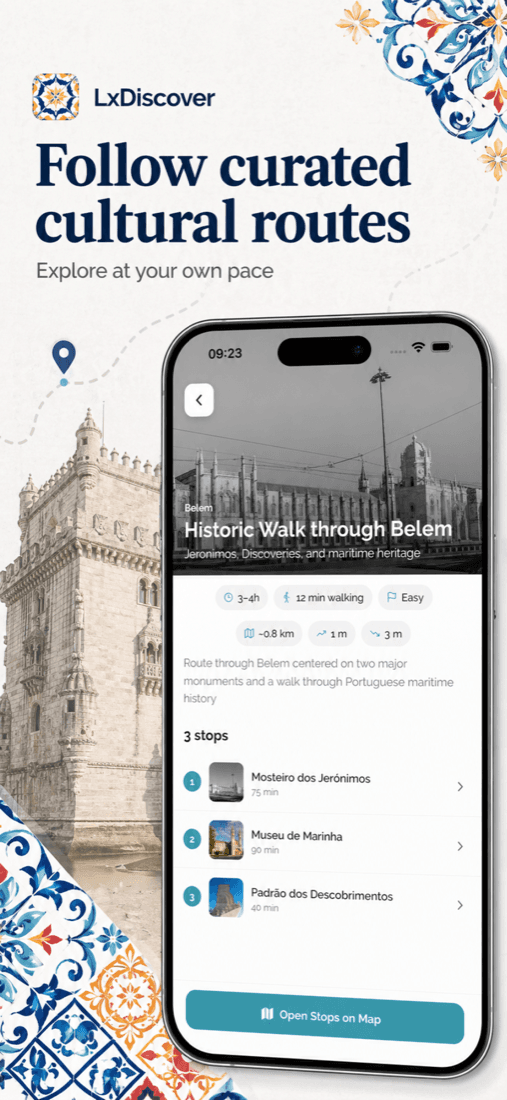
Take the LxDiscover App with you

Explore Portugal with a cultural guide for monuments, museums, gardens, palaces, viewpoints, and historic places in Lisbon, Porto, Sintra, and other regions.

Use the map, follow cultural routes, read editorial context, save places, and track your visits with the visit passport.

Free features

  • Interactive map to discover places of interest
  • Detailed information about monuments, museums, and cultural sites
  • Favorites for the places you want to visit
  • Selected routes to start exploring

Premium subscription

  • Curated routes with ordered stops, duration, and difficulty
  • Thematic collections with editorial context for each area
  • Visit passport for progress, visited places, and achievements
  • Advanced map, planning, and proximity alert tools
LxDiscover map screen
LxDiscover routes screen
LxDiscover visit passport screen