Places

Cultural places in Portugal

Browse LxDiscover places across monuments, museums, palaces, viewpoints, gardens, churches and historic sites. Use this hub to start planning, then open the app for map-based routes, saved places and short cultural audio guides.

12 places

Places in Lisboa

Explore on the map
Arco Triunfal da Rua Augusta4.7

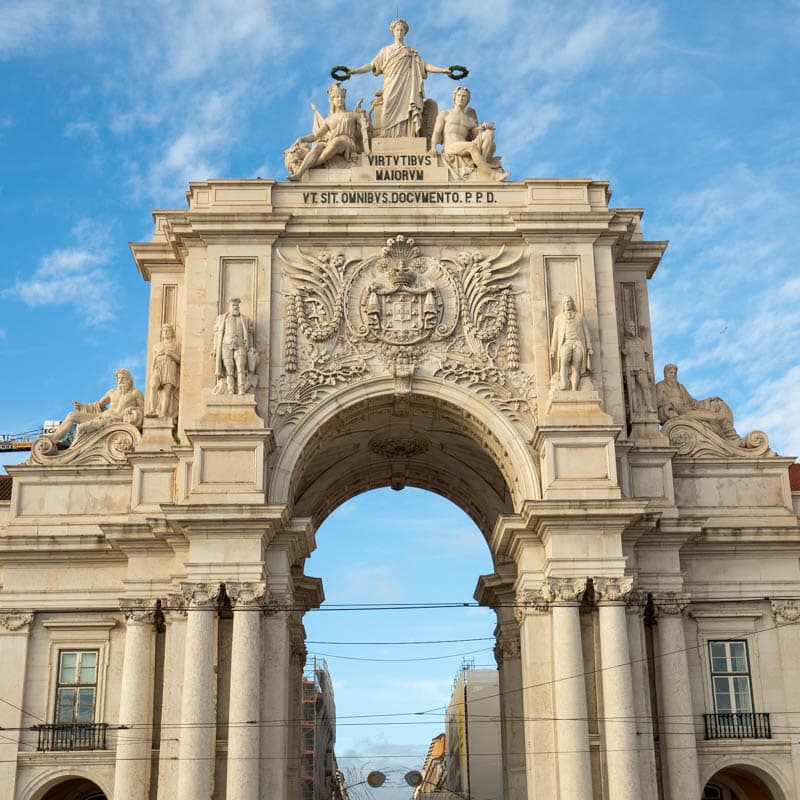
Arco Triunfal da Rua Augusta

Arch • Lisboa, Lisboa

More than a monumental entrance, the Rua Augusta Triumphal Arch is the great symbolic gateway to the Lisbon that rose again after the 1755 earthquake. Conceived in the context of the Pombaline reconstruction, it took more than a century to reach its final form, and that delay says much about the city’s slow reinvention. At the top, Glory crowns Genius and Valour; below, figures such as Vasco da Gama, Viriato, Nuno Álvares Pereira and the Marquis of Pombal turn the monument into a statement of memory and power. It is also worth noticing the Latin inscription, dedicated to the virtues of the ancients, and the way the arch frames the Baixa, Praça do Comércio and the Tagus. Seen up close, it impresses with its scale and sculptural relief; seen from above, it offers one of the clearest readings of the Pombaline plan and of Lisbon’s deep bond with the river.
Praça de Touros do Campo Pequeno4.2

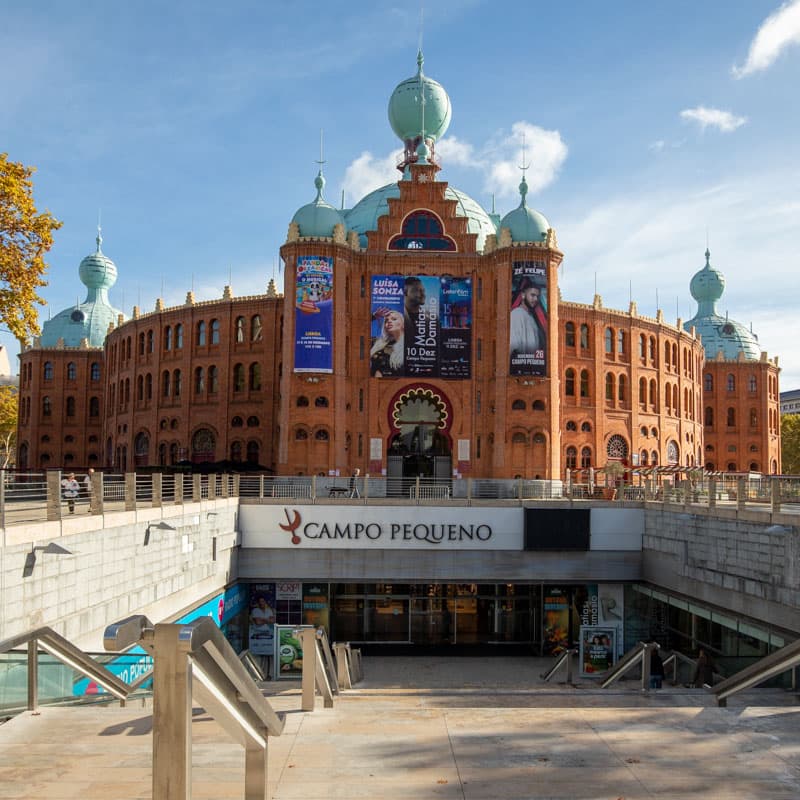
Praça de Touros do Campo Pequeno

Commercial Space • Lisboa, Lisboa

With its red-brick silhouette and neo-Moorish domes, Campo Pequeno seems to bring an unexpected imaginary world into Lisbon, yet its real strength lies in the way it gathers more than a century of urban life into one place. Opened in 1892 and designed by Dias da Silva, it was created as a bullring and soon became one of the city’s social stages, hosting a royal bullfight at the start of the twentieth century, rallies under the Estado Novo and, after the Carnation Revolution, major democratic gatherings. The renovation completed in 2006 preserved the building’s character and gave it a new life as a multi-purpose venue. It is worth noticing the arches, the exposed brick and the turrets, restored to their original turquoise blue. Today, between memory, tradition and reinvention, Campo Pequeno still shows how Lisbon changes without completely erasing its earlier traces.

Mosteiro dos Jerónimos4.5

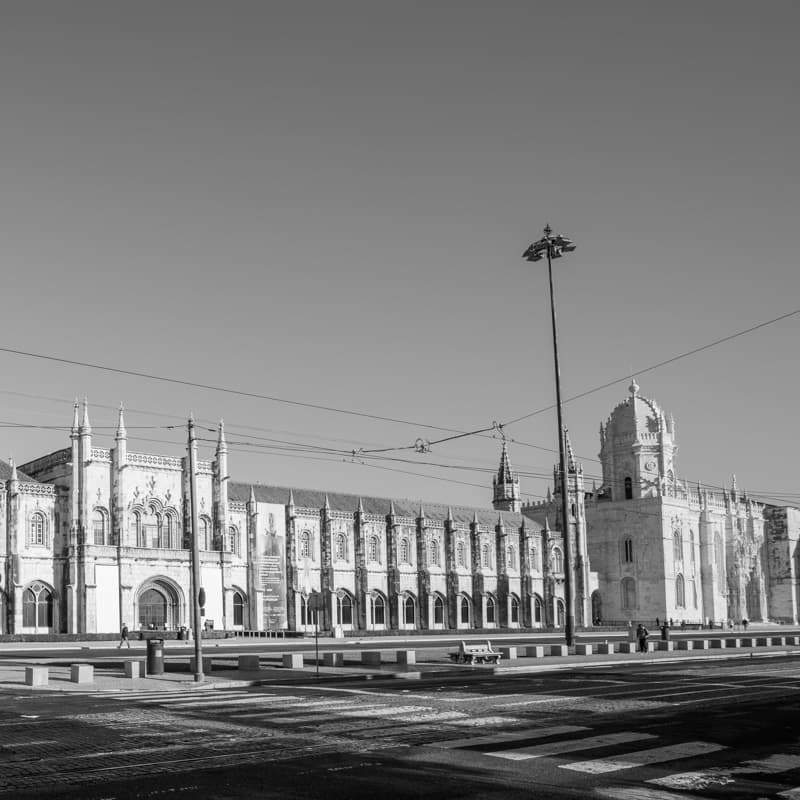
Mosteiro dos Jerónimos

Monastery • Lisboa, Lisboa

On the edge of the Tagus, Jerónimos Monastery seems to turn into stone the moment when Lisbon opened itself to the world. Commissioned by King Manuel the First at the end of the fifteenth century, beside Restelo, where ships and caravels set out, it was entrusted to the monks of Saint Jerome, who were meant to pray for the king and offer spiritual support to navigators. Work began in fifteen hundred and one and continued for about a century, leaving one of the finest examples of the Manueline style, exuberant yet precise, filled with royal, Christian and natural symbols. During a visit, it is worth slowing down in the sixteenth-century cloister and before the south portal, where the sculpture seems almost like lace in stone. In the church lie Vasco da Gama and Luís de Camões, a detail that deepens the monument’s bond with the country’s maritime and literary memory. Few places tell Portugal’s story with such clarity and beauty.

Praça do Comércio e Cais das Colunas4.7

Praça do Comércio e Cais das Colunas

Square • Lisboa, Lisboa

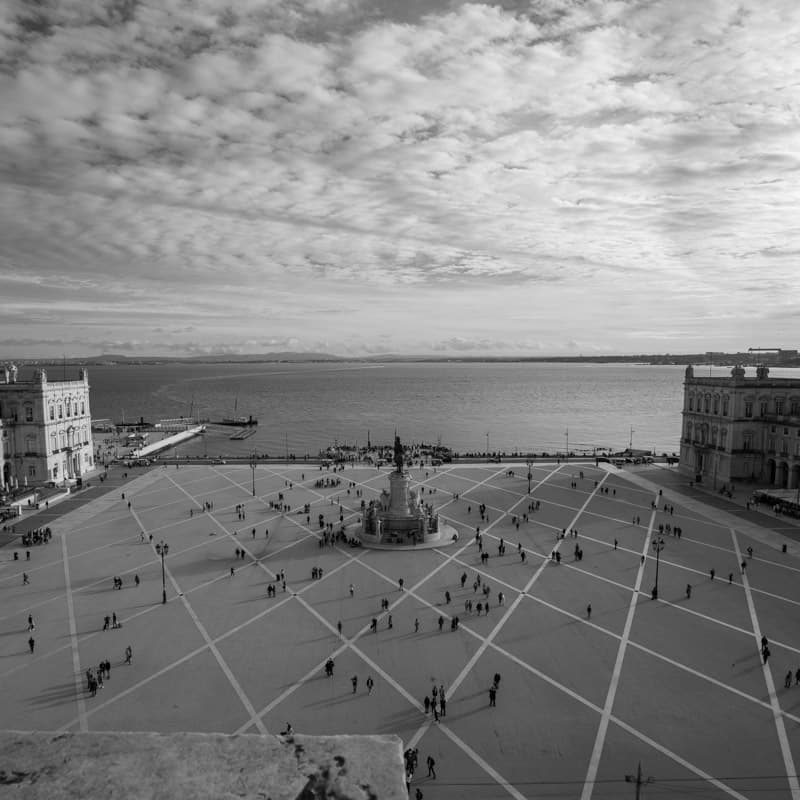
Few places explain Lisbon as clearly as Praça do Comércio and Cais das Colunas. Before the 1755 earthquake, the Ribeira Palace stood here; after the catastrophe, the Pombaline reconstruction turned the old Terreiro do Paço into a regular square open to the Tagus, expressing the capital’s new commercial and political role. The long arcades, the towers and the equestrian statue of King José the First give the whole ensemble the solemnity of a great urban stage, yet it is by the river that the place gains a different intensity. Cais das Colunas, conceived within this new bond between city and water, served as Lisbon’s ceremonial landing place for those arriving by river. Today, between the square’s luminous geometry, the broad horizon of the estuary and the steps that almost touch the Tagus, this ensemble still shows that Lisbon has always understood itself best when facing the river.

Padrão dos Descobrimentos4.6

Padrão dos Descobrimentos

Monument • Lisboa, Lisboa

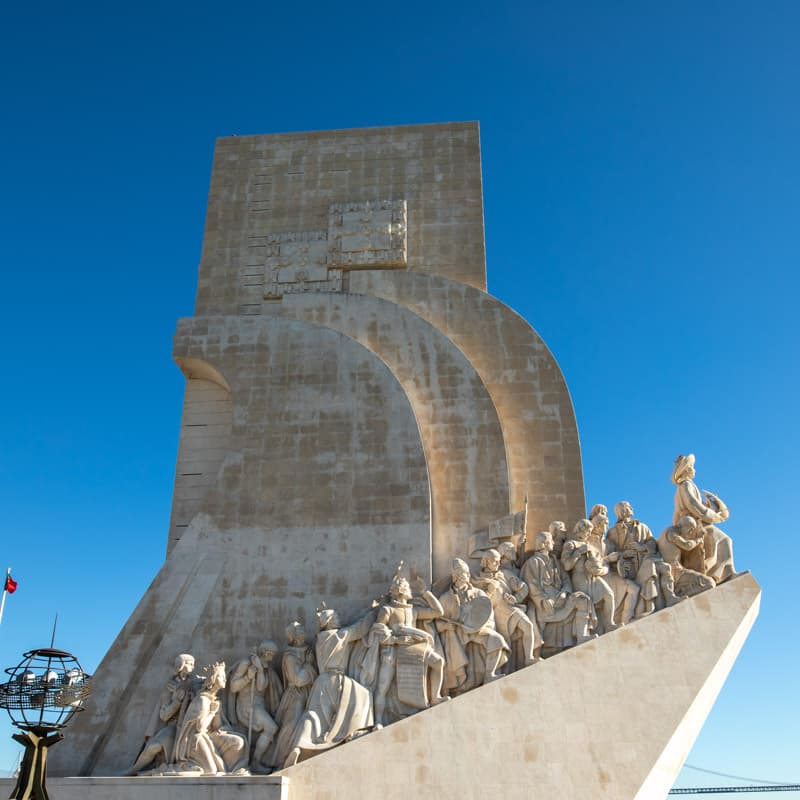
Facing the Tagus, the Monument to the Discoveries has the theatrical force of a ship ready to depart, yet it speaks as much about Portuguese memory in the twentieth century as about the voyages of the fifteenth and sixteenth centuries. It was first built as an ephemeral structure for the Portuguese World Exhibition of 1940 and rebuilt in 1960, for the fifth centenary of the death of Prince Henry the Navigator, the figure who advances at the prow of this stone caravel. Behind him come navigators, cartographers, missionaries and men of culture, in a sculptural procession conceived by Cottinelli Telmo and Leopoldo de Almeida. It is worth seeing the monument from a distance, to feel its scale and forward thrust, and then noticing the Compass Rose on the ground, a gift from South Africa. From the viewpoint, the panorama over Belém, the Tagus and the monumental riverfront helps explain why this is a place where landscape, history and memory meet with rare clarity.

Torre de Belém4.5

Torre de Belém

Monument • Lisboa, Lisboa

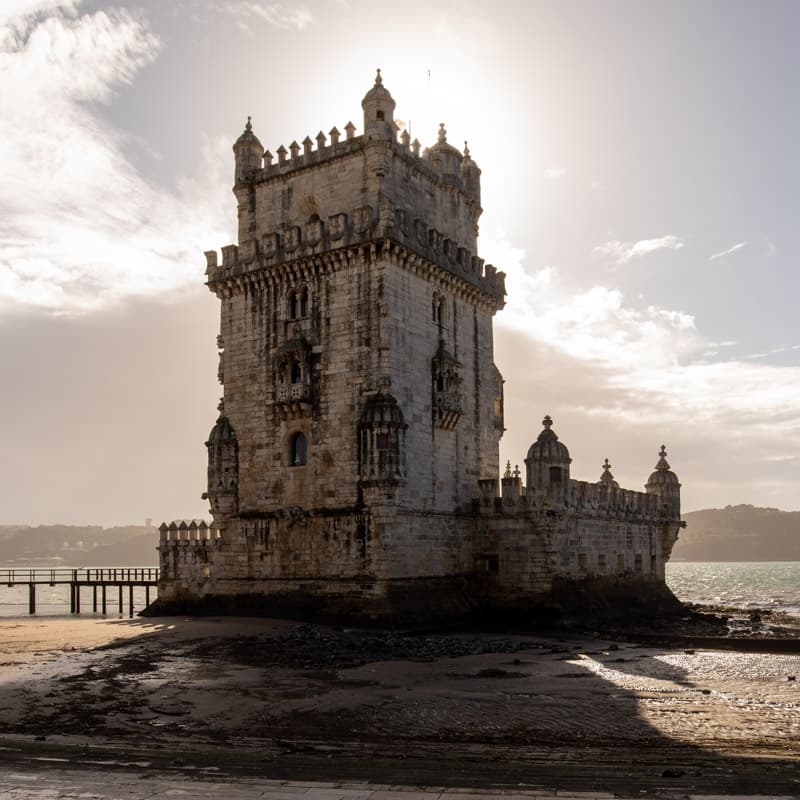
Belém Tower has the grace of a Manueline jewel and the firmness of a fortress built to guard the entrance to the Tagus. Raised in the reign of King Manuel the First, from 1514 onwards, and designed by Francisco de Arruda, it grew closely tied to the port of Lisbon, Jerónimos Monastery and the imagination of the Discoveries. Its form combines a medieval-looking tower with a modern bulwark, while the exterior is covered with ropes, knots, armillary spheres, crosses of the Order of Christ and other motifs that make the stone feel almost like lace. It is worth lingering over the balcony facing the river and one surprising detail: the small rhinoceros carved into one of the façades. From above, the Tagus and Belém come into sharper focus. It then becomes clear why this tower has become one of Lisbon’s great symbols and a UNESCO World Heritage site.

Panteão Nacional4.5

Panteão Nacional

Church • Lisboa, Lisboa

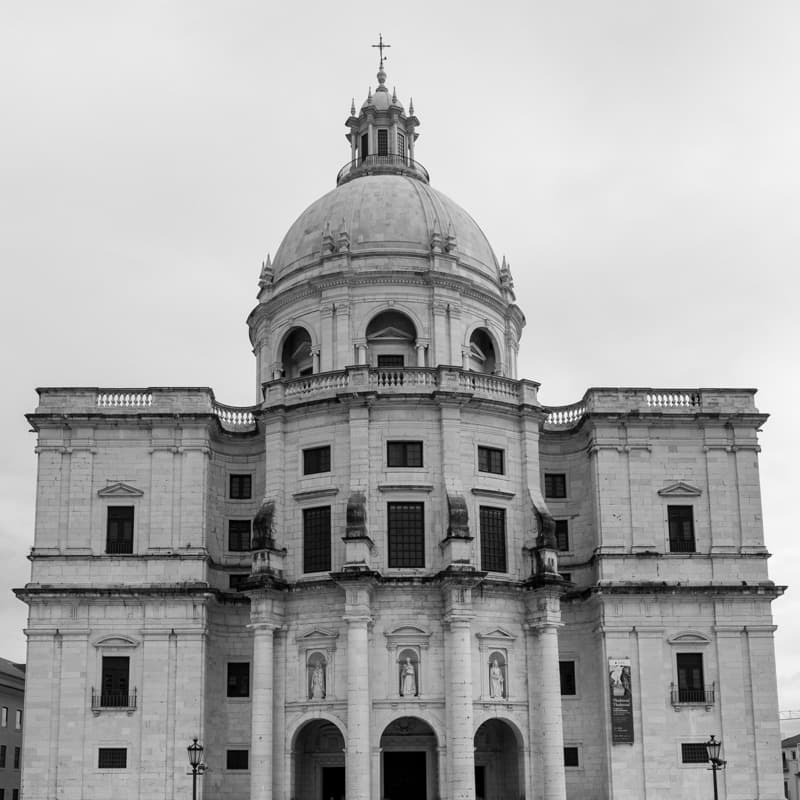
High above Santa Clara, the National Pantheon stands over Lisbon like a monument of stone memory. The building was originally intended to be the church of Santa Engrácia and began to rise in the late seventeenth century, to a design by João Antunes, but it took so long to be completed that it gave rise to the famous Portuguese expression “works of Santa Engrácia”, used for something that never seems to end. Only in the twentieth century was it adapted into the National Pantheon and finally completed, with its great dome and restored interior. Today, among coloured marbles, curved walls and a central space of striking scale, it honours major figures of Portuguese history and culture, including Almeida Garrett, Sophia de Mello Breyner Andresen and Amália Rodrigues. It is well worth climbing to the terrace, where the view over Alfama, the Tagus and Lisbon’s rooftops shows why this place feels both solemn and open to the city.

Elevador de Santa Justa4.1

Elevador de Santa Justa

Elevator • Lisboa, Lisboa

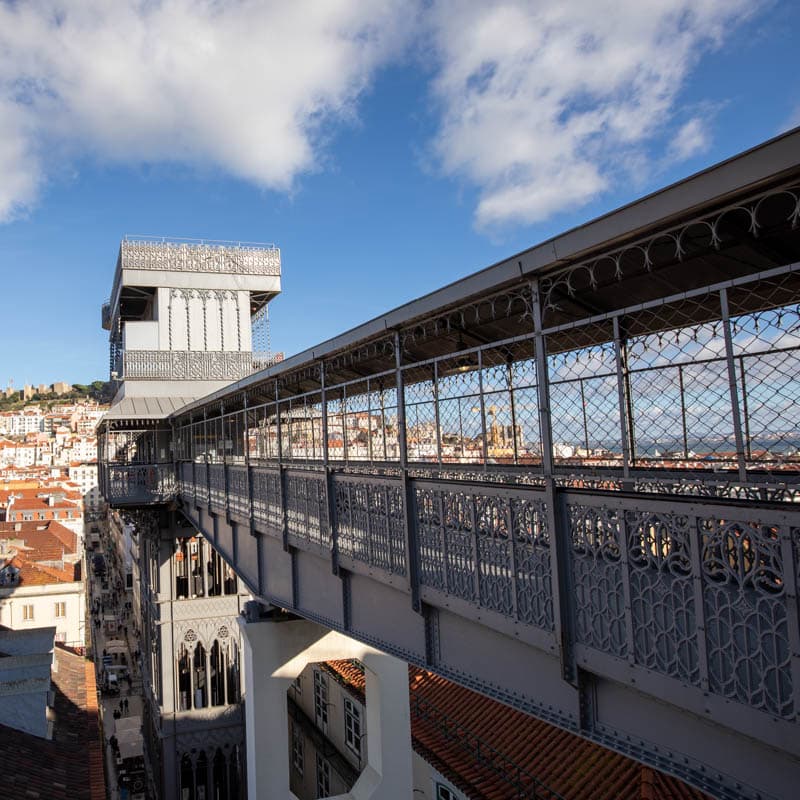
In the heart of Baixa, the Santa Justa Lift shows how Lisbon turned an urban problem into beauty. Opened in 1902 to overcome the steep difference in level between Rua do Ouro and Largo do Carmo, it was designed by Raoul Mesnier du Ponsard and first operated by steam before changing to electricity in 1907. Its iron structure, laced with neo-Gothic arches, makes it far more than a means of transport: it is a rare piece of Lisbon’s industrial architecture and the only vertical lift the city still preserves. During a visit, it is worth noticing the wood-lined cabins, the delicacy of the metal decoration and the suspended walkway leading to Carmo. From the top, among rooftops, ruins and hills, it becomes clear why this monument remains one of Lisbon’s most distinctive images.

Praça Dom Pedro IV4.6

Praça Dom Pedro IV

Square • Lisboa, Lisboa

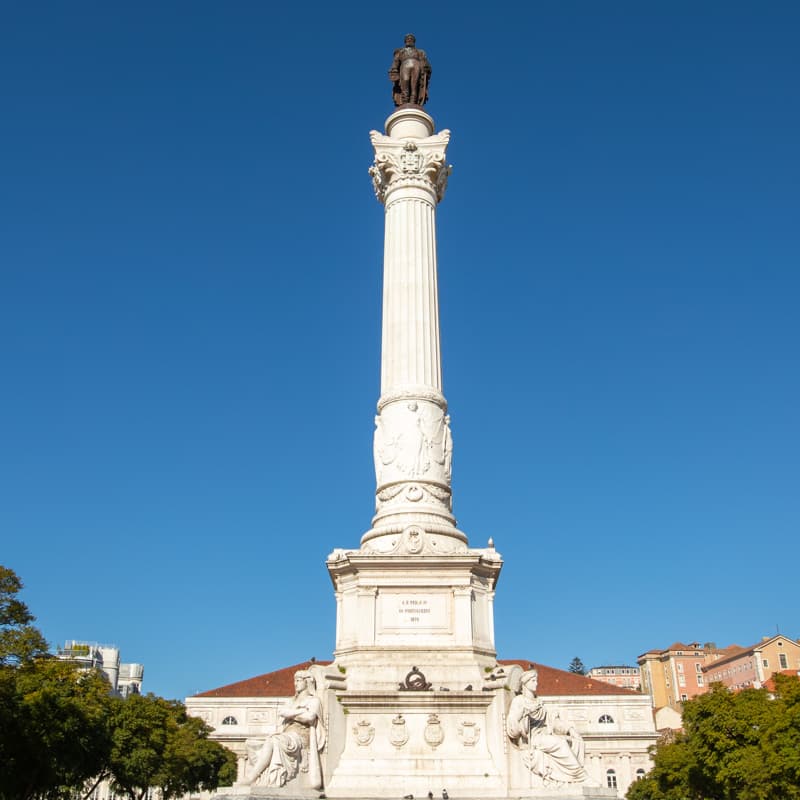
Few places sum up Lisbon’s public life as well as Praça Dom Pedro IV, which everyone still calls Rossio. For centuries it was a market, a stage for festivities, conspiracies and everyday encounters; after the earthquake of 1755, it took on the ordered shape that still structures the Baixa today. At its centre rises, since 1870, the column of D. Pedro IV holding the Constitutional Charter, as if the whole square were also a civic theatre. It is worth looking down at the pavement: the undulating pattern of the calçada, the “wide sea” of light and dark stone, has become one of Lisbon’s most recognisable images. There is also an almost invisible detail that makes the place even more fascinating: beneath Rossio, remains of the Roman circus of Olisipo have been identified. Between the murmur of cafés, the façade of the National Theatre and the flow of passers-by, this square remains an urban heart where Lisbon appears both ancient and vividly alive.

Aqueduto das Águas Livres4.5

Aqueduto das Águas Livres

Aqueduct • Lisboa, Lisboa

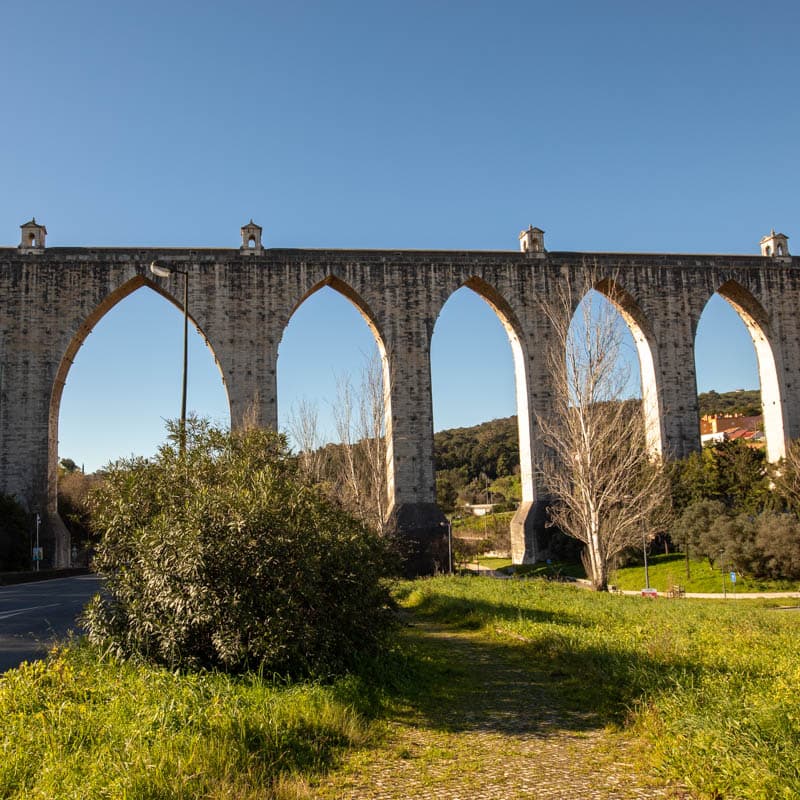
More than a monumental work, the Águas Livres Aqueduct is Lisbon’s grand answer to an old problem: the lack of water. Commissioned by King João V in 1731, the system brought into the city water collected in the Belas area and, throughout the eighteenth century, supplied reservoirs, galleries and fountains that transformed urban life. Its most famous stretch is the one crossing the Alcântara valley: 35 arches over 941 metres, with the largest pointed stone arch in the world, so solid that it survived the earthquake of 1755. During a visit, what impresses most is not ornament but the intelligence of the engineering and the feeling of walking suspended above Lisbon. Between the austerity of the stonework, the scale of the valley and the memory of water entering the capital, it becomes clear why this is one of the city’s most extraordinary monuments.

Museu de Lisboa - Teatro Romano4.4

Museu de Lisboa - Teatro Romano

Archaeological Site • Lisboa, Lisboa

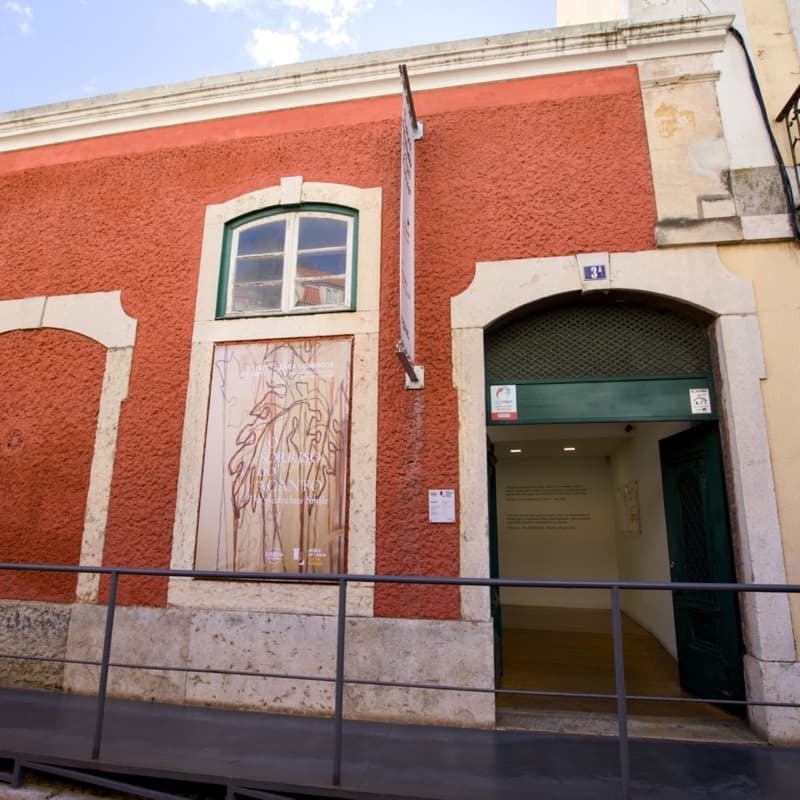
The Museu de Lisboa - Teatro Romano reveals, on the slope of São Jorge Castle, one of the great remains of ancient Felicitas Iulia Olisipo. The theatre was built in the time of Emperor Augustus and remodelled in AD 57, during Nero’s rule. It is estimated to have held around four thousand spectators, a sign of the public importance of performances in the Roman city. Abandoned in the 4th century, it remained buried until 1798, when the ruins emerged during the reconstruction of Lisbon after the 1755 Earthquake. Only in the second half of the 20th century did the monument begin to be studied again through systematic archaeological campaigns. The present route brings together an exhibition area, an archaeological field and the ruins of the theatre, where parts of the orchestra, seating, stage front and stage can still be recognised. Between excavated stone and the urban fabric, the museum reveals a Lisbon older than the city’s own medieval memory.

Galerias Romanas da Rua da Prata4.5

Galerias Romanas da Rua da Prata

Museum • Lisboa, Lisboa

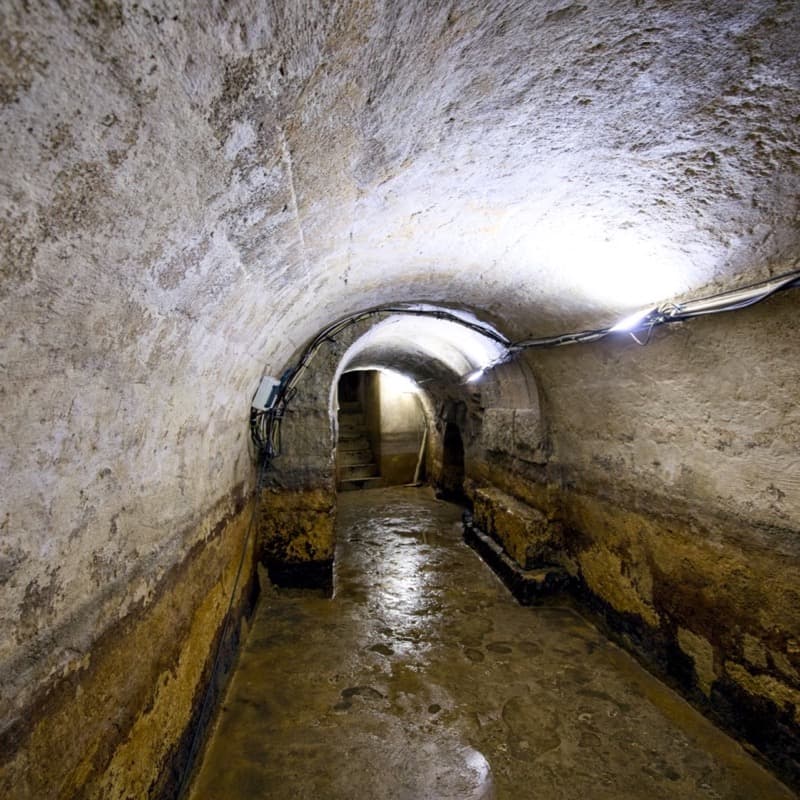
The Roman Galleries of Rua da Prata lie hidden beneath Lisbon’s Baixa, between Rua da Prata and Rua da Conceição, as one of the most discreet traces of ancient Olisipo. Dating from the 1st century AD, they are now interpreted as a cryptoporticus: a vaulted stone structure created to form a stable platform on which large buildings could stand. Their presence was identified in 1771, during the Pombaline reconstruction that followed the 1755 earthquake. Flooded by underground water, the galleries maintain a physical relationship with the damp ground of the riverside city. Inside, corridors, vaults and masonry walls reveal the technical scale of Roman construction. Beneath the regular grid of modern Lisbon, this space preserves an ancient, silent and essential layer of the city.

Showing 1-12 of 12

Discover by category

Take the LxDiscover App with you

Explore Portugal with a cultural guide for monuments, museums, gardens, palaces, viewpoints, and historic places in Lisbon, Porto, Sintra, and other regions.

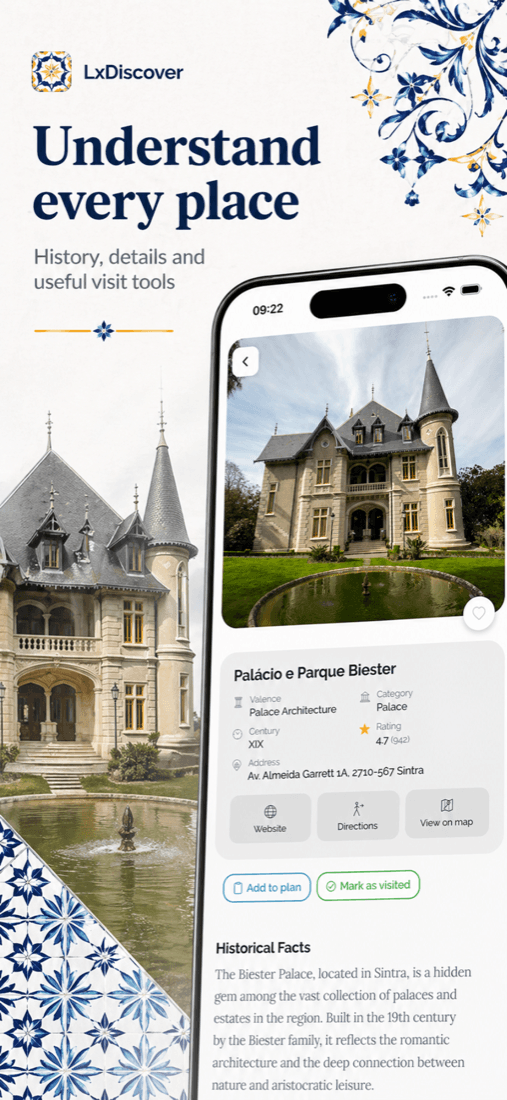
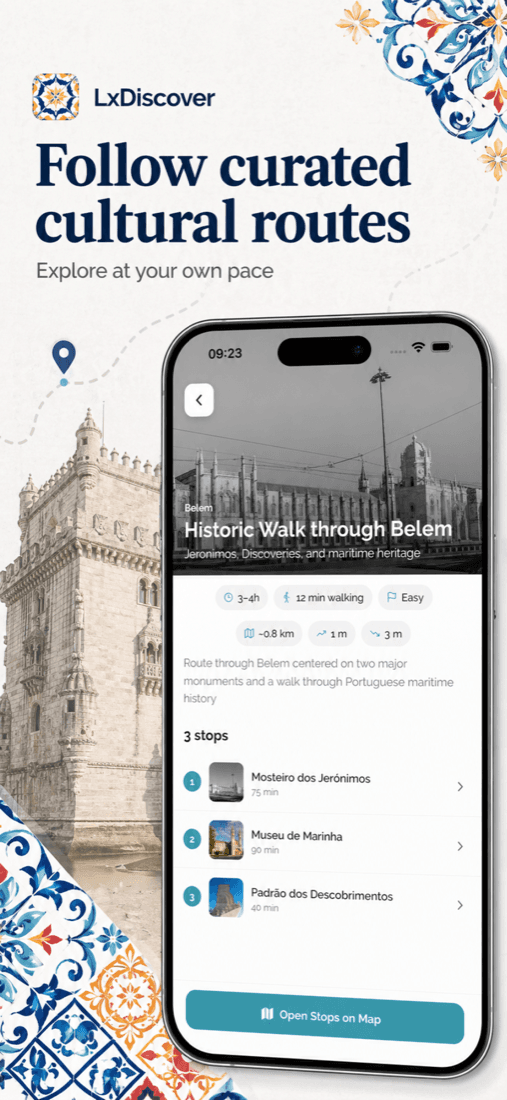
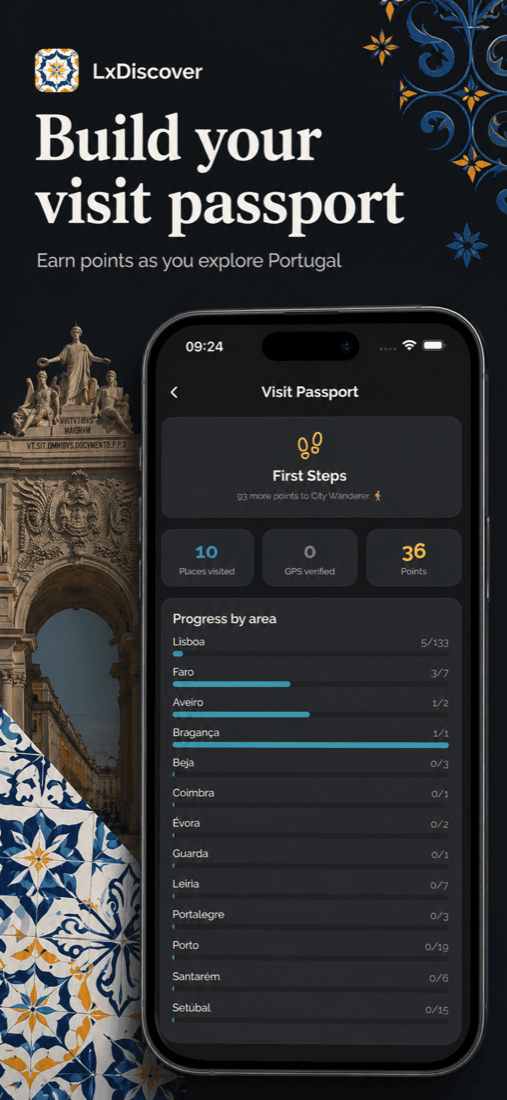
Use the map, follow cultural routes, read editorial context, save places, and track your visits with the visit passport.

Free features

  • Interactive map to discover places of interest
  • Detailed information about monuments, museums, and cultural sites
  • Favorites for the places you want to visit
  • Selected routes to start exploring

Premium subscription

  • Curated routes with ordered stops, duration, and difficulty
  • Thematic collections with editorial context for each area
  • Visit passport for progress, visited places, and achievements
  • Advanced map, planning, and proximity alert tools
LxDiscover map screen
LxDiscover routes screen
LxDiscover visit passport screen