
Places

Cultural places in Portugal

Browse LxDiscover places across monuments, museums, palaces, viewpoints, gardens, churches and historic sites. Use this hub to start planning, then open the app for map-based routes, saved places and short cultural audio guides.

14 places

Places in Lisboa

Explore on the map
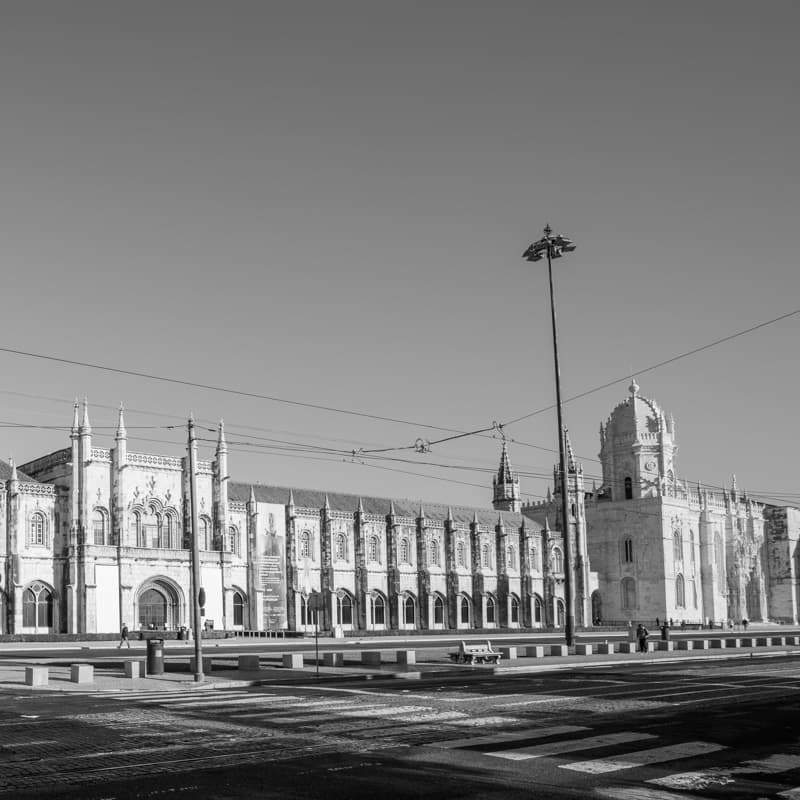
Mosteiro dos Jerónimos4.5

Mosteiro dos Jerónimos

Monastery • Lisboa, Lisboa

On the edge of the Tagus, Jerónimos Monastery seems to turn into stone the moment when Lisbon opened itself to the world. Commissioned by King Manuel the First at the end of the fifteenth century, beside Restelo, where ships and caravels set out, it was entrusted to the monks of Saint Jerome, who were meant to pray for the king and offer spiritual support to navigators. Work began in fifteen hundred and one and continued for about a century, leaving one of the finest examples of the Manueline style, exuberant yet precise, filled with royal, Christian and natural symbols. During a visit, it is worth slowing down in the sixteenth-century cloister and before the south portal, where the sculpture seems almost like lace in stone. In the church lie Vasco da Gama and Luís de Camões, a detail that deepens the monument’s bond with the country’s maritime and literary memory. Few places tell Portugal’s story with such clarity and beauty.
Basílica da Estrela4.6

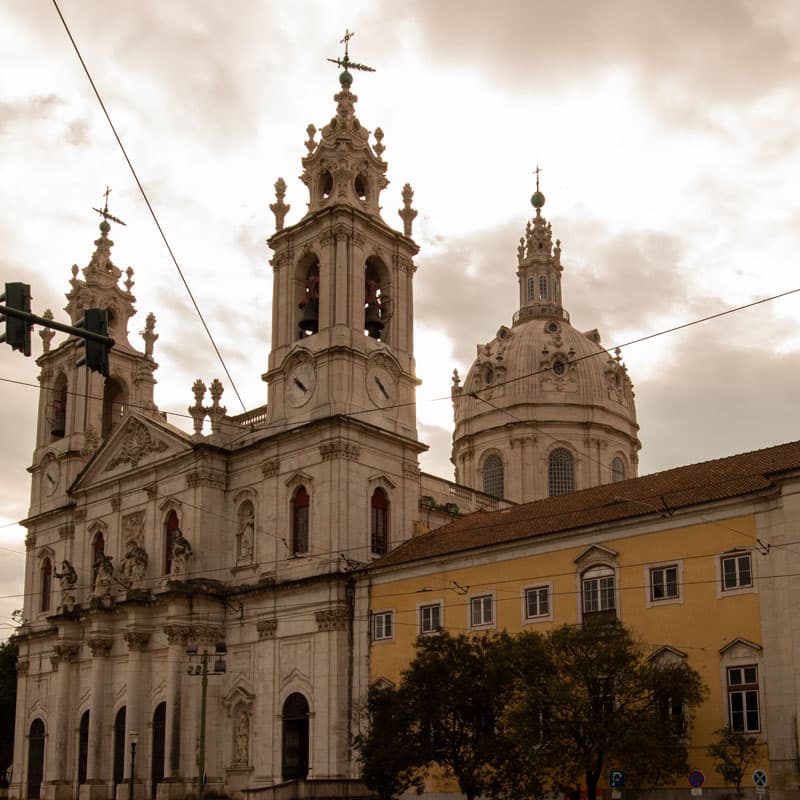
Basílica da Estrela

Church • Lisboa, Lisboa

The Basilica da Estrela rises above the hill as a serene, luminous presence, one of those places that seem to shape Lisbon’s skyline. Born from a vow made by Queen Maria the First in the late eighteenth century, it became the first church in the world dedicated to the Sacred Heart of Jesus. Inside, its grandeur never feels heavy: the coloured marbles, the broad nave and the light falling from the dome create a clear, almost musical solemnity. It is worth pausing at the queen’s tomb and at one of the basilica’s most unexpected treasures, the nativity scene by Machado de Castro, made up of hundreds of terracotta and cork figures, where the sacred and everyday life meet with remarkable delicacy. And if you climb to the dome, the visit takes on another scale: Lisbon opens out all around you, as if the whole city were answering the harmony of this place.

Panteão Nacional4.5

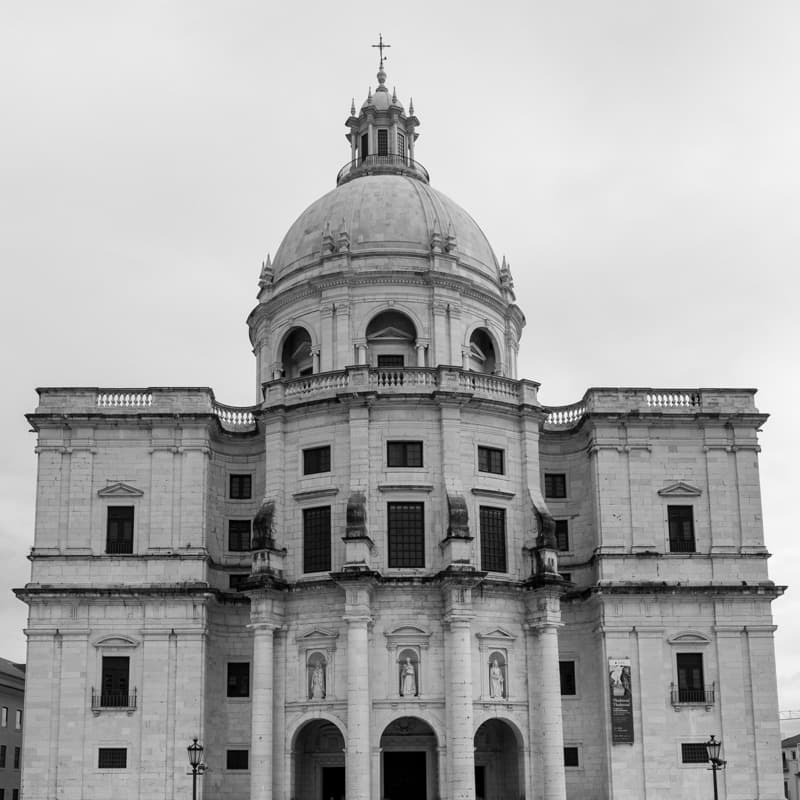
Panteão Nacional

Church • Lisboa, Lisboa

High above Santa Clara, the National Pantheon stands over Lisbon like a monument of stone memory. The building was originally intended to be the church of Santa Engrácia and began to rise in the late seventeenth century, to a design by João Antunes, but it took so long to be completed that it gave rise to the famous Portuguese expression “works of Santa Engrácia”, used for something that never seems to end. Only in the twentieth century was it adapted into the National Pantheon and finally completed, with its great dome and restored interior. Today, among coloured marbles, curved walls and a central space of striking scale, it honours major figures of Portuguese history and culture, including Almeida Garrett, Sophia de Mello Breyner Andresen and Amália Rodrigues. It is well worth climbing to the terrace, where the view over Alfama, the Tagus and Lisbon’s rooftops shows why this place feels both solemn and open to the city.

Museu Arqueológico do Carmo4.5

Museu Arqueológico do Carmo

Convent • Lisboa, Lisboa

Few places in Lisbon bring together ruin and memory as eloquently as the Carmo Archaeological Museum. Housed in the former church of the convent founded by Nuno Álvares Pereira at the end of the fourteenth century, it preserves the great Gothic arches left open to the sky since the 1755 earthquake, making it one of the city’s most striking witnesses to the disaster. In 1864, Joaquim Possidónio Narciso da Silva created here the first museum of art and archaeology in Portugal, with the aim of saving endangered works and fragments of heritage. The result is a singular museum, where medieval tombs, Roman inscriptions, objects from the Castro de Vila Nova de São Pedro and pre-Columbian mummies coexist beneath the same wounded arches. Between the silence of the stone and the strangeness of the collection, Carmo seems to preserve more than objects: it preserves the very idea of Lisbon as a city shaped by loss, survival and reinvention.

Sé de Lisboa4.4

Sé de Lisboa

Church • Lisboa, Lisboa

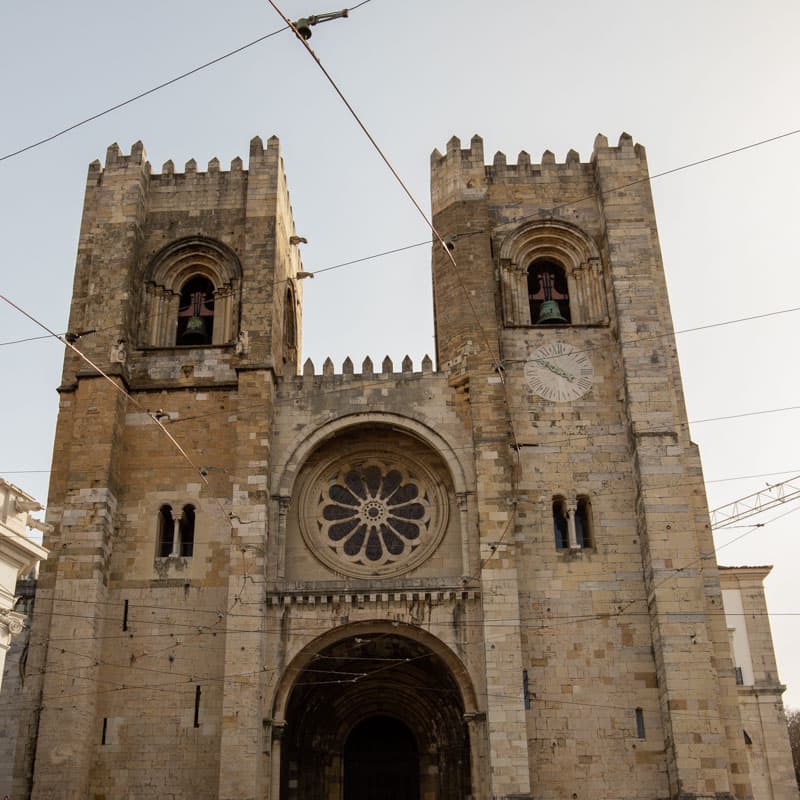
Between Alfama and the Baixa, Lisbon Cathedral seems to gather whole centuries of the city into a single building. Construction began in 1147, just after the Christian conquest of Lisbon, and the Romanesque church changed over time with the same upheavals that shaped the capital itself. To the Gothic cloister commissioned by King Dinis was added, in the fourteenth century, the ambulatory chevet ordered by Afonso IV to receive pilgrims coming to venerate the relics of Saint Vincent, a rare solution that still sets the cathedral apart. The 1755 earthquake destroyed important parts of the complex, and the restorations of the twentieth century gave it the Neo-Romanesque appearance we know today, with the rose window and twin towers dominating the square. Inside, medieval stone lives alongside traces of other periods; and in the baptistry, one is reminded that Saint Anthony was baptised here, a detail that links the Sé not only to Lisbon’s history, but also to its most intimate devotion.

Museu Igreja de São Roque4.5

Museu Igreja de São Roque

Church • Lisboa, Lisboa

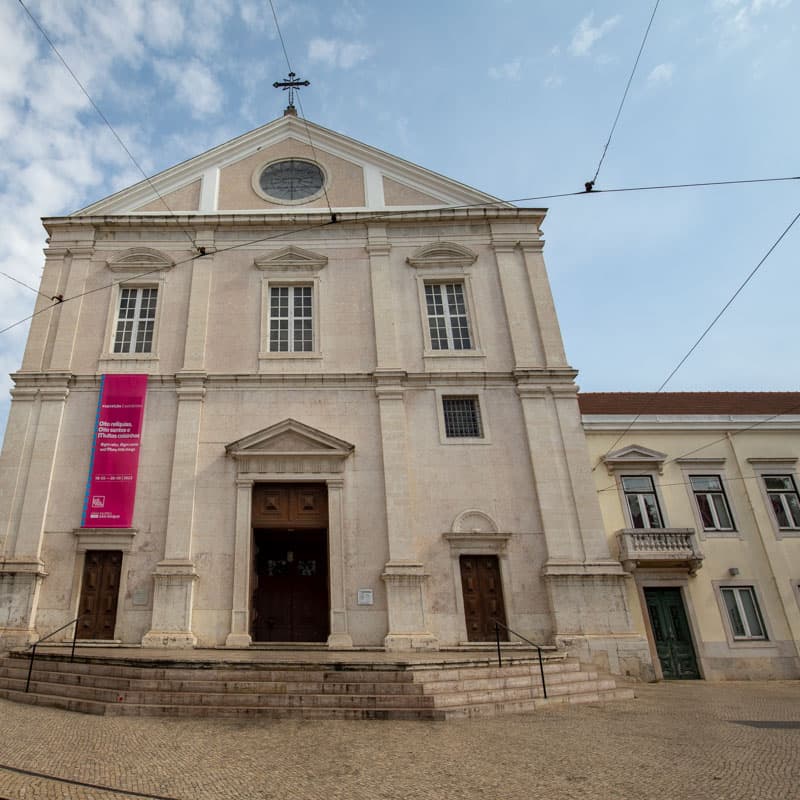
In Bairro Alto, the Church and Museum of São Roque show how a sober façade can conceal one of Lisbon’s greatest artistic surprises. Linked to the former Jesuit professed house, the church was the first Jesuit church in Portugal and one of the rare buildings in the city to survive the 1755 earthquake almost intact. Its single nave, designed for preaching, opens onto richly decorated side chapels filled with Mannerist tiles, painting and gilded woodwork. The most famous is the Chapel of St John the Baptist, commissioned by King João V in Rome, blessed by Pope Benedict XIV and brought to Lisbon in three ships, in an episode that gives the site an unexpectedly European scale. Next door, the São Roque Museum, founded in 1905, extends the visit with sacred art, objects from Asia and the treasure connected to the chapel, showing how faith, power and global circulation also shaped this Lisbon hill.

Convento de São Pedro de Alcântara4.6

Convento de São Pedro de Alcântara

Convent • Lisboa, Lisboa

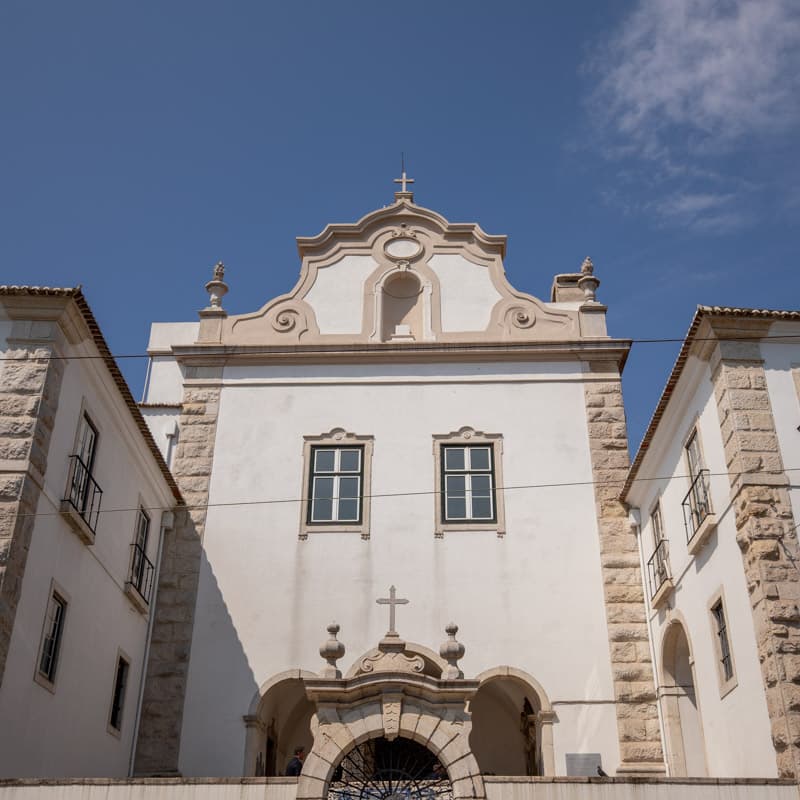
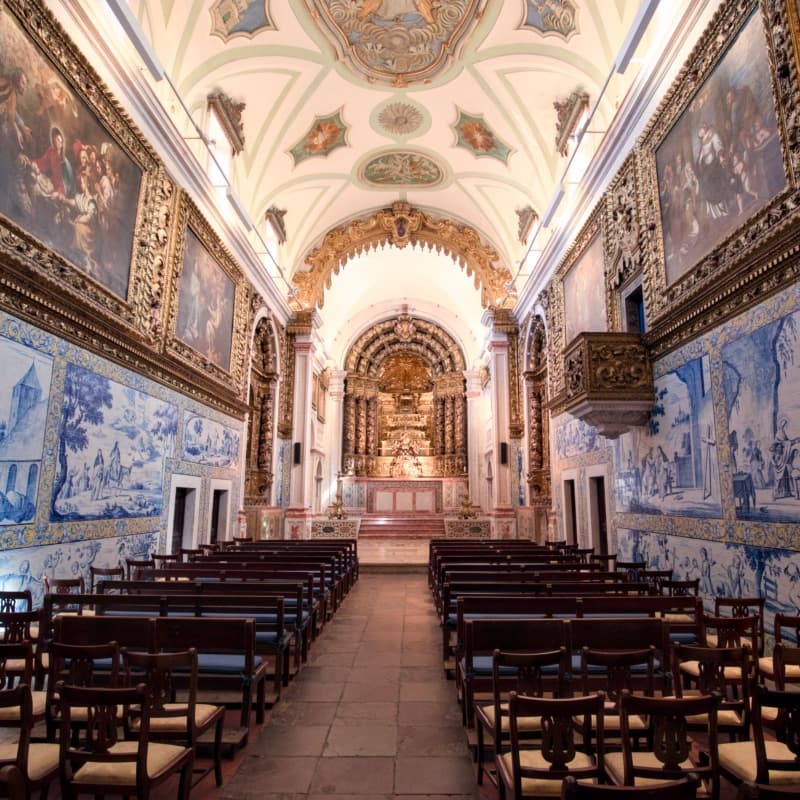
In Bairro Alto, the Convent of São Pedro de Alcântara preserves the memory of a war vow turned into architecture. It was founded in the seventeenth century by António Luís de Meneses, first Marquis of Marialva, after the Battle of Montes Claros, and entrusted to the Arrábidos, the most austere branch of the Franciscan family. The 1755 earthquake destroyed almost the whole complex, but the rebuilding begun in 1783 left a church where the Baroque speaks through gilded woodwork, monochrome eighteenth-century tiles and ceiling frescoes. There is also a rarer surprise: the Chapel of the Lencastres, added to the complex between 1686 and 1692, celebrated for its refined decoration and polychrome marbles. After the extinction of the religious orders, the convent passed to the Santa Casa da Misericórdia de Lisboa, which gave it new uses. Between courtyards, stairways and silence, the building shows how Lisbon rebuilt its memory without freezing it in place.

Igreja de São Vicente de Fora4.6

Igreja de São Vicente de Fora

Convent • Lisboa, Lisboa

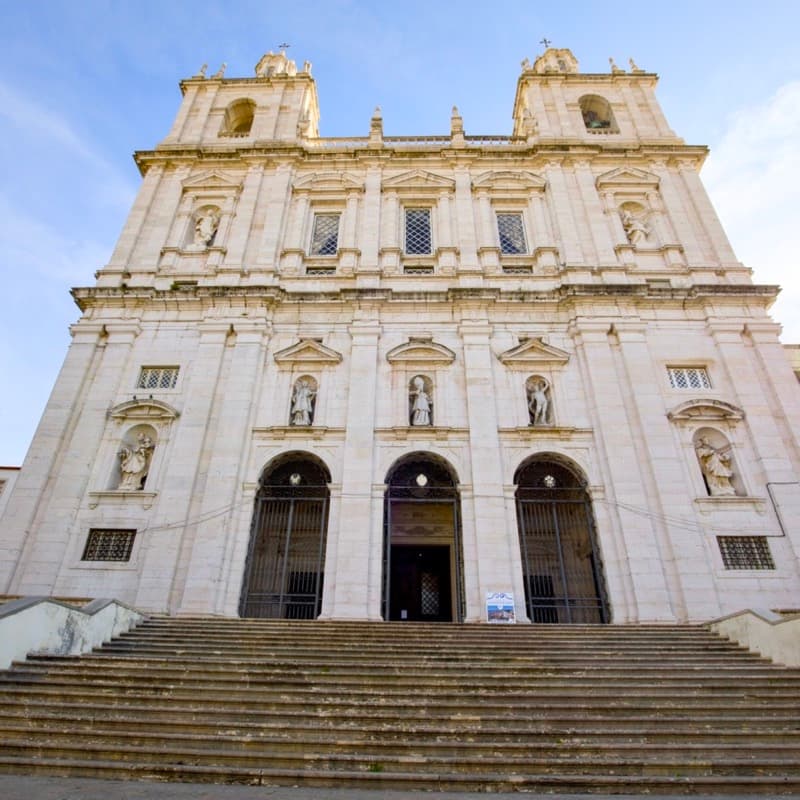
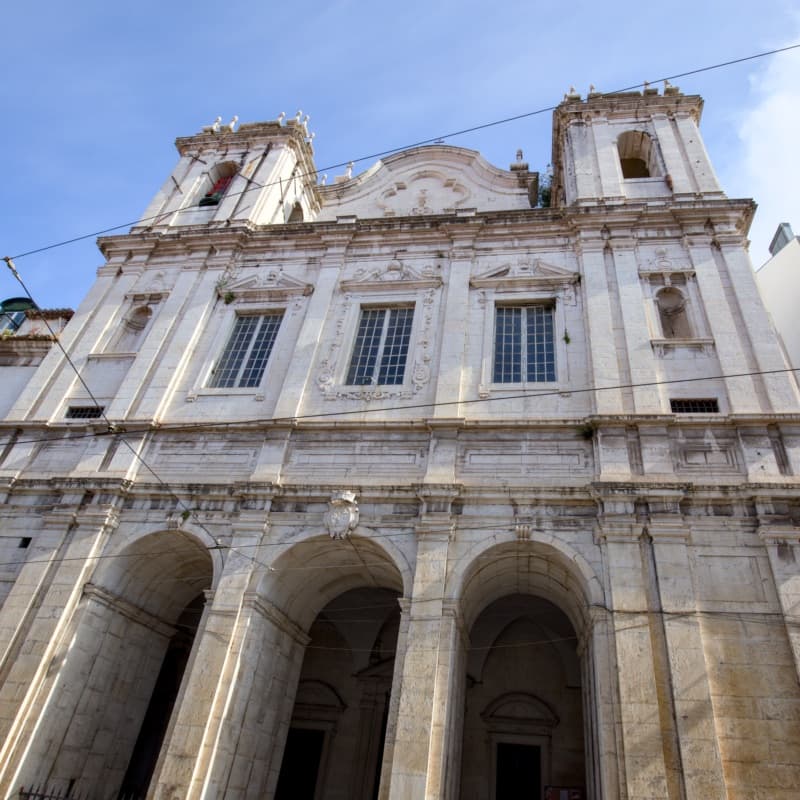
In Largo de São Vicente, in Lisbon, the Church of São Vicente de Fora stands as one of the great architectural statements of the Philippine period. The origin of the complex dates back to 1147, when King Afonso Henriques ordered the foundation, outside the city walls, of a monastery dedicated to Saint Vincent, after the conquest of the city. The reconstruction of the church and monastery advanced at the beginning of the reign of Philip I, with work associated with Juan de Herrera, Filipe Terzi and Baltazar Álvares. The sober façade, with two towers integrated into the frontispiece, announces an interior with a single nave, transept and deep chancel, covered by a barrel vault with coffers. The crossing lost its dome in the 1755 earthquake. In the 17th and 18th centuries, the complex received inlaid marbles and tile panels. Classified as a National Monument since 1910, the church preserves a severe and monumental presence on the hill of São Vicente.

Igreja da Graça4.6

Igreja da Graça

Church • Lisboa, Lisboa

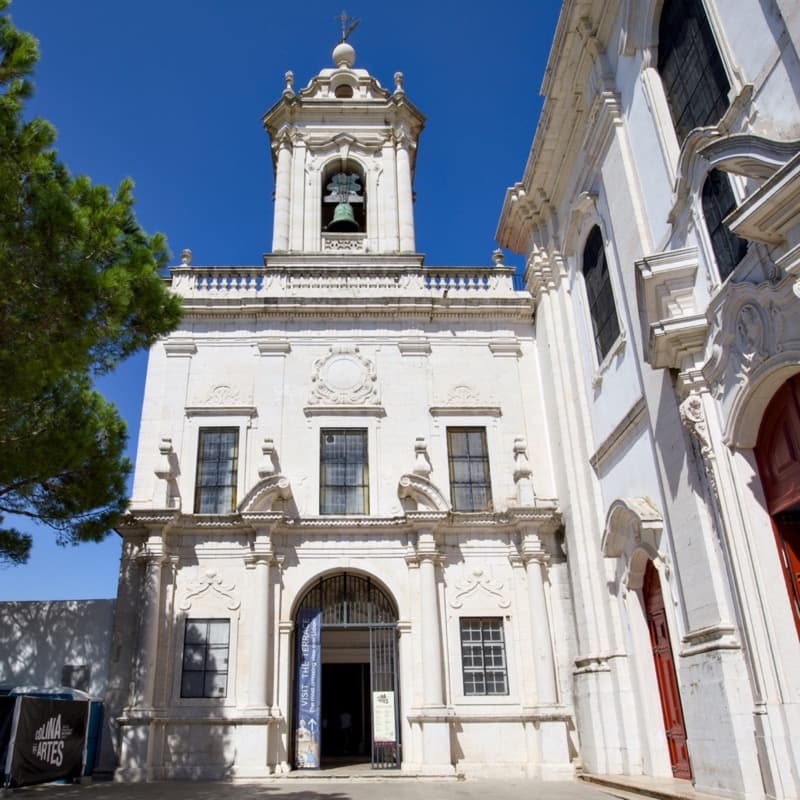
High on Graça hill, in Lisbon, the Church of Graça and the former Convent of Nossa Senhora da Graça preserve a history that spans more than seven centuries. Construction of the convent began in 1271, for the shod hermit friars of Saint Augustine, under the patronage of King Afonso III. The complex was rebuilt in the 16th century and suffered severe ruin in the 1755 earthquake, before being reconstructed with the late-Baroque character that marks the church today. The double façade brings together the church and the former convent entrance, above which rises the bell tower, dated 1738. Inside, the Rococo gilded-wood altars, tiles from several centuries and 18th-century sculptures stand out. The sacristy preserves Baroque decoration, the tomb of D. Mendo de Fóios and the allegorical ceiling by Pedro Alexandrino de Carvalho. The complex is classified as a National Monument.

Igreja de Santos-o-Velho4.5

Igreja de Santos-o-Velho

Church • Lisboa, Lisboa

The Church of Santos-o-Velho, in Lisbon, holds a very ancient religious memory, associated with the Holy Martyrs Veríssimo, Máxima and Júlia. Municipal sources refer to remains on the site of a presumed Late Roman temple from the 4th century; in 1147, after the conquest of the city, King Afonso Henriques ordered a new church to be built there. The parish was established in 1566 by Cardinal Henrique, and the church was built during the reign of King Sebastião. Its present appearance results mainly from reconstructions carried out in the 17th and 19th centuries. The façade, flanked by two bell towers, opens through a portal with a relief of the martyrs and leads to a galilee. Inside the single nave, the false wooden barrel vault stands out, decorated with 72 painted and gilded panels on the Eucharist. Side chapels, a choir resting on corbels and a stucco chancel complete a space where devotion, memory and art overlap in discreet layers.

Igreja de Nossa Senhora da Conceição Velha4.6

Igreja de Nossa Senhora da Conceição Velha

Church • Lisboa, Lisboa

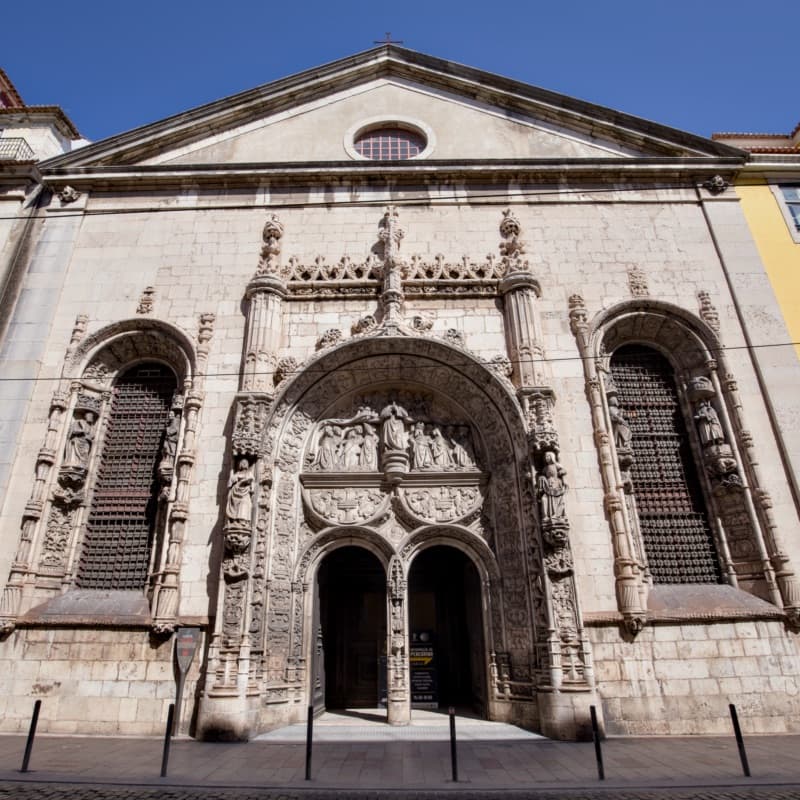
The Church of Nossa Senhora da Conceição Velha, in Lisbon, concentrates the memory of several churches in a single façade. The present building was born from the Pombaline reconstruction of the former Church of the Misericórdia, destroyed by the 1755 earthquake. That church had been the seat of the country’s first Misericórdia, a confraternity instituted in 1498 on the initiative of Queen Leonor and Frei Miguel Contreiras. In the 1770 rebuilding, led by Francisco António Ferreira with the collaboration of Honorato José Correia, surviving elements of the Manueline construction were incorporated. For this reason, the exterior preserves a richly ornamented portal, with a mullioned arch, armillary sphere, cross of the Order of Christ and a tympanum where Our Lady of Mercy shelters kneeling figures beneath her mantle. Inside the single nave, side chapels, tiles, 18th-century stucco and gilded woodwork extend the dialogue between devotion, catastrophe and reconstruction.

Igreja de São Domingos4.6

Igreja de São Domingos

Church • Lisboa, Lisboa

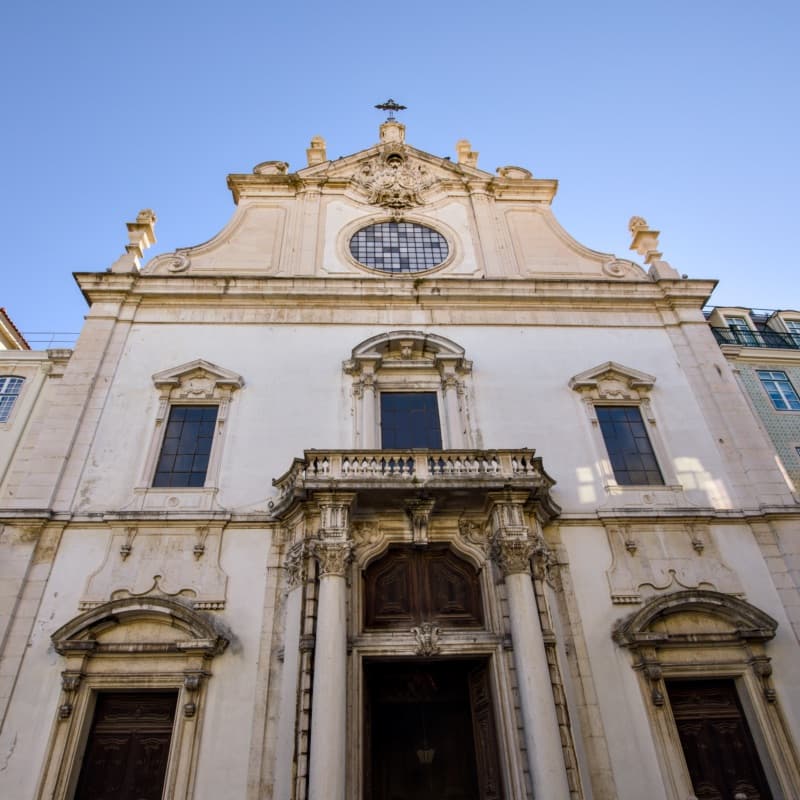
The Church of São Domingos, in Lisbon, is a place where history can be seen in stones marked by fire. The first stone was laid in 1241, in the former Dominican convent, and the building passed through successive building campaigns. Classified as a National Monument since 1918, it saw its chancel reformed in 1748 by João Frederico Ludovice; this would be the area spared by the 1755 earthquake. The later reconstruction, associated with Manuel Caetano de Sousa, incorporated the portal and balcony that came from the Royal Chapel of the Ribeira Palace. The Baroque church, with a Latin-cross plan and a single nave, preserves an interior scale marked by monumental columns and the polychromy of its marbles. On 13 August 1959, a fire destroyed much of the interior. Reopened in 1994, it keeps those marks visible, turning loss into material memory.

Convento dos Cardaes4.7

Convento dos Cardaes

Convent • Lisboa, Lisboa

The Convent of Nossa Senhora da Conceição dos Cardaes, in Lisbon, was founded in 1681 by D. Luísa de Távora to house Discalced Carmelite nuns. Its history has crossed the city with little interruption: the 1755 earthquake caused little damage to the structure, allowing its seventeenth-century layout to be preserved. The sober exterior prepares a striking contrast with the interior, where the nave brings together gilded woodcarving, paintings and blue-and-white Dutch tile panels, signed by Jan van Oort of Amsterdam, showing episodes from the life of Saint Teresa of Ávila. In the chancel, the polychrome marble inlays, attributed to João Antunes, give the space depth and brilliance. After the death of the last Carmelite nun, the convent came to serve the Associação Nossa Senhora Consoladora dos Aflitos. Still today it is a monument, museum and inhabited home, linking Baroque art, religious memory and social mission.

Igreja de Santa Catarina4.7

Igreja de Santa Catarina

Church • Lisboa, Lisboa

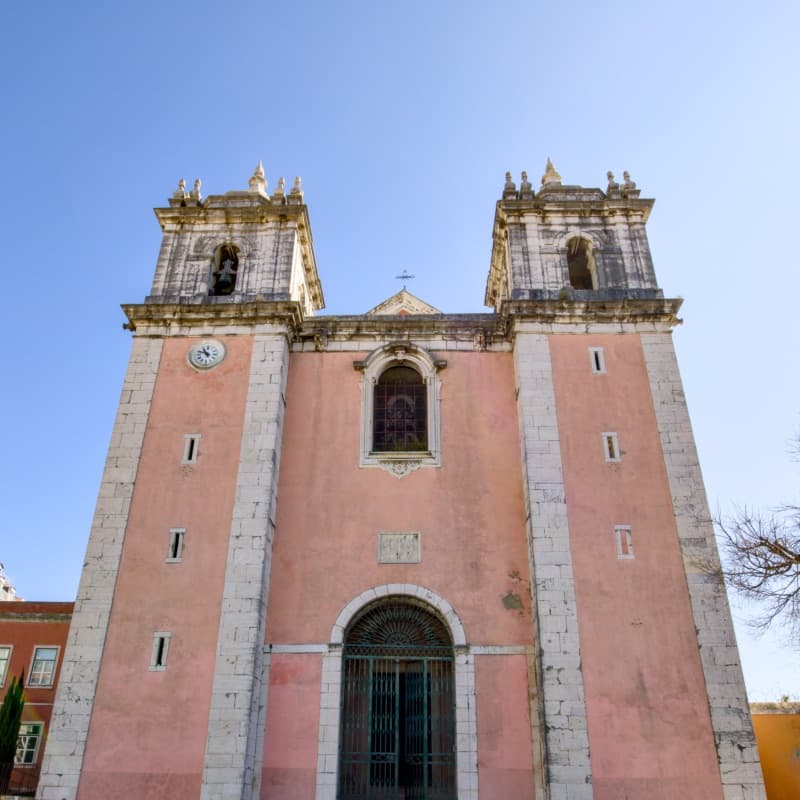
The Church of Santa Catarina, in Lisbon, was founded in 1654 in connection with the religious community of São Paulo da Serra de Ossa, beside the former Convent of the Paulists. First associated with the Blessed Sacrament, it came under the invocation of Saint Catherine in the nineteenth century, when the parish seat was transferred to this complex. Classified as a National Monument since 1918, it brings together Baroque and Rococo elements. The façade is arranged in three sections, with a triple arcade, a curved pediment and two bell towers decorated with balusters. Inside, the single nave leads to the chancel, where the Johannine gilded carving of the high altar stands out. The stuccowork by João Grossi, the side chapels, the carved wooden pulpits and the Portuguese organ complete a space in which convent architecture, parish devotion and artistic heritage remain closely linked.

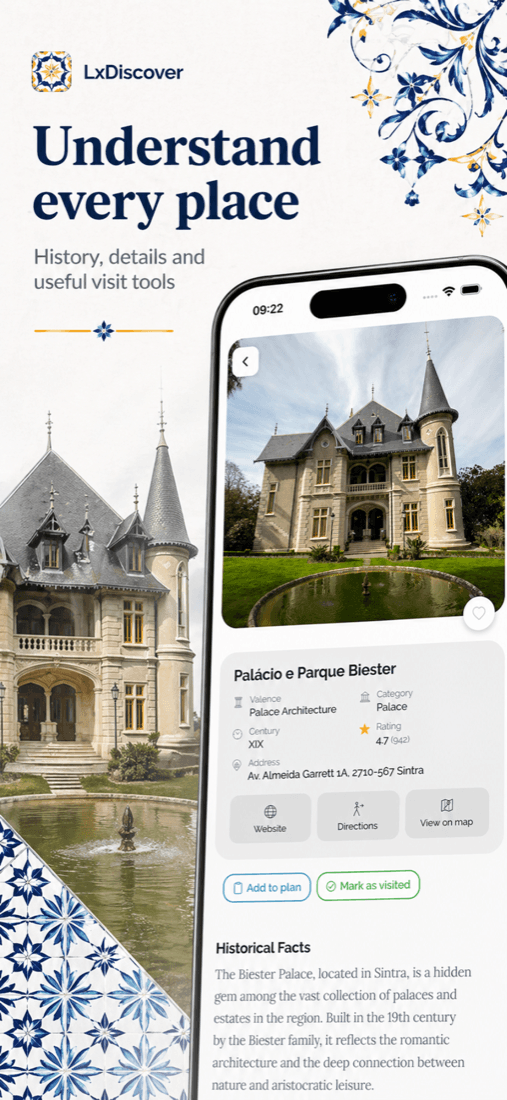
Get the app

Take LxDiscover with you

Explore Portugal with a cultural guide for monuments, museums, gardens, palaces, viewpoints, and historic places in Lisbon, Porto, Sintra, and other regions.

Use the map, follow cultural routes, read editorial context, save places, and track your visits with the visit passport.

Free features

  • Interactive map to discover places of interest
  • Detailed information about monuments, museums, and cultural sites
  • Favorites for the places you want to visit
  • Selected routes to start exploring

Premium subscription

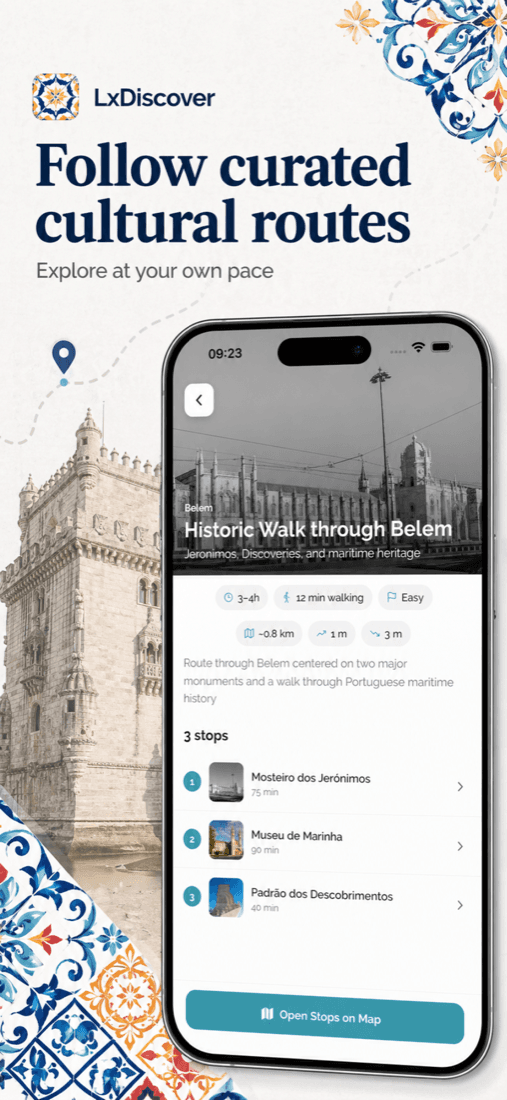
  • Curated routes with ordered stops, duration, and difficulty
  • Thematic collections with editorial context for each area
  • Visit passport for progress, visited places, and achievements
  • Advanced map, planning, and proximity alert tools
LxDiscover map screen
LxDiscover routes screen
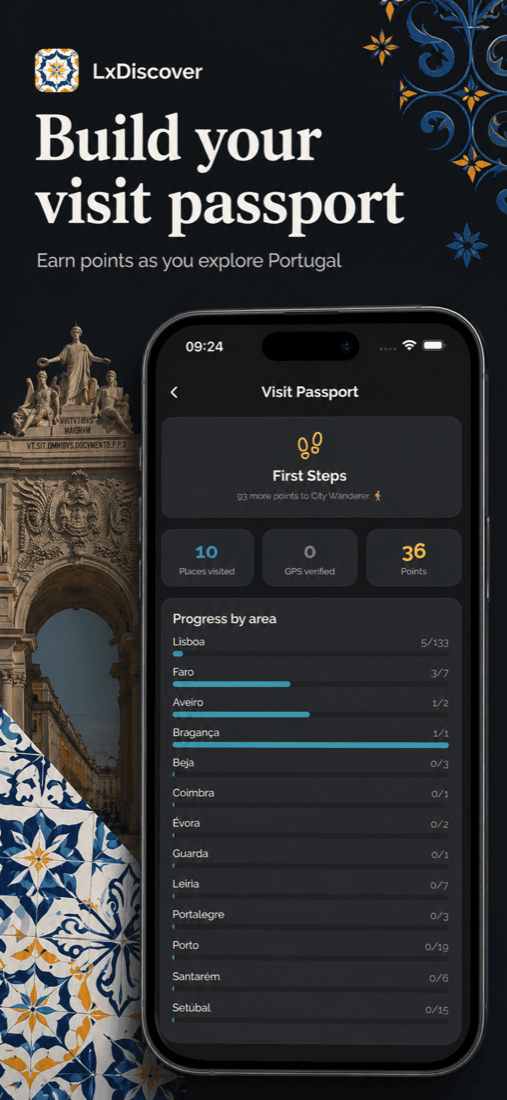
LxDiscover visit passport screen