Places

Cultural places in Portugal

Browse LxDiscover places across monuments, museums, palaces, viewpoints, gardens, churches and historic sites. Use this hub to start planning, then open the app for map-based routes, saved places and short cultural audio guides.

203 places

Featured cultural places

Explore on the map
Jardins do Palácio Marquês de Pombal4.7

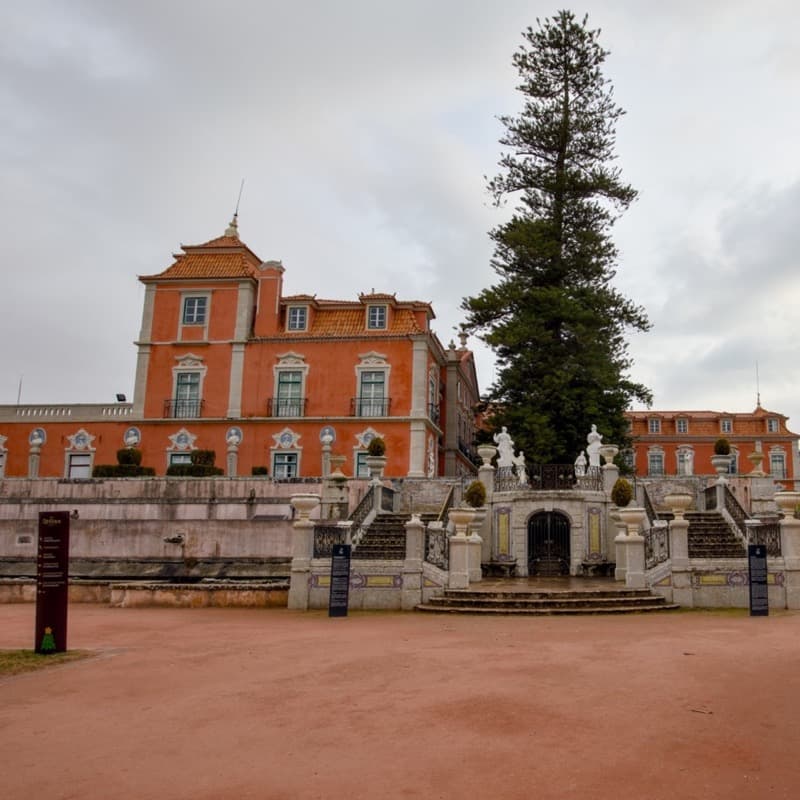
Jardins do Palácio Marquês de Pombal

Palace • Oeiras, Lisboa

The Gardens of the Palácio Marquês de Pombal, in Oeiras, form with the palace, the Casa da Pesca and the adjoining cascade a complex classified as a National Monument. They emerged within the context of the recreational estate linked to Sebastião José de Carvalho e Melo, in an 18th-century project that combined residence, garden and agricultural production. The intervention is generally associated with Carlos Mardel, an architect linked to the Pombaline reconstruction of Lisbon. The Ribeira da Laje crosses the space and helped to structure canals, bridges, tanks and cascades, integrating water into the landscape composition. In the gardens, statues, marble busts, low walls and stairways clad in tiles stand out. Between terraces, lake, Casa da Pesca and Cascata dos Poetas, the ensemble reveals an idea of aristocratic leisure shaped by order, decoration and the scenic command of water.
Museu da Música Mecânica4.7

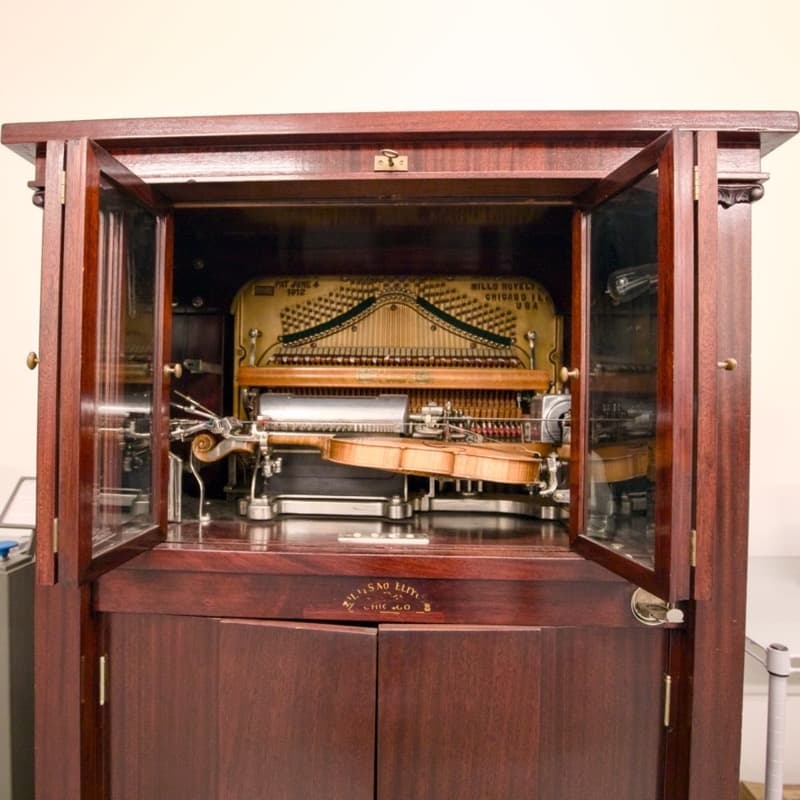
Museu da Música Mecânica

Museum • Palmela, Setúbal

The Museu da Música Mecânica is located in Arraiados, in the parish of Pinhal Novo, municipality of Palmela. Inaugurated in 2016, it is a private museum created from the collection assembled by Luís Cangueiro, dedicated to instruments capable of producing sound through exclusively mechanical systems. The collection brings together more than 600 pieces, all in working order, dating from the late 18th century to the first half of the 20th century. Music boxes, gramophones, mechanical organs, phonographs and other devices reveal a history in which music is linked to engineering, entertainment and sound memory. The building, designed by the architect Miguel Marcelino, was conceived as a large closed box, with a concavity at the entrance that evokes the horns of phonographs and gramophones. The five exhibition galleries are arranged around a central courtyard, turning the visit into a listening experience of the past in motion.

Santuario do Senhor Jesus da Pedra4.4

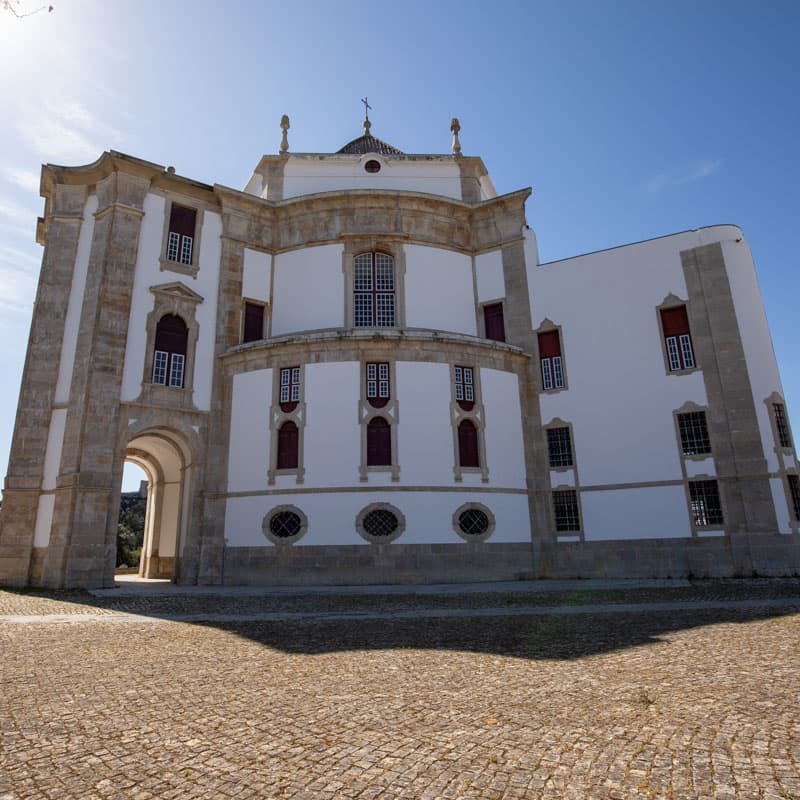
Santuario do Senhor Jesus da Pedra

Church • Óbidos, Leiria

Outside the walls of Óbidos, beside the road to Caldas da Rainha, the Sanctuary of Senhor Jesus da Pedra stands out for its unusual form and for the devotion that gave rise to it. The present church was built between 1740 and 1747, to a design by Captain Rodrigo Franco, architect of the Patriarchal See, in a period associated with the patronage of D. Tomás de Almeida and King João V. Its centralised plan combines a cylindrical exterior body with a hexagonal interior; around it are arranged the chancel, the sacristy and the bell towers. In the churchyard remain the pilgrims’ lodging house and a Rococo fountain. Inside, the chancel holds the stone image of the Crucified Christ, placed in a small shrine within the altarpiece, accompanied by a painting of Calvary by André Gonçalves. Classified as a Monument of Public Interest in 2013, it preserves, in its open forecourt, a direct visual relationship with the town of Óbidos.

Castelo de Tomar4.6

Castelo de Tomar

Castle • Tomar, Santarém

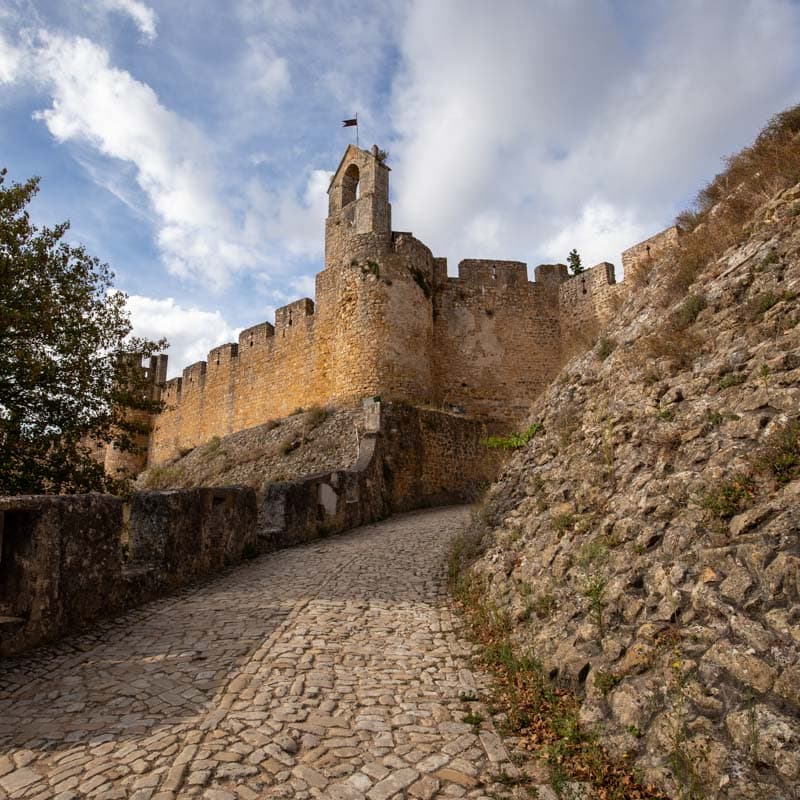
On the hilltop overlooking Tomar, the Castle of Tomar marks the beginning of the great Convent of Christ complex. The fortification began to be built in 1160, after the donation of the region to the Templars, and is linked to Gualdim Pais, master of the Order of the Temple. Its position protected a strategic point between the Tagus and Coimbra, then the capital of the kingdom. Even today, Romanesque military solutions associated with the Templars can be read in the walls, such as the sloping base that strengthened them, and the keep, rising above the citadel. In the lower enclosure stood the former fortified town; to the west was placed the Charola, the Templar oratory that would later become part of the Convent of Christ. Classified as a National Monument in 1910 and included in the ensemble inscribed by UNESCO in 1983, the castle preserves the defensive memory that shaped Tomar.

Monumento Natural das Pegadas de Dinossáurios4.2

Monumento Natural das Pegadas de Dinossáurios

Natural Monument • Ourém, Santarém

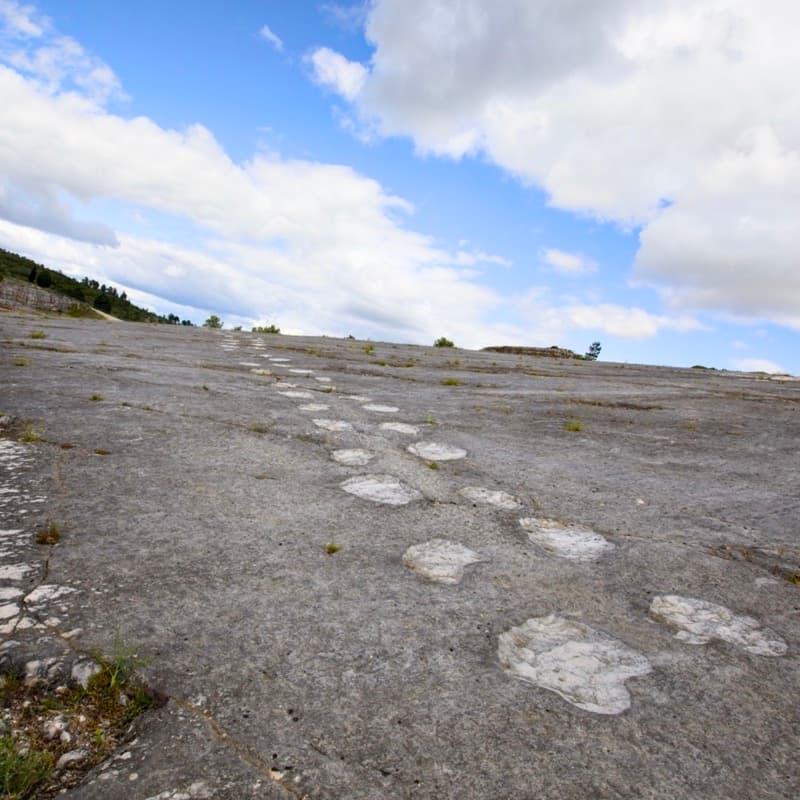
The Ourém/Torres Novas Dinosaur Footprints Natural Monument lies in the Serra de Aire, near the village of Bairro, on the boundary between the municipalities of Ourém and Torres Novas. The former Pedreira do Galinha quarry revealed a limestone slab where hundreds of footprints of sauropod dinosaurs, large four-legged herbivores from the Jurassic, have been preserved. The site was classified in 1996, by Regulatory Decree no. 12/96, with the aim of conserving the Cabeço dos Casanhos ichnofossil deposit, promoting its scientific study and communicating its environmental and palaeoenvironmental value. On the rocky surface, the footprints are arranged in around twenty trackways; the longest reach 142 and 147 metres, creating a concrete reading of these animals’ movement. The interpretive route allows visitors to observe elliptical marks from the feet and smaller impressions from the hands, inscribed in the limestone like a silent sequence of their steps.

Museu Municipal de Arqueologia de Silves4.4

Museu Municipal de Arqueologia de Silves

Museum • Silves, Faro

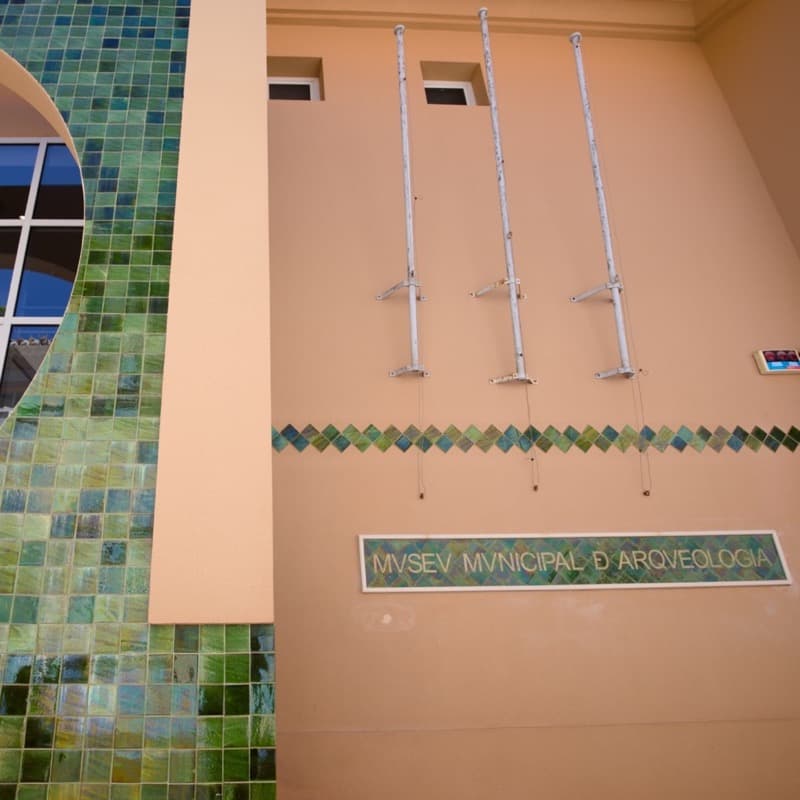
In the historic centre of Silves, the Municipal Archaeology Museum organises the city’s memory around an exceptional feature: the Arab Well-Cistern, classified as a National Monument. Identified in late 1979, this Almohad well-cistern, built between the end of the 12th century and the beginning of the 13th, was integrated into the museum route, inaugurated in 1990. Its circular structure descends more than eighteen metres and is accompanied by a spiral staircase, with windows opened at different heights to provide access to the water. The building also incorporates, on its southern elevation, a section of the Almedina wall, from the 12th century. The exhibition traces the history of the Silves territory from prehistory to the 18th century, with particular emphasis on Islamic materials collected during decades of excavations in the city. Here, archaeology and architecture make Silves’ long continuity visible.

Centro Ciência Viva do Algarve4.4

Centro Ciência Viva do Algarve

Science Centre • Faro, Faro

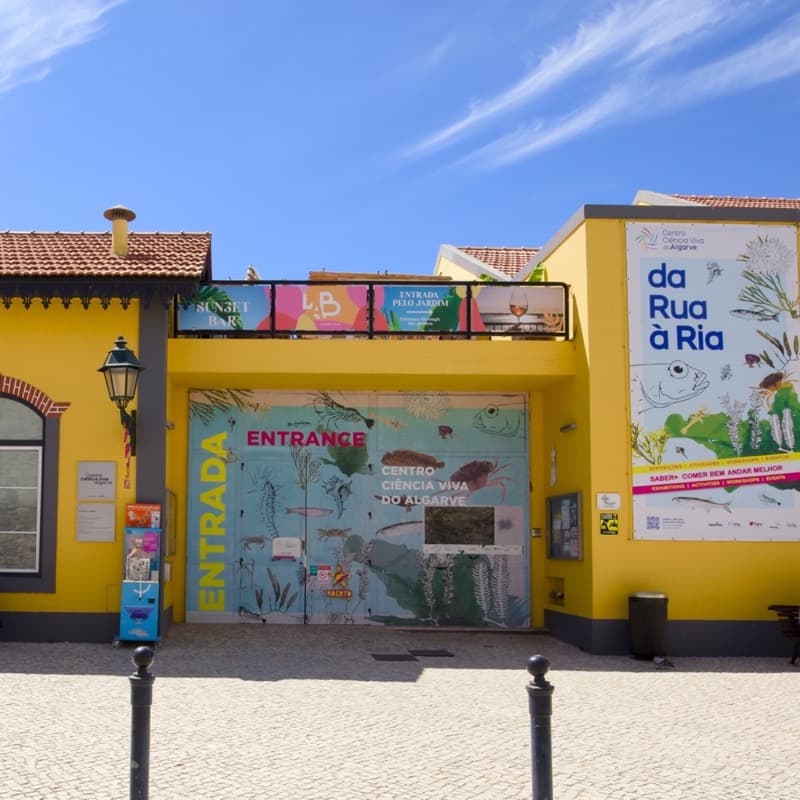
Next to Faro Marina, the Centro Ciência Viva do Algarve turns the closeness of the Ria Formosa into a starting point for scientific discovery. Housed in a century-old building originally built to accommodate the Algarve’s first power station, it opened on 3 August 1997 as the first interactive centre in the National Network of Ciência Viva Centres. Its main exhibition is dedicated to the sea, with aquariums and modules that bring natural, environmental and physical-chemical phenomena close to the regional reality. The Apalpário, a tank dedicated to species typical of the Algarve coast and the Ria Formosa, allows close observation of organisms from the intertidal zone, with support from monitors. The centre also includes spaces on light, the brain and the senses, a garden with energy modules, a technological greenhouse and a rooftop terrace facing the Ria Formosa, used for observing wading birds.

Dino Parque da Lourinhã4.5

Dino Parque da Lourinhã

Garden/Park • Lourinhã, Lisboa

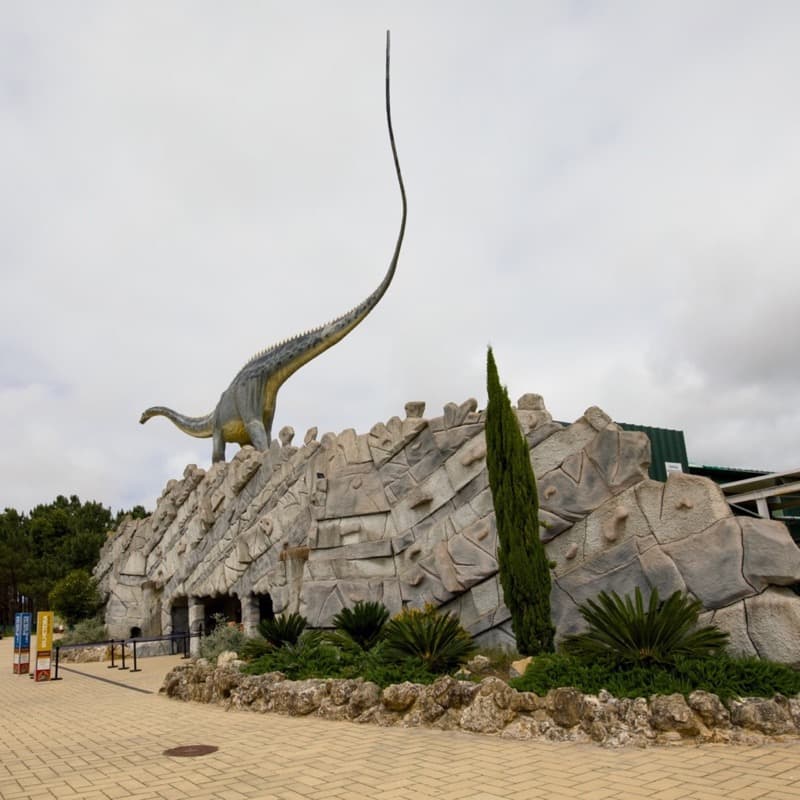
Dino Parque Lourinhã, in Abelheira, in the municipality of Lourinhã, turns the region’s palaeontological richness into an open-air journey through the history of life. Opened in February 2018, it is presented as the largest open-air museum in Portugal. The route brings together more than 200 life-size models of dinosaurs and other animals, scientifically verified, distributed across six themed trails that cover major stages in the history of the Earth, from the Palaeozoic to the Cenozoic, including Sea Monsters and the Ice Age. The museum space presents fossils, original dinosaur eggs and replicas from the Museu da Lourinhã, including material associated with Torvosaurus and the Lourinhanosaurus nest. In the Live Lab, fossil preparation makes the patient work of palaeontology visible. Among pine woods, walkways and monumental figures, the park brings science, territory and imagination together without losing its link to local Jurassic finds.

Castelo de S. Jorge4.5

Castelo de S. Jorge

Castle • Lisboa, Lisboa

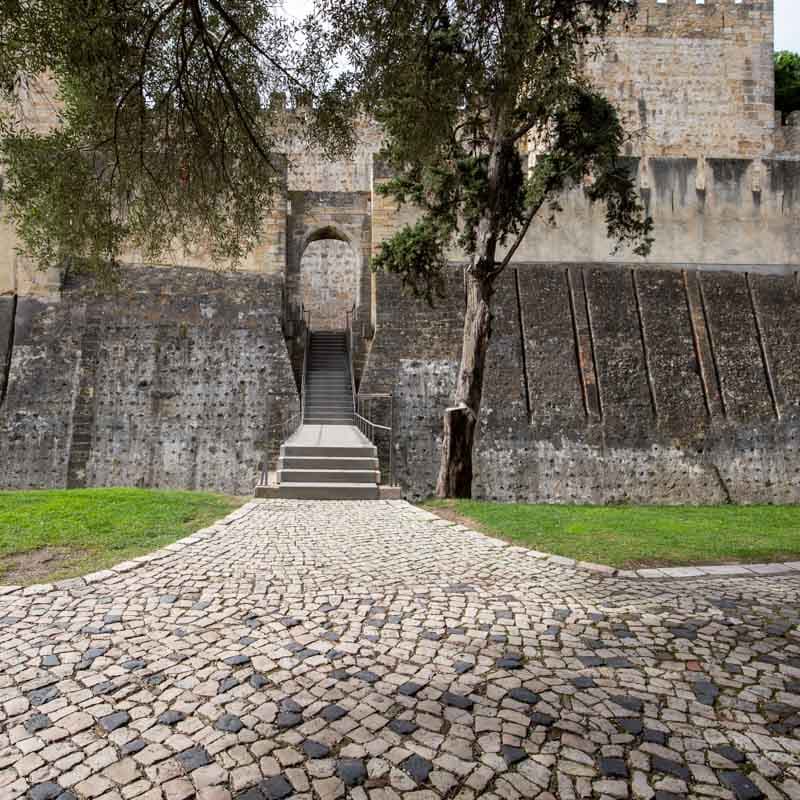
Rising from the highest point of old Lisbon, São Jorge Castle seems to gather almost the whole biography of the city into one place. The hill had been occupied since very early times, but the fortification we recognise today took shape in the Islamic period, as the last defensive stronghold of the citadel. After the conquest of 1147 by Afonso Henriques, the castle entered its brightest age: it became a royal palace, housed the court, the royal archive and major ceremonies, and from here the city’s rooftops, estuary and gateways could be watched over. When the royal residence moved down to the riverside, the complex lost its central role, was turned to military use and suffered after the 1755 earthquake, before being rediscovered in the great restoration campaigns of the twentieth century. Today, among walls, archaeological remains and the Camera Obscura in the Tower of Ulysses, it remains a rare place to understand Lisbon in layers, between stone, memory and horizon.

Sea Life4.2

Sea Life

Aquarium • Porto, Porto

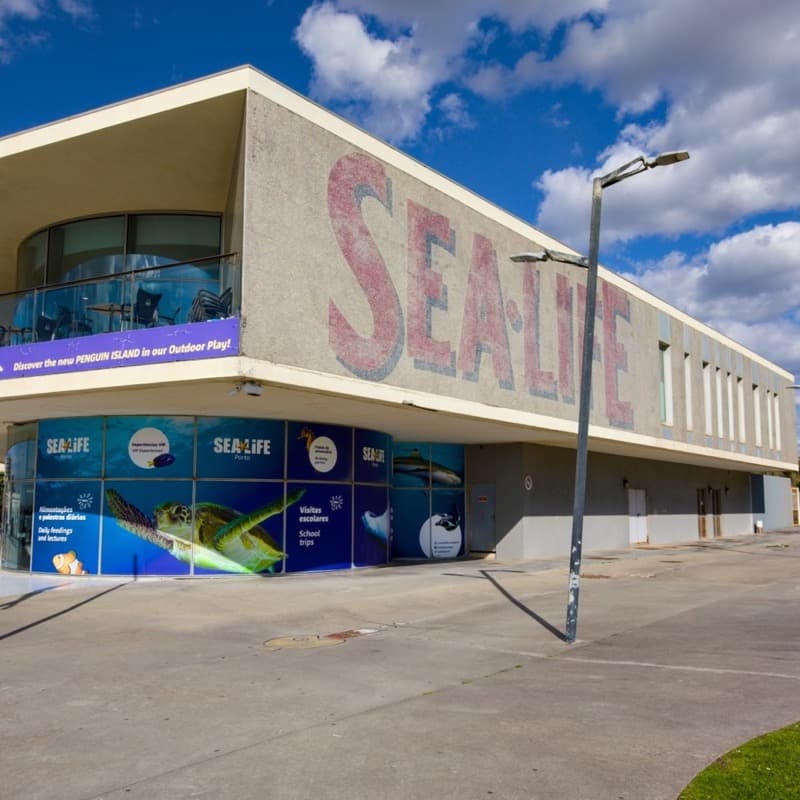
SEA LIFE Porto is located beside Castelo do Queijo, between the City Park and the sea. It is an aquarium dedicated to discovering marine life, environmental education and conservation, bringing together more than 3,000 creatures in different habitats. The route passes through areas such as Rivers and Streams, Rock Pools, Sunken Ship, Kingdom of Salacia, Ocean Cave, Seahorse Temple and Ray Bay. Among its inhabitants are seahorses, jellyfish, sharks, octopuses, penguins, rays and the turtle Mariza. One of its most striking features is the underwater tunnel, presented by the aquarium itself as the only one in the country. The space also includes a Coral Nursery, described as the first national project for breeding threatened corals for the worldwide SEA LIFE network. Between tanks, filtered light and the constant movement of water, the museum brings science, biodiversity and ocean awareness closer together.

Palácio Nacional e Jardins de Queluz4.6

Palácio Nacional e Jardins de Queluz

Palace • Sintra, Lisboa

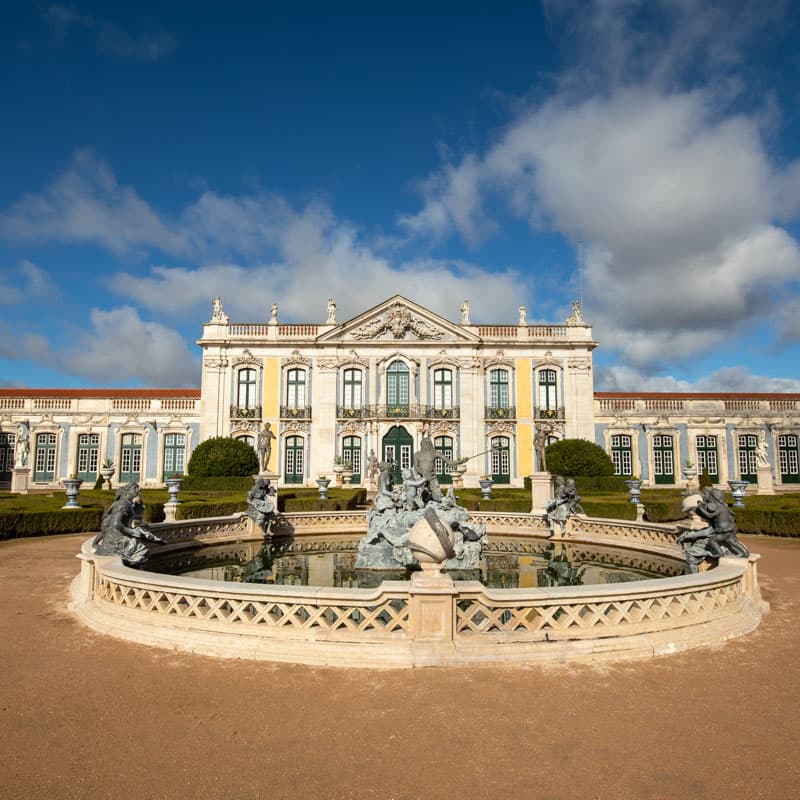
In Queluz, the Portuguese court still seems to breathe among luminous state rooms and gardens designed for pleasure. Born from a country house belonging to the Casa do Infantado, the palace was enlarged from 1747 for the infante D. Pedro, the future D. Pedro III, and under Jean-Baptiste Robillion it acquired the rococo elegance that still defines it today. After the fire at the Real Barraca da Ajuda in 1794, it became the official residence of Queen Maria I and the prince regents, until the royal family left for Brazil in 1807. Queluz also holds a rare emotion: D. Pedro IV was born and died here, in the famous Quarto D. Quixote. In the gardens, it is worth slowing down beside the parterres, the mythological sculpture and the Canal dos Azulejos, where the royal family once drifted by boat to the sound of music. Few places unite palatial intimacy, courtly theatre and the art of outdoor living with such grace.

Casa da Cerca4.7

Casa da Cerca

Museum • Almada, Setúbal

High above Almada Velha, facing Lisbon and the Tagus, Casa da Cerca brings together an old leisure estate and one of the most distinctive cultural projects on the south bank. Built between the late seventeenth and early eighteenth centuries, the manor house was enlarged over time; in the chapel survive tile panels attributed to Master P.M.P., and in the oldest part there are still traces of a blocked sixteenth-century doorway. After decades of private use and a period of neglect, the building was restored by the municipal council and opened in 1993 as a Centre for Contemporary Art, through the initiative of Rogério Ribeiro, with special attention to drawing. The garden deepens that rare identity: O Chão das Artes, inaugurated in 2001, brings together botany, art and science through plants linked to pigments, fibres, oils and other materials used in artistic creation. Between the white house, the walls and the light on the river, the place has the calm of a belvedere and the curiosity of a laboratory.

Museu dos Condes Castro Guimarães4.6

Museu dos Condes Castro Guimarães

Museum • Cascais, Lisboa

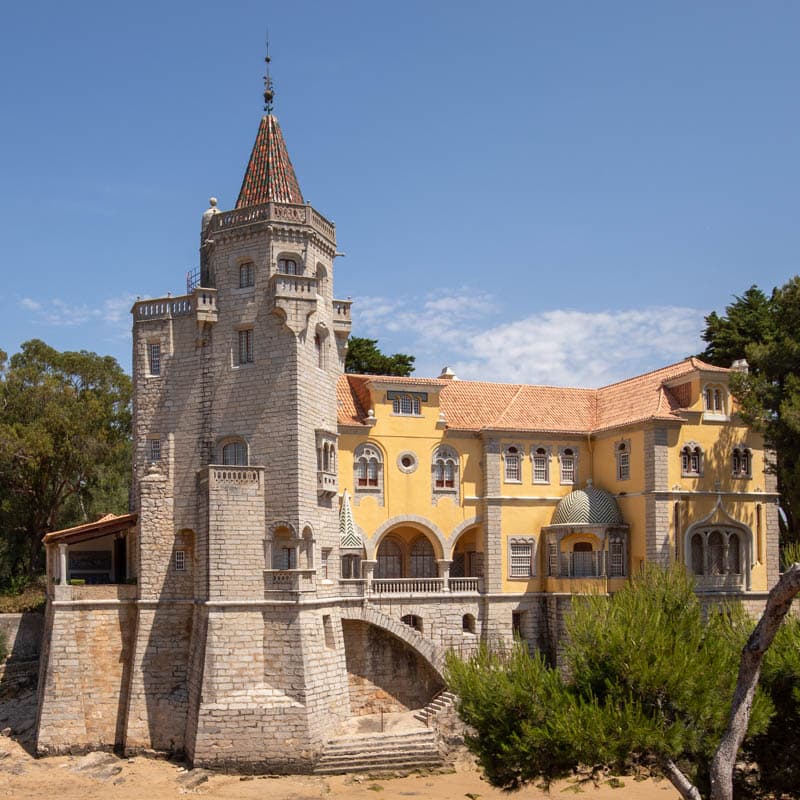
In Cascais, almost above the Santa Marta cove, the Condes de Castro Guimarães Museum shows how a summer residence can become public memory without losing its private charm. The former Tower of São Sebastião was built between 1897 and 1900 on the initiative of Jorge O’Neill, and it became a museum thanks to the legacy of Manuel Inácio de Castro Guimarães, who left the house, the books and its artistic contents to the town for public use. Opened on 12 July 1931, the ensemble preserves a rare atmosphere: rooms with painting, Oriental porcelain, furniture, silver and an organ installed for the Counts’ musical gatherings coexist with the theatrical quality of a revivalist architecture shaped by Neo-Romanesque, Neo-Gothic and Neo-Manueline echoes. The library also holds a quiet treasure: the Chronicle of Afonso Henriques, an illuminated manuscript from 1505 with one of the earliest known representations of Lisbon.

Museu Marítimo de Sesimbra4.7

Museu Marítimo de Sesimbra

Museum • Sesimbra, Setúbal

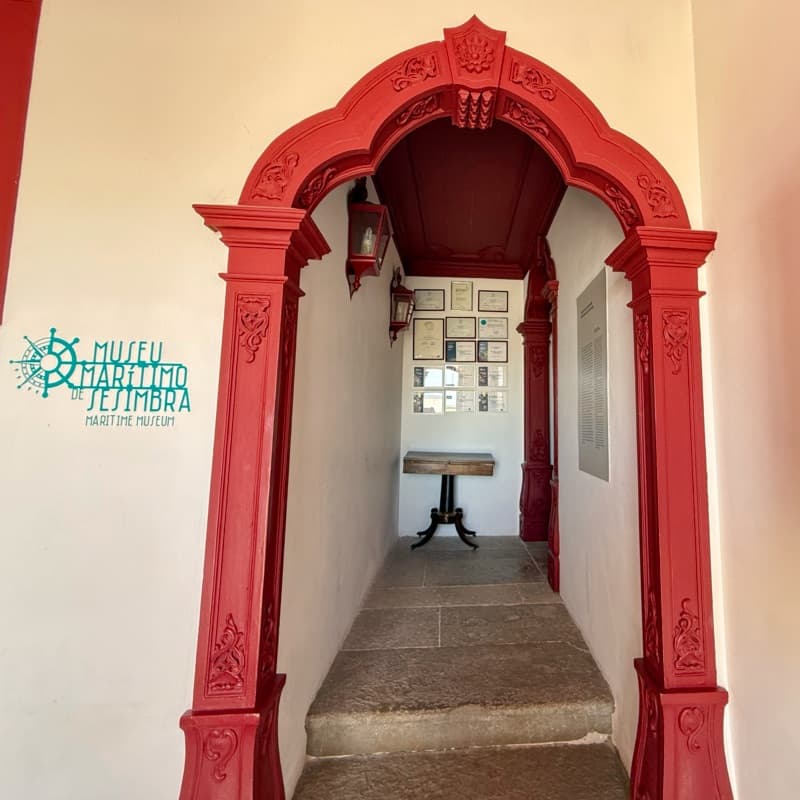
The Maritime Museum of Sesimbra, housed in the Fortress of Santiago, presents the town’s long relationship with the sea and fishing. Opened to the public in 2016, it forms part of the Municipal Museum of Sesimbra and organises its route through several spaces within the fortress. The exhibition brings together material heritage and memories collected with the fishing community, giving voice to the knowledge of seafarers. Among the oldest objects are an anchor stock around five thousand years old, and hooks and net weights dated between 2500 and 200 BC. The route addresses fishermen’s journeys, routes, fishing grounds, fishing techniques, boatbuilding, maritime devotions, the Professor Luiz Saldanha Marine Park and the relationship of King Carlos with Sesimbra. With models, films, documents and interactive technology, the museum turns local history into a narrative of work, identity and continuity.

Museu de Setúbal/Convento de Jesus4.6

Museu de Setúbal/Convento de Jesus

Convent • Setúbal, Setúbal

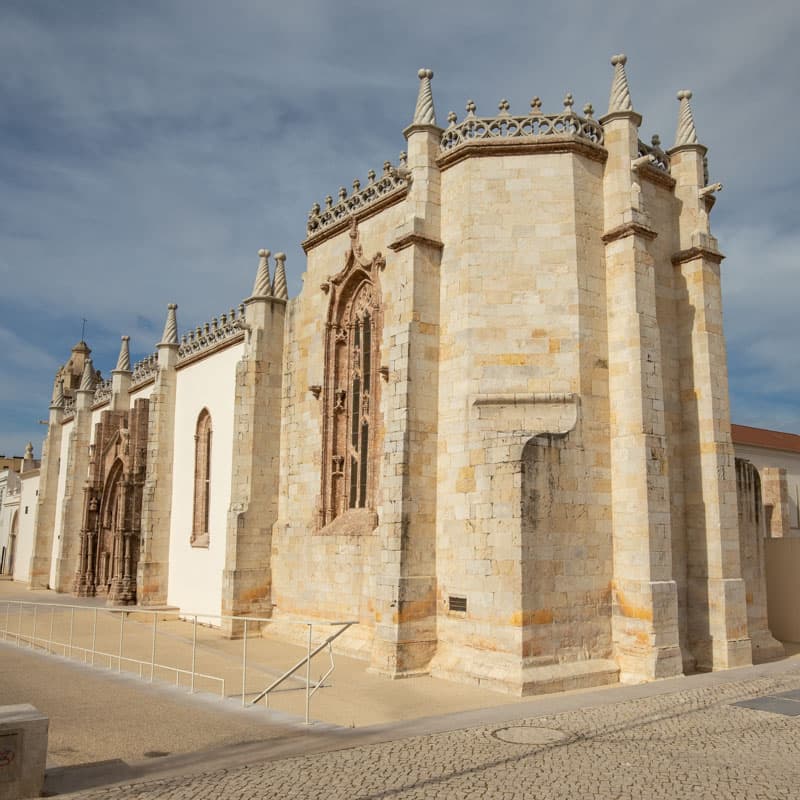
In the heart of Setúbal, the Convent of Jesus reveals a decisive moment in Portuguese art. Founded in 1490 by Justa Rodrigues Pereira and enlarged under the patronage of King John II, it was entrusted to Diogo Boitaca, who carried out his first work in Portugal here. The church is seen as a landmark in the beginnings of the Manueline style: its three vaulted aisles at the same height create a rare, bright and continuous space, supported by twisted columns that stay in the memory. Over the centuries, the complex changed its life: a convent for Poor Clare nuns, later a hospital, and since 1961 the city museum. Today, moving between the cloister, the Chapter House, the Upper Choir and the Gallery of 16th-century Art, one senses how the building preserves very different layers of time. Among them, the fourteen panels of the former altarpiece, attributed to Jorge Afonso’s workshop, stand out as a treasure linking Setúbal to the great cycle of Portuguese Renaissance painting.

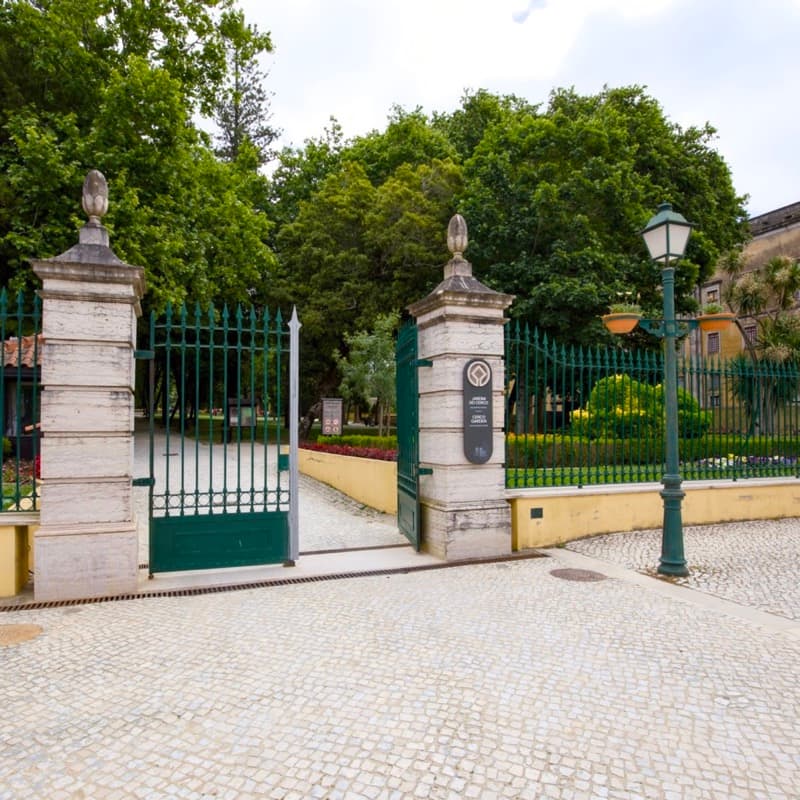
Jardim do Cerco4.6

Jardim do Cerco

Garden/Park • Mafra, Lisboa

In Mafra, the Cerco Garden follows the scale of the Royal Building, which brings together the Palace, Basilica, Convent, garden and Tapada, inscribed by UNESCO in 2019. It began as a convent enclosure serving the friars and also the court. In 1718, King João V ordered wild trees from the empire to be planted in well-distributed plots, linked by wide paths that encouraged a symmetrical organisation; its present layout, however, is the result of later adaptations. Between the monumentality of the National Palace of Mafra and the walled vastness of the Royal Tapada, the garden combines woodland and formal garden across eight hectares. Water features, leafy trees, a century-old noria still in operation, the large central lake and the old Ball Game Field give it variety. In the Aromatic Garden, around 39 species recall medicinal and culinary uses, bringing the history of the place close to the botany of everyday life.

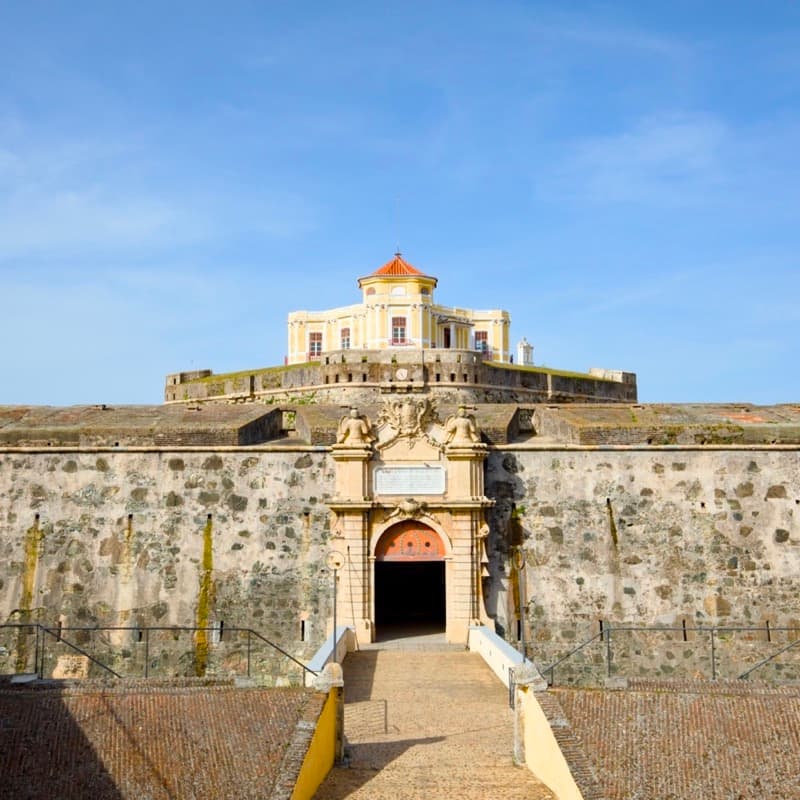
Forte de Nossa Senhora da Graça4.6

Forte de Nossa Senhora da Graça

Fort • Elvas, Portalegre

On Monte de Nossa Senhora da Graça, north of Elvas, the Fort of Nossa Senhora da Graça rises on one of the most strategic points in the region. The site had already shown its importance during the siege of 1658-1659 and became decisive again in the Seven Years’ War. In 1763, King José I ordered the construction of a fortress there to complete the city’s defence, with planning associated with Wilhelm, Count of Schaumburg-Lippe. The works continued until 1792. The fort is organised in successive defensive lines, with outer works, dry moats, bastions, ravelins and a central redoubt with an octagonal plan. This core contains the chapel, the Governor’s House and, beneath the chapel, a cistern. Also known as the Fort of Lippe, it was classified as a National Monument in 1910 and has formed part, since 2012, of the Garrison Border Town of Elvas and its Fortifications, a UNESCO World Heritage Site.

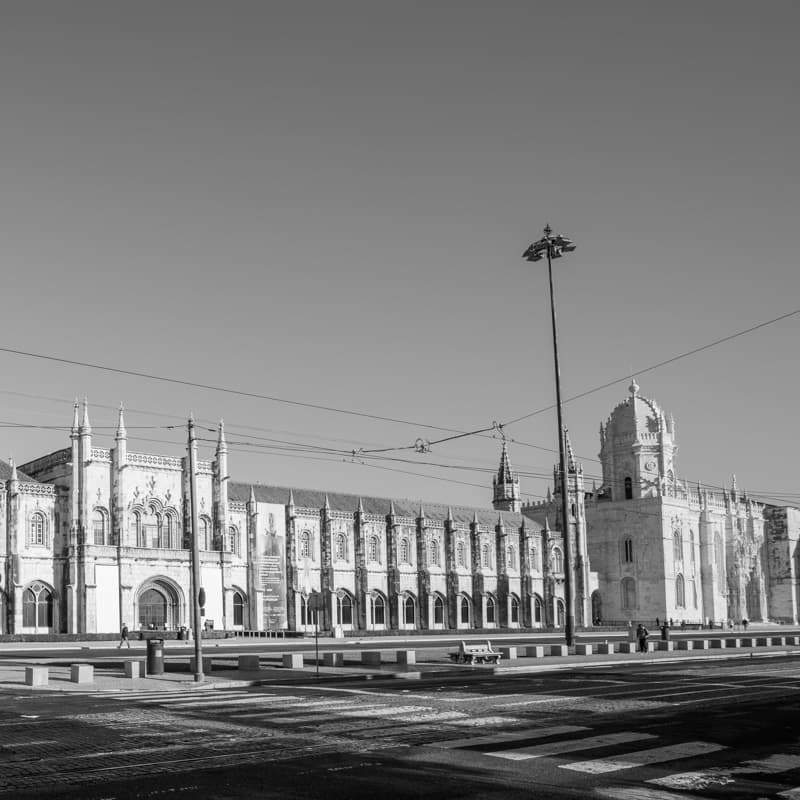
Mosteiro dos Jerónimos4.5

Mosteiro dos Jerónimos

Monastery • Lisboa, Lisboa

On the edge of the Tagus, Jerónimos Monastery seems to turn into stone the moment when Lisbon opened itself to the world. Commissioned by King Manuel the First at the end of the fifteenth century, beside Restelo, where ships and caravels set out, it was entrusted to the monks of Saint Jerome, who were meant to pray for the king and offer spiritual support to navigators. Work began in fifteen hundred and one and continued for about a century, leaving one of the finest examples of the Manueline style, exuberant yet precise, filled with royal, Christian and natural symbols. During a visit, it is worth slowing down in the sixteenth-century cloister and before the south portal, where the sculpture seems almost like lace in stone. In the church lie Vasco da Gama and Luís de Camões, a detail that deepens the monument’s bond with the country’s maritime and literary memory. Few places tell Portugal’s story with such clarity and beauty.

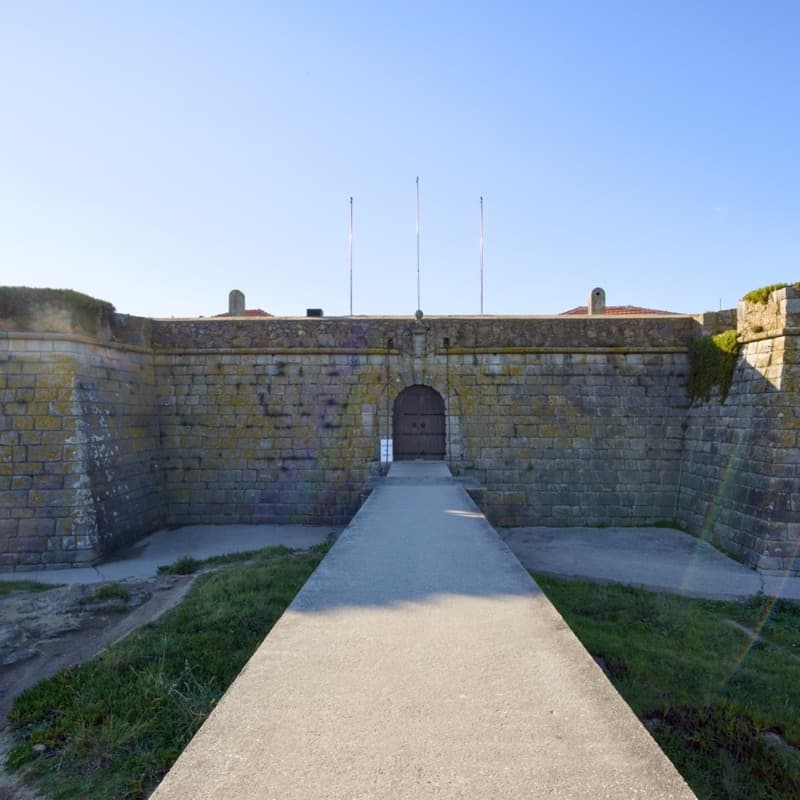
Forte de São Francisco Xavier4.4

Forte de São Francisco Xavier

Fort • Porto, Porto

The Forte de São Francisco Xavier, in Porto, is better known as Castelo do Queijo. It stands in Praça de Gonçalves Zarco, beside the Atlantic, between Foz and Matosinhos, on the rounded rock that explains its popular name. Built in the 17th century to defend the coast, it forms part of the line of small maritime fortifications that protected this stretch of shoreline. Its presence is compact and austere: stone walls, a moat, a fortified entrance, corner sentry boxes and platforms facing the sea recall the building’s military function. Tradition links the name “Queijo” to the shape of the granite rock on which it was built. Classified as a Property of Public Interest, the fort still offers a clear reading of coastal defensive architecture. Between stone, wind and the nearness of the waves, it preserves the scale of an Atlantic sentry at the northern entrance to the city.

Parque e Palácio de Monserrate4.7

Parque e Palácio de Monserrate

Palace • Sintra, Lisboa

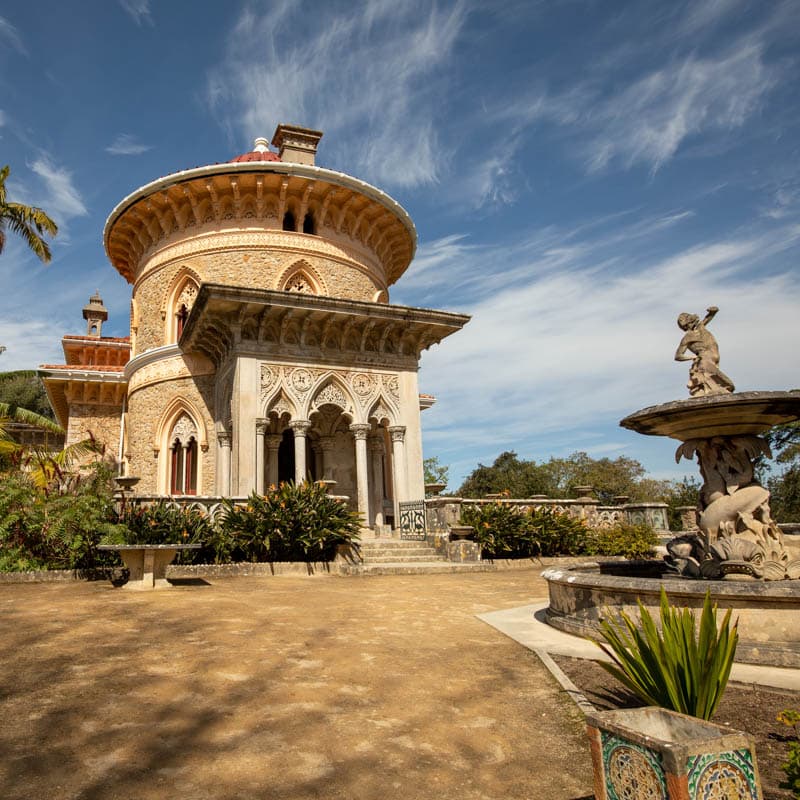
At Monserrate, Romanticism seems to have taken on an almost vegetal form. The story of the place begins in 1540, with the hermitage ordered by Frei Gaspar Preto, but the setting that dazzles visitors today gained a different scale in the nineteenth century: after the stay of William Beckford and the admiration that Lord Byron gave it in Childe Harold’s Pilgrimage, Francis Cook bought the estate in 1863 and had the palace built that still defines it today. Designed by James Knowles Junior, the building blends Gothic, Indian and Moorish echoes with unexpected lightness, especially in the octagonal atrium, where the sound of the fountain and the light filtered through the dome create an almost unreal atmosphere. Outside, the park matters as much as the palace: exotic species were arranged by geographical areas, taking advantage of the hills’ microclimates, and turned Monserrate into one of Portugal’s most remarkable botanical gardens. Among ruins, tree ferns, lakes and winding paths, everything here seems made to surprise without haste.

Submarino Barracuda4.6

Submarino Barracuda

Museum Ship • Almada, Setúbal

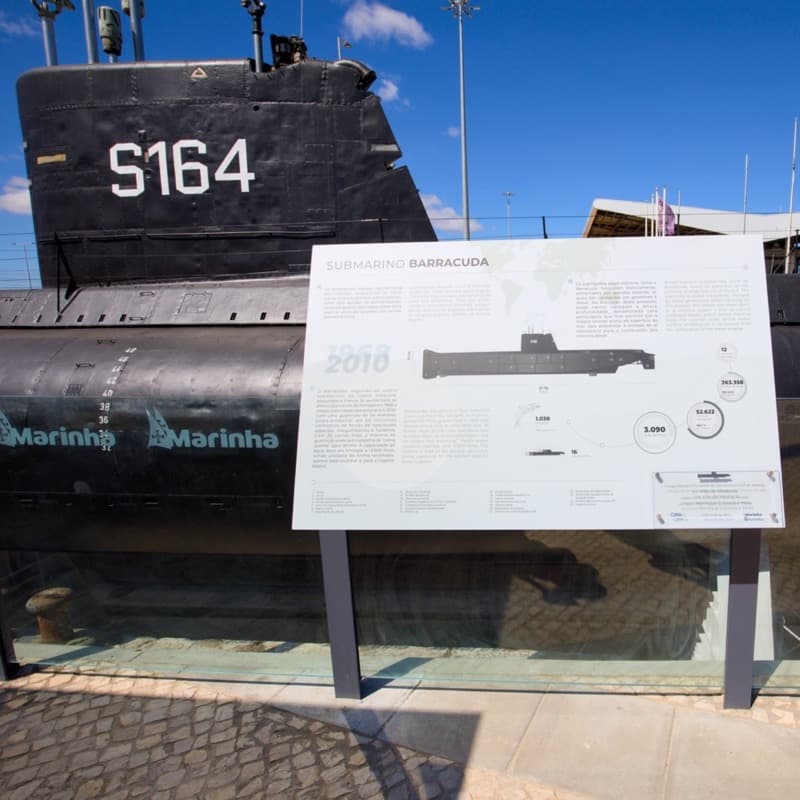
In Cacilhas, in the municipality of Almada, the Barracuda Submarine returned to public contact as a museum ship of the Portuguese Navy. Inaugurated in this new role on 9 May 2024 and open to visitors since 11 May, it forms part of the Cacilhas dry dock, alongside the Frigate D. Fernando II e Glória. Built in France, it was the second of four Albacora-class submarines in the Portuguese Navy. It entered service on 4 May 1968 and completed its last mission in 2010, after 42 years of operational life. With a length of 54 metres, a submerged displacement of 1,038 tonnes and a crew of 54 servicemen, it could operate down to 300 metres and carry 12 torpedoes. Over its career, it carried out national and international missions and covered 263,358 nautical miles. Today, the dark hull and compact interior reveal the technical precision and discipline required by submarine navigation.

Farol Museu de Santa Marta4.4

Farol Museu de Santa Marta

Lighthouse • Cascais, Lisboa

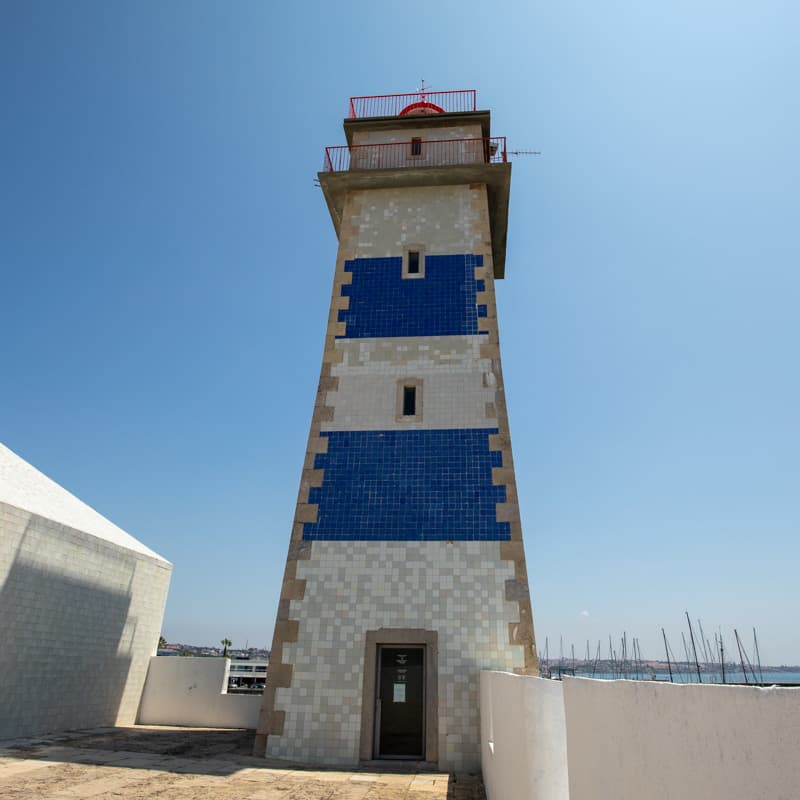
On the edge of Cascais Bay, the Santa Marta Lighthouse Museum shows how a former place of defence and maritime signalling could gain a second life without losing its original function. The fort that houses it probably dates back to the seventeenth century; after being deactivated for military purposes, it received a lighthouse established in 1868 and enlarged in 1936 to respond better to navigation. Restored through a protocol between the municipality and the Portuguese Navy, it opened as a museum in July 2007 and became a rare case in Portugal: it still guides the coast while presenting the history, technology and heritage of Portuguese lighthouses. In the former keepers’ houses, nautical objects, optical devices and memories of the trade help one understand that the light at sea also has a human story. Between the blue bands of the tower, the rock and the Atlantic, the place preserves the practical elegance of a site always turned towards the horizon.

Palácio Nacional da Ajuda4.7

Palácio Nacional da Ajuda

Palace • Lisboa, Lisboa

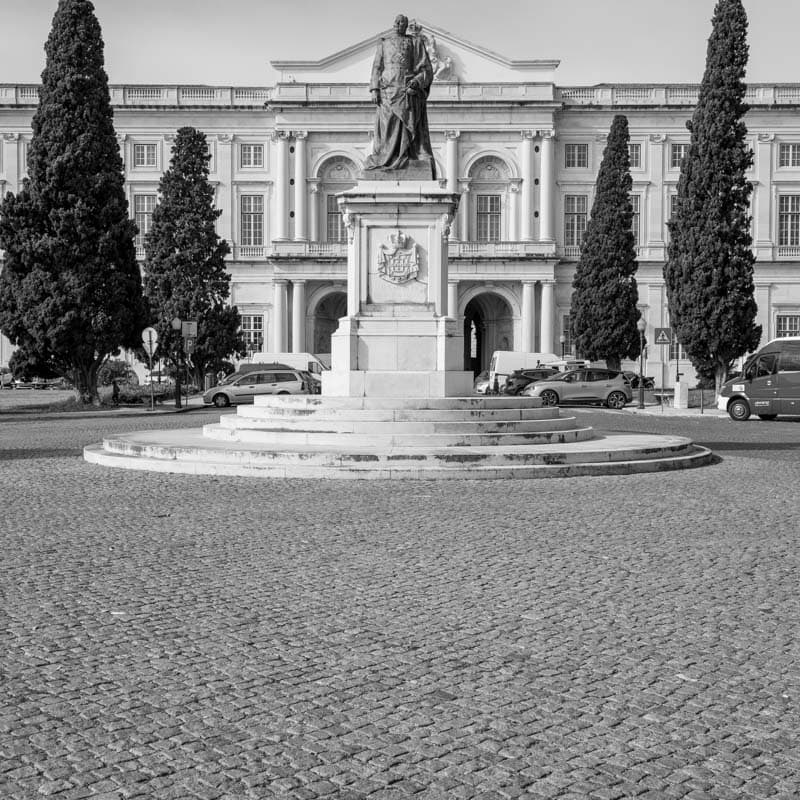
High on Ajuda hill, this neoclassical palace speaks less of completed triumph than of ambition, interruption and endurance. Conceived at the start of the nineteenth century to replace the wooden Real Barraca built after the earthquake, it was never fully finished, held back by the court’s departure to Brazil and by repeated financial difficulties. Even so, it became the royal family’s official residence from the reign of King Luís the First, and it was under Queen Maria Pia that it gained the domestic and ceremonial brilliance still felt in its interiors today. During a visit, it is worth lingering in the Throne Room, the state salons and the private apartments, because few places in Lisbon preserve so authentically the taste and protocol of nineteenth-century court life. Between its view over the Tagus, its splendour and its intimacy, Ajuda National Palace leaves the rare impression of a royal home suspended in time, made even more compelling by the fact that it was never entirely completed.

Palácio da Bolsa4.5

Palácio da Bolsa

Palace • Porto, Porto

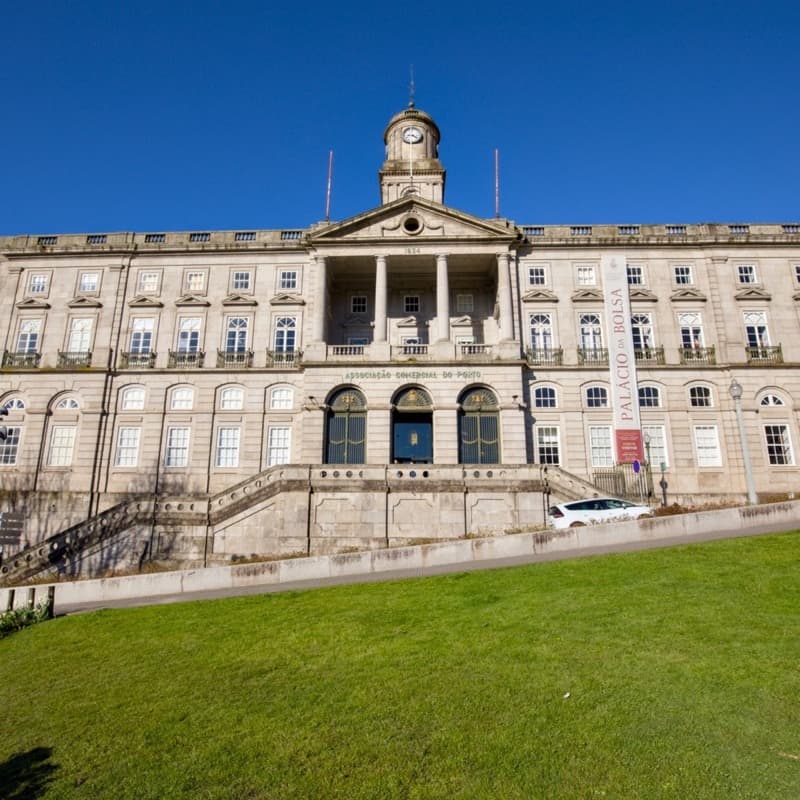
The Palácio da Bolsa, on Rua Ferreira Borges, stands in Porto’s Historic Centre, beside the former Convent of São Francisco. Its origin is linked to the fire of 1832, during the Siege of Porto, which left the convent in ruins. After the closure of the Casa da Bolsa do Comércio, Porto’s merchants sought a headquarters of their own; the first stone was laid in 1842 by the Associação Comercial do Porto, following a design by the architect Joaquim da Costa Lima. The neoclassical building, classified as a National Monument, is organised around the Pátio das Nações, covered by a glazed metal structure. From the 1860s onwards, the interiors gained greater decorative richness. The Arab Room, conceived by Gustavo Adolfo Gonçalves e Sousa, was inaugurated in 1880 and evokes the Alhambra. Between staircases, noble rooms and ornamented surfaces, the palace preserves the economic, artistic and civic memory of 19th-century Porto.

Showing 49-72 of 203

Discover by category

Take the LxDiscover App with you

Explore Portugal with a cultural guide for monuments, museums, gardens, palaces, viewpoints, and historic places in Lisbon, Porto, Sintra, and other regions.

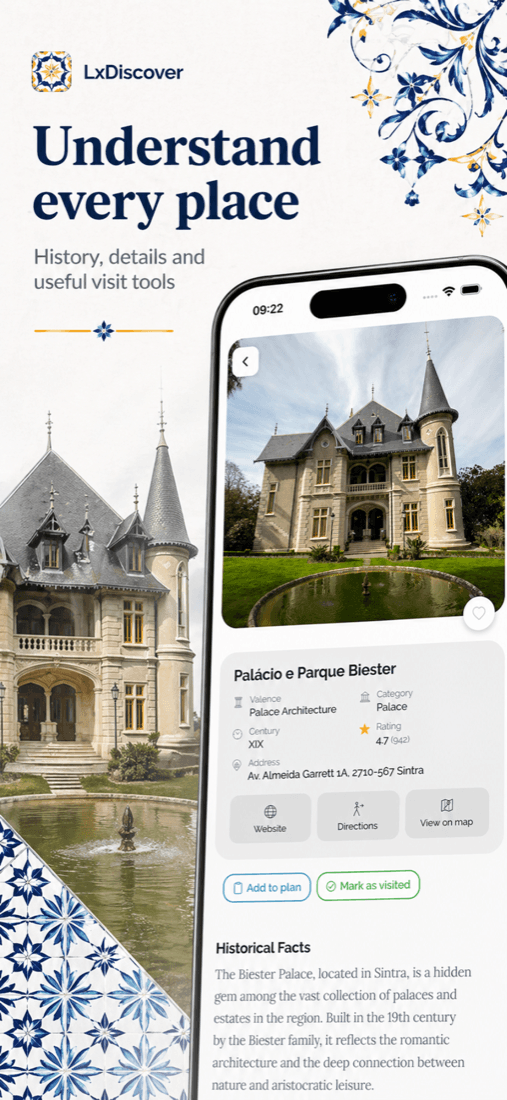
Use the map, follow cultural routes, read editorial context, save places, and track your visits with the visit passport.

Free features

  • Interactive map to discover places of interest
  • Detailed information about monuments, museums, and cultural sites
  • Favorites for the places you want to visit
  • Selected routes to start exploring

Premium subscription

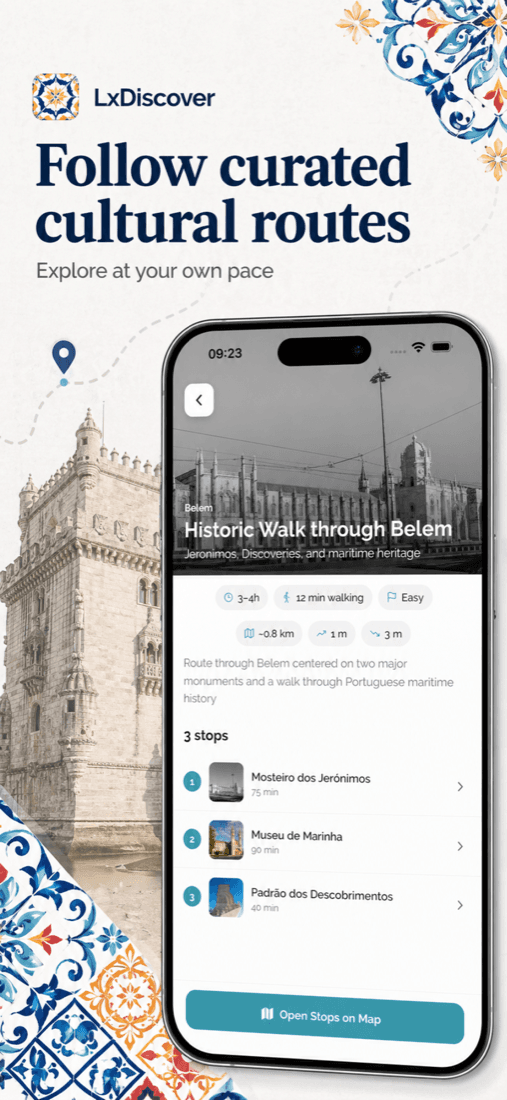
  • Curated routes with ordered stops, duration, and difficulty
  • Thematic collections with editorial context for each area
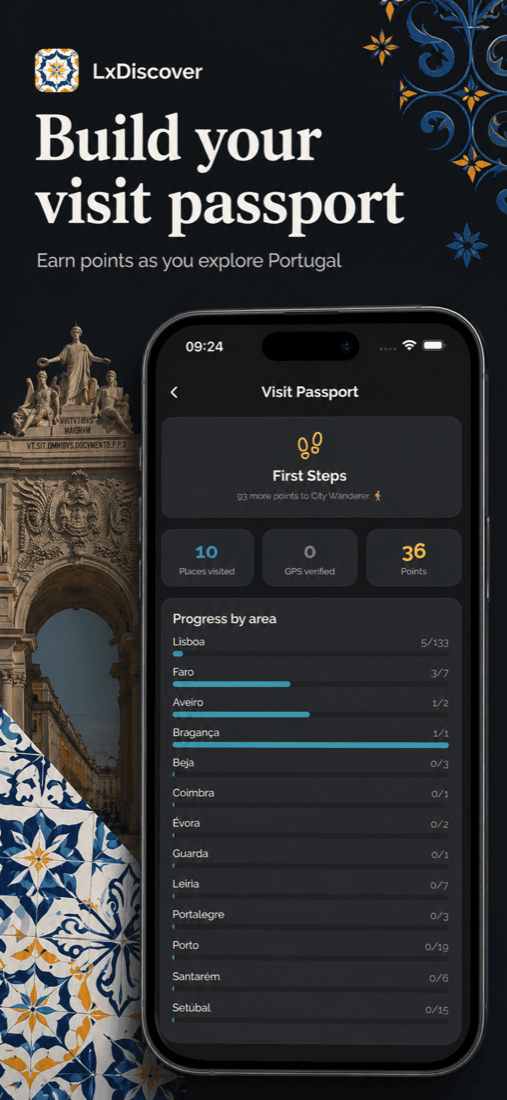
  • Visit passport for progress, visited places, and achievements
  • Advanced map, planning, and proximity alert tools
LxDiscover map screen
LxDiscover routes screen
LxDiscover visit passport screen