Places

Cultural places in Portugal

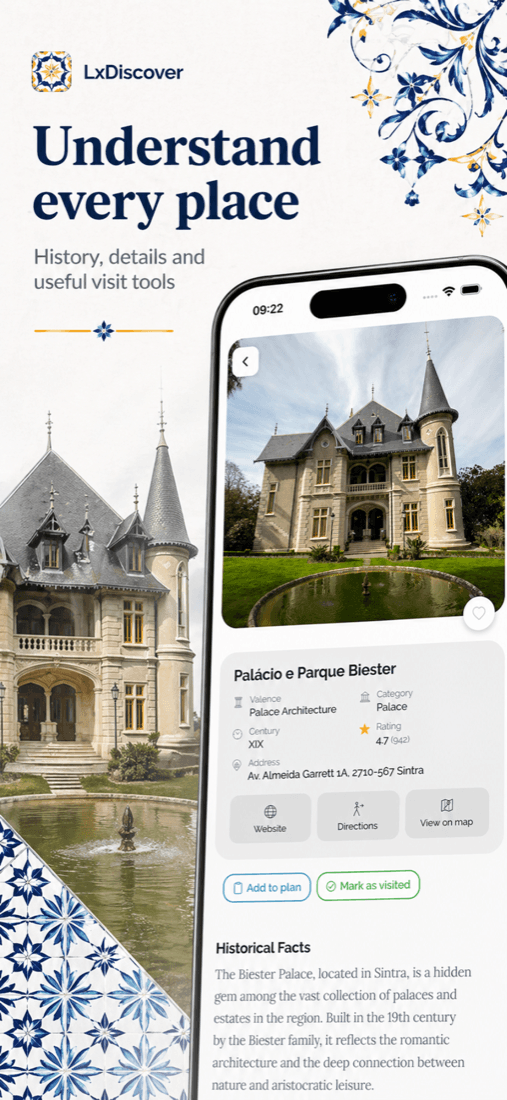
Browse LxDiscover places across monuments, museums, palaces, viewpoints, gardens, churches and historic sites. Use this hub to start planning, then open the app for map-based routes, saved places and short cultural audio guides.

98 places

Featured cultural places

Explore on the map
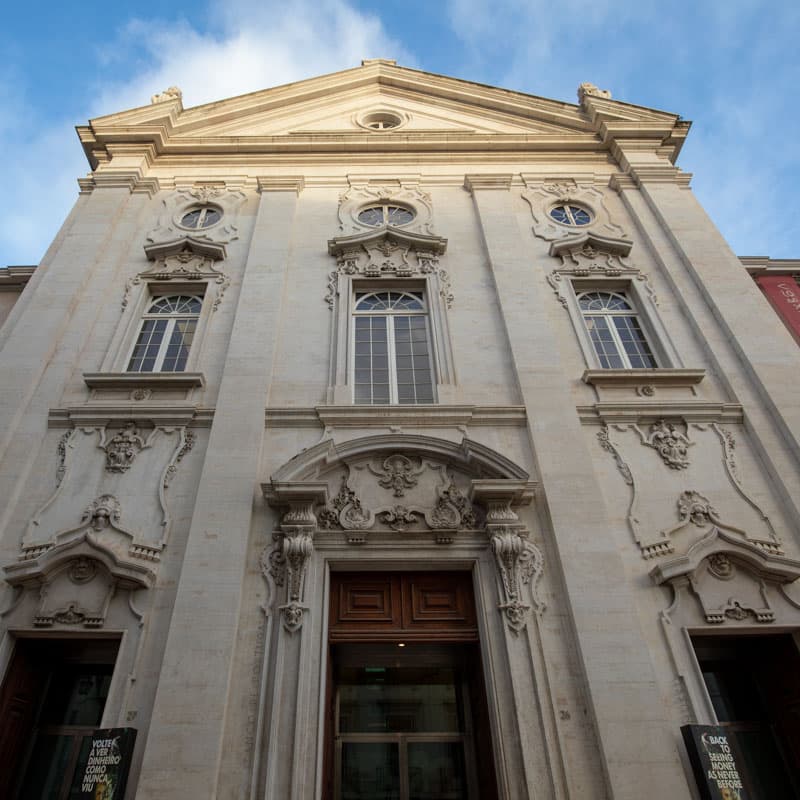
Museu do Dinheiro4.6

Museu do Dinheiro

Museum • Lisboa, Lisboa

Set inside the former church of Saint Julian, the Money Museum is one of those places where Lisbon reveals itself in layers. Open to the public since 2016, it occupies a building restored as part of the rehabilitation of the Bank of Portugal’s headquarters, and that long biography gives depth to a museum devoted to money, its history and the ways people exchange value. Along the route, coins, banknotes, machines and multimedia displays show how money has shaped trade, power and everyday life, without losing sight of the human scale. Yet two details make the visit especially memorable: the Wall of King Dinis, preserved within the museum, and the gold bar that visitors can touch. Between medieval remains, the old nave of Saint Julian and contemporary museography, the place achieves something rare: it speaks about economics without coldness and shows that behind every coin there is always a story of city, power and imagination.
Casa do Infante4.4

Casa do Infante

Historic House • Porto, Porto

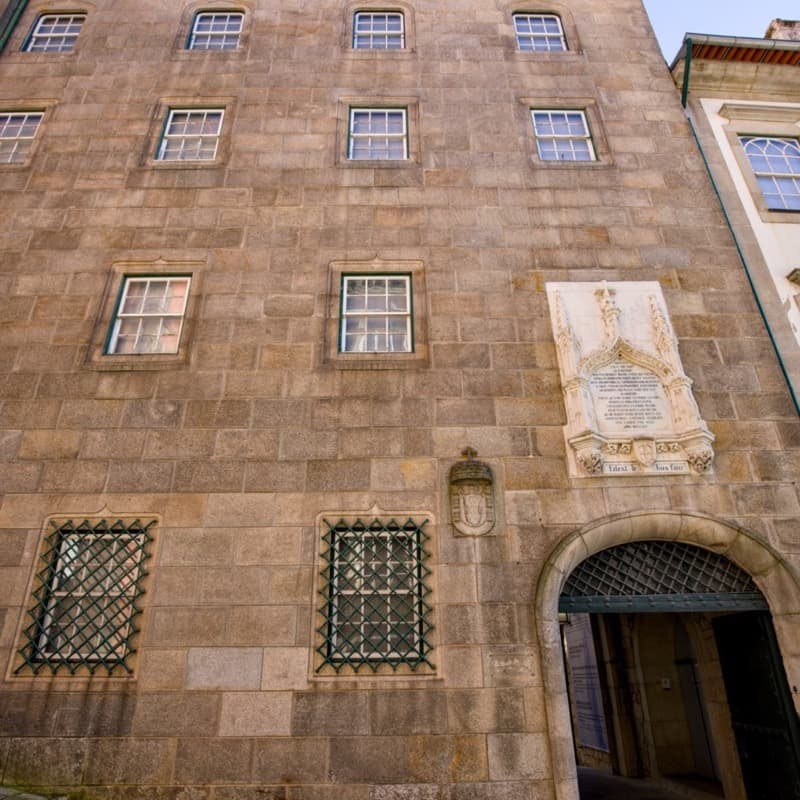
Casa do Infante is located on Rua da Alfândega, in Porto’s riverside area. Also known as Casa da Rua da Alfândega Velha, it is one of the city’s oldest buildings and preserves the memory of royal services installed beside the Douro. Over the centuries, it housed the former Customs House, the Mint and functions connected to the administration of the Crown. Its name became associated with the tradition that Prince Henry the Navigator was born here in 1394. Classified as a National Monument since 1924, the house reveals a history built in layers: medieval structures, later enlargements and archaeological remains of Roman occupation, including mosaic floors. Today it forms part of the Museu do Porto and contains permanent exhibitions, the Gabinete do Tempo and the Municipal Historical Archive. Between stone, documents and excavated ruins, the building brings together trade, royal power and urban memory.

Museu dos Condes Castro Guimarães4.6

Museu dos Condes Castro Guimarães

Museum • Cascais, Lisboa

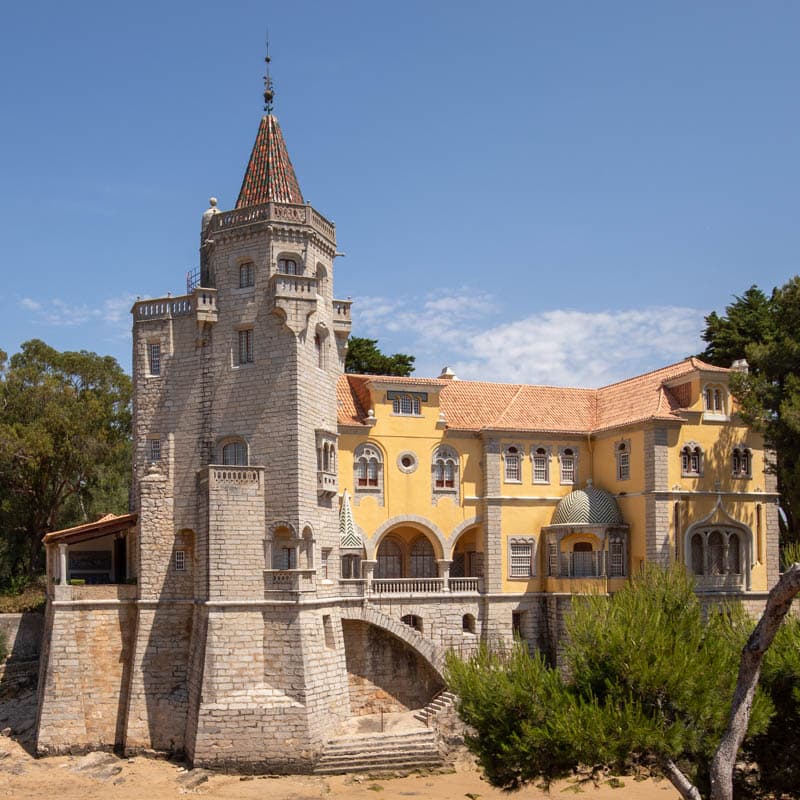
In Cascais, almost above the Santa Marta cove, the Condes de Castro Guimarães Museum shows how a summer residence can become public memory without losing its private charm. The former Tower of São Sebastião was built between 1897 and 1900 on the initiative of Jorge O’Neill, and it became a museum thanks to the legacy of Manuel Inácio de Castro Guimarães, who left the house, the books and its artistic contents to the town for public use. Opened on 12 July 1931, the ensemble preserves a rare atmosphere: rooms with painting, Oriental porcelain, furniture, silver and an organ installed for the Counts’ musical gatherings coexist with the theatrical quality of a revivalist architecture shaped by Neo-Romanesque, Neo-Gothic and Neo-Manueline echoes. The library also holds a quiet treasure: the Chronicle of Afonso Henriques, an illuminated manuscript from 1505 with one of the earliest known representations of Lisbon.

Museu de História Natural de Sintra4.5

Museu de História Natural de Sintra

Museum • Sintra, Lisboa

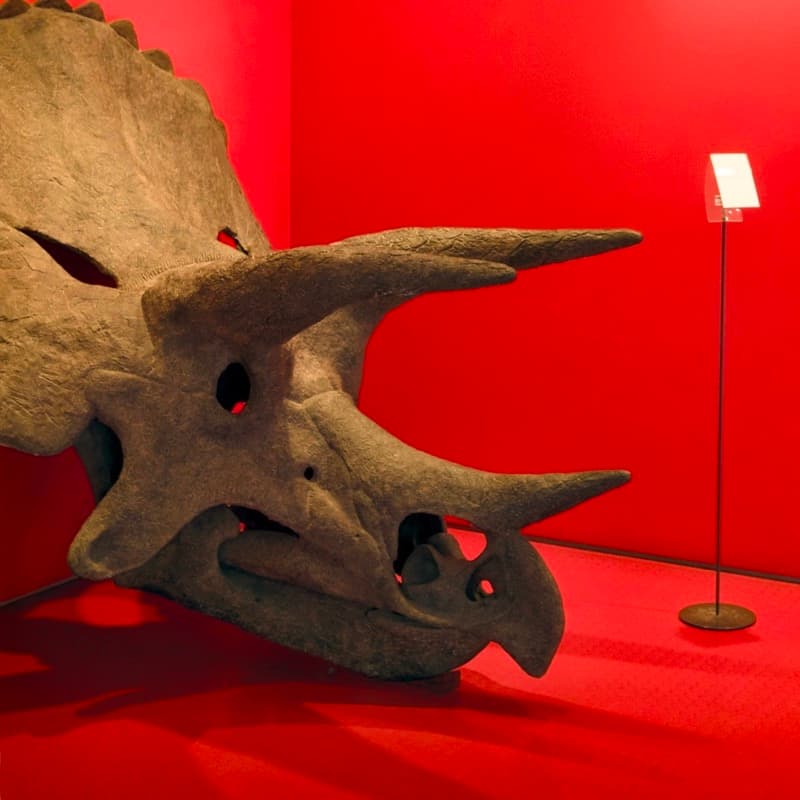
The Museu de História Natural de Sintra is located on Rua do Paço, in the Historic Centre of Sintra’s Old Town, in a building dating from 1893. Inaugurated on 1 August 2009, it grew out of the collection assembled over around 50 years by Miguel Barbosa and his wife, Fernanda Barbosa, later donated to the Municipality of Sintra. The long-term exhibition follows the formation of the Earth and the evolution of life, from the Precambrian to the Quaternary, through the municipal collections of palaeontology, mineralogy, malacology and petrography. Among fossils, minerals, shells, rocks and meteorites, the museum displays pieces from different continents. One of its most relevant elements is the type specimen of a pterosaur whose scientific name honours Miguel Barbosa. Small in urban scale, the museum opens in Sintra an unexpected window onto the deep history of the planet.

Submarino Barracuda4.6

Submarino Barracuda

Museum Ship • Almada, Setúbal

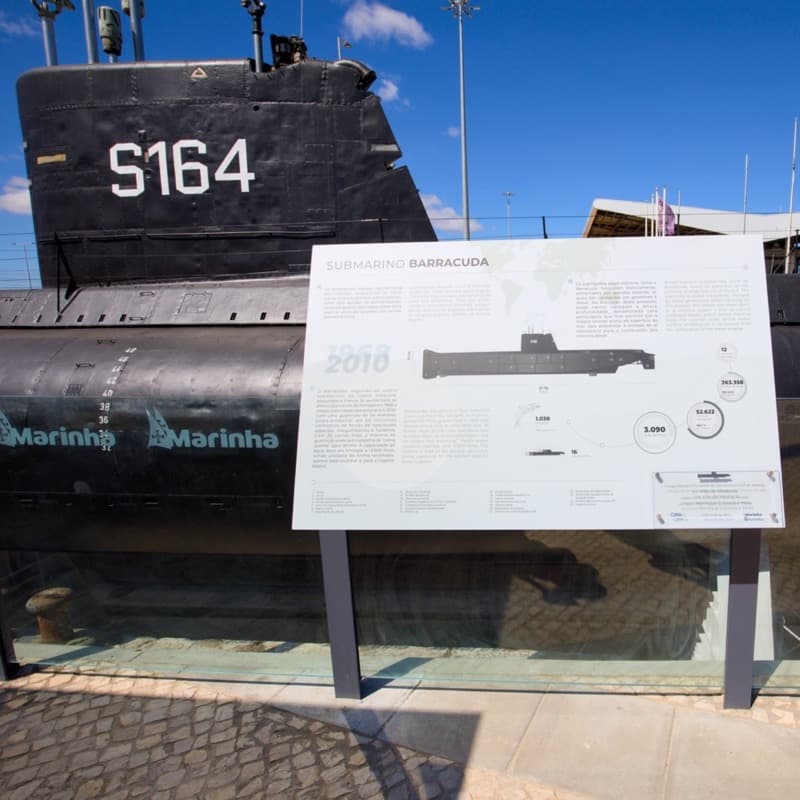
In Cacilhas, in the municipality of Almada, the Barracuda Submarine returned to public contact as a museum ship of the Portuguese Navy. Inaugurated in this new role on 9 May 2024 and open to visitors since 11 May, it forms part of the Cacilhas dry dock, alongside the Frigate D. Fernando II e Glória. Built in France, it was the second of four Albacora-class submarines in the Portuguese Navy. It entered service on 4 May 1968 and completed its last mission in 2010, after 42 years of operational life. With a length of 54 metres, a submerged displacement of 1,038 tonnes and a crew of 54 servicemen, it could operate down to 300 metres and carry 12 torpedoes. Over its career, it carried out national and international missions and covered 263,358 nautical miles. Today, the dark hull and compact interior reveal the technical precision and discipline required by submarine navigation.

Museu da Marioneta4.6

Museu da Marioneta

Museum • Lisboa, Lisboa

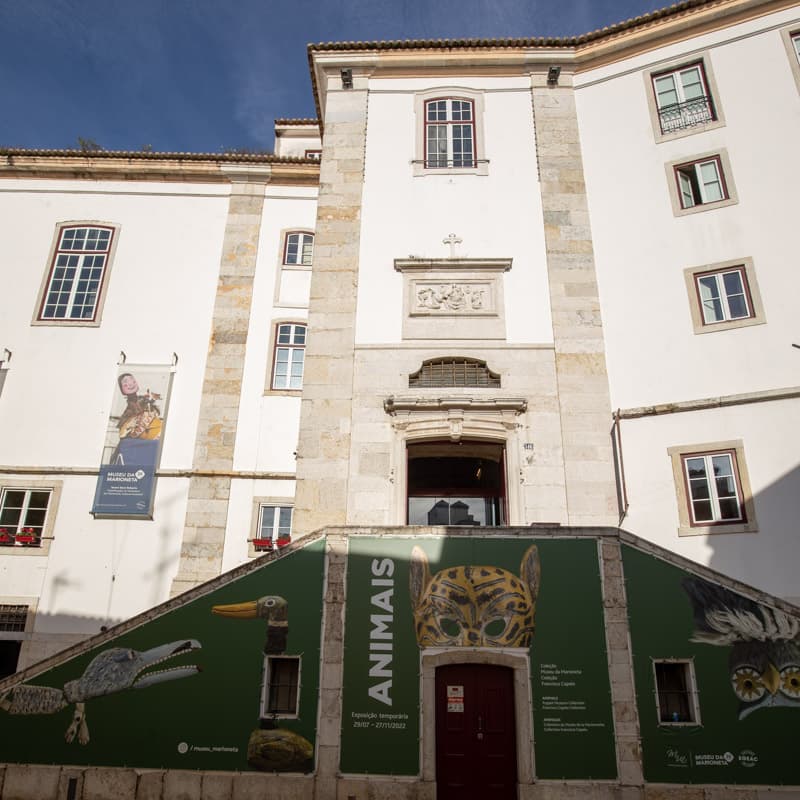
In the Convento das Bernardas, in Madragoa, the Puppet Museum shows how a small object can hold an entire world. Founded in 1987, it was the first museum in Portugal entirely devoted to puppetry and, since 2001, it has been housed in this former seventeenth-century convent, almost destroyed by the 1755 earthquake and later rebuilt. The collection brings together more than 3,000 pieces across different places, techniques and periods, yet the heart of the visit beats most strongly in the Portuguese traditions, from the Robertos to the Bonecos de Santo Aleixo. Along the way appear shadow puppets, string puppets, rod puppets, African and Asian masks, and even a section linked to animation cinema. It is also worth slowing down to feel the building itself: the cloister, the adapted former church and the atmosphere suspended between theatre and retreat. It is a museum that speaks of childhood, certainly, but also of memory, artifice and the old human desire to give soul to things.

Museu da Misericórdia do Porto4.2

Museu da Misericórdia do Porto

Museum • Porto, Porto

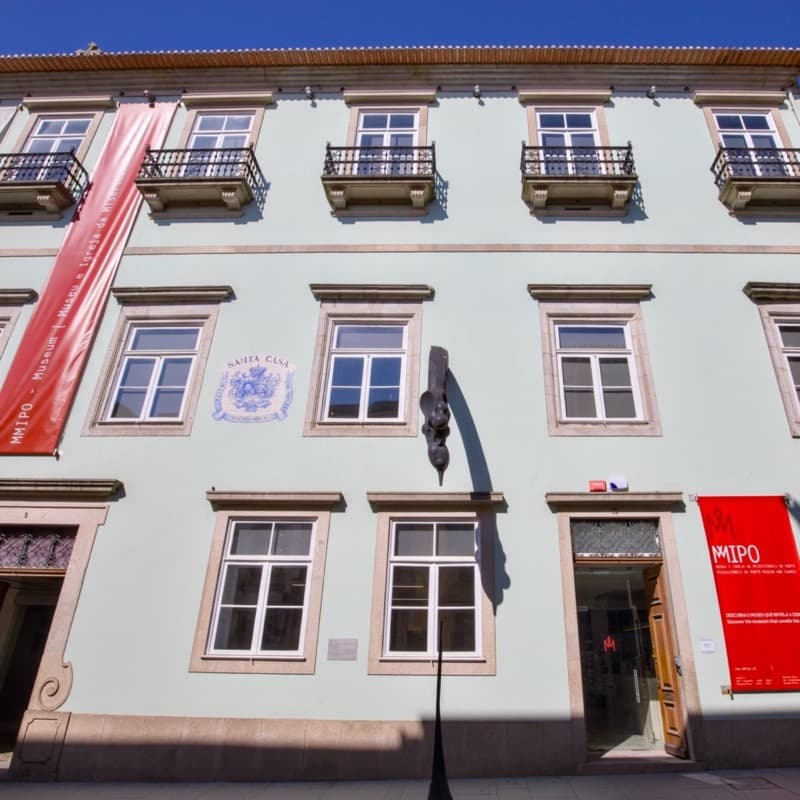
The Museu da Misericórdia do Porto, or MMIPO, is located on Rua das Flores, in Porto’s Historic Centre, in the building that served as the headquarters of the Santa Casa da Misericórdia do Porto from the mid-16th century until 2013. The institution, founded in 1499, is linked to a long history of assistance, charity and artistic heritage. The museum presents this memory through collections of painting, sculpture, sacred art and objects related to the work of the Misericórdia. The route includes the Igreja da Misericórdia, a 16th-century construction deeply transformed in the 18th century by Nicolau Nasoni, and the Galeria dos Benfeitores, marked by iron-and-glass architecture. Among the works on display, Fons Vitae stands out, an oil painting on oak panel, attributed to Colijn de Coter and dated to around 1515-1517. Between devotion, assistance and art, the museum makes visible a long-standing institutional memory in Porto.

Farol Museu de Santa Marta4.4

Farol Museu de Santa Marta

Lighthouse • Cascais, Lisboa

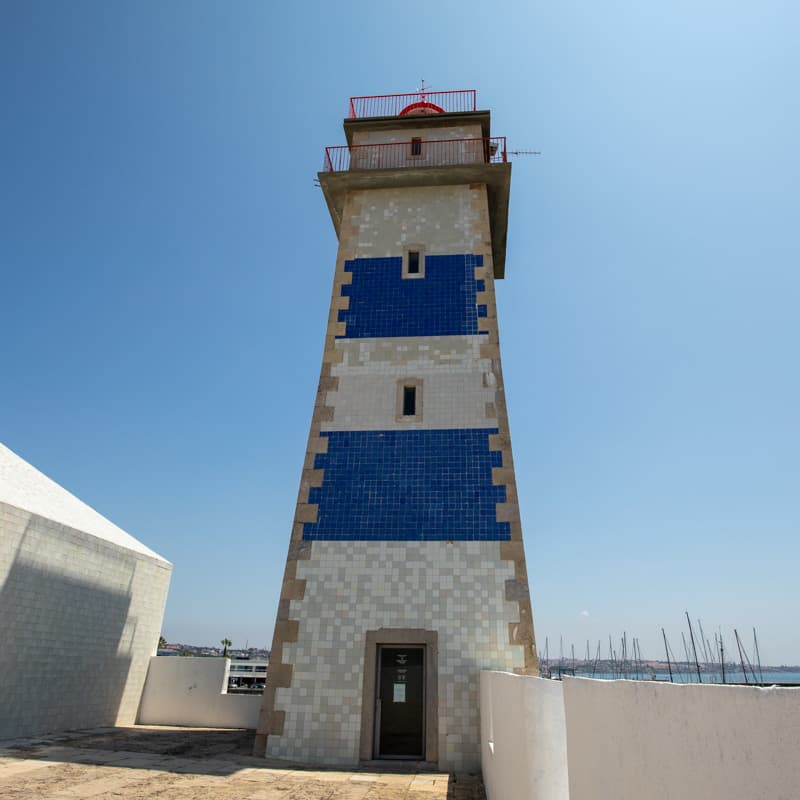
On the edge of Cascais Bay, the Santa Marta Lighthouse Museum shows how a former place of defence and maritime signalling could gain a second life without losing its original function. The fort that houses it probably dates back to the seventeenth century; after being deactivated for military purposes, it received a lighthouse established in 1868 and enlarged in 1936 to respond better to navigation. Restored through a protocol between the municipality and the Portuguese Navy, it opened as a museum in July 2007 and became a rare case in Portugal: it still guides the coast while presenting the history, technology and heritage of Portuguese lighthouses. In the former keepers’ houses, nautical objects, optical devices and memories of the trade help one understand that the light at sea also has a human story. Between the blue bands of the tower, the rock and the Atlantic, the place preserves the practical elegance of a site always turned towards the horizon.

Museu da Água e Resíduos de Sintra4.3

Museu da Água e Resíduos de Sintra

Museum • Sintra, Lisboa

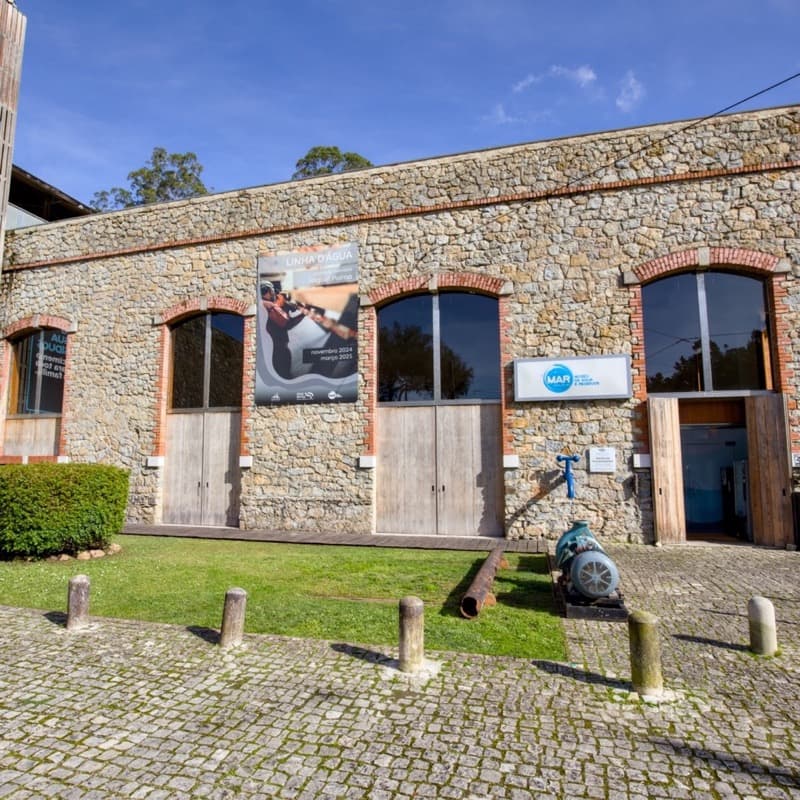
The Museu da Água e Resíduos, in Ribeira de Sintra, is managed by SMAS de Sintra and is dedicated to environmental education and awareness. Installed in the former tram garage, it occupies a building linked to the history of the line that connected Sintra to Colares and Praia das Maçãs. Its technical memory remains visible: essential parts of the structure have been integrated into interactive modules, such as the original pulley system, once used to lift coal wagons and heavy materials. The route combines indoor and outdoor areas, bringing themes such as the urban water cycle, recycling, waste and sustainability closer through games, models and tactile experiences. Among the most expressive elements are the interactive model of the urban water cycle, the modules on waste separation and the outdoor tank reused for water-related experiments. The museum turns infrastructure and pedagogy into a practical reading of environmental heritage.

Museu Nacional de Arte Antiga4.6

Museu Nacional de Arte Antiga

Museum • Lisboa, Lisboa

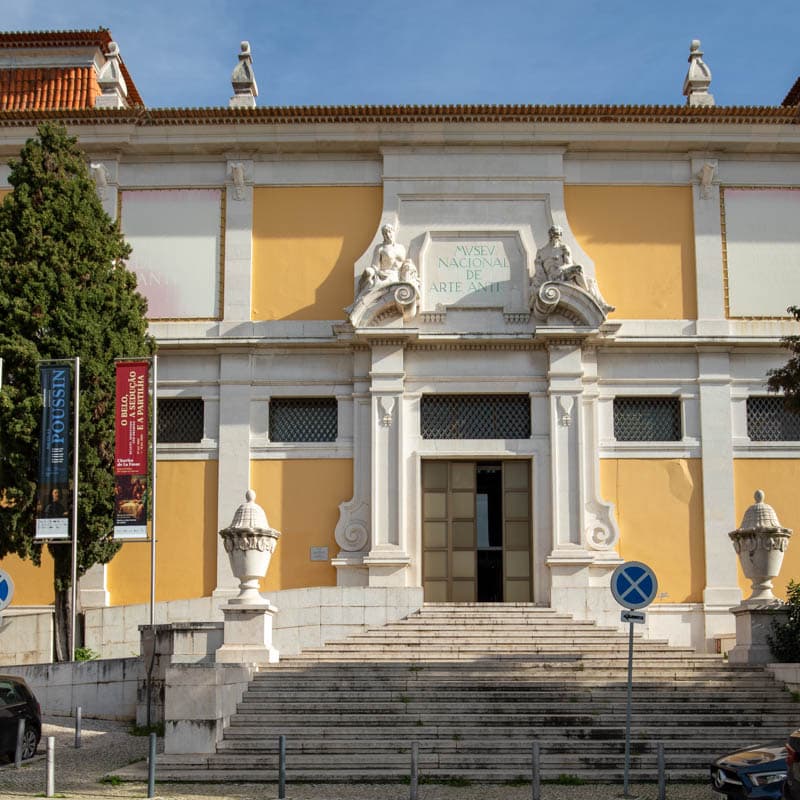
High on Rua das Janelas Verdes, the National Museum of Ancient Art is one of those places where Portugal seems to tell its own story with unusual clarity. Opened in 1884, to give a home to many works that came from convents and monasteries after the extinction of the religious orders, it was installed in the former Palace of the Counts of Alvor and became the country’s great house of ancient art. Its collection crosses centuries and geographies, from painting to goldsmithing, from sculpture to works from Europe, Africa and the East, yet some encounters ask for real pause: the Panels of Saint Vincent, the Belém Monstrance, the Namban screens. During a visit, it is also worth slowing down in the garden facing the Tagus, where the city seems to breathe differently. Between palace, collection and horizon, the museum leaves a rare impression: that history, when well kept, remains alive.

World of Discoveries4.4

World of Discoveries

Museum • Porto, Porto

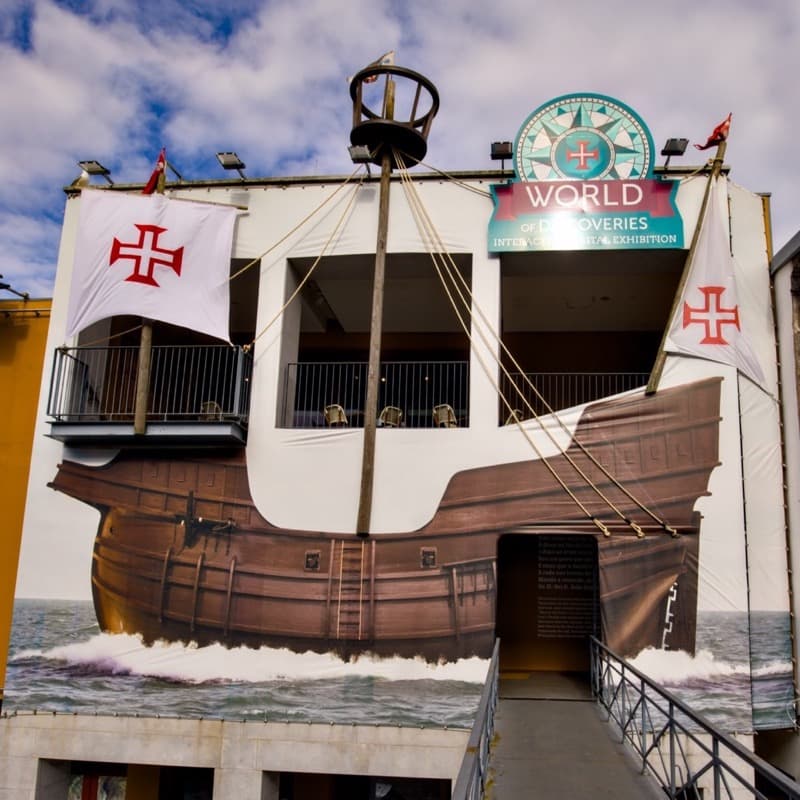
World of Discoveries is located in Porto’s riverside area, a few metres from the Douro and the Alfândega. Inaugurated in 2014, it presents itself as an interactive museum and theme park dedicated to the Portuguese Discoveries. The route combines exhibition, scenography and immersive experience to recreate episodes of Portuguese navigation, maritime routes and encounters with other territories. Among the proposed moments are the Conquest of Ceuta, the figure of Adamastor, the exploration of the inside of a vessel and the evocation of spices. One of its distinctive components is the journey along a water channel, designed to follow, in a staged setting, routes associated with Portuguese maritime expansion. With multilingual content, audio guides and an educational service, the space brings history, adventure and pedagogy together in an accessible format. More than presenting old objects, it seeks to transform the narrative of the Discoveries into a visual, sound and participatory experience.

Casa Sommer4.6

Casa Sommer

Museum • Cascais, Lisboa

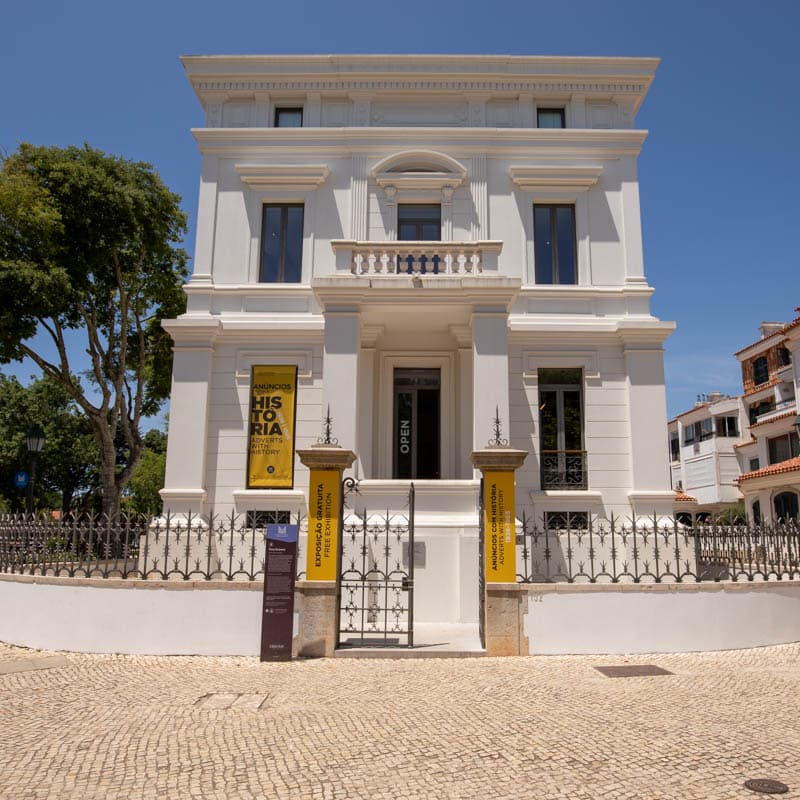
In Cascais, Casa Sommer reveals a side of the town that is less maritime and more urban, shaped by the elegance of the late nineteenth century. Commissioned by Henrique Sommer, this Neoclassical house with a square plan is described by the municipality as the most refined example of a private residence of its kind in Cascais, with symmetrical façades, pilasters, pediments and a noble balcony that give it an almost palatial dignity. For decades it remained a private home; later, it fell into neglect, until a major rehabilitation restored it, also incorporating the former stables and a new underground structure. Since 2016, it has housed the Municipal Historical Archive and the Municipal Bookshop, becoming not just a recovered building but a true centre of local memory. That transformation is what strikes most deeply: a house once meant to express social standing now preserves documents, stories and traces of centuries of municipal life, as if the architecture had found a second vocation in time itself.

Sintra Mitos e Lendas3.6

Sintra Mitos e Lendas

Museum • Sintra, Lisboa

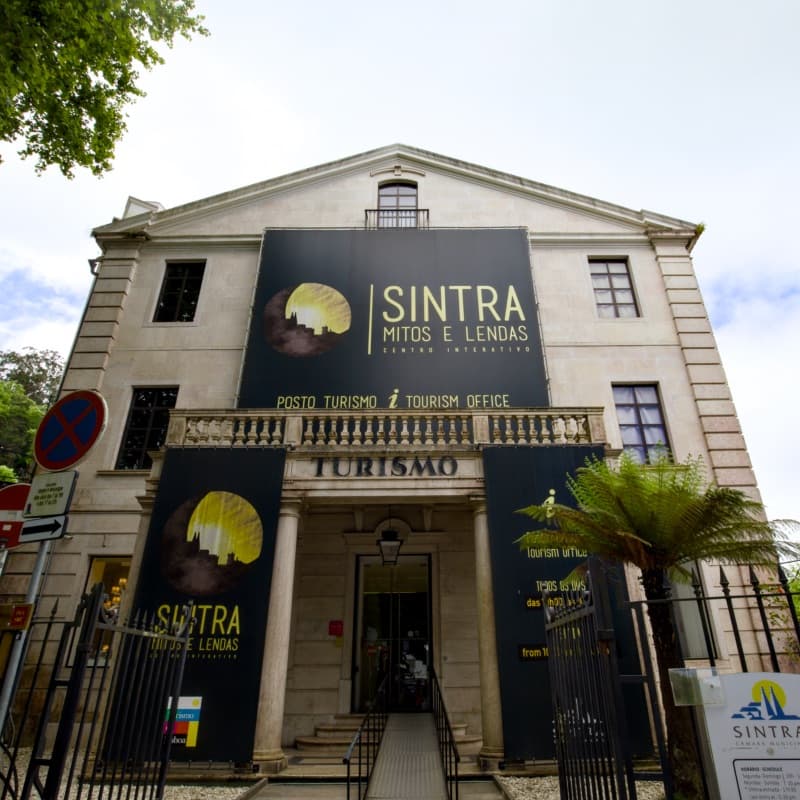
The Sintra Myths and Legends Interactive Centre, in Sintra, presents the town’s imaginative dimension through an immersive language. Opened in 2015, it proposes a journey through time and space, where myths and legends are historically framed and placed in dialogue with music, literature and local memory. The route is spread across 17 spaces and crosses reality and fiction through set design, multimedia and sensory experiences. Technology appears as a narrative medium: there are touchscreens, video mapping, augmented reality, 3D films, sensory effects and holograms. Among the stories evoked are the Creation of the Crags, the Tomb of the Two Brothers and the Seven Sighs. The centre reveals a Sintra made not only of palaces and landscape, but also of narratives transmitted, reinvented and staged to show the cultural force of its imagination.

Museu do Oriente4.5

Museu do Oriente

Museum • Lisboa, Lisboa

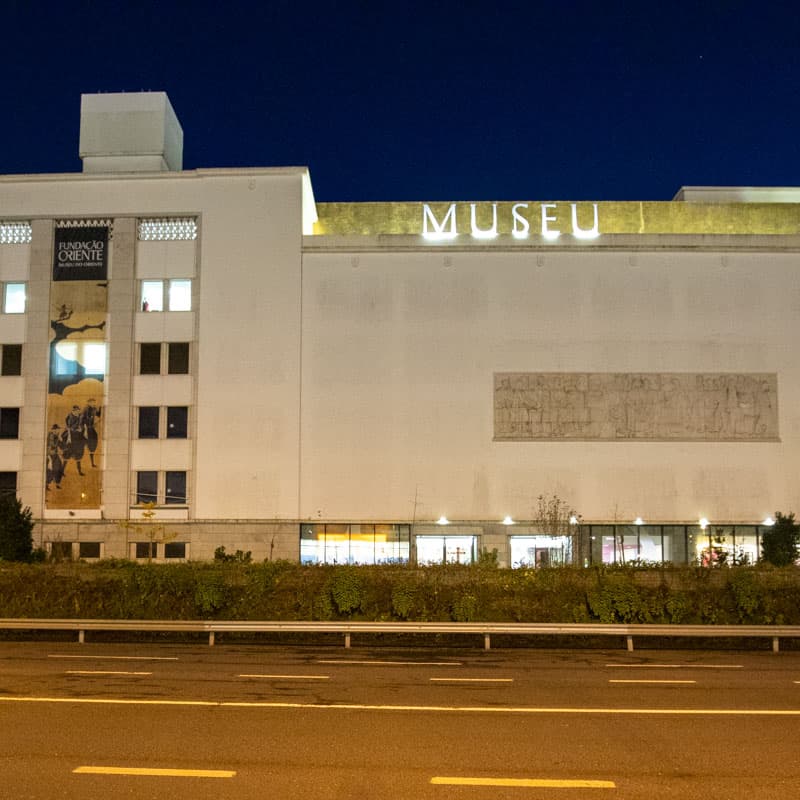
On Alcântara’s waterfront, the Orient Museum shows how a former dockside warehouse can become a place where worlds meet. Opened in 2008 inside the modernist building of the former refrigerated cod warehouses, designed from 1939 onwards, it holds two collections that define its character with unusual clarity. On one side, Portuguese Presence in Asia brings together thousands of objects and reveals the fascination, exchange and curiosity that shaped the relationship between Portugal and the East. On the other, the Kwok On collection, regarded as one of the most representative of its kind in Europe, opens a path into the performing arts, rituals and popular religions of a much wider Asia. During a visit, it is worth noticing the contrast between the building’s industrial sobriety and the richness of puppets, masks, folding screens, ivories and ritual objects. Few museums in Lisbon manage to feel at once so calm, so layered and so open to dialogue.

Museu dos Transportes e Comunicações4.4

Museu dos Transportes e Comunicações

Museum • Porto, Porto

The Museu dos Transportes e Comunicações occupies the Alfândega Nova do Porto, on Rua Nova da Alfândega, beside the right bank of the Douro. The building, designed by the French architect Jean F. G. Colson, began to be built in 1859 on the former Praia de Miragaia and was inaugurated in 1869. Its neoclassical architecture, marked by the combined use of iron, stone, brick and wood, served the city’s customs activity for more than a century. In 1987 it was decided that it would house the future museum, and the requalification was guided by Eduardo Souto de Moura. Today, the museum preserves the memory of the Customs House and interprets the role of transport and communications in modern society. Among its sections are Metamorfose de um Lugar, O Motor da República and the panel Ribeira Negra, by Júlio Resende.

Museu do Mar Rei Dom Carlos I4.5

Museu do Mar Rei Dom Carlos I

Museum • Cascais, Lisboa

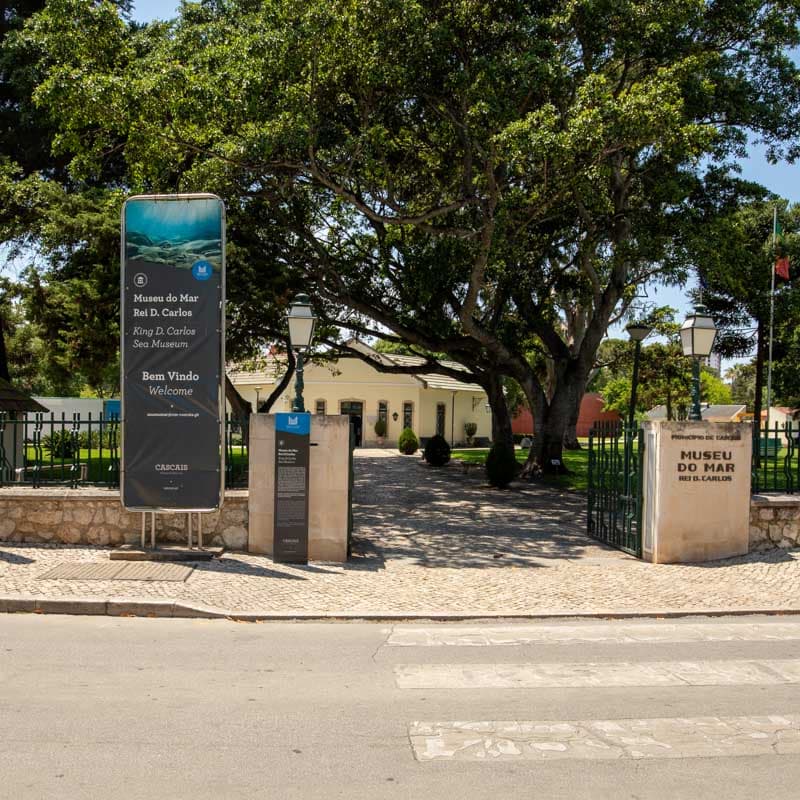
In Cascais, the King D. Carlos Sea Museum tells the story of the town through what shaped it most deeply: the sea. Housed in the former Sporting Club de Cascaes, founded in 1879 on the initiative of the then Prince Carlos, the museum was created in 1976 and opened to the public in 1992, turning a nineteenth-century leisure venue into a place of maritime memory. Its name is more than a tribute: it recalls the king who made Cascais the base for his oceanographic campaigns and helped bring science closer to the observation of the ocean. Inside, the old Octagonal Room stands alongside collections of natural history, underwater archaeology, fishing ethnography and navigation, forming a broad portrait of a town of kings and fishermen. More than gathering shells, boats or nets, this museum shows how the sea was labour, knowledge, risk and imagination, and how it still defines the identity of Cascais.

Museu da Carris4.5

Museu da Carris

Museum • Lisboa, Lisboa

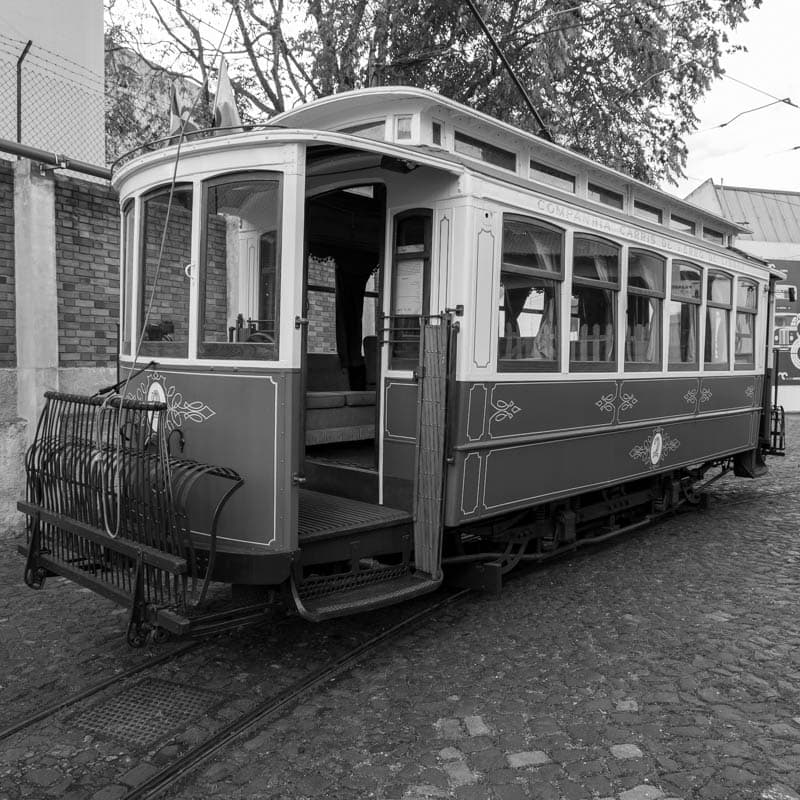
Stepping into the Carris Museum is like understanding Lisbon in motion. Housed in Santo Amaro Station, Carris’s first station, the museum preserves the memory of a company founded in 1872, intriguingly in Rio de Janeiro, before it transformed the way the capital expanded and overcame its hills. Here, the history of public transport meets the history of the city itself: from horse-drawn streetcars to the funiculars, from the electrification of the network to twentieth-century buses. Among photographs, uniforms, tickets, machinery and historic vehicles, visitors follow the technical, social and urban changes that shaped everyday life in Lisbon. One of the most memorable moments is the journey between the two exhibition areas on a tram from 1901, which gives the visit a rare sense of authenticity. More than a transport museum, this is a place where Lisbon can be seen growing along its rails.

Fundação Serralves4.6

Fundação Serralves

Cultural Centre • Porto, Porto

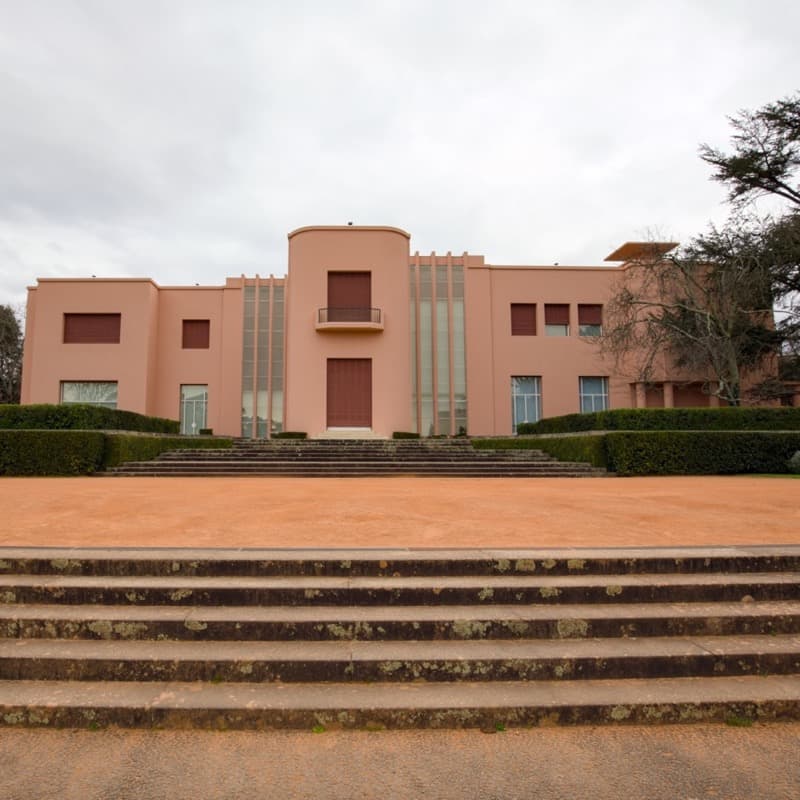
The Serralves Foundation, in Porto, brings together contemporary art, architecture, cinema and landscape in a heritage ensemble classified as a National Monument in 2012. The property was acquired by the State in December 1986, and the House and Park opened to the public on 29 May 1987. Created in 1989, the Foundation gave institutional structure to this cultural project. The Museum of Contemporary Art, designed by Álvaro Siza, began in 1991 and opened its new building in 1999. The Serralves House preserves the Art Deco language of the 1930s, while the Park, designed by Jacques Gréber, extends over 18 hectares of formal gardens, woodland and a traditional farm. Between lioz-stone interiors, exhibition spaces and tree-lined paths, Serralves shows how historic heritage and contemporary creation can inhabit the same place.

Museu de Marinha4.5

Museu de Marinha

Museum • Lisboa, Lisboa

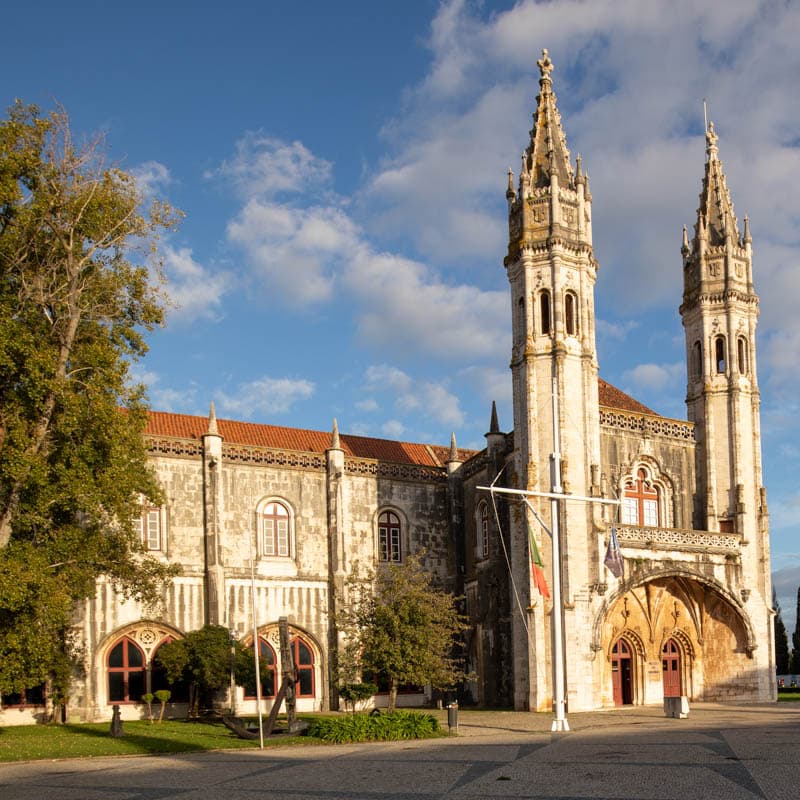
The Maritime Museum, housed since 1962 in the wings of Jerónimos Monastery, does more than display vessels: it tells the long intimacy between Portugal and the sea. Created on the initiative of King Luís in 1863, it began with a didactic purpose, yet today the visit feels like a journey through time. Among models, charts, instruments and paintings, visitors sense how the ocean was a route for trade, science, war and imagination. The most striking moment awaits in the Barge Pavilion, built to house full-size boats. There, the Royal Brig stands out for its gilded carving, mythological figures and the Venetian mirrors in its stern cabin, but also for its story: in 1808 it carried the royal family to the squadron that sailed to Brazil and, already in the twentieth century, it returned to the water for the official visit of Queen Elizabeth the Second. Few places show so clearly how the sea helped shape Portuguese power and memory.
Museu de História Natural e da Ciência da Universidade do Porto4.3

Museu de História Natural e da Ciência da Universidade do Porto

Museum • Porto, Porto

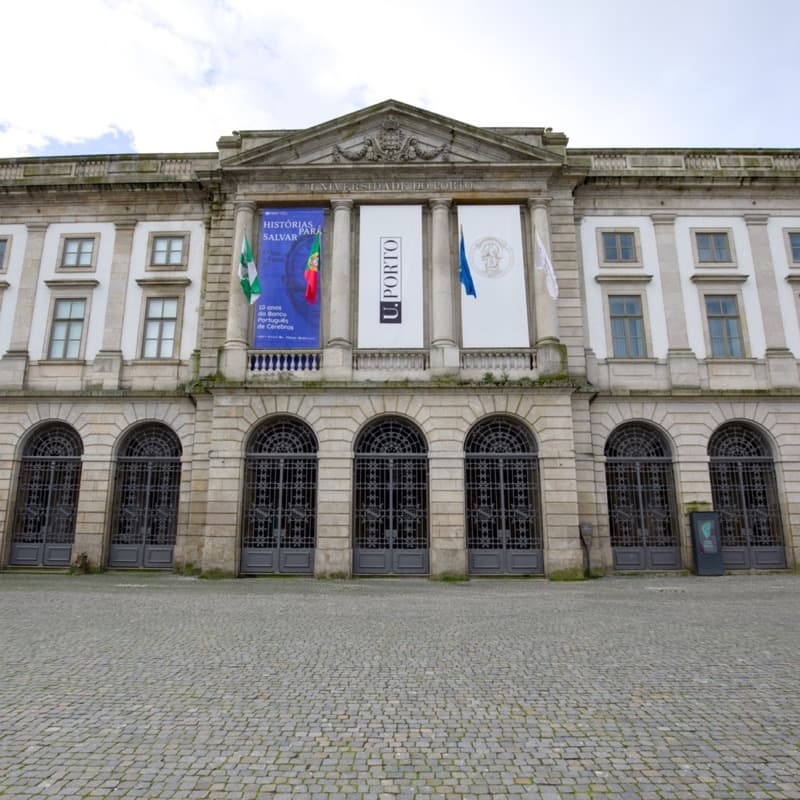
The Natural History and Science Museum of the University of Porto, brings together the University’s scientific memory and brings it closer to the public through a multipolar structure. Formally created at the end of 2015, it resulted from the merger of the Natural History Museum of the University of Porto with the Science Museum of the University of Porto / Faculty of Sciences Centre. Its Central Hub occupies the Historic Building of the Rectorate, next to the Jardim da Cordoaria, and houses collections of geology, palaeontology, zoology, archaeology and ethnography, scientific instruments, documentary and audiovisual archives, and the Herbarium of the University of Porto. The museum also includes the Biodiversity Gallery – Ciência Viva Centre and the Botanical Garden of Porto. Its collections comprise around 850,000 specimens, distributed across 17 collections, with material dating from the mid-19th century to the present day.

Museu Nacional dos Coches4.6

Museu Nacional dos Coches

Museum • Lisboa, Lisboa

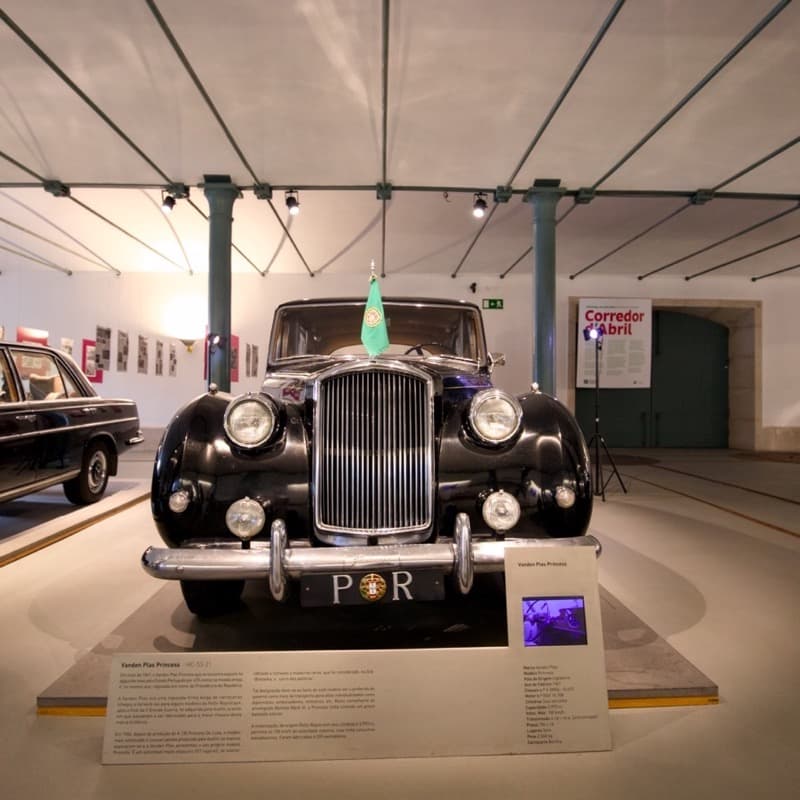
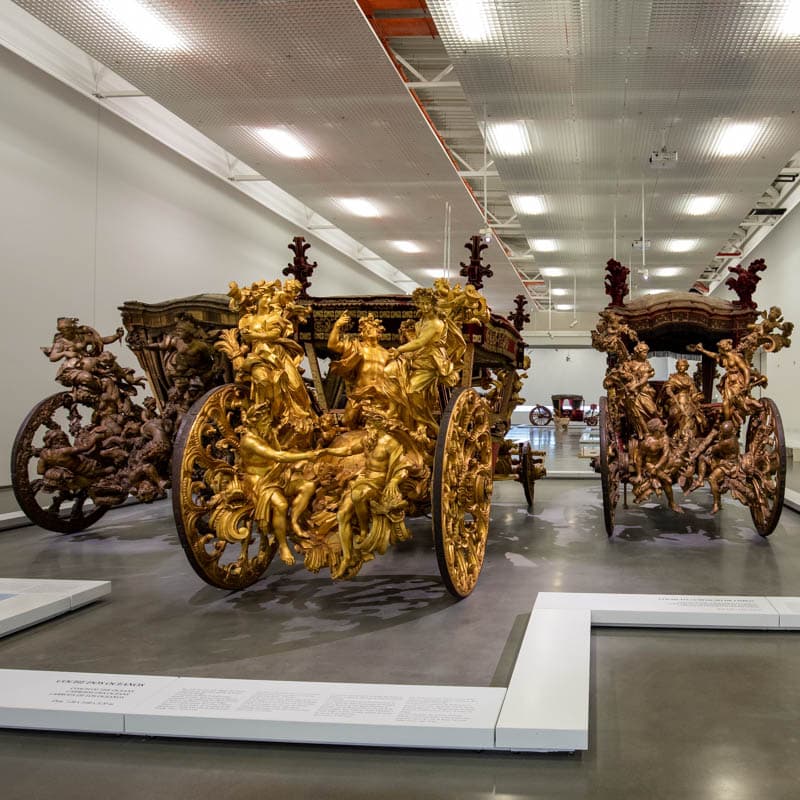
The National Coach Museum is one of those places where history seems to pass before your eyes in procession. Created on the initiative of Queen Amélia in 1905 to gather and preserve the royal vehicles scattered across different palaces, it began in the former Royal Riding School of Belém and, more than a century later, gained a new building designed by Paulo Mendes da Rocha. The collection, regarded as unique in the world, shows how power was displayed on wheels, through luxury, ceremony and diplomacy. Among coaches, berlins and litters, the eye is drawn to the celebrated Coach of the Oceans, one of the museum’s treasures, built for the embassy sent by King João the Fifth to Pope Clement the Eleventh in 1716. Its exuberant carving and allegories linked to the sea and the Discoveries reveal the grand image Portugal wished to project. Visiting this museum is like stepping into a theatre of splendour where memory moves at the solemn pace of horses.

Museu do Carro Eléctrico4.4

Museu do Carro Eléctrico

Museum • Porto, Porto

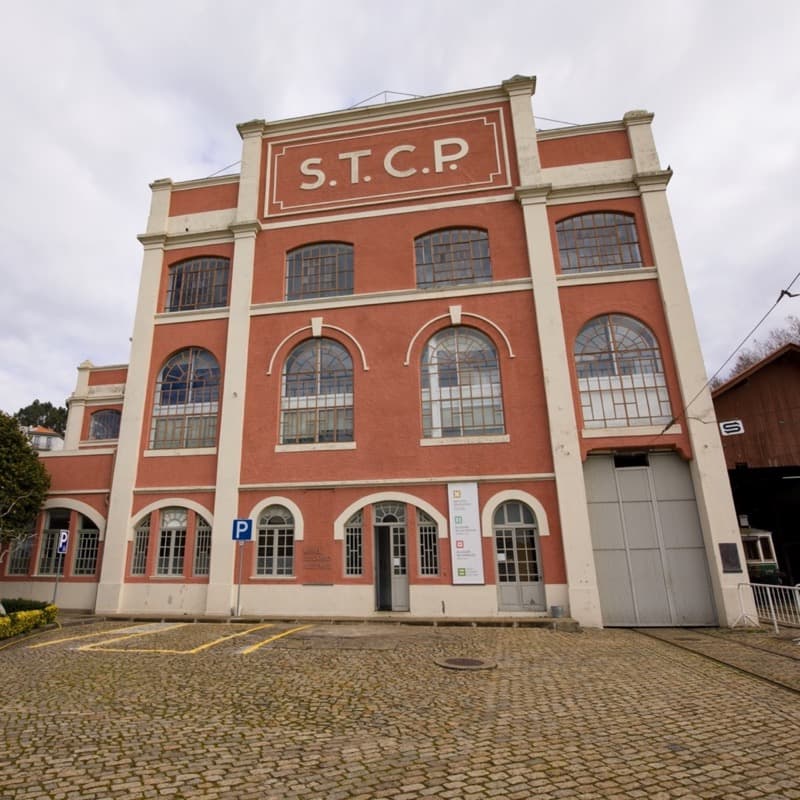
The Museu do Carro Eléctrico, in Porto, occupies part of the former Massarelos Thermoelectric Power Station and preserves the memory of the city’s urban rail transport. The idea of creating a museum emerged in the 1980s, when the electric traction network was losing ground to buses and the car. On 18 May 1992, it opened to the public with vehicles restored by STCP. The building, completed in 1911 and fully operational from 1915, produced and transformed energy to power the trams. Inspired by French industrial structures, it had two production naves and a chimney connected to coal combustion. Today, the collection brings together 28 vehicles, technical equipment, uniforms, transport tickets and documentation. Among rails, machines and restored bodies, the museum tells a story in which energy, city and mobility move forward side by side.

MAAT Central4.6

MAAT Central

Museum • Lisboa, Lisboa

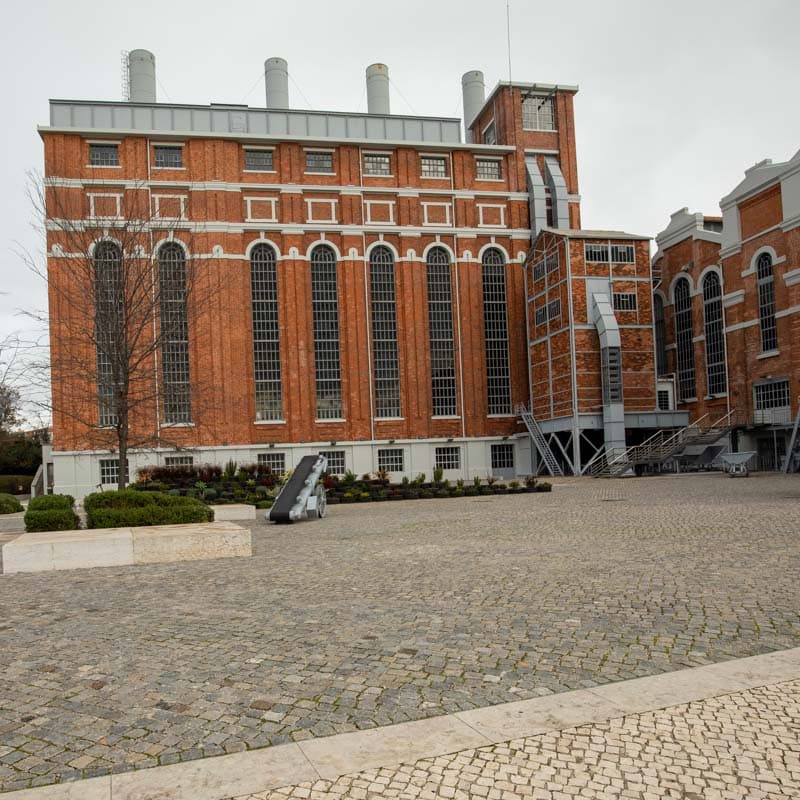
MAAT Central is one of those places where Lisbon can be understood as a modern city. Formerly the Tejo Power Station, this thermoelectric plant began operating in 1909 and supplied the capital for decades, first continuously and later as a reserve station, before being reborn as a museum space. The building, with its red brick, iron and vast windows, is one of the landmarks of Portuguese industrial architecture, yet what impresses most is stepping inside and finding the original machinery still in place. In the exhibition The Electricity Factory, boilers, turbo-alternators and walkways reveal the almost theatrical scale of energy production and recall the time when coal helped to light Lisbon. Today, as part of the MAAT campus, the former plant has gained a new life without losing its raw force. It is a rare place, where technology, memory and city still speak to one another.

Torre de Belém4.5

Torre de Belém

Monument • Lisboa, Lisboa

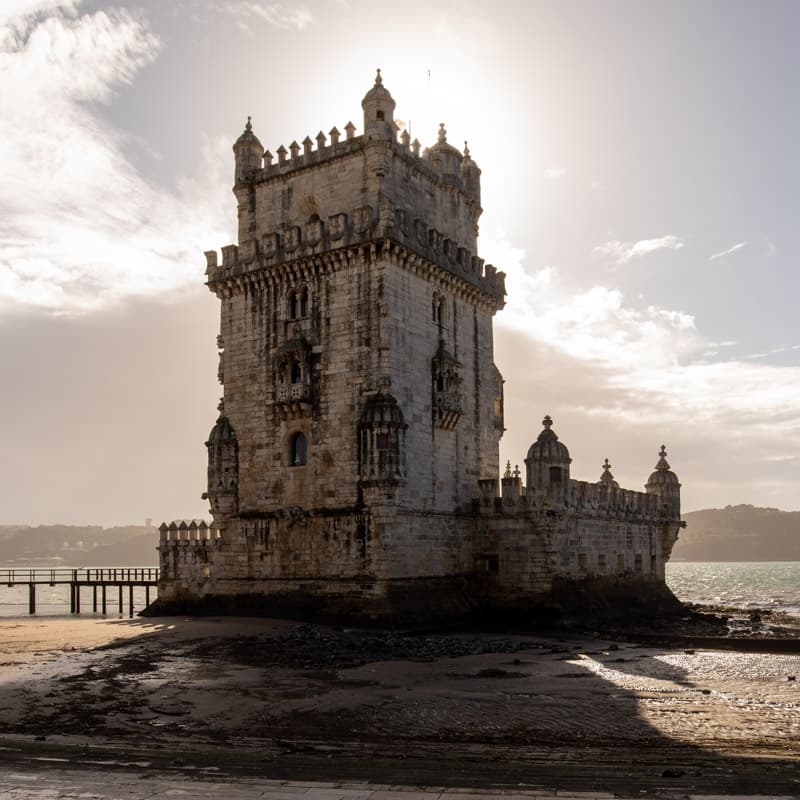
Belém Tower has the grace of a Manueline jewel and the firmness of a fortress built to guard the entrance to the Tagus. Raised in the reign of King Manuel the First, from 1514 onwards, and designed by Francisco de Arruda, it grew closely tied to the port of Lisbon, Jerónimos Monastery and the imagination of the Discoveries. Its form combines a medieval-looking tower with a modern bulwark, while the exterior is covered with ropes, knots, armillary spheres, crosses of the Order of Christ and other motifs that make the stone feel almost like lace. It is worth lingering over the balcony facing the river and one surprising detail: the small rhinoceros carved into one of the façades. From above, the Tagus and Belém come into sharper focus. It then becomes clear why this tower has become one of Lisbon’s great symbols and a UNESCO World Heritage site.

Showing 25-48 of 98

Discover by category

Take the LxDiscover App with you

Explore Portugal with a cultural guide for monuments, museums, gardens, palaces, viewpoints, and historic places in Lisbon, Porto, Sintra, and other regions.

Use the map, follow cultural routes, read editorial context, save places, and track your visits with the visit passport.

Free features

  • Interactive map to discover places of interest
  • Detailed information about monuments, museums, and cultural sites
  • Favorites for the places you want to visit
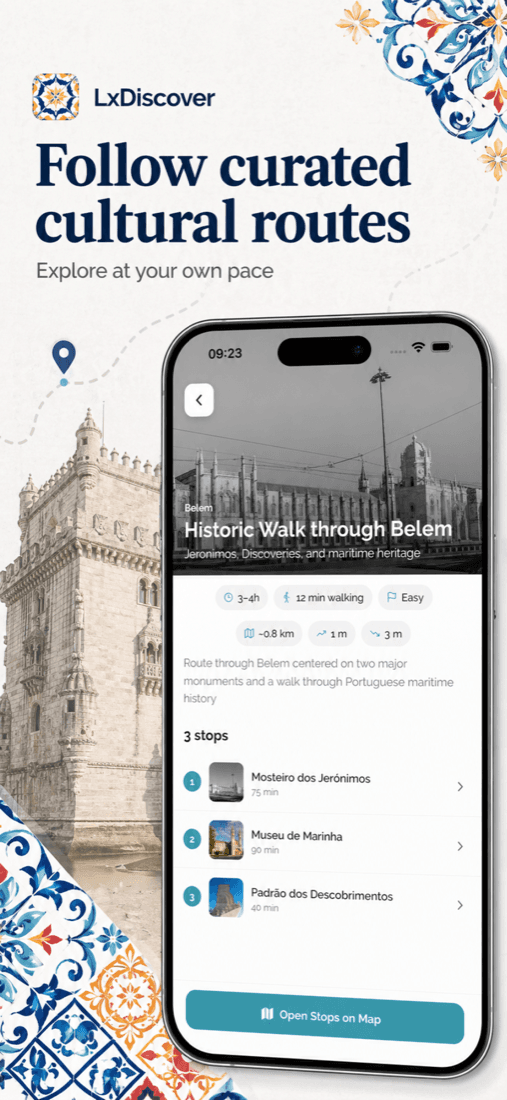
  • Selected routes to start exploring

Premium subscription

  • Curated routes with ordered stops, duration, and difficulty
  • Thematic collections with editorial context for each area
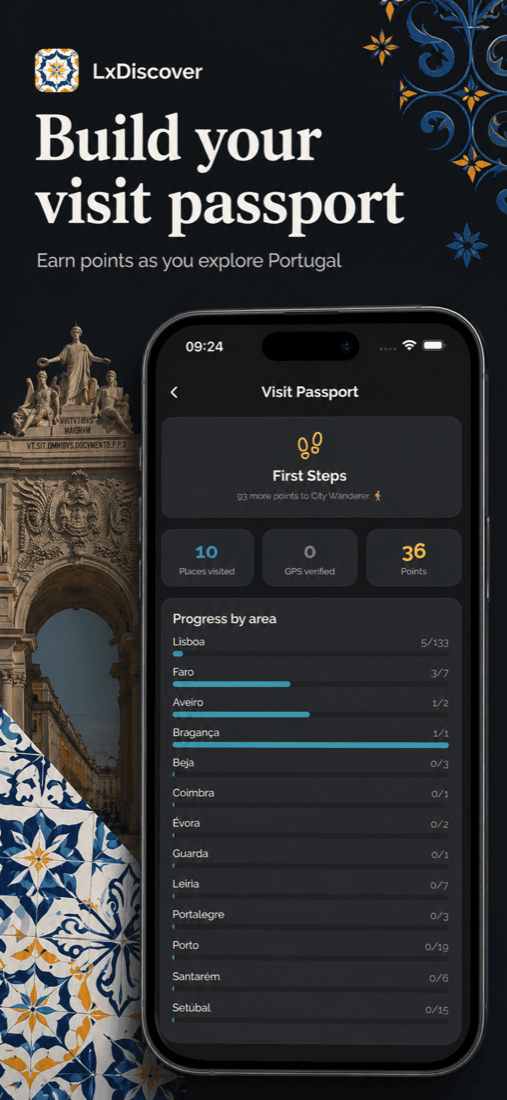
  • Visit passport for progress, visited places, and achievements
  • Advanced map, planning, and proximity alert tools
LxDiscover map screen
LxDiscover routes screen
LxDiscover visit passport screen